
STEADI: intervene
Don't Wait for Hives in Elderly Parents' Peanut Reactions
Anaphylaxis in older adults often looks like a cardiovascular event — dizziness, fainting, low blood pressure — rather than hives or throat swelling, and epinephrine, the life-saving first step, is the one older adults are least likely to receive. This act-now guide gives adult-child caregivers a numbered response path: recognize the reaction, inject epinephrine immediately, call 911, position the parent lying flat with legs elevated, and hand EMS a complete medication list.
If your older parent ate peanuts, may have eaten peanuts, or ate food that could contain peanuts, and then becomes dizzy, faint, weak, confused, short of breath, nauseated, vomiting, or collapses, treat it as possible anaphylaxis even if there are no hives. In older adults, severe allergic reactions can look like a cardiovascular event: low blood pressure, syncope, collapse, or sudden weakness may be the main signs rather than rash or throat swelling.[1]
Managing peanut allergy in elderly parents starts with the first few minutes: use epinephrine, call 911, keep the parent from standing or falling, and get EMS the medication list. Do not wait to see whether hives appear.

If your parent may have eaten peanuts, do this now
- Use the epinephrine autoinjector immediately if your parent has possible peanut exposure plus breathing symptoms, repeated vomiting, sudden dizziness, fainting, collapse, confusion, or symptoms in more than one body system. Allergy guidance treats epinephrine as the first-line treatment and advises using it when in doubt.[2]
- Call 911 right after the injection. Say the word “anaphylaxis.” Say: “Possible peanut exposure. Epinephrine given at [time]. Older adult with dizziness/fainting/shortness of breath/vomiting.”
- Keep your parent lying flat with legs elevated if you can do that safely. Do not have them walk to the car, stand up to “test it,” or sit at the table while they are faint or weak. The fall can become the second emergency.
- Stay with them and watch for change: breathing, alertness, skin color, vomiting, swelling, chest discomfort, or another fainting spell. If they vomit, keep them as flat as possible while helping them avoid choking.
- Use a second epinephrine dose after about 5 minutes if symptoms are not improving or are getting worse, if a second autoinjector is available.[2]
- Hand EMS the complete medication list: prescriptions, over-the-counter medicines, supplements, allergy history, the suspected food, and the time each epinephrine dose was given.
This order matters. Epinephrine comes before the phone call if the autoinjector is in your hand. The dispatcher and paramedics can help with the next steps, but they cannot replace the minutes lost while a caregiver waits for a rash.
The reaction may look like a fall, not an allergy
Families often expect peanut allergy to announce itself on the skin: hives, flushing, itching, a swollen lip. Those signs can happen, but they are not required. Roughly 10% to 20% of life-threatening anaphylaxis reactions may have no skin symptoms, and the absence of skin signs has been associated with more severe reactions.[1]
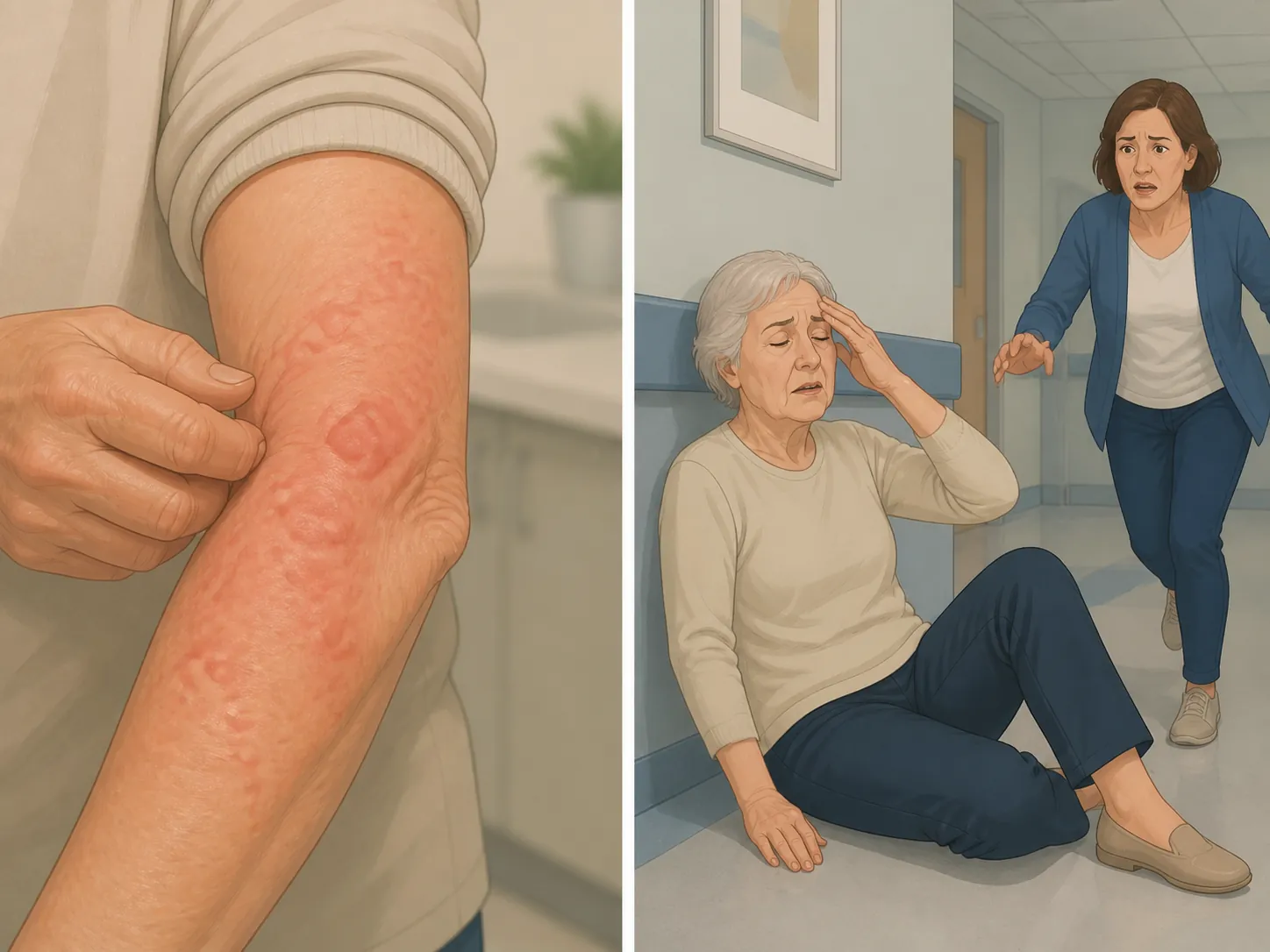
In an older parent, the clue may be the way the body suddenly stops compensating. A parent says they feel “woozy,” becomes pale, slides down a wall, faints in the bathroom, or cannot stay upright at the kitchen table. That can be mistaken for dehydration, a blood-pressure drop, a medication effect, or a heart spell. Those are real possibilities, but possible peanut exposure changes the working rule: treat the allergic reaction while EMS sorts out the rest.
Caregivers who already watch for dizziness and fainting in older adults may recognize the collapse risk from other situations. The same practical thinking used in heat-related fall prevention applies here: get the person low, prevent standing, and keep the pathway clear for help. The difference is that suspected anaphylaxis also needs epinephrine immediately.
A quick way to recognize possible anaphylaxis
Do not try to diagnose every possibility at the table. Look for peanut exposure plus either severe cardiovascular symptoms or symptoms involving more than one body system.
| Body system | Signs a caregiver might see |
|---|---|
| Cardiovascular | Dizziness, fainting, collapse, sudden weakness, low blood pressure if measured, gray or pale appearance |
| Breathing | Wheezing, shortness of breath, coughing, tight throat, trouble speaking |
| Stomach/gut | Repeated vomiting, severe nausea, abdominal cramping, diarrhea |
| Skin/mouth | Hives, flushing, itching, swelling of lips, tongue, face, or eyelids |
| Brain/alertness | Confusion, agitation, sudden sleepiness, seeming “not right” after exposure |
Two-system symptoms after peanut exposure are enough to act. Skin plus vomiting, vomiting plus dizziness, throat tightness plus faintness, or hives plus wheezing all belong in the same emergency lane. But in an older adult, severe cardiovascular symptoms alone after likely exposure should also move you to epinephrine and 911, because cardiovascular presentation is especially important in this age group.[1]
This does not mean every faint is peanut anaphylaxis. It means a caregiver should not wait for the “classic” allergy picture before treating a severe reaction when peanut exposure is plausible.
Use epinephrine even if your parent has heart disease
The hesitation is understandable. Many older parents have coronary artery disease, atrial fibrillation, high blood pressure, a pacemaker, or a drawer full of heart and blood-pressure medications. An epinephrine autoinjector can feel like a dramatic step in someone whose heart is already fragile.
Still, epinephrine is the first-line treatment for anaphylaxis at any age, and allergy guidance describes no absolute contraindication to epinephrine in suspected anaphylaxis, including in people with cardiovascular disease.[1][2]
That does not mean epinephrine is risk-free. It means the risk comparison is not close when anaphylaxis is suspected. Untreated anaphylaxis can progress quickly to airway compromise, shock, or death. An unnecessary autoinjector dose may cause frightening symptoms and still deserves emergency evaluation, but withholding epinephrine during true anaphylaxis is the more dangerous mistake.
There is also an older-adult medication issue EMS needs to know about. Beta-blockers can make anaphylaxis harder to treat because they may blunt the response to epinephrine; glucagon may be needed as a rescue treatment in that setting.[1] Adults over 80 have been identified as carrying higher cardiac adverse-event risk in emergency-setting anaphylaxis care, which is another reason to call 911 and hand over the medication list rather than trying to manage the reaction at home.[3]
So the caregiver rule stays plain: inject anyway, then tell EMS everything.
Why older adults are at special risk of being undertreated
This is not only a family hesitation problem. In European Anaphylaxis Registry data, adrenaline was administered in only about 30% of older patients with anaphylaxis.[4] A 2025 U.S. emergency-setting cohort also found older adults were significantly less likely than younger adults to receive epinephrine from EMS, and prescribing of self-injectable epinephrine was especially low in this group.[3]
The pattern matters because the symptom pattern invites delay. If an older parent has no hives, the family may think “heart,” “fainting,” “blood pressure,” or “medication side effect.” Emergency clinicians may also be weighing cardiac explanations. The answer is not to ignore the heart; it is to treat suspected anaphylaxis while the heart is being evaluated.
Peanut also should not be overstated as the leading anaphylaxis trigger in older adults. Registry data show that, in elderly patients, drugs and venom are more common triggers than food overall; among foods, wheat, hazelnut, and shellfish appeared more frequently in the cited registry data than peanut.[4] The practical point for a peanut-allergic parent is narrower but still serious: peanut allergy can persist into older age, and food allergy can also begin in adulthood.[1]
Position your parent to prevent collapse-related injury
After epinephrine and 911, the next job is preventing a fall while blood pressure may be unstable. Do not walk your parent to the bathroom. Do not guide them to the car. Do not ask them to stand for a blood-pressure reading if they are faint.
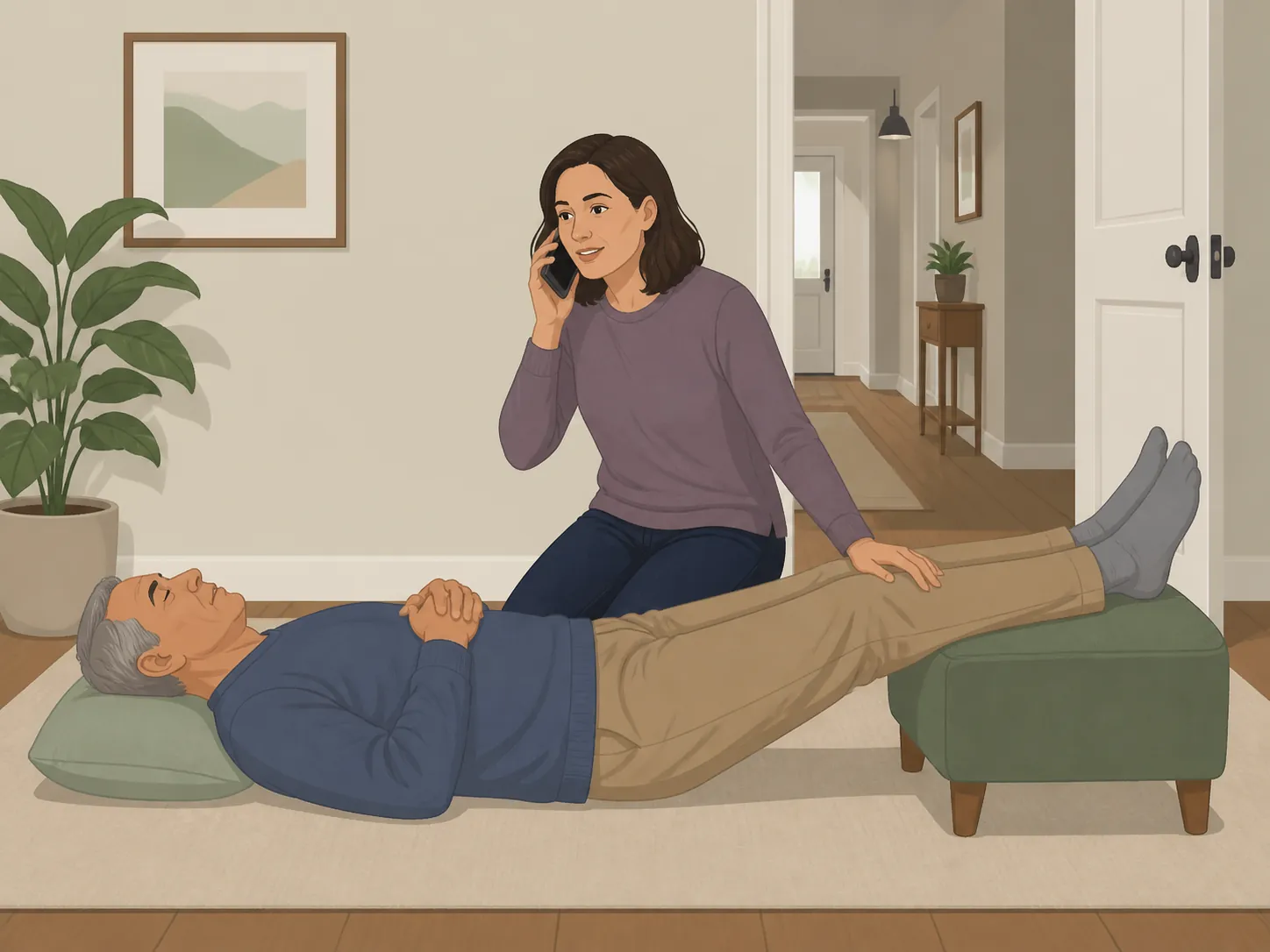
Help them lie flat and raise the legs on a low stool, cushion, or folded blanket if that can be done without delay. Clear chairs, rugs, pets, and clutter from the route EMS will use. Unlock the door if you can do so without leaving your parent alone for long.
Older adults who already have orthostatic hypotension, dehydration risk, or medication-related dizziness may be more vulnerable to collapse during any crisis. CareWise’s fall-prevention guidance on medication effects and orthostatic hypotension is useful for planning, but during a suspected peanut reaction the immediate sequence remains epinephrine, 911, flat positioning, and a second dose if needed.
What to say to 911 and what to hand EMS
Use the word “anaphylaxis” with the dispatcher. It tells the emergency system what you are worried about and keeps the call from becoming only a “dizzy older adult” call.
- “My parent may have eaten peanuts.”
- “They are dizzy/fainting/collapsed/short of breath/vomiting.”
- “Epinephrine was given at [time].”
- “A second dose is available,” or “No second dose is available.”
- “They take heart or blood-pressure medicines,” if they do.
The medication list should be easy to grab. Keep one printed copy near the epinephrine, one in your phone, and one in a visible emergency folder if your parent lives alone. Include the pharmacy name, prescribing doctors, drug allergies, and emergency contacts. If your parent takes a beta-blocker, do not make EMS hunt for that information.
After the ER, fix the plan while the event is still fresh
Once the emergency is over, the goal is not to replay blame. It is to make the next first minute easier.
- Create or update a Food Allergy & Anaphylaxis Emergency Care Plan with your parent’s clinician; FARE provides a widely used emergency care plan template.[5]
- Confirm your parent has two epinephrine doses available, not one, because a second dose may be needed if symptoms do not improve after about 5 minutes.[2]
- Store autoinjectors where caregivers can reach them quickly. Do not bury them in a bedroom drawer if meals happen in the kitchen.
- Ask the allergist or treating clinician to review heart disease, beta-blockers, blood-pressure medicines, and the anaphylaxis plan together.
- Practice the words: “Peanut exposure, possible anaphylaxis, epinephrine given.” A caregiver should not have to invent that sentence during a collapse.
For parents who live alone, the plan has to include access: where the autoinjectors are, who checks expiration dates, who gets called after 911, and how EMS gets through the door. Planning for dizziness and collapse is also part of food-allergy safety in older age, not a separate topic.
The caregiver rule
If peanut exposure is possible and an older parent has cardiovascular symptoms or symptoms in more than one body system, do not wait for hives. Use epinephrine, call 911 and say “anaphylaxis,” keep the parent lying flat with legs elevated, repeat epinephrine after about 5 minutes if symptoms are not improving, and give EMS the medication list.
Medical safety note
This article is for education and emergency preparedness. It is not a diagnosis, treatment plan, or substitute for advice from your parent’s physician, allergist, or emergency clinician. If anaphylaxis is suspected, use prescribed epinephrine and call 911.
References
- Anaphylaxis in elderly people — PMC, 2022
- Epinephrine Auto-Injector — ACAAI
- Age-dependent differences in anaphylaxis: elderly population — PMC, 2025
- Anaphylaxis in Elderly Patients—Data From the European Anaphylaxis Registry — Frontiers in Immunology, 2019
- Food Allergy & Anaphylaxis Emergency Care Plan — FARE
Related reading
Noticed something outdated or inaccurate on this page? Flag a correction. We review every report against CDC, NIA, and AARP HomeFit guidance before updating a page.
Part of the Fall Prevention section.