
STEADI: Intervene
Why wildfire evacuation plans for older adults can't wait
Older adults are the recurring majority in America's deadliest wildfire disasters, yet that outcome is substantially preventable through early departure during warnings, a named support network, and preparation done before the season. This evidence shows how urgent the risk really is and gives caregivers the specific behaviors that flip the outcome.
The fatal pattern is already clear before the next fire season
An emergency evacuation plan for an older adult during a wildfire is not a binder on a shelf. It is the answer to a much harder question: who gets an older person out before smoke, traffic, fear, disability, medication needs, and hesitation narrow the choices?
The Camp Fire made that question impossible to treat as theoretical. In Los Angeles Times reporting on the 2018 fire in Paradise, 53 of 69 positively identified victims were over 65, or about 77%. The same report found that at least 22 people died in mobile homes, a detail that matters because many mobile-home residents had less protection, less time, and fewer evacuation options once the fire arrived. [1]
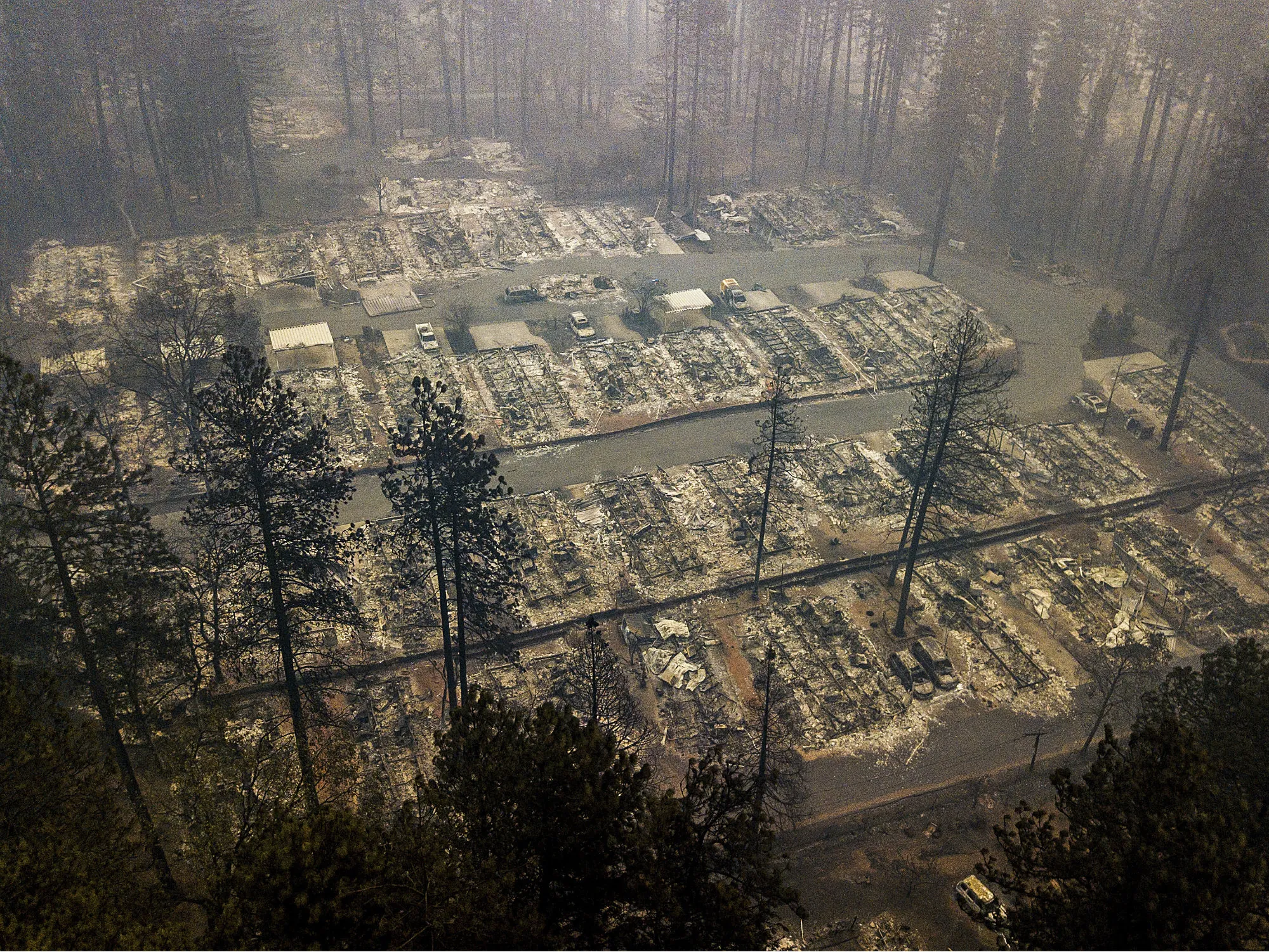
Places Journal, looking back five years after the Camp Fire, described the toll in similarly severe terms: 80% of fatalities were over 65, and more than a dozen victims were physically or mentally impaired. [2] Those figures are not identical to the Los Angeles Times count, and they should not be flattened into one tidy statistic. They point, from different reporting frames, to the same recurring profile: older adults, often with limits on mobility, health, cognition, income, housing safety, transportation, or social support.
That profile changes what “evacuate now” really means. A younger adult may hear the order, grab a phone, and leave. An older adult may need glasses found from a nightstand, a walker folded into a trunk, oxygen equipment, a medication bag, hearing aids, pet carriers, keys, documents, a charger, and someone calm enough to keep moving while the sky changes color. Every missing item becomes a delay. Every delay becomes more expensive.
The 2025 Los Angeles fires showed the pattern had not gone away
The January 2025 Southern California fires were not a replay of Paradise, and the victim profile was still being reported through news accounts and county officials rather than a final mortality dataset. That caution matters. But the early profile was familiar enough to be alarming: CalMatters reported that several of those killed were disabled and that the majority were over 70. [3]
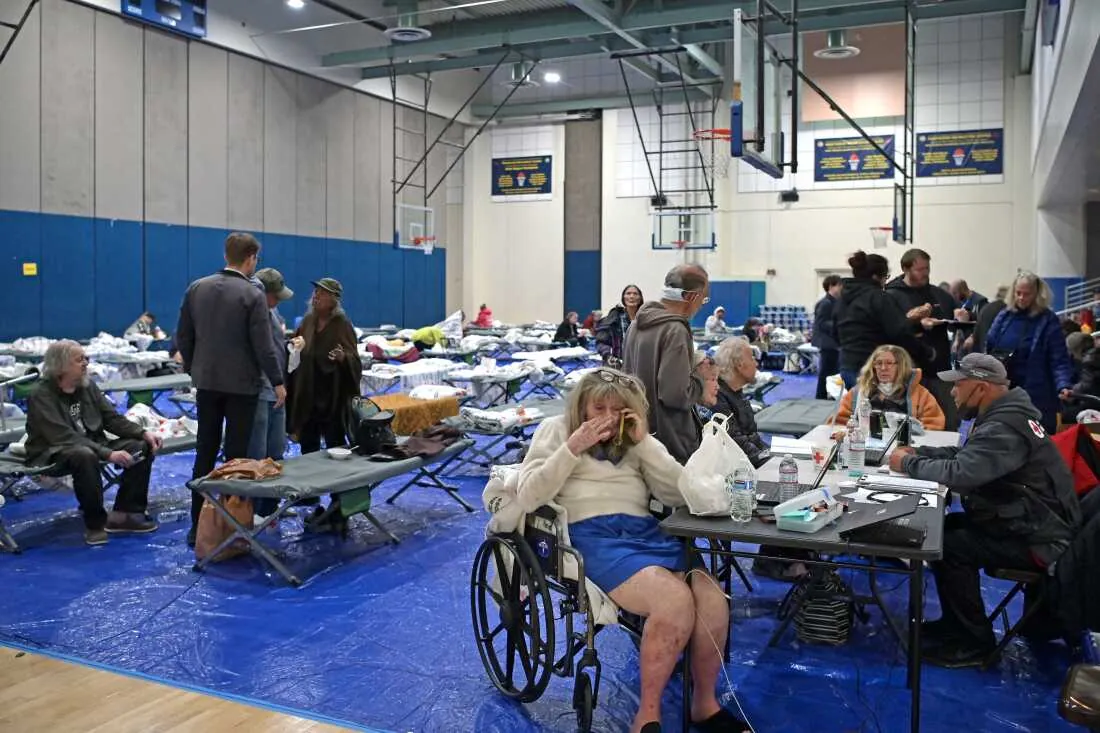
CalMatters also pointed back to a 2019 California state audit finding that counties had not adequately assessed the needs of vulnerable populations or pre-arranged evacuation assistance. [3] That is not a family’s failure alone. Counties, alert systems, transportation networks, facility operators, neighbors, and relatives all touch the outcome. But for the adult child waiting for a cleaner official system before making a plan, the lesson is uncomfortable: the gap has been documented before, and the fire will not wait for agencies to finish closing it.
The broader fire-risk data also pushes in the same direction, though it must be used carefully. The U.S. Fire Administration and FEMA report that adults 65 and older had 2.5 times the general population’s risk of dying in a fire in 2023, while adults 85 and older had 3.4 times the risk. The agency also reports that the 10-year fire death rate trend for older adults increased 26%. [4] Those are fire-death statistics generally, not wildfire-specific mortality counts. They still help explain why wildfire evacuation cannot be planned as if age were a minor detail.
The deadly delay usually starts before the evacuation order
The mechanism is not mysterious. A 2023 scoping review on disaster preparedness among older adults found that older adults are less likely to receive disaster warnings and more likely to face life-threatening evacuation challenges. The same review noted evidence from one wildfire study that fatalities were reduced when communities supported their older adults. [5]
That should change the way families hear the word “plan.” A plan is not proof that someone once bought bottled water. It is a support system built around predictable failure points: the warning that is missed, the phone that is on silent, the car that is not available, the parent who does not want to be a burden, the caregiver who assumes a neighbor will check, the neighbor who assumes family already did.
Warnings are especially fragile for older adults who live alone, have hearing loss, do not use smartphones comfortably, distrust automated messages, speak a different primary language from the alert, or are used to waiting for a more authoritative instruction. Evacuation itself can be just as fragile. A person who walks slowly may need help getting from bedroom to driveway. A person with cognitive impairment may resist leaving. A person who depends on oxygen or refrigerated medication cannot simply “grab essentials” after the street is already filling with cars.
This is why community support is not a sentimental extra. It is the thing that turns a broadcast warning into a knock on the door, a ride in the driveway, a second person checking the medication list, and a decision made while evacuation is still physically possible.
The decision rule that prevents the worst scramble
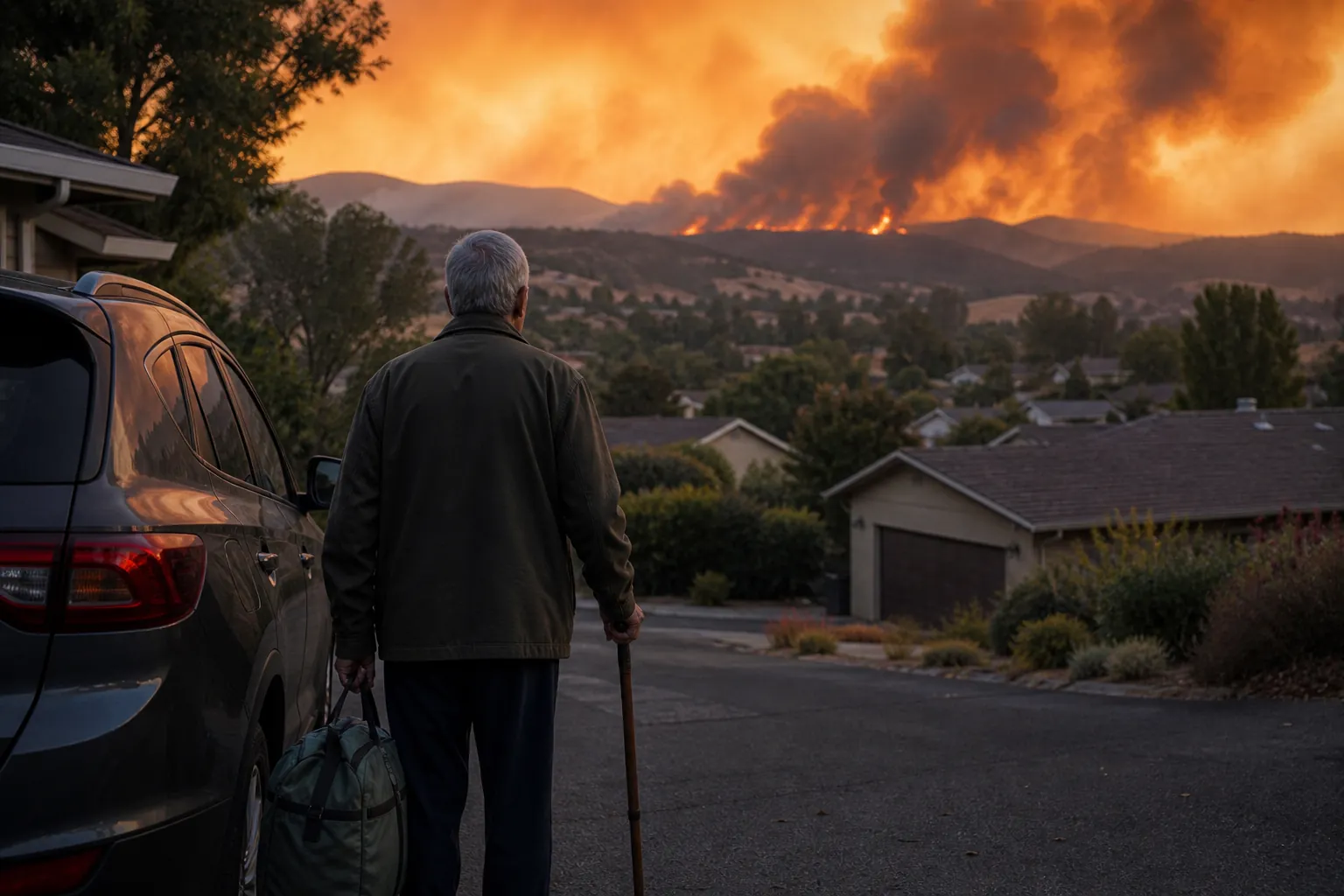
Alameda County’s guidance for older adults is blunt in the way wildfire planning needs to be blunt: older adults may evacuate during warnings, and no one should wait to be told to leave an unsafe situation. [6]
That is the behavior many families need permission to adopt. The evacuation order is not the first moment to move a frail parent; it is often the last official moment when everyone else is trying to move too. For older adults with mobility, medical, sensory, or cognitive limits, the safer trigger is earlier: leave when the area enters a warning stage, when smoke is worsening, when a red-flag day aligns with nearby fire activity, or when the person helping them cannot guarantee rapid departure later.
If your family needs a practical way to make that threshold less negotiable, use a leave-one-level-early evacuation trigger. The value of leaving early is not that every warning becomes a disaster. It is that the false alarm costs less than the late exit.
A real plan names people, not just supplies
Preparedness articles often drift into gear lists because gear is easier to discuss than responsibility. Gear matters. But in the fatal pattern visible after major fires, the more important question is often whether anyone was assigned to notice, call, insist, drive, lift, carry, translate, unlock, or return for the pet carrier before the road became dangerous.
For an older adult in a wildfire-risk area, “planned” should mean these roles have names attached before the season starts:
- One person monitors official alerts and local fire conditions, including at night.
- One person calls the older adult when a warning, smoke change, or nearby fire makes early departure reasonable.
- One person is responsible for transportation, with a backup if the first driver is at work, out of town, or blocked by road closures.
- One person knows how to help with walkers, wheelchairs, oxygen equipment, hearing aids, medication, pets, and any cognitive or communication needs.
- One person checks the home if contact fails, without assuming silence means everything is fine.
- One person has authority to say, “We are leaving now,” while the situation is still a warning rather than a rescue.
Each role can be handled by an adult child, neighbor, friend, caregiver, faith-community contact, building manager, or a rotating pair. The important part is that the role is not left to the kindest nearby person to improvise under smoke. If your family has not assigned those roles yet, start with a named-helper wildfire evacuation plan for an aging parent and write down the backup names, not just the ideal names.
Alerts: one channel is not enough
Because older adults are less likely to receive disaster warnings, alert planning has to be redundant. A smartphone alert alone is weak if the phone is in another room, muted, not charged, or unfamiliar. Families should combine official county alerts, phone calls from named helpers, weather-radio or local broadcast habits where appropriate, neighbor checks, and a rule that no one waits for a single perfect message before acting.
Transportation: the plan fails where the walker meets the car
Transportation is not solved by saying “we’ll pick her up.” Which vehicle fits the walker? Can the older adult transfer into it quickly? Is there room for oxygen, a pet, and the emergency bag? Who drives if the adult child is on the wrong side of a closure? Is there a neighbor who can leave earlier because they live closer? These are not small details. They are the minutes families later wish they had not spent figuring out in the driveway.
Supplies: pack for the first day of functioning, not for a perfect emergency
The emergency bag should make departure faster, not heavier. Medications, a current medication list, glasses, hearing-aid batteries or chargers, phone chargers, mobility-device accessories, copies of key documents, pet supplies, water, clothing, and basic hygiene items belong where a helper can find them. For the detailed build-out, use a senior-specific wildfire evacuation preparedness checklist or a home-focused wildfire evacuation checklist for seniors. The checklist is the tool; the earlier decision to use it is what keeps the bag from becoming another thing no one can locate.
Smoke and heat can make “stay or go” less obvious
Early evacuation is the safer default for many older adults in wildfire paths, but not every hazardous day presents the same choice. Smoke can make sheltering indoors temporarily safer than entering traffic for someone with severe respiratory illness. Extreme heat can make both home and evacuation routes risky. Medical equipment, power loss, road closures, and shelter availability can all change the balance.
That is why families should decide in advance what conditions push the plan toward departure and what conditions make short-term indoor protection necessary. Use a two-track smoke and evacuation plan for days when air quality is deteriorating, and weigh heat risk with a stay-vs-go plan for wildfire smoke and heat. If sheltering is part of the plan, prepare the home for smoke before the event with steps to protect a parent’s home from wildfire smoke.
What “planned” should mean before the season starts
No family can guarantee a wildfire outcome. Roads close, fires move faster than expected, alerts fail, power goes out, and public systems have obligations that private households cannot replace. It would be dishonest to say every death is preventable by better family planning.
But the recurring victim profile is too consistent to treat as bad luck alone. Older adults are overrepresented in the deadliest fire accounts. The mechanisms are known: missed warnings, delayed departure, mobility limits, health needs, social isolation, and lack of pre-arranged assistance. The behavior that improves the odds is concrete enough to begin before the smoke column appears.
If no one is named to call, drive, check the house, handle mobility needs, monitor alerts, manage medications and pets, and decide to leave at the warning stage, the family does not yet have an evacuation plan. It has a hope that everyone will become organized at the worst possible moment.
References
- Many Camp Fire victims were elderly. Could they have been saved? — Los Angeles Times, February 9, 2019.
- Paradise Redux: Five Years After the Camp Fire — Places Journal.
- California wildfires emergency preparedness — CalMatters, February 2025.
- Older Adults — U.S. Fire Administration / FEMA.
- Disaster Preparedness Among Older Adults: A Scoping Review — PMC, 2023.
- Older Adults — Alameda County.
Related reading
Noticed something outdated or inaccurate on this page? Flag a correction. We review every report against CDC, NIA, and AARP HomeFit guidance before updating a page.
Part of the Fall Prevention section.