
STEADI: Intervene
Emergency Evacuation Plan Checklist for Elderly Parents
Most emergency plans for older adults fail because they assume independence and are never practiced. This checklist shows caregivers how to assign every evacuation step to a named helper with a backup, cover shelter-in-place and evacuate scenarios, and rehearse the plan twice a year so it works when it is needed.
Most emergency plans for older parents do not fail because there was no flashlight in the closet. They fail at the handoff: the spare key is with the wrong person, the phone is dead, the medication list is out of date, the neighbor who was supposed to drive is out of town, or the parent is trying not to “bother anyone” while the situation gets worse.
So the useful version of an emergency evacuation plan checklist for elderly parents starts with a harder question than “Do they have supplies?” If the evacuation day were today, who does what, in what order, and who takes over if the first person cannot?
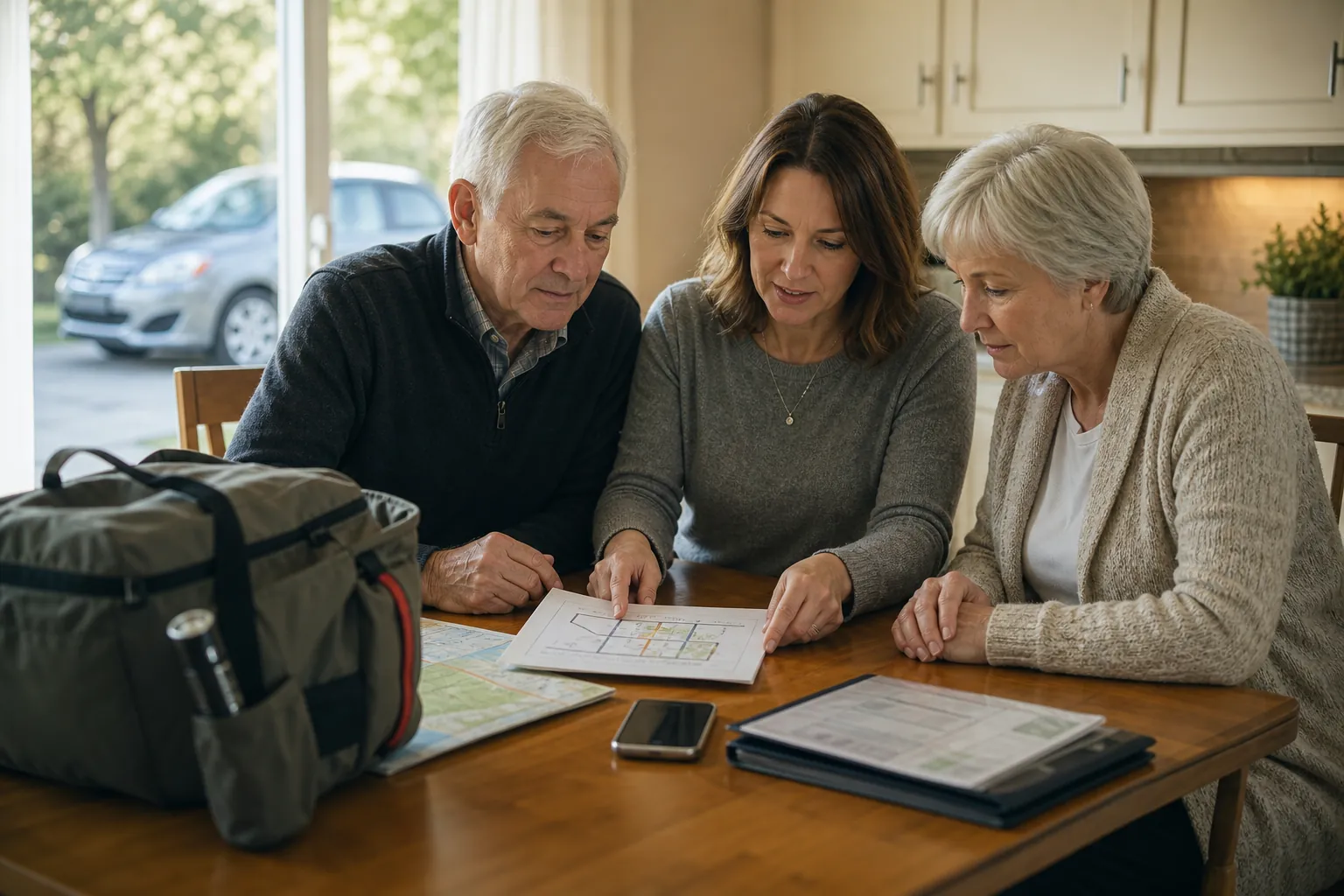
The checklist, before the details
Ready.gov’s older-adult guidance puts the work in three plain steps: assess needs, make a plan, and engage a support network. That is the right order. A caregiver cannot assign help until the actual needs are named, and a parent cannot rely on a network that has never been asked, given a key, or shown where anything is kept. [1]
Use this as the master worksheet. The blanks matter. A task without a named owner is still just a hope.
| Planning piece | What must be written down | Primary helper | Backup helper |
|---|---|---|---|
| Needs assessment | Mobility, medications, equipment, cognition, pets, communication, transportation, and daily-care needs | Name and phone | Name and phone |
| Shelter-in-place branch | What happens if your parent stays home for several days: food, water, medication, power, phone charging, bathroom safety, check-ins, and when staying home stops being safe | Name and phone | Name and phone |
| Evacuation branch | Who calls, who drives, what route is used, what goes in the car, where your parent goes first, and what happens if the first route or driver is unavailable | Name and phone | Name and phone |
| Medication and medical equipment | Medication supply target, refill plan, prescribing doctor, pharmacy, equipment instructions, batteries, chargers, and oxygen or lifesaving-equipment details if applicable | Name and phone | Name and phone |
| Documents | Paper packet location, waterproof copy location, cloud copy location, and who is authorized to access them | Name and phone | Name and phone |
| Communication | Who your parent contacts first, who contacts other relatives, the out-of-state contact, and the short emergency text your parent can send | Name and phone | Name and phone |
| Transportation | Driver, backup driver, vehicle, fuel plan, mobility-equipment loading plan, rideshare or community-transport backup if realistic | Name and phone | Name and phone |
| Home shutoff and lockup | Who knows how to shut off utilities if instructed, who locks the house, who takes the key, and who confirms the house is empty | Name and phone | Name and phone |
| Practice drill | Date of last drill, what failed, what changed, and date of next drill | Name and phone | Name and phone |
Assess what your parent cannot safely improvise
This is the part people skip because it feels personal. Do not skip it. The plan has to account for the parent who moves slowly in the dark, forgets the name of a medication under stress, cannot lift the walker into a trunk, does not hear weather alerts, or insists they are fine because they do not want to be trouble.
The gap between feeling prepared and being able to act is not small. In a July 2023 AARP/NORC survey reported by AARP, roughly two-thirds of adults age 50 and older said they felt prepared for a natural disaster, but fewer than one-third had created the emergency plan FEMA considers vital. About 1 in 3 did not have extra prescription medication, almost half did not have emergency phone chargers, and only 12 percent followed local authorities on social media. [2]
A caregiver’s assessment should be blunt and specific:
- Mobility: Can your parent get from bed to door without help? Can they manage steps, smoke, darkness, rain, ice, or a crowded shelter?
- Vision and hearing: Will they hear an alert at night? Can they read a paper instruction sheet without glasses? Are hearing-aid batteries or chargers packed?
- Cognition and stress response: If they are tired, afraid, or confused, will they follow a written plan, wait for a caller, or wander into problem-solving on their own?
- Medication and equipment: Which medicines cannot be missed? Which devices need electricity, batteries, distilled water, oxygen, refrigeration, or help to operate?
- Transportation: Who can physically get them into a car, load mobility equipment, and drive a route that may be slow or changed?
- Pets: Who takes the pet, carrier, leash, food, vaccination paperwork, and medications?
- Money and access: Does your parent have cash, cards, ID, house keys, car keys, and the ability to pay if electronic systems are down?
- Home risks: Which exits are usable? Where are flashlights? Who can shut off utilities if local officials instruct residents to do so?
Write the answers as if a neighbor, cousin, or paid aide might need to step in without a family meeting first. “Mom knows where it is” is not an answer. “Medication list is taped inside the red folder in the top kitchen drawer, and Lena has the cloud copy” is an answer.
Assign every job to a named helper and a named backup
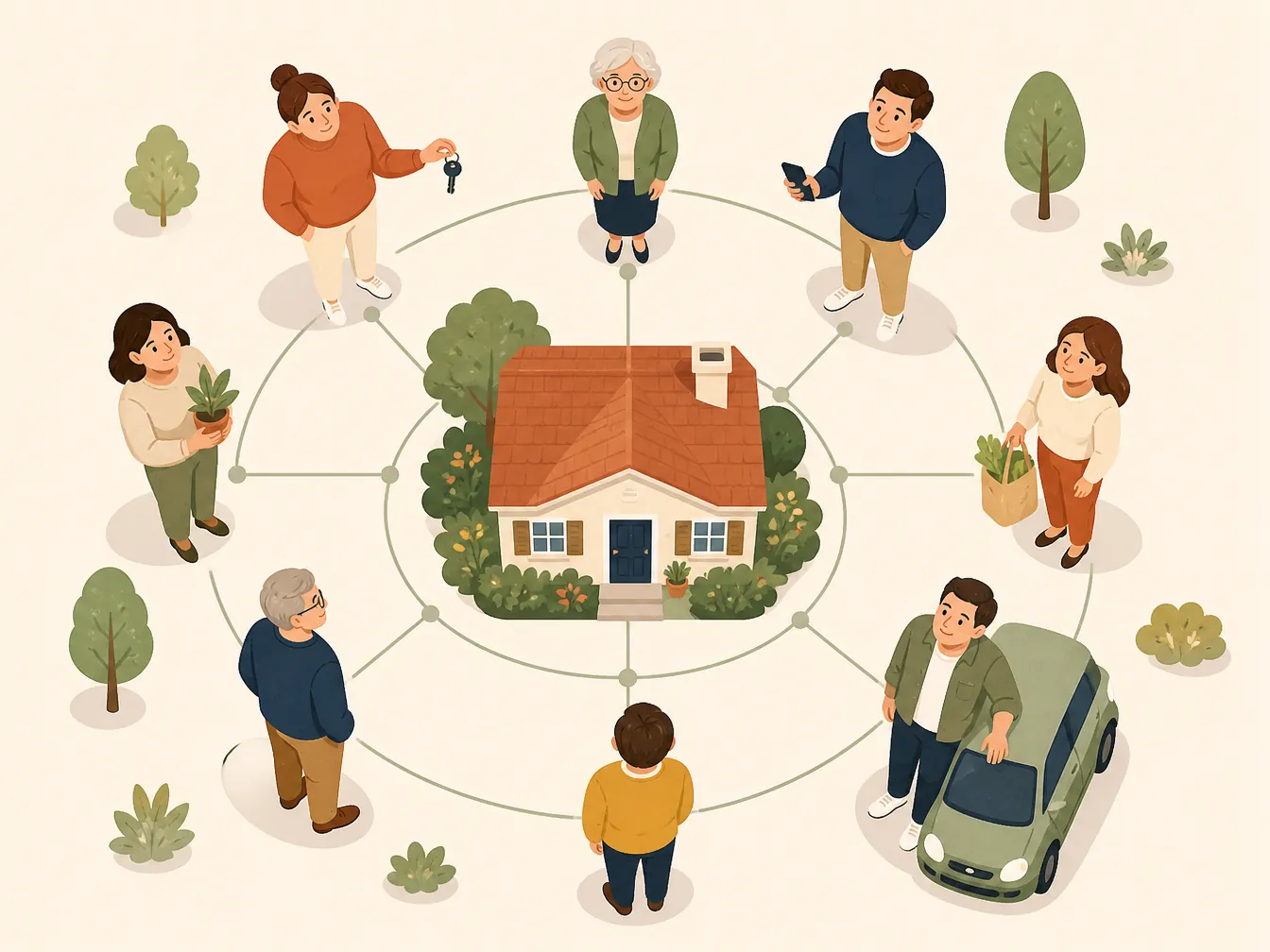
The support network is not a contact list. It is a job list with people attached. Ready.gov says at least one support-network member should have an extra key, know where emergency supplies are kept, and know how to use lifesaving equipment or administer medicine. [1]
That is the minimum. For an older parent, especially one living alone or with a spouse who also needs help, one person is not enough. Every job needs a primary helper and a backup because disasters are inconsiderate about work meetings, dead phones, closed roads, and people being out of town.
| Job | What the helper is responsible for | What to verify now |
|---|---|---|
| First caller | Calls your parent when an alert or evacuation order affects the home | They have your parent’s landline and cell number, and your parent recognizes the number |
| In-person checker | Goes to the home if your parent does not answer or sounds confused | They have a key, alarm code, and permission to enter |
| Driver | Picks up your parent and takes them to the first destination | They can lift or load the walker, cane, wheelchair, oxygen, pet carrier, and go-bag |
| Backup driver | Takes over if the first driver is unavailable or roads block the first route | They know the route, destination, and where the supplies are |
| Medication lead | Checks that medications, medication list, equipment, chargers, and medical paperwork leave with your parent | They know the pharmacy, doctor, refill process, and emergency supply location |
| Document lead | Brings ID, insurance cards, legal papers, emergency contacts, and copies of key documents | They know the paper location and have cloud access if appropriate |
| Pet lead | Loads the pet, carrier, leash, food, medication, and paperwork | They know which shelters or relatives can accept the pet |
| Utility and lockup lead | Turns off utilities only if instructed by local officials, locks doors, and confirms the home is empty | They know shutoff locations and do not guess under pressure |
| Family communicator | Updates siblings, relatives, and other concerned people so the driver is not answering ten calls | They have the group text list and the out-of-state contact |
| Out-of-state contact | Receives status updates if local calls are overloaded or relatives are scattered | Everyone knows this person’s number and role |
Do not write “neighbors” or “kids” in these boxes. Write names. If the named person has not agreed, the job is not assigned. If the backup does not know they are the backup, the job is not backed up.
For long-distance caregivers, this is where the plan either becomes real or stays decorative. You may be the organizer, but you cannot be the person who unlocks the door from three states away. Build the local layer first: neighbor, nearby relative, building manager, faith-community contact, home-care aide, or trusted friend. Then give that person written authority where appropriate, not just emotional expectation.
Write the shelter-in-place branch as its own plan
Sheltering at home is not the lazy version of evacuating. It is a separate branch with its own supplies, triggers, and helpers. The Red Cross tells older adults to plan for either staying home for at least two weeks or evacuating, and to refresh plans, supplies, and documents every six months. [3]
Start with the condition that makes staying home reasonable: the home is structurally safe, the parent can move safely inside, medications and essential equipment are usable, temperatures are safe enough, water and sanitation are manageable, and a helper can check in. If one of those fails, the shelter-in-place branch should say who reconsiders the decision and who starts the evacuation branch.
The stay-home branch should include
- Check-in schedule: who calls or visits in the morning and evening, and what happens if your parent does not answer.
- Power plan: how phones, hearing aids, medical devices, flashlights, and mobility-equipment batteries stay charged.
- Food and water plan: what is safe and easy for your parent to open, prepare, and eat without normal utilities.
- Medication plan: where medications are, which ones cannot be missed, and who checks supply before a known storm or outage.
- Bathroom and fall-safety plan: lighting, clear paths, grab bars, commode supplies if used, and a rule against carrying heavy water containers through dark rooms.
- Temperature plan: where your parent goes in the home during heat or cold, and when the home is no longer safe.
- Information plan: which local alerts, radio station, emergency-management office, or local authority your helper follows.
- Exit trigger: the specific conditions that move the plan from “stay” to “leave,” such as no safe temperature, no working medical equipment, flooding, fire risk, blocked caregiver access, or an official evacuation order.
The supply details belong in one place, not scattered through everyone’s memory. If you need a separate supply list, use a stay-home bin and go-bag approach like the one in this senior emergency kit checklist. For power-specific fall risks, add the home checks from the power outage fall-prevention checklist.
Write the evacuation branch in full
An evacuation branch is not “we’ll go to my sister’s.” It is a sequence. FEMA’s evacuation guidance, as summarized by AARP, includes mapping routes with a paper-map backup, keeping a full tank of gas, arranging rides with friends if there is no car, choosing a family meeting place, and learning how to shut off utilities. [2]
Write the branch so someone can act from the top down:
- Trigger: Name what starts the evacuation branch. It may be an official evacuation order, smoke conditions, loss of safe indoor temperature, flooding risk, medical-equipment failure, or a caregiver’s inability to reach the home.
- First call: The first caller contacts your parent with one clear instruction: “Put on your shoes, take your phone, and sit by the front door. Paul is coming.”
- In-person check: If your parent does not answer, sounds disoriented, or says they are staying despite the trigger, the in-person checker goes to the home or calls emergency services if entry is unsafe.
- Load order: The driver loads your parent first if conditions are deteriorating, then mobility equipment, medications, documents, phone and charger, glasses, hearing aids, wallet, keys, clothing layer, and pet supplies.
- Route: The driver follows Route A unless blocked, then Route B. A paper map stays in the vehicle or go-bag because phone service and batteries are not guaranteed.
- Destination: Name the first destination, second destination, and out-of-area destination. Include full addresses, phone numbers, pet rules, accessibility limits, and who confirms availability.
- Family update: The family communicator sends one group update after your parent is in the car, then again after arrival. The driver should not be the switchboard.
- Home closeout: The utility and lockup lead handles shutoff only if local officials instruct it, locks the home if safe, and confirms no person or pet remains inside.
- Backup transfer: If the first driver cannot arrive by the agreed time or the first route is blocked, the backup driver or alternate destination takes over without waiting for another family debate.
The wording should be simple enough for panic. A parent who is frightened, short of breath, or embarrassed about needing help should not have to interpret a paragraph. Use direct lines: “Go to the front door.” “Bring the red folder.” “Do not wait for another call if Maria arrives.”
If your parent no longer drives, do not leave transportation as “call someone.” Put the ride in writing: primary driver, backup driver, vehicle type, mobility-equipment fit, pet fit, and what happens if neither driver can get there. If local paratransit, a county emergency program, or a building evacuation list exists, verify the rules locally; those programs are not the same everywhere.
For hazard-specific details, keep this master plan and then attach the relevant hazard checklist. A hurricane plan may need window, flood, and fuel timing from the hurricane safety checklist for seniors. A wildfire plan should add smoke, air-quality, and route decisions from the wildfire smoke and evacuation guide. A tornado plan needs a short-lead-time sheltering branch like the tornado warning checklist for seniors and caregivers.
Handle medications, documents, and communication as safeguards
Medication guidance varies by source, so do not pretend there is one universal number. The Red Cross says older adults should keep at least 30 days of medications. The CDC recommends at least a one-week supply of prescription medicines in an emergency kit. AARP’s FEMA preparedness article describes a minimum three-day medication supply for evacuation kits, and WVU suggests asking a doctor about keeping an extra week on hand. [3][4][2][5]
For a real household, the action is to choose the highest safe and practical target your parent’s prescriptions, insurance, storage rules, and doctor will allow. Then write down who checks it, when it is rotated, and what happens when a refill is blocked. A 30-day goal is useless if the extra pills expired two years ago or sit in a cabinet nobody can find.
The medication packet should include:
- Current medication name, dose, timing, prescribing doctor, and pharmacy
- Allergies and serious diagnoses
- Medical-equipment instructions, model names, batteries, chargers, and oxygen information if used
- Insurance cards, Medicare or Medicaid information if applicable, photo ID, emergency contacts, and advance-directive or health-care proxy documents if your parent has them
- Doctor, pharmacy, home-health agency, durable-medical-equipment supplier, and preferred hospital information
Paper still matters. AARP’s caregiver guidance recommends keeping written numbers in several places because memory can fail under stress, naming an out-of-state contact, teaching a short “IMOK” text, and storing digital copies of documents in the cloud. [6]
Use all of that, not just one version. Keep a waterproof paper packet in the go-bag, a second paper copy with a nearby helper, and cloud copies accessible to the person who may have to solve a pharmacy or shelter problem from a distance. Put phone numbers on paper near the landline, in the go-bag, on the refrigerator, and in the document packet. Phones are wonderful until they are locked, lost, wet, or dead.
The emergency text should be short enough to send with shaky hands. “IMOK” works if everyone already knows it means “I’m OK.” If your family prefers another phrase, use that. The important part is that your parent practices sending it and the family knows not to reply with a dozen separate questions.
If your parent lives in a facility, ask operational questions
Assisted living, independent living, memory care, and nursing facilities should already have emergency procedures, but a caregiver still needs the practical version. Ask who decides to evacuate, where residents go, how families are notified, how medications travel, how mobility devices are labeled, what happens during a power outage, and whether the facility has your current emergency contacts. AARP’s caregiver guidance includes facility planning as part of emergency preparation for loved ones. [6]
Then add the facility’s answers to your family plan. Do not assume the front desk will have time to explain the process during a regional evacuation. That is exactly when everyone else’s adult children are calling too.
Practice the plan every six months
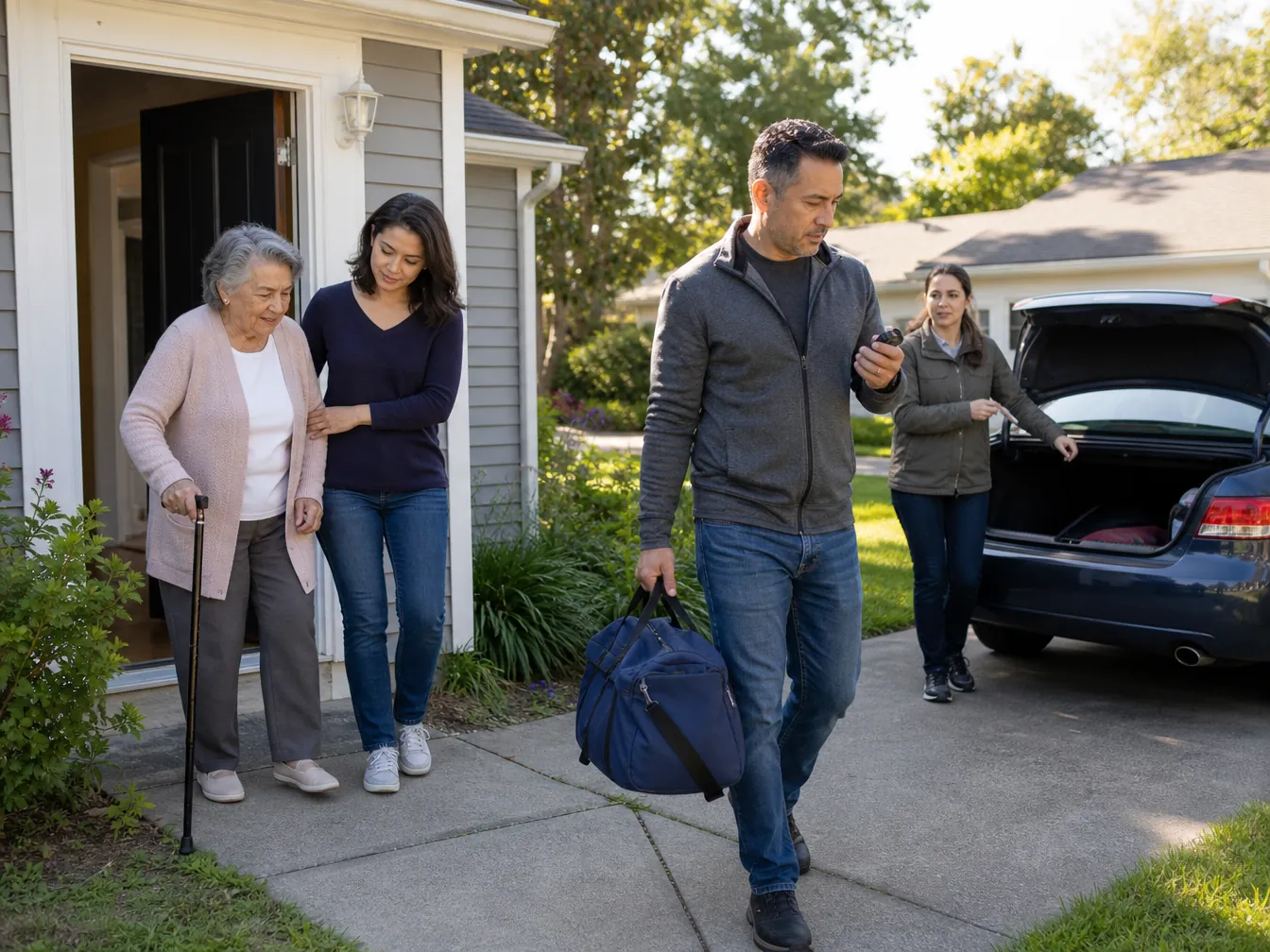
Ready.gov tells households to document and practice their emergency plan, and the Red Cross tells older adults to refresh their plan, supplies, and documents every six months. [7][3]
Practice is where polite assumptions die usefully. The cane is not by the bed. The go-bag is too heavy. The driver cannot fold the walker. The hearing aids are charging in a different room. The paper map is still in the glove box of the car that is at work. Better to find that out on a Saturday morning than during smoke, sirens, rising water, or a midnight outage.
Run the drill in four passes
- Desk check: Sit with the written plan and call every primary helper and backup. Confirm phone numbers, keys, destination addresses, pet arrangements, medication locations, and document access.
- Communication check: Have your parent receive the first-call instruction, place the return call, and send the short emergency text. If they cannot do it, assign that task to a helper instead of pretending repetition will fix it.
- Shelter-in-place check: Walk through one day without normal assumptions. Where is the phone charger? Can your parent reach food, water, flashlight, medication, glasses, hearing aids, and bathroom supplies safely?
- Evacuation check: Start at the door, load the bag, load mobility equipment, get your parent into the vehicle, drive the first few turns of Route A, and confirm the backup route on paper.
Time the evacuation check if timing matters for your parent’s condition, but do not turn it into a race. The point is not speed for its own sake. The point is to see where help is needed, who provides it, and what has to move earlier in the sequence.
After the drill, change the plan immediately. Do not leave the corrections in someone’s head. If the backup driver could not find the folder, move the folder or change the instructions. If the go-bag was too heavy, split it. If your parent froze when asked to gather items, stop asking them to gather items; assign that to the medication or document lead.
Put the next drill on the calendar before everyone leaves. Twice a year is often enough to catch expired supplies, changed prescriptions, new mobility limits, disconnected phone numbers, and helpers whose lives have changed. It is also often enough for the plan to feel familiar when the real call comes.
Test the plan against today
Before you call the plan finished, run it against two ordinary bad days. Do not imagine the most cinematic disaster. Imagine the one that exposes weak handoffs.
- Scenario 1: Your parent must stay home for several days. The power is unreliable, the cell phone battery is low, and you are not nearby. Who checks in? Who knows whether the house is still safe? Who confirms medication, food, water, temperature, bathroom safety, and charging? Who decides when staying home has become the wrong branch?
- Scenario 2: Your parent must leave quickly. The first helper does not answer. The usual route is blocked. Your parent is anxious and cannot remember where the medication list is. Who takes over? Who has the key? Who drives? Who brings the red folder, phone charger, mobility equipment, and pet supplies? Who tells the rest of the family where your parent is going?
If any answer is “someone,” the plan is not done. If any answer depends on your parent improvising while frightened or exhausted, rewrite that step. A plan is real only when another person can execute each part without guessing, and the household has already rehearsed both the stay-home and evacuation branches twice a year.
References
- Older Adults, Ready.gov
- Older Adults Need a Disaster Plan, FEMA Says, AARP
- Older Adults Emergency Preparedness, American Red Cross
- Building an Emergency Kit, CDC
- Checklist: Emergency Planning for Seniors, WVU School of Public Health
- How Caregivers Can Build Emergency Plans for Loved Ones, AARP
- Make A Plan, Ready.gov
Related reading
Noticed something outdated or inaccurate on this page? Flag a correction. We review every report against CDC, NIA, and AARP HomeFit guidance before updating a page.
Part of the Fall Prevention section.