
STEADI: intervene
Protect Elderly During Extreme Heat Warnings and Prevent Falls
Extreme heat is more than a discomfort risk for older adults—it directly increases fall danger through dehydration, medication side effects, and impaired balance. This guide explains the three heat-to-fall pathways and gives caregivers actionable steps to keep seniors safe during heat warnings.
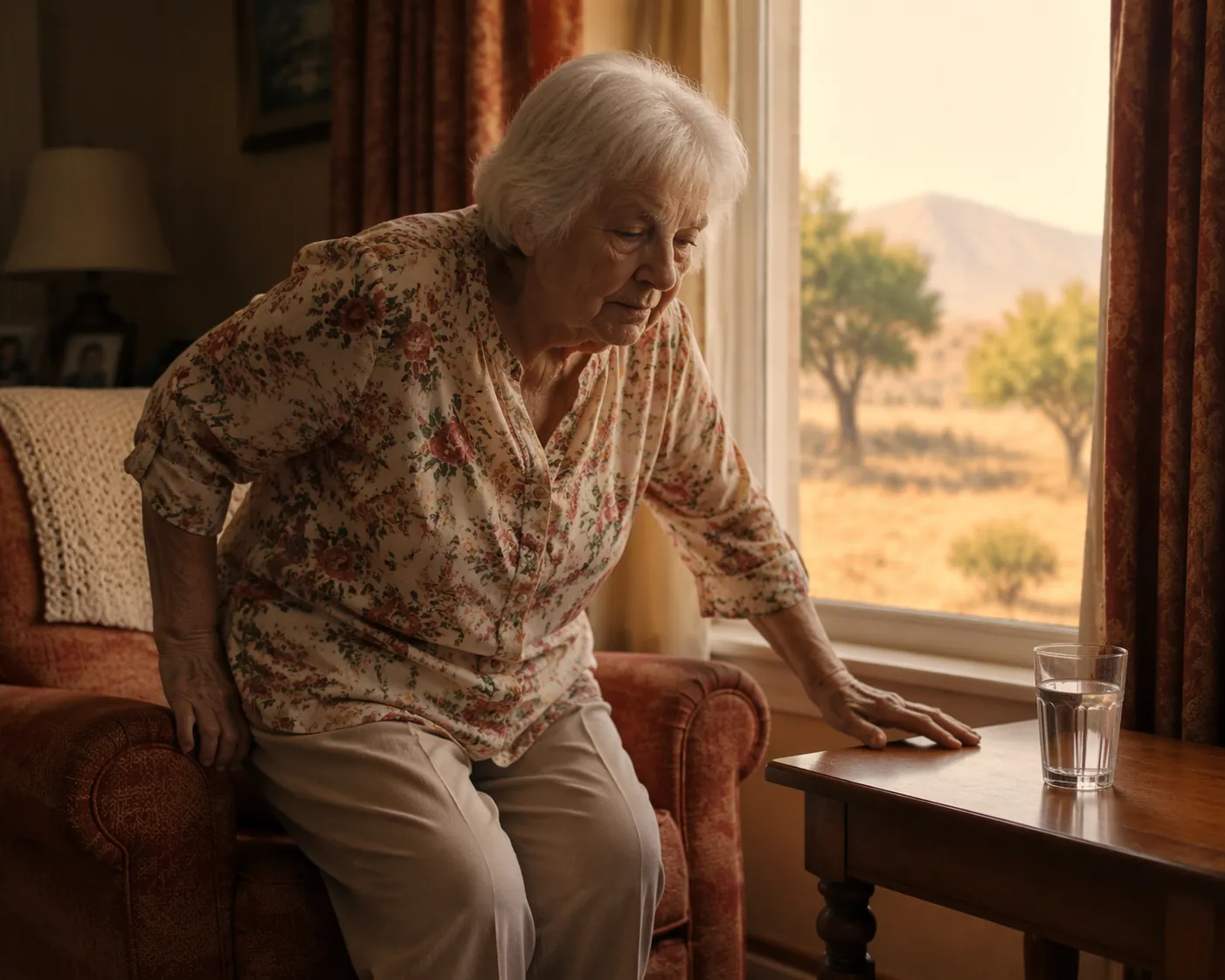
During an extreme heat warning, an older adult does not have to collapse from heatstroke for the day to become dangerous. The more ordinary scene is quieter: she stands up from a chair after sitting in a warm room, feels lightheaded, reaches for the table, and the full glass of water beside her has not been touched. At that moment, heat has already become a fall hazard.
That is the practical answer for protecting elderly people during extreme heat warnings: treat the warning as part of the fall-prevention routine, not only as weather advice. The air conditioner, the water schedule, the medication list, the bathroom path, and the decision about when to call for help all belong in the same plan.
The stakes are not small. In CDC data covering 2004 through 2018, adults 65 and older accounted for 40% of all heat-related deaths in the United States, with an annual average of 702 heat-related deaths nationally; older adults also had the highest heat-death rate of any age group. [1]
Heat Turns Small Fall Risks Into Bigger Ones
Most heat-safety advice sounds simple until it meets an older body and a real medication list. “Drink more water” is less simple when the person no longer feels thirsty. “Use a fan” is less reassuring when the room is still hot and the person is already weak. “Check on them” is too vague if nobody knows what to check.
Older adults are not just younger adults with more birthdays. CDC heat guidance notes that adults 65 and older can have reduced thirst sensitivity, impaired sweating, and chronic conditions that worsen the effects of heat. [2] Those changes matter inside a house, not just outside in direct sun.
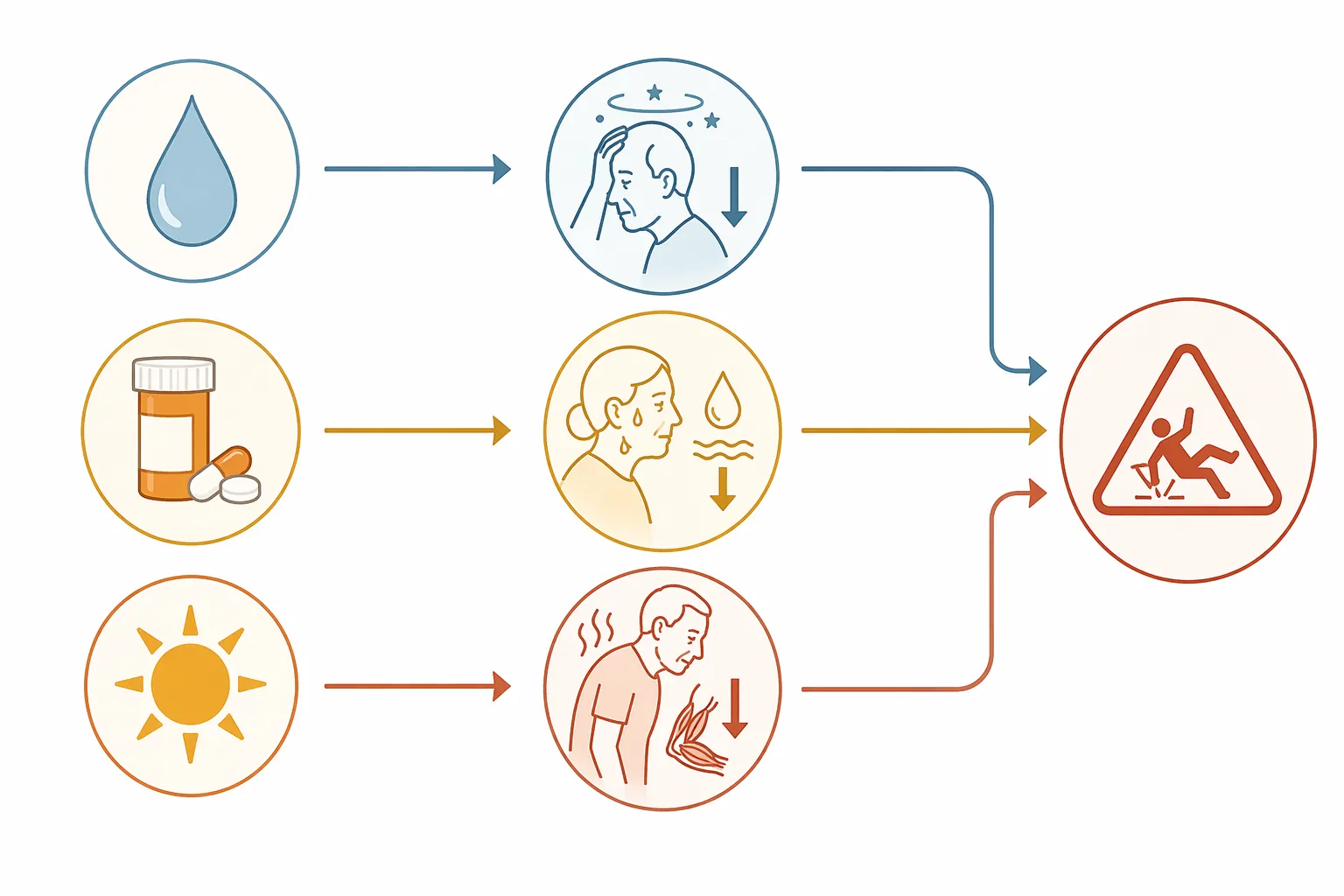
The fall risk usually travels through three pathways: dehydration, heat-sensitive medications, and cumulative heat exposure. They can overlap. A parent can be mildly dehydrated, taking a diuretic, and tired from a warm bedroom at the same time. That combination is exactly why a heat warning deserves the same attention as a loose rug or a dark hallway.
Pathway One: Dehydration, Dizziness, and Standing Up
Dehydration is not only a heat illness issue. It can become a balance issue. When fluid volume drops, standing up can bring dizziness or orthostatic hypotension: the familiar moment when blood pressure does not adjust quickly enough and the person feels faint, wobbly, or suddenly unsure of their legs.
One study in Mayo Clinic Proceedings followed a retrospective cohort of 10,211 older adults with a mean age of 76.7. At baseline, 37.9% were dehydrated, and dehydration was associated with 13% increased odds of falls. The study is useful because it connects hydration status to falls in older adults, but it should not be stretched beyond what it shows: it was one retrospective cohort from a Midwestern health system, 94.6% white non-Hispanic, and the result is an association rather than proof that dehydration directly caused each fall. [3]
For a caregiver, the important part is that thirst is a weak safety alarm in many older adults. If the water glass stays full all morning, that is not evidence that the person is fine. It may mean nobody has made drinking visible, routine, and easy enough.
Make Hydration Observable
A hydration plan during an extreme heat warning should be something a caregiver can verify without guessing. The goal is not to force large amounts of fluid at once. It is to notice whether drinking is actually happening.
- Set out a measured bottle, pitcher, or cup system in the morning so the remaining amount tells the truth.
- Offer small drinks regularly rather than waiting for the older adult to ask.
- Watch for water avoidance because of bathroom trips; that is a fall-prevention problem, not stubbornness.
- Keep the route to the bathroom clear, well lit, and free of rugs or cords before encouraging more fluids.
- Ask the clinician or pharmacist about fluid limits if the person has been told to restrict fluids for a medical condition.
The bathroom point is easy to miss. An older adult may skip water because more drinking means more standing, more walking, and more urgency. If the path from chair to bathroom is cluttered, hydration advice can accidentally increase trips across a risky room. Clear the path first.
Pathway Two: Medications That Make Heat Harder to Handle
The right question is not whether medicine is “bad” in the heat. The question is whether any medicine on the list can interfere with sweating, fluid balance, alertness, or blood pressure during hot weather. That is a pharmacist question, and it is best asked before the warning arrives.
AARP’s heat-and-medication guidance, updated in July 2026, names several drug categories that can be a problem in hot weather, including heart medications such as beta blockers and diuretics, antidepressants such as SSRIs, SNRIs, and TCAs, antipsychotics, anticholinergics, and antihistamines. [4]
The fall connection is practical. A diuretic may contribute to volume depletion. A drug with anticholinergic effects may reduce sweating or add confusion. Some medications can contribute to sedation or slower reaction time. In the Hamrick cohort, loop diuretics, antipsychotics, antidepressants, anticholinergics, and hypnotics were each independently associated with falls or death. [3]
| Medication question | Why it matters during heat | Caregiver action |
|---|---|---|
| Is there a diuretic or heart medication on the list? | Fluid balance and blood pressure may be harder to maintain. | Ask the pharmacist or prescriber what to watch for during heat warnings. |
| Is there an antidepressant, antipsychotic, antihistamine, anticholinergic, or sleep medicine? | Sweating, alertness, balance, or reaction time may be affected. | Confirm whether heat precautions or timing concerns apply. |
| Has anything been newly started or dose-changed? | The older adult may not yet know how the medication feels in hot weather. | Write down symptoms such as dizziness, unusual sleepiness, confusion, or weakness. |
| Is the person skipping doses to avoid side effects? | Unplanned changes can create their own risks. | Do not stop or change medication without medical advice. |
A medication review does not have to be dramatic. Put every prescription, over-the-counter medicine, sleep aid, allergy pill, and supplement in front of the pharmacist and say plainly: “There is an extreme heat warning coming. Which of these could increase dizziness, dehydration, reduced sweating, confusion, or fall risk?” That question is much more useful than asking whether the list is generally safe.
Pathway Three: Heat Fatigue and Poorer Balance
Heat does not need to cause a medical crisis before it changes movement. A warm room can wear a person down over hours. By late afternoon, the same short walk from sofa to kitchen may take more effort. Legs feel heavy. The person sits longer, rises faster because the phone rings, and reaches for furniture instead of a walker.
That is why cooling and fall-proofing belong together. Air conditioning is the primary cooling tool when it is available. Curtains, shaded rooms, cooler public spaces, and avoiding unnecessary errands during the hottest hours all matter. Fans may feel helpful in some conditions, but they should not be treated as reliable protection when the indoor environment remains very hot.
The fall-prevention version of cooling asks a different set of questions: Is the coolest room also safe to walk through? Is the path to the bathroom clear? Is the walker within reach before the person stands? Is the phone close enough that nobody has to rush across the room? Has the throw rug been moved for the heat warning, even if it usually stays there?
Before the Heat Warning: Set Up the House for a Dizzy Moment
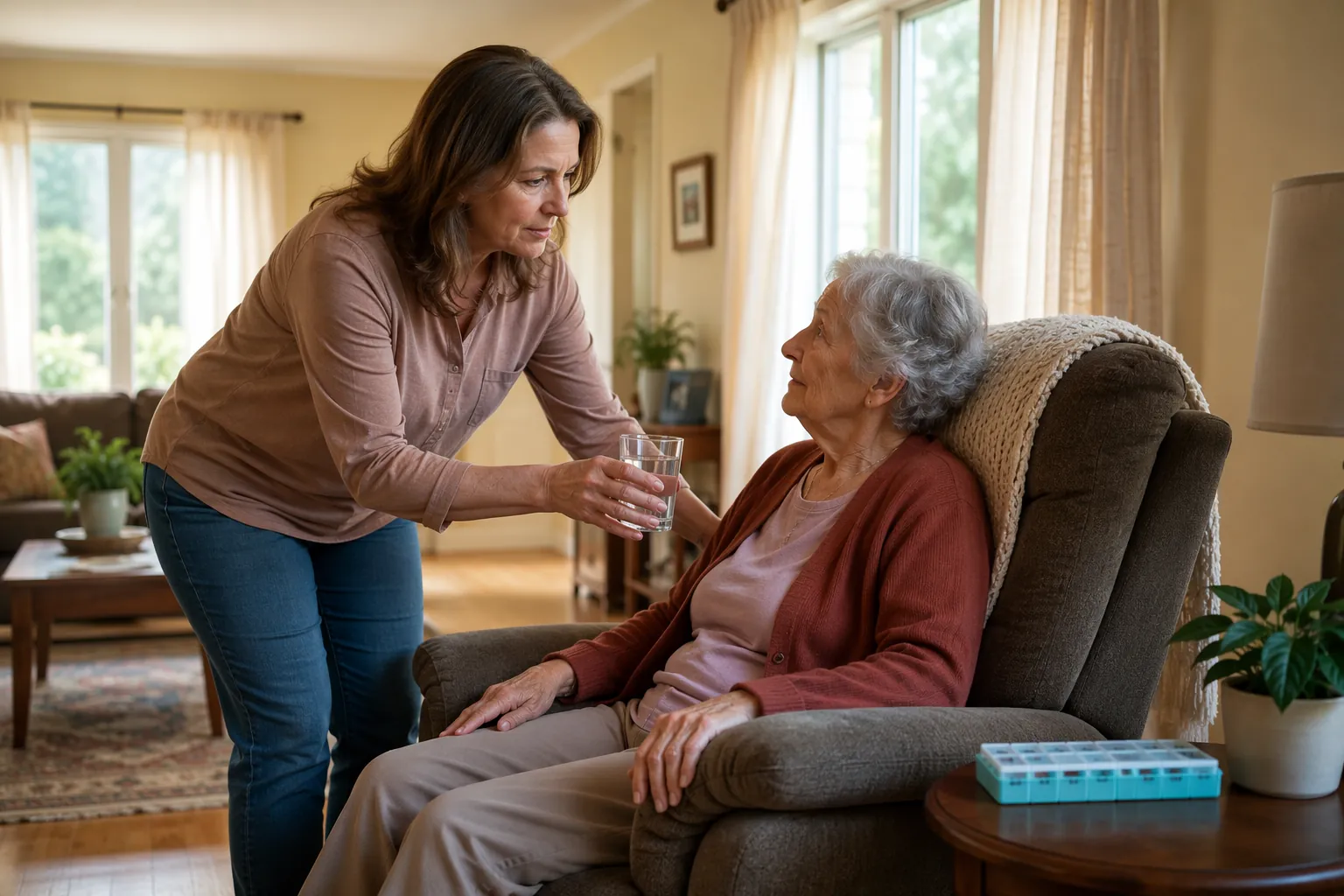
The best heat-warning work happens before the hottest hours, when nobody is already tired or arguing about the thermostat. The house should be arranged with one assumption in mind: at some point, the older adult may stand up and feel briefly lightheaded.
- Cool the main living area early, before indoor heat builds.
- Move loose rugs, shoes, laundry baskets, cords, and low tables out of walking paths.
- Put water within reach of the chair, bed, and usual meal spot.
- Place the walker, cane, glasses, phone, and hearing aids where they can be reached without standing first.
- Check that night lights or hallway lights are working, especially on the path to the bathroom.
- Confirm the medication plan with a pharmacist or prescriber if any heat-sensitive category is on the list.
If the older adult resists air conditioning, the argument should stay concrete. This is not about comfort or wasting electricity. It is about preventing dizziness, weakness, confusion, and the rushed walk to the bathroom after hours in a warm room.
During the Hottest Hours: Check What Changes
A useful check-in is not just “Are you okay?” Many older adults will say yes because they do not feel thirsty, do not want to be a bother, or do not recognize early heat strain as important. Ask about function.
- Has the water level changed since the last check?
- When standing, does she feel dizzy, weak, unusually tired, or unsteady?
- Is she using furniture for support more than usual?
- Has she avoided the bathroom because she does not want to walk there?
- Does she seem more confused, sleepy, irritable, or unlike herself?
- Is the room actually cool, or only less hot than outside?
The answer may call for a small fix: lower the room temperature, bring a drink, move a rug, stay on the phone while she walks to the bathroom, or ask a nearby person to check in. It may also mean stopping home management and getting medical help. The difference is whether the person is simply uncomfortable or showing signs that heat is affecting the brain, balance, or consciousness.
After a Near-Fall, Treat Heat as Part of the Incident
If an older adult stumbles, grabs furniture, or has to sit suddenly during a heat warning, do not file it away as “not serious” just because there was no injury. Write down the time, room temperature if known, what she had drunk, when she last ate, recent medication timing, and what she felt when standing.
Those details make the follow-up conversation better. “She fell last summer” is vague. “She became lightheaded standing from the recliner at 4 p.m. during a heat warning after drinking very little, while taking a diuretic” gives a clinician or pharmacist something to work with.
The record also protects the caregiver from false reassurance. A near-fall is not proof that heat caused the problem, but it is a signal that the next heat warning should start with hydration tracking, medication review, cooling, and cleared walking paths already in place.
When to Escalate
Some heat problems are not home-management problems. If an older adult has a body temperature of 104°F or higher with confusion, altered mental status, or behavior that is clearly not normal for them, call 911 immediately.
References
- Heat-Related Deaths — United States, 2004–2018, CDC MMWR
- Heat and Older Adults, CDC
- Dehydration and Falls in Older Adults, Mayo Clinic Proceedings, 2020
- 8 types of medications that don’t mix with heat, AARP, July 2026
Related reading
Noticed something outdated or inaccurate on this page? Flag a correction. We review every report against CDC, NIA, and AARP HomeFit guidance before updating a page.
Part of the Fall Prevention section.