
How to Protect an Older Adult During an Air Quality Alert
Understand why seniors are especially vulnerable to poor air quality and learn immediate actions to take at each alert level to protect their health and prevent complications.
The air quality alert usually arrives at the least convenient moment: in a grocery store parking lot, between appointments, or while an older parent is insisting they feel perfectly fine. The phrase that matters is often easy to glide past: “unhealthy for sensitive groups.” Older adults are one of those sensitive groups under EPA AirNow guidance, along with people who have heart or lung disease, children, and people who are active outdoors.[1]
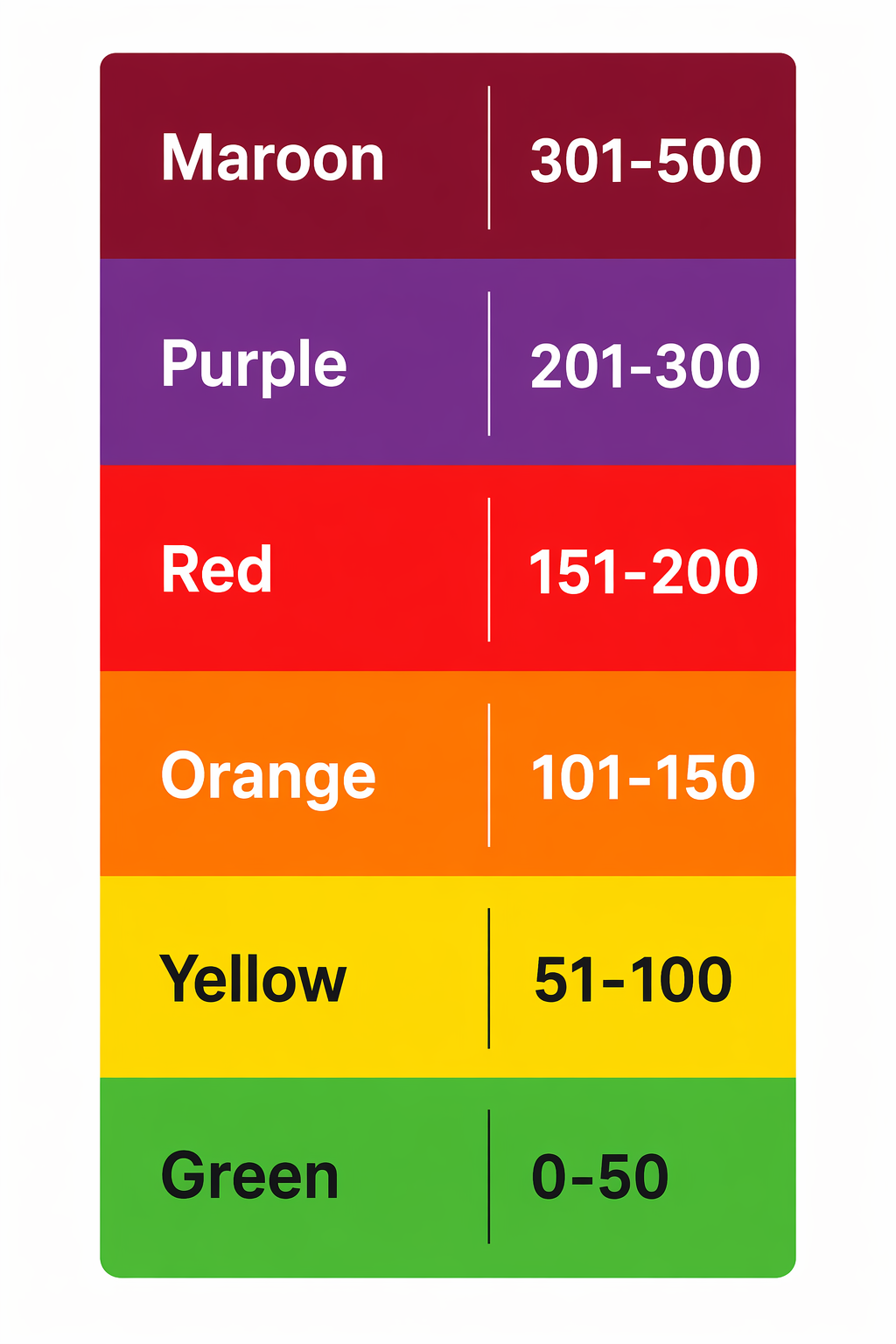
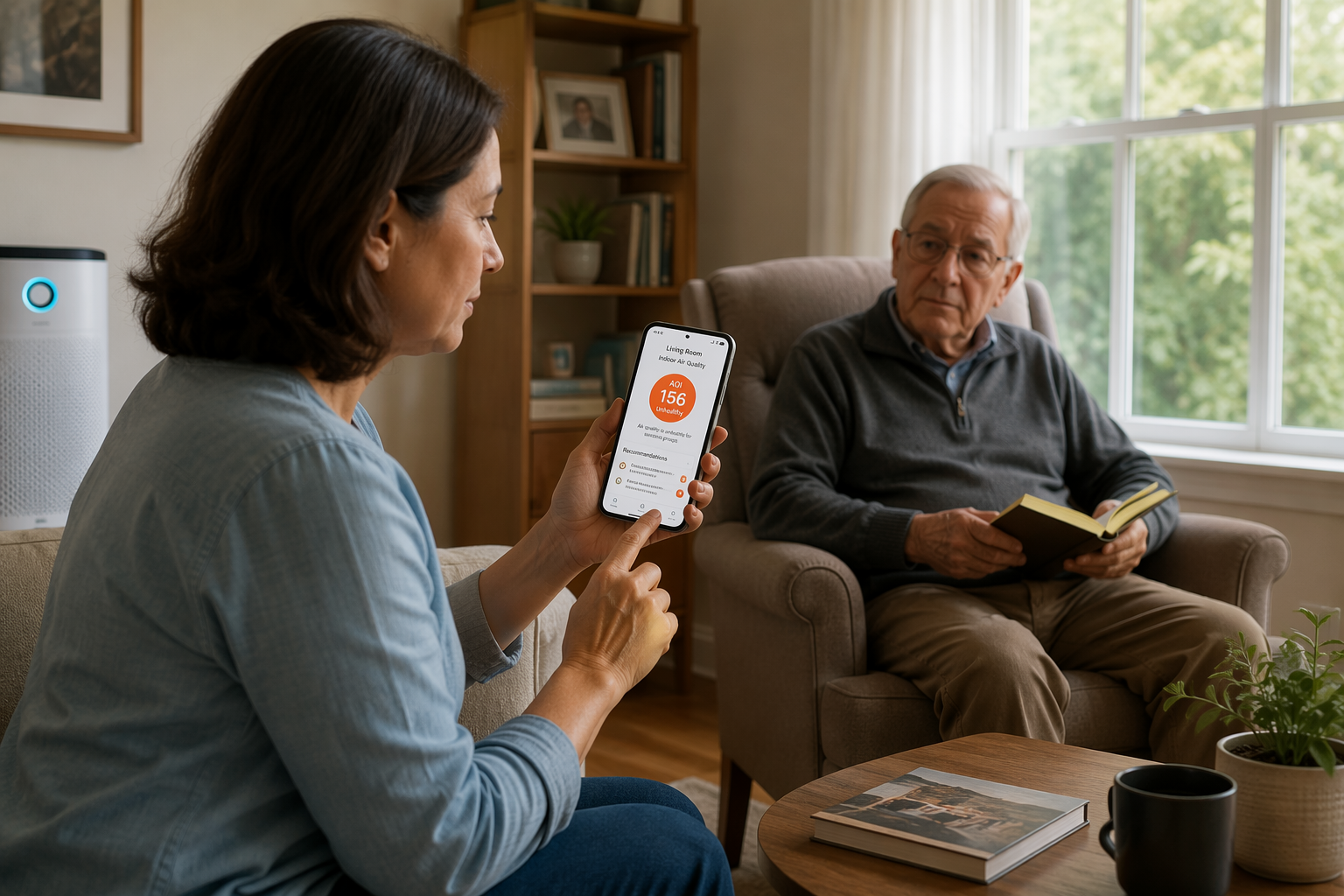
For an older adult, an Orange AQI alert is not just a weather note. Orange means the Air Quality Index is 101–150, a range the EPA labels “Unhealthy for Sensitive Groups.” The general public may be able to continue normally, but older adults may need to shorten outdoor activity, move plans indoors, and watch symptoms earlier than everyone else.[2]
First, Translate the Color Into a Decision
The AQI is a simple color scale, but it is easy to use it too late. Families often wait for Red before changing plans. For older adults, Orange is already the point where the day may need adjustment.
| AQI color | AQI value | Official meaning | What it means for an older adult at home |
|---|---|---|---|
| Green | 0–50 | Good | Usual routines are generally reasonable unless a clinician has given stricter limits. |
| Yellow | 51–100 | Moderate | Start paying attention if the older adult has COPD, asthma, heart disease, diabetes, recent illness, or symptoms. |
| Orange | 101–150 | Unhealthy for Sensitive Groups | Change outdoor plans for older adults, especially long errands, yard work, exercise, and rehabilitation travel that can be rescheduled safely. |
| Red | 151–200 | Unhealthy | Move most activity indoors, reduce exertion, improve indoor air protection, and monitor symptoms closely. |
| Purple | 201–300 | Very Unhealthy | Treat as a serious health day: keep activity low, stay indoors when possible, and use a higher level of caregiver check-in. |
| Maroon | 301–500 | Hazardous | Follow emergency-style precautions and local instructions; older adults should avoid exposure as much as possible. |
If fall risk is part of the concern—dizziness, rushing inside, carrying groceries in poor air, or getting lightheaded after exertion—the AQI can also be folded into a broader safety check. CareWise’s guide to using the Air Quality Index for senior fall prevention goes deeper on that narrower angle.
What To Do Today at Each Alert Level
A useful air quality plan should not require a family meeting every time the phone buzzes. The goal is to know which decisions change now, which can wait, and when symptoms or medical history raise the stakes. The National Weather Service advises people to pay attention to the AQI, limit time outside, reduce exertion, and follow local guidance during air quality alerts.[3]
Green: Keep the Usual Routine, but Know the Baseline
Green days are the easiest time to make the plan, because nobody is arguing with an alert yet. Save the local AirNow page, confirm where the older adult keeps rescue inhalers or other prescribed breathing medicines, and write down which symptoms should trigger a call to a clinician. If the older adult uses oxygen, has a recent cardiac procedure, or has been told to avoid outdoor exertion, their personal instructions matter more than the color alone.
Yellow: Pay Attention to the Person, Not Just the Number
Yellow is “Moderate,” and many older adults will not need major changes. Still, this is where caregivers should start noticing patterns. Did walking to the mailbox cause unusual shortness of breath? Is there more coughing today? Did a short errand leave the person unusually tired?
- Check whether the alert is expected to worsen later in the day.
- Move optional outdoor chores to a cleaner-air window if that is easy to do.
- Ask about symptoms without turning the check-in into an interrogation.
- Keep windows closed if outdoor air is visibly smoky, hazy, or irritating.
Orange: Make the First Real Change
Orange is the caregiver trap. It can sound mild because it is not Red, but for older adults it is already the level where the official warning applies. The practical move is to reduce exposure before symptoms force the issue.
- Shorten or reschedule outdoor exercise, yard work, and long errands.
- Move walks indoors if the older adult has COPD, asthma, heart disease, diabetes, or recent respiratory infection.
- Use delivery, curbside pickup, or a family errand run when available, especially if parking lots and heat will add strain.
- Close windows during the worst outdoor air period, then manage temperature so the home does not become unsafe or stuffy.
- Watch for coughing, wheezing, chest tightness, unusual fatigue, dizziness, or shortness of breath.
This is also the level where a standing plan helps preserve independence. “Let’s move the walk to the mall today” usually lands better than “You can’t go out.” The same health protection can feel very different when it is offered as a routine adjustment instead of a new restriction.
Red: Move the Day Indoors and Lower Exertion
Red means the air is unhealthy for everyone, not only sensitive groups.[2] For an older adult, it is a day to cancel nonessential outdoor activity rather than negotiate each errand one by one.
- Reschedule outdoor appointments that are not time-sensitive.
- Avoid outdoor exercise and physically demanding chores.
- Run HVAC on recirculation if appropriate for the system, and use a portable air cleaner if one is available.
- Avoid adding indoor particles from smoke, candles, fireplaces, or heavy frying.
- Check in more often with older adults who live alone.
The American Lung Association advises people to stay indoors when pollution levels are high, keep indoor air clean, and pay attention to symptoms such as coughing, wheezing, chest tightness, or shortness of breath.[4] Those symptoms deserve more weight in an older adult than they might in a younger person who can simply rest and recover.
Purple and Maroon: Treat Exposure as the Problem To Solve
Purple is “Very Unhealthy,” and Maroon is “Hazardous.”[2] At these levels, the plan should become simpler: keep the older adult away from outdoor air as much as possible, reduce physical demand inside the home, and follow local emergency instructions.
- Postpone anything outdoors unless it is medically necessary or urgent.
- Keep doors and windows closed while maintaining safe indoor temperature.
- Use the cleanest indoor room available, especially for resting or sleeping.
- Have medications, phone numbers, chargers, water, and mobility aids within reach.
- Seek medical guidance promptly for breathing trouble, chest pain, confusion, fainting, or symptoms that are worse than usual.
For a more detailed severe-alert home setup, see CareWise’s Code Purple air quality precautions for older adults at home.
Why Older Adults Are Included Before Everyone Else Is at Risk
Older adults are not listed as a sensitive group because every person over a certain birthday is fragile. They are included because aging bodies have less reserve, and because the conditions that make air pollution more dangerous—heart disease, lung disease, diabetes, and reduced exercise tolerance—are more common later in life.
Fine particle pollution, often discussed as PM2.5, is small enough to be inhaled deep into the lungs. Cleveland Clinic notes that these particles can enter the bloodstream and contribute to inflammation, which can affect the lungs and cardiovascular system.[5] That helps explain why an air quality alert is not only a breathing issue. It can matter for someone with coronary artery disease, heart failure, irregular heartbeat, or a history of stroke.
Respiratory disease adds another layer. COPD and asthma can make a small increase in irritation feel like a large change in daily function. A person who was fine at breakfast may be coughing by afternoon after a short walk, a car trip with poor cabin filtration, or time spent near an open window during a smoke event.
There is also emerging research interest in air pollution and cognitive health, but this should be kept in proportion. For a household making decisions today, the more immediate concerns are breathing, chest symptoms, fatigue, dizziness, and the way poor air can worsen existing medical strain.
Dizziness and cardiovascular stress also intersect with fall safety. If poor air leaves someone lightheaded, rushing, or unusually weak, the risk is not limited to lungs. CareWise’s hazardous air quality and fall risk guide covers that connection more directly.
Indoor Air Protection Without Turning the Home Into a Trap
The first instinct on a bad-air day is to close everything. Sometimes that is right. But older adults can also be harmed by heat, poor ventilation, or a home that becomes difficult to move through because everyone rushed to rearrange fans, cords, and air purifiers.
- Close windows and doors during the worst outdoor air period.
- Use HVAC filtration or a portable air cleaner if available and appropriate for the space.
- Choose one cleaner room for rest instead of trying to perfect the whole house.
- Avoid indoor smoke, strong fumes, aerosol products, and unnecessary combustion.
- Keep walking paths clear when moving air purifiers, fans, extension cords, or chairs.
Indoor filtration can reduce exposure, but it should be treated as practical risk reduction, not a guarantee. How much particle pollution is removed depends on the device, filter, room size, air leakage, maintenance, and how long it runs. If the setup creates cords across a hallway or blocks a walker route, solve that hazard too. CareWise’s room-by-room fall prevention checklist for caregivers can help keep the air-quality response from creating a different safety problem.
Masks, Errands, and the Older Adult Who Still Wants To Go
Some errands cannot wait. Prescriptions need pickup, appointments are hard to reschedule, and not every older adult has someone nearby to help. On poor-air days, the American Lung Association advises reducing outdoor exposure and notes that well-fitting N95 or P100 respirators can help filter particle pollution, while cloth or surgical masks do not offer the same protection against fine particles.[6]
For many older adults, though, a mask decision is not only about filtration. A tight respirator may feel uncomfortable, may be hard to tolerate with breathing disease, or may not be safe for someone who has been told by a clinician to avoid certain breathing resistance. If a mask causes distress, dizziness, or shortness of breath, the errand plan needs to change rather than forcing the mask to solve everything.
- Prefer delivery, pickup, or a caregiver errand run on Orange or worse days when practical.
- If the older adult must go out, choose the shortest route and lowest-exertion option.
- Use car recirculation during smoky or polluted stretches if it is safe and appropriate.
- Bring mobility aids rather than relying on “just a quick stop.”
- Have a plan to leave early if coughing, chest tightness, dizziness, or unusual fatigue appears.
Symptoms That Should Change the Plan
Air quality precautions are educational safety steps, not a substitute for medical advice. The line to watch is a change from the older adult’s usual baseline. A person with stable COPD may cough every morning; that is different from new wheezing after walking outside on an Orange day. A person with heart failure may tire easily; that is different from sudden chest pressure or breathlessness at rest.
- Call a clinician or follow the person’s care plan for worsening wheezing, coughing, or shortness of breath.
- Treat chest pain, fainting, severe breathing trouble, blue lips, or new confusion as urgent.
- Take dizziness seriously, especially if the person is walking, bathing, using stairs, or transferring from a chair.
- Do not wait for the AQI to become Red if symptoms are already changing.
The National Council on Aging also emphasizes that older adults should monitor air quality, limit outdoor time when pollution is poor, keep indoor air cleaner, and speak with a healthcare provider about personal risk when they have chronic conditions.[7]
Why These Precautions Are Not Overreaction
Air quality has improved in many ways, which can make alerts feel like background noise. A Public Policy & Aging Report article notes that national PM2.5 concentrations declined by 43% from 2000 to 2019.[8] That progress matters. It also does not erase the risk on high-pollution days.
The same article reported that increases in PM2.5 during 2017–2018 were associated with about 9,700 excess premature deaths, and that 80% of those deaths occurred among older adults.[8] That statistic should not turn every Orange day into a crisis. It should make families less casual about early precautions for the people most likely to bear the consequences.
Make Tomorrow’s Alert Easier
The best air quality plan is usually made before the next alert. It does not need to be elaborate. It needs to be clear enough that the older adult, spouse, adult child, neighbor, or home aide can make the same first few moves without starting from scratch.
- Check AirNow or local alerts in the morning during wildfire smoke, ozone, or pollution episodes.
- Decide ahead of time which activities change at Orange, Red, Purple, and Maroon.
- Keep a short symptom list near the medication list or care binder.
- Identify one cleaner-air room and keep its walking paths clear.
- Plan backup options for errands, outdoor exercise, cardiac rehab travel, and social visits.
Air quality alerts do not mean panic, and they do not mean an older adult has to give up ordinary life at home. They do mean that Orange deserves attention, Red deserves a changed day, and Purple or Maroon deserves a much tighter exposure plan. The sooner the color turns into a household routine, the less it has to turn into a family argument.
References
- Older Adults and Air Quality, EPA AirNow.
- AQI Basics, EPA AirNow.
- During an Air Quality Alert, National Weather Service.
- Air Quality Index, American Lung Association.
- What Air Quality Alerts Mean for Your Health, Cleveland Clinic.
- Protecting Yourself from Poor Air Quality FAQs, American Lung Association.
- Protecting Yourself from Poor Air Quality, National Council on Aging.
- Importance of Air Quality Policy for Older Adults, Public Policy & Aging Report.
Related reading
Noticed something outdated or inaccurate on this page? Flag a correction. We review every report against CDC, NIA, and AARP HomeFit guidance before updating a page.
Part of the Fall Prevention section.