
Salmonella warning signs in elderly after an egg recall
Recognize salmonella warning signs in older adults after an egg recall, know when symptoms require immediate care, and understand why dehydration from salmonella can quickly trigger a fall in seniors.
If an older adult may have eaten recalled eggs, do not watch for diarrhea alone. Watch for diarrhea and dehydration together. In a 65+ adult, especially someone on a diuretic or living with kidney disease, diabetes, heart disease, or balance problems, salmonella can move from “upset stomach” to dizziness, low blood pressure, and a fall before the family has decided whether to call.
The CDC gives a broad symptom window for salmonella after exposure: illness can begin 6 hours to 6 days after eating contaminated food.[1] FDA and Mayo Clinic materials describe a narrower, common range around 12 to 72 hours or 8 to 72 hours, so the practical plan is this: be most alert during the first three days, but keep watching through day six if recalled eggs were eaten.[2][3]
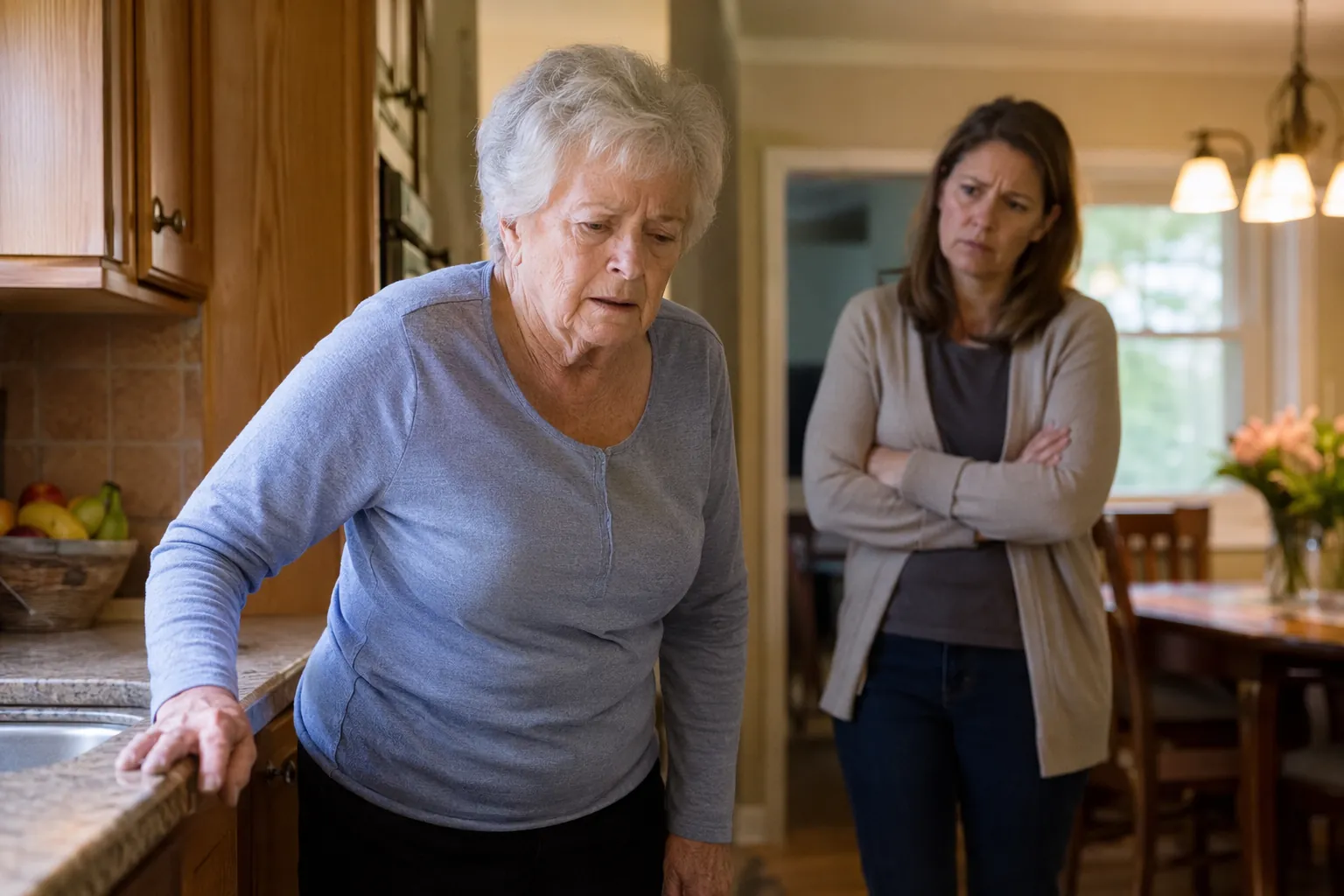
First Check: Symptoms That Change the Next Step
Salmonella commonly causes diarrhea, fever, stomach cramps, nausea, vomiting, and headache.[3] In a younger adult, mild diarrhea with steady drinking may be watched at home. In an older adult, the same symptoms need a second question right away: is this person still getting enough fluid to stand, think clearly, urinate, and walk safely?
| What you see | Why it matters in an older adult | Next step |
|---|---|---|
| Mild diarrhea, mild cramps, able to drink, normal thinking, steady walking | This can still fit an uncomplicated salmonella illness, but the first day can change quickly. | Monitor closely, push small amounts of fluid often, and recheck balance and urination. |
| Diarrhea plus fever | Fever increases fluid loss and can make weakness worse. | Call the clinician the same day for a 65+ adult, especially with chronic disease or frailty. |
| Repeated vomiting or cannot keep fluids down | Home hydration may not keep up with losses. | Call the clinician promptly; seek urgent care if weakness, confusion, or dizziness appears. |
| Blood in stool | This is not a “wait and see” symptom. | Call the clinician urgently or seek emergency guidance. |
| New confusion, unusual sleepiness, fainting, chest pain, severe weakness, or trouble staying upright | These may signal dehydration, infection severity, or another acute problem. | Call 911 or use emergency services. |
| Dizziness on standing, gripping furniture, near-fall, or suddenly needing help to walk | The gut illness may already be affecting blood pressure and balance. | Treat as urgent, assist all walking, and contact medical care immediately. |
| Very little urination, dark urine, dry mouth, no tears, or worsening thirst | These are dehydration clues; older adults may not feel thirst strongly even when fluid is low. | Call the clinician the same day; do not rely on thirst alone. |
A caregiver does not need to diagnose salmonella at the kitchen table. The job is to decide whether home monitoring is still safe. If the older adult is getting weaker, thinking less clearly, urinating less, or walking less steadily, the decision has already changed.
When to Call 911, Call the Doctor, or Monitor at Home
Use the highest-risk sign you see, not the most reassuring one. An older adult may say “I’m fine” while standing with locked knees and one hand on the counter.
- Call 911 now if there is fainting, a fall with injury, severe weakness, new confusion, trouble waking, chest pain, shortness of breath, signs of shock, or the person cannot stand or walk safely.
- Call the doctor or nurse line the same day for diarrhea with fever, repeated vomiting, blood in stool, reduced urination, dizziness when standing, worsening weakness, or symptoms in someone 65+ with kidney disease, diabetes, heart disease, immune suppression, or significant frailty.
- Call sooner if the person takes a diuretic, uses antacids regularly, or has been told to limit fluids for a medical reason. Do not stop prescribed medications on your own; ask the clinician how to handle them during diarrhea or vomiting.
- Monitor at home only when symptoms are mild, the person can keep fluids down, thinking is normal, urination continues, fever is absent or low, and walking is steady with no dizziness.
If you are deciding between “doctor call” and “wait,” call. The cost of a same-day phone call is low; the cost of a bathroom fall in a dehydrated older adult can be high.
Why Older Adults Do Not Fit the Usual Wait-and-See Script
The warning is not theoretical. In a Canadian hospitalization study of adult salmonella cases from 2000 to 2010, adults 65 and older accounted for 50% of salmonella hospitalizations and 82% of deaths among adults. The median hospital stay was 7 days for older adults, compared with 4 days for younger adults. The death rate rose from 2.4% among adults ages 60 to 79 to 5.3% among those 80 and older.[4]
That study is Canadian and covers an earlier period, so it should not be read as a current U.S. outbreak forecast. It still points to the clinical issue families see at home: once salmonella is severe enough to require hospitalization, older adults carry a disproportionate share of the worst outcomes.
The World Health Organization puts the same concern plainly: in elderly patients, salmonella-associated dehydration can become severe and life-threatening.[5] That is the sentence families should hold onto when someone says, “Most people recover without treatment.” Many do. The question is whether this person, in this body, with these medications, is still safely in that group.
The Fall Risk Starts Before the Fall
Diarrhea and vomiting remove fluid. Fever raises fluid needs. Poor appetite lowers intake. Then an older adult stands to go to the bathroom, blood pressure drops, the room tilts, and the fall happens in the hallway instead of the clinic.
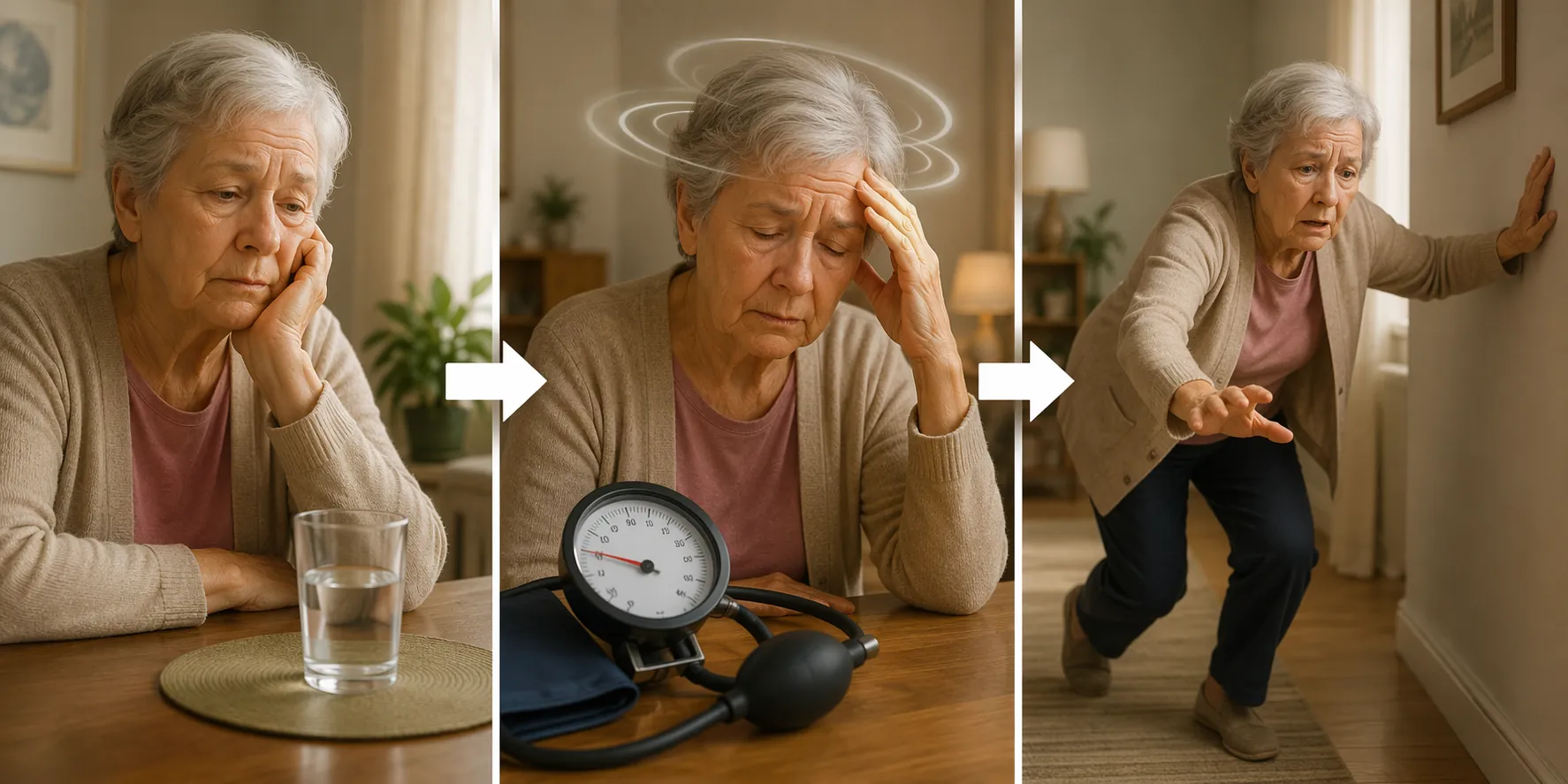
This is why dehydration checks belong in an egg recall response. A study of 30,634 older adults found that 37.9% were dehydrated, and dehydration was independently associated with falls, with an odds ratio of 1.13. Loop diuretics also compounded fall risk, with an odds ratio of 1.26.[6]
That falls study has limits. Its cohort was Midwestern and 94.6% White non-Hispanic, and the dehydration-fall association was statistically significant but modest.[6] It is not proof that dehydration causes every fall. It is enough of a signal to change household behavior during a diarrheal illness: do not let an older adult repeatedly make urgent, unsupported trips to the bathroom while fluid losses are ongoing.
What to Do in the House During the Monitoring Window
During the first 6 hours to 6 days after possible exposure, set the house up as if a fall is possible, not as if it is inevitable.[1] The point is to reduce the distance between feeling dizzy and getting help.
- Keep a clear, well-lit path from bed or chair to the bathroom, especially overnight.
- Ask the older adult to sit at the edge of the bed or chair before standing, then pause again after standing before walking.
- Offer small amounts of fluid often if the clinician has not restricted fluids; do not wait for strong thirst.
- Stay nearby for bathroom trips if there is weakness, urgency, dizziness, or a history of falls.
- Use glasses, hearing aids, walkers, canes, grab bars, and night lights as usual; illness is not the time to skip support devices.
- Write down diarrhea episodes, vomiting, temperature, fluid intake, urination, dizziness, and any near-falls so the clinician hears a clear timeline.
Medication questions should go to the clinician or pharmacist. Diuretics, blood pressure medicines, diabetes medicines, kidney disease, and fluid restrictions can make “just drink more” unsafe or inadequate. Antacids also belong in the medication conversation because they may change risk and urgency, not because they should be stopped independently.
How Much the Egg Recall Data Should Change Your Concern
Recall numbers are not just consumer news when an older adult ate the food. In the CDC’s egg-linked salmonella outbreak page, the August Egg Company outbreak included 134 illnesses, 38 hospitalizations, and 1 death across 10 states. The same CDC page also lists a Country Eggs recall connected with 105 illnesses and 19 hospitalizations.[1]
FDA’s outbreak investigation page for salmonella linked to August Egg Company eggs also documents the official investigation and recall context.[2] News coverage reported the recall scope as about 1.7 million dozen cartons, or 20.4 million eggs, distributed through Walmart, Safeway, Ralphs, and other national chains.[7][8] Those distribution details help explain why many families heard about the recall at once; the clinical question at home is still whether the older adult has symptoms or dehydration signs now.
Some social-media posts have circulated larger egg-count figures for July 2026. Those figures are not used here because they could not be verified against the official CDC or FDA materials available in the research brief. For an active recall, check the current FDA and CDC recall pages directly before deciding whether a carton in the refrigerator is affected.
A Note on Medical Advice
This guide is for caregiver triage and fall-prevention awareness. It is not a diagnosis, treatment plan, or substitute for advice from a licensed clinician who knows the older adult’s medical history. If your household needs the planning-mode version of this issue after the immediate concern has passed, see Why Egg Recalls Deserve a Spot in Your Fall Prevention Plan. In the moment, the safer judgment is simple: with older adults, the dangerous part of salmonella may be less the stomach symptoms themselves than the dehydration and blood-pressure drop that follow.
References
- Salmonella Outbreak Linked to Eggs, Centers for Disease Control and Prevention.
- Outbreak Investigation of Salmonella: Eggs, August 2025, U.S. Food and Drug Administration.
- Salmonella infection, Mayo Clinic.
- Hospitalizations and deaths associated with Salmonella infections, FoodNet Canada, 2000-2010, Turgeon et al., 2017.
- Salmonella (non-typhoidal), World Health Organization.
- Association between dehydration and falls, Hamrick et al., 2020.
- Egg Recall Update as FDA Sets Highest Risk Level Over Salmonella, Newsweek.
- More than 1.7 million dozen eggs recalled after salmonella outbreak, NBC News.
Related reading
Noticed something outdated or inaccurate on this page? Flag a correction. We review every report against CDC, NIA, and AARP HomeFit guidance before updating a page.
Part of the Fall Prevention section.