
What SORLA Protein Means for Alzheimer's Prevention in Seniors
Learn what the SORLA protein is, how it protects the aging brain against both amyloid and tau pathology, and why the most exciting 2026 discoveries — while groundbreaking in mice — have not yet translated into specific prevention steps for seniors.
The practical answer comes first: SORLA is a promising brain-protective protein, and it may turn out to matter a great deal in Alzheimer’s biology. But in 2026, SORLA’s role in Alzheimer's prevention for seniors is not a checklist a family can act on. There is no proven diet, supplement, exercise plan, brain game, or medication shown to raise SORLA in humans in a way that prevents Alzheimer’s disease.
That does not make the science small. It makes the translation delicate. SORLA sits at an unusually busy intersection: amyloid-beta handling, tau pathology, microglial cleanup, lipid stress, synaptic protection, and inherited risk through the SORL1 gene. A protein that touches several of those systems is worth watching. It is just not yet something to “boost naturally” at home.
Why SORLA Is Getting Attention Now
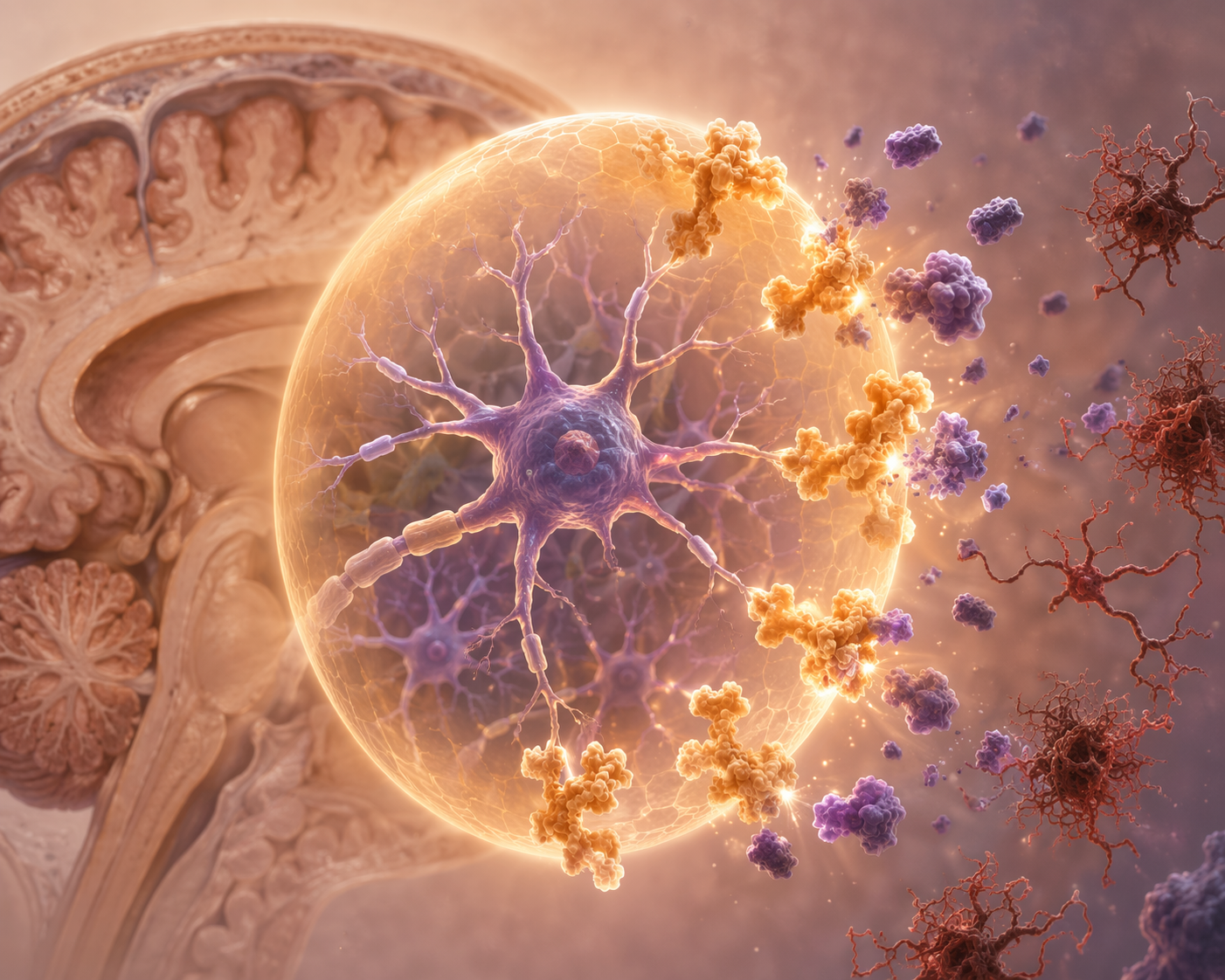
For years, SORLA was mostly discussed in connection with amyloid-beta, the sticky protein fragment that can accumulate into plaques in Alzheimer’s disease. The more recent excitement comes from tau, another Alzheimer’s-related protein that can become abnormally modified, spread through vulnerable brain circuits, and form tangles inside neurons.
In July 2026, reporting on a Science Advances study described a striking mouse-model result: when researchers upregulated SORLA in tauopathy mice, the animals showed reduced tau hyperphosphorylation, reduced tau seeding, less brain atrophy, and preserved synaptic plasticity compared with disease-model controls.[1] Those are not cosmetic endpoints. Tau hyperphosphorylation and seeding are close to the biology that makes tau disease so destructive, and synaptic plasticity is part of how brain circuits keep learning and adapting.
The boundary matters just as much as the result: this was a mouse-model finding, not a human prevention trial. It does not show that a senior can raise SORLA through lifestyle changes, and it does not show that a SORLA-targeted treatment slows Alzheimer’s disease in people. What it does show is that SORLA may not be only an amyloid-related protein. In this model, increasing SORLA changed several tau-related disease features at once.[1]
That is why the study feels important without being family-ready. A lab can ask whether more SORLA changes tau biology under controlled conditions. A caregiver sitting with a newly diagnosed parent needs a different answer: whether this changes what to do this month. Right now, it does not.
The Traffic Controller Inside the Cell
The simplest way to understand SORLA is as a cellular traffic controller. Cells are not static bags of chemicals. They sort, shuttle, recycle, and degrade proteins through different compartments. Where a molecule gets sent can change what happens to it.
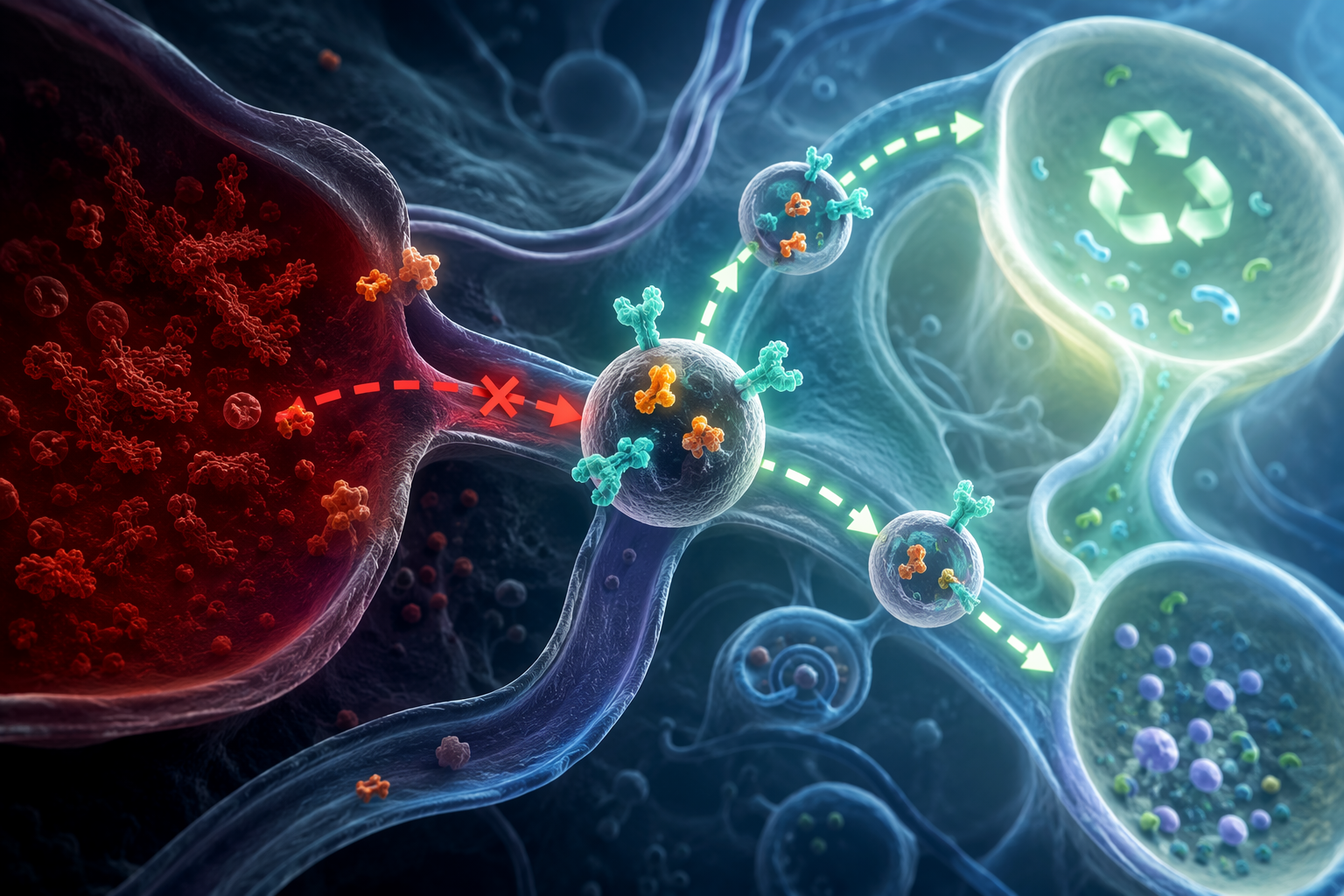
One of SORLA’s best-established jobs involves APP, the amyloid precursor protein. APP can be processed in ways that generate amyloid-beta. SORLA binds APP and helps redirect it away from compartments where amyloid-beta is more likely to be produced. In cell models described by Alzforum, SORLA-related routing reduced amyloid-beta by up to 50%.[2]
That does not mean SORLA “cures amyloid.” It means the protein appears to influence the cellular itinerary of APP. For a disease where location and timing inside the cell matter, that routing role is biologically meaningful.
The July 2026 tau work made the story broader. Amyloid and tau are often discussed as separate Alzheimer’s landmarks, even though the living disease is more tangled than that. A protein with evidence in both amyloid handling and tau-related injury naturally attracts attention because it may sit upstream of several damaging processes rather than at the end of just one.
What Aging Brain Tissue Adds to the Story
Mouse studies can reveal mechanisms, but families are usually asking about older human brains. That is where the April 2026 Columbia-led microglia study becomes important. Researchers reported that SORLA protein was significantly reduced in Alzheimer’s brain tissue, and that the reduction appeared in both microglia and neurons.[3]
Microglia are the brain’s resident immune and cleanup cells. They help respond to damage and clear debris, including amyloid-beta. In the Columbia study, loss of SORLA was tied to endoplasmic reticulum stress, lipid droplet accumulation, and impaired microglial clearance of amyloid-beta.[3] Put less technically: when SORLA was reduced, cells showed signs of internal stress, abnormal lipid handling, and weaker cleanup behavior.
That finding helps explain why SORLA decline may matter in older brains. Alzheimer’s is not only a story of one bad protein appearing. It is also a story of aging cells losing the ability to sort, clear, repair, and tolerate stress. SORLA seems to belong to that maintenance machinery.
This is also where the lipid story becomes relevant. Many readers have heard of APOE, especially APOE ε4, because it is one of the most familiar genetic risk markers for Alzheimer’s. A 2023 Harvard Gazette report on Cell Reports research described a related pathway: SORL1 loss reduced APOE and CLU in neurons and caused lipid droplet accumulation, pointing to a mechanism distinct from simply producing more amyloid.[4]
The useful point is not that SORLA explains APOE risk. The evidence does not support that shortcut. The point is narrower and more interesting: SORLA-related biology appears to touch lipid handling, and lipid stress is one of the ways aging brain cells may become more vulnerable.
SORL1 Genetics: Important, but Easy to Misread
SORLA is the protein. SORL1 is the gene that encodes it. That distinction matters because genetic findings can feel personal very quickly, especially in families where Alzheimer’s has appeared across generations.
Research has identified rare damaging SORL1 variants in a minority of early-onset Alzheimer’s disease cases. A 2023 PNAS paper described SORL1 as a causal Alzheimer’s gene and noted that approximately 2–3% of early-onset Alzheimer’s patients carry rare damaging SORL1 variants.[5]
That is not the same as saying most Alzheimer’s is caused by SORL1, or that every family with dementia should pursue SORL1 testing. Rare inherited damaging variants and age-related changes in SORLA protein are separate stories. One is a genetic-risk question, most relevant in specific early-onset or strongly familial contexts. The other is a broader aging-brain biology question.
For a family reader, the safest interpretation is this: SORL1 is scientifically important and may be clinically relevant in selected families, but casual genetic testing is not a standard prevention step. If a family has unusually early dementia or a strong multigenerational pattern, that is a conversation for a clinician or genetic counselor, not a direct-to-consumer guess.
A Protein With More Than One Protective Route
The case for SORLA’s importance does not rest on one pathway. Beyond amyloid routing, tau protection in mice, microglial cleanup, and lipid stress, researchers have described additional protective routes that make SORLA look less like a single-purpose switch and more like part of a larger cellular defense network.
One line of work reported in 2017 connected SORLA with EphA4, a receptor involved in synaptic toxicity. ScienceDaily’s coverage of research from the Xu lab described SORLA as blocking EphA4-related synaptotoxicity, adding another possible route by which it may protect communication points between neurons.[6]
Another line of research, published in Alzheimer’s & Dementia in 2025, connected SORLA with regulation of neurotrophic exosomes.[7] Exosomes are small vesicles cells use to carry molecular cargo, and neurotrophic signaling relates to support for neuron health and function. This is not yet a family-facing treatment pathway, but it reinforces the same pattern: SORLA appears repeatedly in systems that help neurons survive stress.
| SORLA-related area | What the research suggests | What families should not infer |
|---|---|---|
| Amyloid handling | SORLA helps route APP away from amyloid-producing compartments. | This does not prove a home method can lower amyloid by raising SORLA. |
| Tau pathology | Upregulating SORLA improved several tau-related features in tauopathy mice. | This is not evidence of a human Alzheimer’s prevention therapy. |
| Microglial cleanup | Reduced SORLA was tied to cellular stress, lipid droplets, and impaired amyloid-beta clearance. | This does not identify a supplement or lifestyle plan that restores SORLA. |
| Genetic risk | Rare damaging SORL1 variants appear in a minority of early-onset Alzheimer’s cases. | This does not make SORL1 testing routine for every family. |
What This Means for Alzheimer’s Prevention in Seniors
For seniors, the prevention question has to be handled with care. SORLA may be one of the brain’s more versatile natural defense systems now under study. But a defense system identified in cells, brain tissue, genetic studies, and mouse models is not the same thing as a prevention plan.
The strongest 2026 tau findings came from tauopathy mice, not from older adults enrolled in clinical trials.[1] The Columbia microglia work helps explain aging-brain vulnerability, but it does not show that an intervention raises SORLA in people or prevents dementia.[3] The amyloid-routing work shows a plausible protective mechanism, but much of that mechanistic evidence comes from cell models.[2]
That distinction is not academic. Families are often told to treat every new Alzheimer’s discovery as a behavior assignment: eat this, avoid that, train this pathway, buy this product. SORLA research does not support that move. No diet, supplement, exercise program, sleep protocol, cognitive game, or wellness product has been proven to specifically raise SORLA protein levels in humans and thereby prevent Alzheimer’s disease.
General brain-health habits may still matter for many reasons: cardiovascular health, sleep, hearing, social connection, medication review, fall prevention, and management of diabetes or blood pressure can all be part of good aging care. But those are not SORLA-specific claims. It is more honest to support proven and clinician-guided health measures without pretending they are targeted SORLA therapy.
The Honest Takeaway
SORLA deserves attention because it helps make Alzheimer’s biology look less like a black box. It offers a way to think about cellular routing, protein cleanup, lipid stress, synaptic survival, genetic vulnerability, amyloid, and tau as connected systems rather than isolated headlines.
The July 2026 tau findings are genuinely exciting. In tauopathy mice, increasing SORLA reduced several disease-related features and preserved synaptic plasticity.[1] The April 2026 human brain tissue and microglia findings add a sober aging-brain context: lower SORLA in Alzheimer’s tissue was associated with stressed cells, lipid droplet accumulation, and weaker amyloid-beta clearance.[3]
For a family making decisions today, the conclusion is quieter. No SORLA-boosting therapy is in clinical use or clinical trials based on the available research. No everyday intervention has been proven to raise SORLA in humans for Alzheimer’s prevention. SORL1 genetic testing is not something to pursue casually outside appropriate medical guidance.
So the permission is this: follow the science without feeling that you have missed a hidden prevention step. SORLA may become important for future Alzheimer’s therapies. In 2026, it is a compelling research lead, not a task for tonight.
References
- SORLA protein may protect the brain from toxic tau tangles, News-Medical.net, July 17, 2026.
- SORLA / SORL1, Alzforum.
- PMC13053485, PubMed Central, 2026.
- Molecular road to Alzheimer’s leads to new treatment strategy, Harvard Gazette, 2023.
- Loss-of-function variants in SORL1 are a cause of autosomal dominant Alzheimer disease, PNAS, 2023.
- Research reveals how genetic risk factor causes Alzheimer’s disease, ScienceDaily, November 7, 2017.
- PMC12421412, PubMed Central, 2025.
Related reading
Noticed something outdated or inaccurate on this page? Flag a correction. We review every report against CDC, NIA, and AARP HomeFit guidance before updating a page.
Part of the Fall Prevention section.