
How to Prepare for Storms and Prevent Falls in Elderly Adults
This pre-season checklist helps caregivers and older adults reduce fall risks during severe storms by addressing room-by-room hazards like darkness, wet floors, and displaced objects — with steps that take under two hours per room.
The fall most families worry about during storm season often happens after the sirens, alerts, and weather maps have gone quiet: an older adult gets up at 2 a.m., the power is out, the usual nightlight is dead, a towel is on the bathroom floor, and the cane is just far enough away to require one unsupported step.
That is why storm preparation tips for elderly adults need to start inside the home, not with a garage shelf full of supplies. Food, water, radios, and evacuation plans matter. But for fall prevention, the urgent question is simpler: when the floor is wet, the room is dark, and help may be delayed, can the person move from bed to bathroom, door to chair, or kitchen to phone without improvising?
Most of the hazards are ordinary and inexpensive to fix before the season starts: loose mats, high shelves, blocked walkways, untested flashlights, furniture shifted into a path. Lighting deserves special attention because a power outage removes one of the main layers of everyday fall prevention. A flashlight still in its packaging does not help much when it is across the room.
There is good reason to give extra attention to older adults who use canes, walkers, wheelchairs, or other mobility aids, and to those who live alone. In a National Poll on Healthy Aging study of 2,256 adults ages 50 to 80, people who used mobility aids had lower odds of feeling confident about addressing power outages and severe weather, and older adults living alone had lower odds of having discussed evacuation plans or having a stocked emergency kit. The study also did not include adults over 80, so it should not be treated as the outer edge of risk for the oldest households.[1]
Start Outside: The Entry Path Has to Work Wet
Begin where rain, wind, leaves, branches, mud, and ice meet the home: the path from driveway or sidewalk to the door. This is not cosmetic housekeeping. It is the route an older adult may use while carrying a bag, leaning on a cane, or trying to get inside before another band of rain arrives.
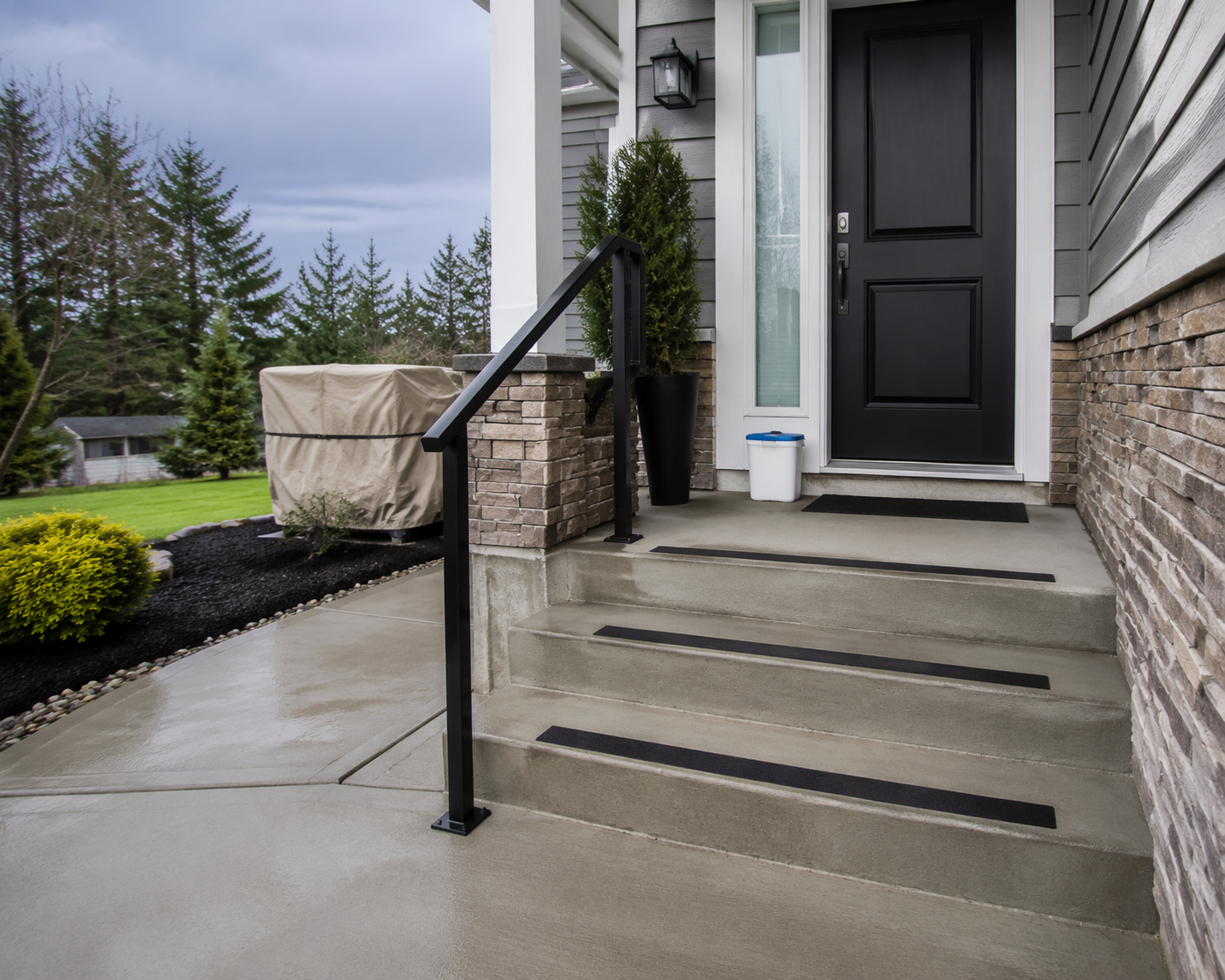
- Move outdoor chairs, planters, hoses, decorations, and loose doormats out of the walking path before storm season.
- Check that handrails are secure and usable on the side where the older adult naturally reaches.
- Add non-slip traction strips to steps or ramps where surfaces become slick.
- Trim branches that brush the walkway or drop debris near the door.
- Keep ice melt, a small broom, or a lightweight shovel near the entrance instead of in a distant shed.
A porch mat deserves more suspicion than it usually gets. If it curls when wet, slides on smooth flooring, or bunches under a walker, remove it or replace it with a low-profile mat that grips the surface. A mat that catches water but catches a cane tip too is not doing the safer job.
If the home has steps, watch the older adult use them on an ordinary day. Does one hand search for a rail before the foot moves? Does a walker have to be lifted? Does the person turn sideways to descend? Those details decide whether the storm plan should include staying with family before forecasted severe weather, arranging help with entry and exit, or getting a professional home safety assessment before the next season.
Wet or Icy Ground: Use the Penguin Rule
After a storm, crossing a slick driveway or walkway is a time to slow the whole body down. The common “walk like a penguin” cue is useful because it is simple: take short, flat-footed steps, keep the feet slightly apart, point the toes outward a little, and avoid carrying anything that blocks balance. It is not a substitute for cleared paths or handrails, but it can reduce rushed, long-stride walking on wet or icy surfaces.
Make the Bedroom Work in a Blackout
The bedroom is the room to handle before any other interior space if the older adult gets up at night. Do not assume a familiar route stays familiar in a storm. A laundry basket, oxygen tubing, pet bed, fan cord, or cane leaning across the first step from the bed can become the obstacle no one sees.
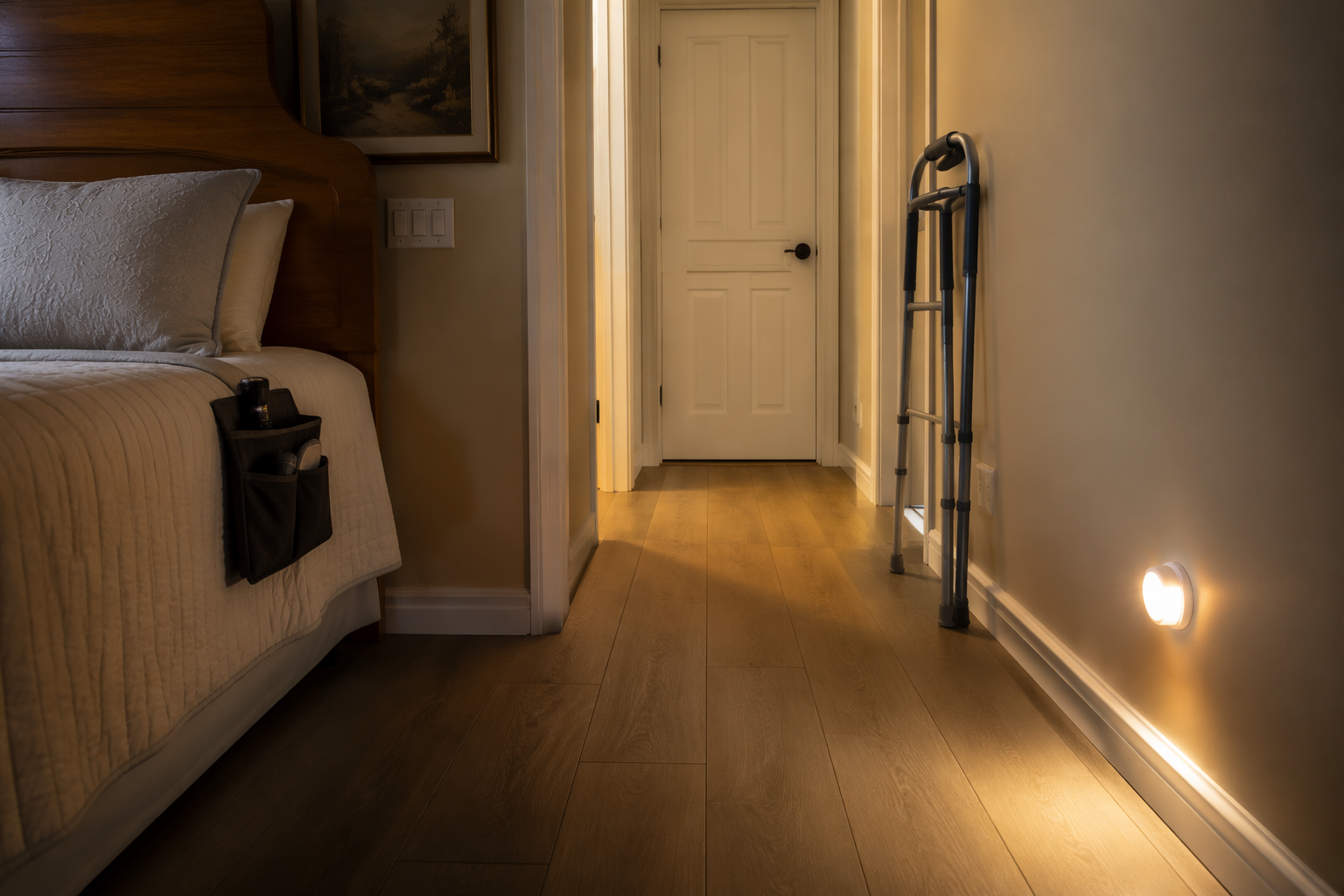
- Place a working flashlight in a bedside caddy, drawer, or basket the person can reach without sitting fully up.
- Install battery-powered or rechargeable motion-sensor lights low on the route from bed to door.
- Clear the floor on both sides of the bed, not just the side used most often.
- Move canes, walkers, slippers, and glasses into predictable reach without letting them cross the walking path.
- Tape down necessary cords along the wall or reroute them away from the path to the bathroom.
- Remove throw rugs unless they are truly secured and do not catch toes, cane tips, or walker legs.
Test this room in the way it will be used. Turn off the lights, stand at the bed, and trace the route to the door with one hand occupied. If the person uses a cane or walker, the aid should be reachable before the first step, not after a lean, twist, or reach across furniture.
For an older adult living alone, the bedside area also needs a communication plan. Keep the phone charged and reachable from bed. If there is a medical alert device, confirm that it is worn at night or placed where it can be reached after a fall. Solo planning deserves its own attention; families can use an aging-in-place-alone safety guide to build the storm plan around more than one check-in call.
Protect the Nighttime Route to the Bathroom
The route from bedroom to bathroom is where storm preparation and fall prevention overlap most sharply. It is usually traveled while sleepy, sometimes urgently, and often without shoes. If the power is out, the brain may rely on memory while the floor has changed.
- Clear the full path from bed to toilet, including hallway corners where laundry, boxes, pet bowls, or spare supplies tend to land.
- Put motion-sensor lights along the path, not only inside the bathroom.
- Keep supportive slippers or shoes in the same place every night, with non-slip soles and backs that stay on the heel.
- Move storm supplies out of this route; bottled water stacked in the hallway is a fall hazard at night.
- If the bathroom is far from the bedroom, discuss whether a bedside commode is safer during outages or high-risk nights.
A two-hour room check should be honest about what it can and cannot solve. It can remove clutter, place lights, and move supplies. It cannot turn a long, narrow hallway into a safe route for every person during every outage. If the walk to the bathroom already feels risky in normal conditions, storm season is not the time to pretend it will improve under stress.
Set Up the Bathroom Before the Floor Gets Wet
Bathrooms collect several storm-related fall hazards in one small room: poor lighting, slick floors, towel clutter, urgency, and water tracked in from other rooms. A bathroom that works on a dry afternoon may not work when an older adult is tired, the fan is off, and the only light comes from a small flashlight.
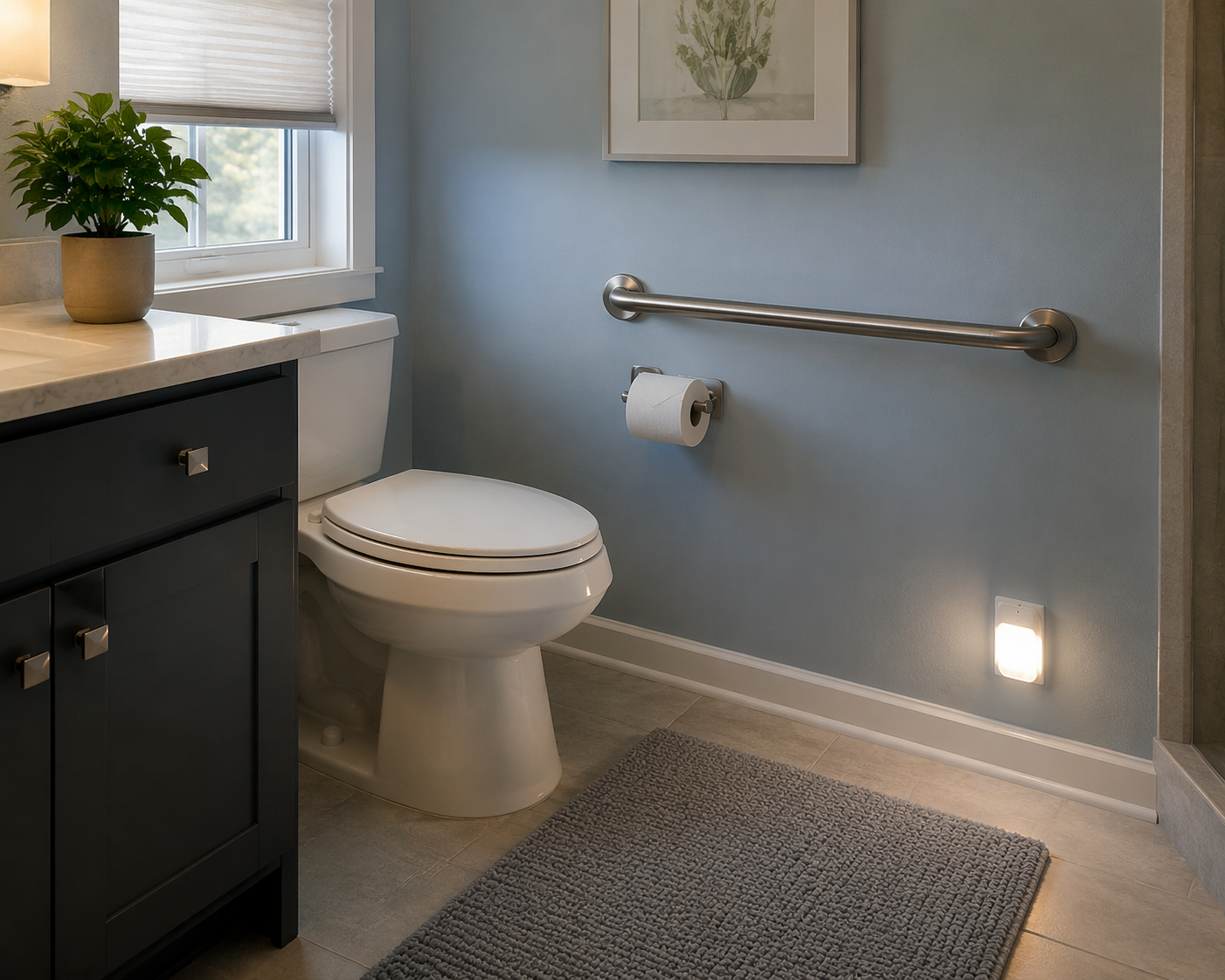
- Install secure grab bars beside the toilet and near the tub or shower; do not rely on towel bars for body weight.
- Use a non-slip bath mat that stays flat and does not slide when stepped on.
- Place a battery-powered emergency light near the toilet and another near the bathroom entrance if the room is dark without overhead lighting.
- Remove loose towels, robes, laundry, small trash cans, and scale clutter from the walking zone.
- Keep toilet paper, hygiene items, and incontinence supplies within reach so no one has to stretch, turn, or step onto a wet floor.
- Check that the bathroom door can be opened from the outside in an emergency, especially if the person lives alone.
If water sometimes leaks under the door, from a window, or around the tub, fix that before storm season if possible. If it cannot be fixed quickly, place absorbent materials where they do not become a trip hazard, and make sure someone checks that area after heavy rain.
Keep the Kitchen Simple: Lower the Heavy Things
The kitchen does not need to become a complete storm command center. For fall prevention, the most important pre-season job is to stop an older adult from climbing, reaching overhead, or handling heavy breakables when tired or underlit.
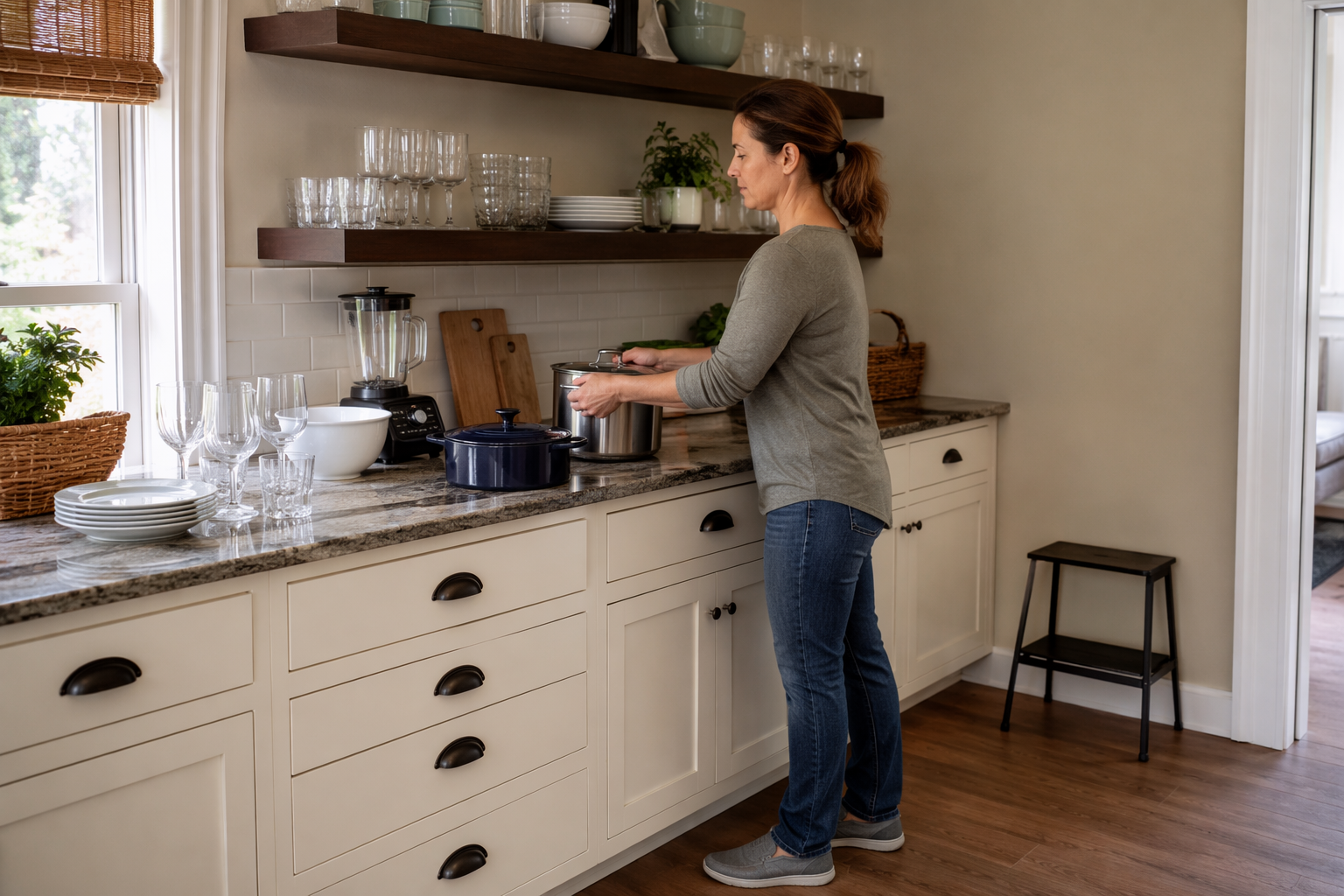
- Move heavy pots, glass dishes, canned goods, flashlights, manual can openers, and daily-use items from upper shelves to counter or waist height.
- Store the step stool flat against a wall or in a closet, not half-open in the walking path.
- Remove small rugs or mats that slide when the floor is damp.
- Keep a clear route from the kitchen to the main chair, phone, and exit.
- Place drinking water where it can be reached without lifting a heavy case from the floor.
A case of water on the floor may look prepared, but it can block a walker or require an awkward lift. Split supplies into smaller, reachable amounts. Put the backup items elsewhere, and keep the first day’s essentials at a height that does not require bending or climbing.
Build a Lighting Plan, Not a Flashlight Pile
A flashlight pile in a closet is a storage system, not a safety plan. Storm lighting should be placed where the body actually moves: bed, bathroom, hallway, main sitting area, entry, kitchen, and medication area.
| Location | What to Place There | Why It Matters During an Outage |
|---|---|---|
| Bedside | Flashlight within reach, motion-sensor floor light, phone charger or backup battery | The first step after waking is often the least steady |
| Hallway to bathroom | Battery-powered motion lights at low height | The route needs light before the person reaches the bathroom |
| Bathroom | Emergency nightlight near toilet and entrance | Wet floors and urgency make poor lighting more dangerous |
| Entryway | Lantern or wall-mounted battery light | Rain gear, shoes, and mats can shift into the path |
| Medication area | Small task light or flashlight | Labels, pill organizers, and water must be visible |
Test every light while standing where the older adult will stand. Can the bedside flashlight be found by touch? Does the motion light turn on before the first step into the hallway? Is the light too dim to show the edge of a rug or threshold? Replace batteries before the season, then set a calendar reminder to check them again.
Ready.gov’s older-adult preparedness guidance emphasizes planning around the supports a person uses every day, including medical, mobility, communication, and transportation needs.[2] For fall prevention, that means the lighting plan should follow the person’s actual routine, not the neatest storage spot.
Adapt Mobility Aids for Storm Conditions
Mobility aids need their own storm check. The NPHA findings on lower confidence among mobility-aid users during power outages and severe weather are not surprising when you look at the home itself: a walker that works well in a bright hallway may become awkward around stacked supplies, wet thresholds, extension cords, or a dark bathroom doorway.[1]
- Keep the main cane, walker, or rollator within arm’s reach of the bed and main chair.
- Attach a small light and whistle to each frequently used mobility aid.
- Check cane tips, walker glides, brakes, and wheels before storm season.
- Keep a spare cane near the go-bag or exit if the person can use one safely.
- Do not store storm supplies where a walker needs turning space.
If the older adult uses oxygen, a wheelchair, a lift chair, or any powered device, planning needs to include backup power, charging routines, and who will help if the device cannot be used. That broader equipment planning sits beyond a quick room tidy-up, but it should not be delayed until the forecast is already serious.
Put Medication, Water, and Emergency Supplies Where Weakness Won’t Win
Medication access belongs in a fall-prevention checklist because missed doses, dehydration, dizziness, confusion, and rushing can all change how safely a person moves. The American Red Cross recommends that older adults prepare a medication supply, including at least a 30-day supply when possible.[3]
- Keep daily medications, a current medication list, water, and a small light together in a reachable location.
- Avoid storing pills in a bathroom cabinet if the floor is often wet or the room is hard to reach at night.
- Pack copies of prescriptions and important medical details in the go-bag.
- Use smaller containers for water and supplies so the older adult does not have to lift heavy bins.
- Place the go-bag where it does not block the bedroom, bathroom, or exit path.
The National Institute on Aging also advises older adults and caregivers to plan for disasters with attention to supplies, medical needs, and recovery after the event.[4] In a fall-focused home check, that advice becomes very practical: supplies should not merely exist; they should be reachable by the person most likely to need them when the home is dark.
Check Detectors, Alarms, and the First Call for Help
Smoke and carbon monoxide detectors are not usually described as fall-prevention tools, but they affect how a person moves during an emergency. A working alarm gives clearer information. A chirping, dead, or confusing alarm can send someone searching for a chair, step stool, or hallway light in the middle of a stressful night.
- Test smoke and carbon monoxide detectors before storm season.
- Replace batteries or units according to the manufacturer’s instructions.
- Write emergency numbers in large print near the phone and place a copy in the go-bag.
- Confirm which neighbor, relative, or friend will check in after an outage.
- Decide in advance who can help clear an entry path after wind, rain, snow, or ice.
For families coordinating from a distance, the problem is often not concern; it is missing information. A written emergency contact binder can hold medication lists, physicians, neighbors, utility contacts, insurance details, and home access instructions. A long-distance caregiver emergency plan can spell out who calls first, who has keys, and who can physically check the home.
If Memory Problems Are Part of the Picture
Storms can make a familiar home feel unfamiliar for someone living with dementia or significant memory changes. The Alzheimer’s Association recommends planning ahead for emergencies, including identification, comfort items, and caregiver coordination for people with dementia.[5]
For fall prevention, simplify the environment as much as possible before severe weather. Keep paths unchanged. Do not move the walker to a “better” place without practicing that new location. Use clear labels if they already help. If evacuation is possible, pack comfort items, identification, medication information, and familiar cues before the person is tired or frightened.
A Two-Hour-Per-Room Storm Fall Check
If time is limited, do not start by reorganizing closets. Walk the home in the order the older adult will need it during a storm: entry, bedroom, bathroom route, bathroom, kitchen, then the wider lighting and communication plan.
| Area | Highest-Value Fixes | Stop When This Is True |
|---|---|---|
| Entry and walkway | Clear debris, secure mats, check handrails, add traction, place ice melt or broom nearby | The person can enter without stepping over, around, or onto loose items |
| Bedroom | Place flashlight within reach, clear floor, position mobility aid, add motion light | The first step from bed is supported and visible |
| Bathroom route | Clear hallway, light the path, remove stored supplies from walking space | The route works in darkness without memory or guesswork |
| Bathroom | Install grab bars, use non-slip mat, place emergency light, remove towel clutter | Wet-floor hazards are reduced before the storm |
| Kitchen | Lower heavy items, remove loose rugs, keep water reachable, store stool safely | No climbing or heavy lifting is needed for basic supplies |
| Whole home | Test detectors, place lights, update contacts, adapt go-bag for mobility | Help, light, and supplies are reachable without blocking paths |
This is a practical standard, not a guarantee. A two-hour room check can make the common hazards less likely to trip someone when conditions get worse. It does not replace medical judgment, repairs, mobility evaluation, or hands-on help when the home has deeper risks.
The same room-by-room approach can be adapted for other hazards. Readers in earthquake zones may want a room-by-room earthquake preparedness checklist for seniors; families dealing with smoke season can use a wildfire smoke safety checklist for seniors and caregivers.
Before the next outage, make the non-negotiables visible: light where the feet go, mobility aids where the hand reaches, dry paths where water enters, and help arranged before the phone call becomes urgent.
References
- Emergency Preparedness Among Older Adults, National Poll on Healthy Aging, 2020.
- Older Adults, Ready.gov.
- Older Adults, American Red Cross.
- Disaster Preparedness and Recovery for Older Adults, National Institute on Aging.
- Preparing for Emergencies, Alzheimer’s Association.
Related reading
Noticed something outdated or inaccurate on this page? Flag a correction. We review every report against CDC, NIA, and AARP HomeFit guidance before updating a page.
Part of the Fall Prevention section.