
Wildlife Safety Tips for Seniors That Double as Fall Prevention
This checklist shows how the same yard changes that keep wild animals away also remove common fall hazards, helping seniors stay independent outdoors without a long, separate to-do list.
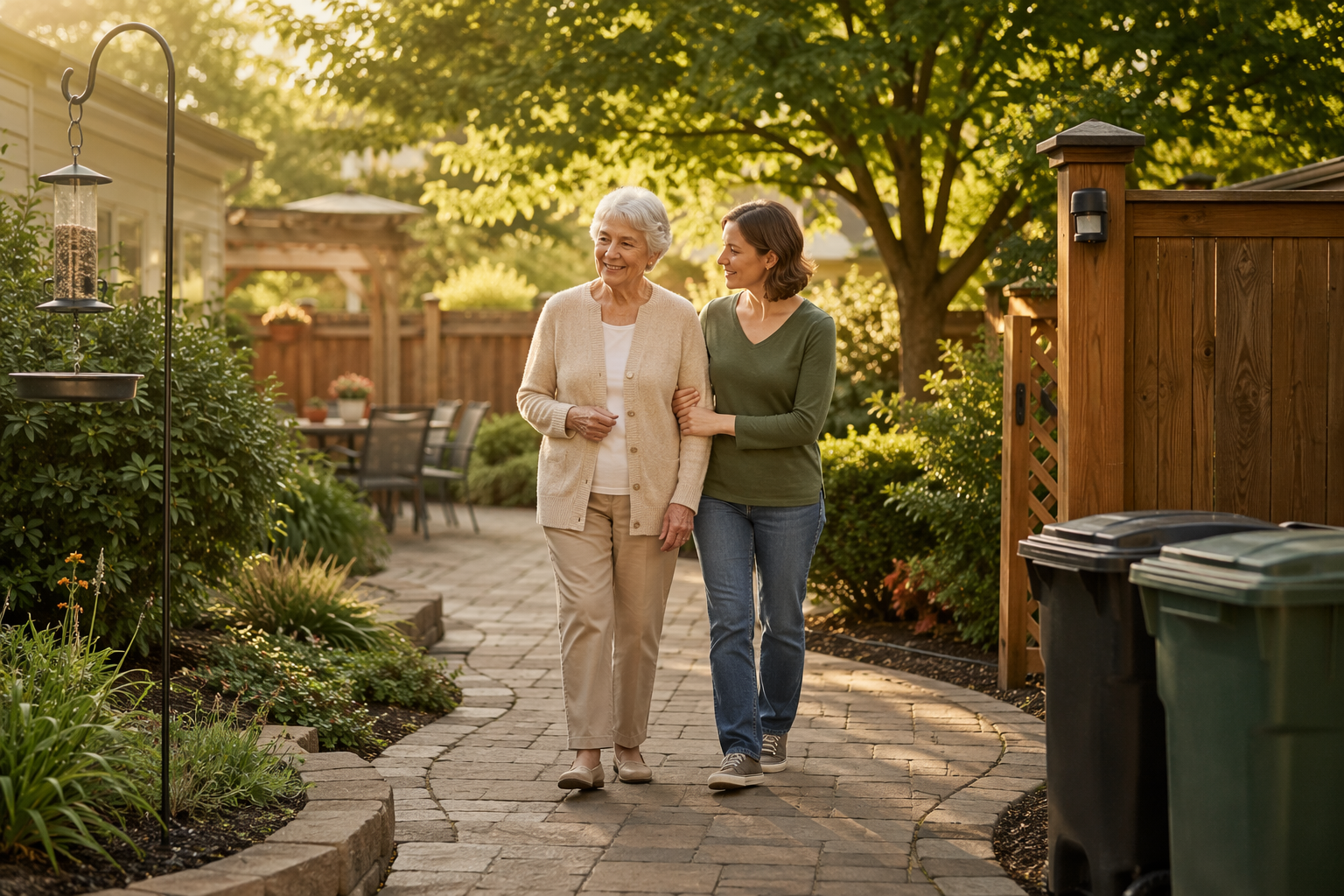
The most useful wildlife safety tips for seniors often start with an ordinary walk, not a warning about animals. Begin at the back door and follow the route an older adult actually uses: to the trash cans, the bird feeder, the garden bed, the hose bib, the compost pail, the shed, and the chair where they sit in the evening. That single pass can show two kinds of trouble at once: what might attract animals and what might make a person stumble, turn quickly, or step onto unstable ground.
That overlap matters because falls are already common among older adults. The CDC reports that more than one in four adults age 65 and older falls each year, and that older adults ages 75 and older have the highest rates of fall-related fractures.[1] The CDC’s STEADI materials push families toward practical corrections such as clear walkways, stable surfaces, and good lighting.[2] Those same corrections also make a yard less inviting to raccoons, rodents, opossums, skunks, and other animals looking for food, cover, or a quiet corner.
Walk the Yard in the Order It Is Used
A backyard safety project gets smaller when it follows the route instead of the whole property line. Stand at the door and ask what happens on a normal day. Is someone carrying a small trash bag after dinner? Stepping out to refill a feeder before breakfast? Crossing gravel to reach tomatoes? Moving a hose while holding pruning shears? Those are the places where wildlife-proofing and fall prevention belong together.
| Yard Stop | What to Look For | Why It Helps |
|---|---|---|
| Back door and steps | Dim lighting, loose mats, uneven threshold, clutter near the exit | Makes the first step outside visible and reduces surprise movement near the door |
| Trash and recycling | Loose lids, overflow bags, bins placed far from the usual path | Removes food odors and reduces after-dark trips |
| Bird feeder area | Seed on the ground, feeder over a walkway, unstable footing under the feeder | Keeps bird-watching while reducing slip spots and rodent attractants |
| Garden beds and hose areas | Hoses across paths, holes, soft edges, tools left in grass | Keeps the working area usable without hidden trip points |
| Side yard, shed, compost | Overgrowth, food scraps, loose gravel, poor sight lines | Reduces animal cover and makes surface changes easier to see |
Humane World’s guidance on keeping wild animals out of homes and yards centers on removing food sources, securing garbage, and closing off attractive shelter or entry points.[3] In a senior’s yard, those steps should be judged by one extra standard: do they also make the walking route simpler? A heavy bin with a tight lid helps with animals, but if it is stored down a dark, uneven side path, it may solve one problem while preserving another.
Start With Food Sources, Because They Change Animal Behavior
Food is where many yards become busier than anyone intended. A trash lid that does not quite close, cat food left outside for “just an hour,” spilled birdseed under a feeder, fruit rotting under a tree, or open compost near a walkway can all turn a familiar path into a place where animals appear at close range. The concern is not that every animal is dangerous. The more ordinary risk is that a person steps out, sees movement, changes direction quickly, or backs away onto a poor surface.
The strongest first pass is usually not expensive. Move trash and recycling to a location that is close enough to reach safely but not pressed against the door. Use bins with secure lids. Avoid setting full bags beside the can, especially overnight. If compost is part of the household routine, keep food scraps in a closed container and make the path to the compost area as clear as the path to the mailbox. Humane World specifically identifies garbage, pet food, birdseed, and other accessible food as attractants to remove or secure.[3]
- Put trash and recycling on a firm, level surface instead of grass, mud, or loose stone.
- Choose lids that can be opened without wrestling, bending deeply, or pulling the bin off balance.
- Keep pet food and water bowls indoors unless someone is outside with them.
- Pick up fallen fruit before it softens and spreads across a walking route.
- Place compost where it does not require a dusk or nighttime trip across uneven ground.
If an adult child has only one Saturday morning, this is the place to spend a good part of it. Food sources quietly pull animals toward exactly the places people walk, carry things, and hurry. Removing them makes the yard calmer without asking an older adult to stop using the yard.
Keep Bird-Watching, but Move the Mess Out of the Path
Bird feeders deserve more care than a quick “take them down.” For many older adults, watching birds is not decoration; it is a daily routine, a reason to step outside, and a small point of connection when other activities have narrowed. The practical question is whether the feeder can stay without putting seed, shells, squirrels, or rodents on the route someone uses every day.
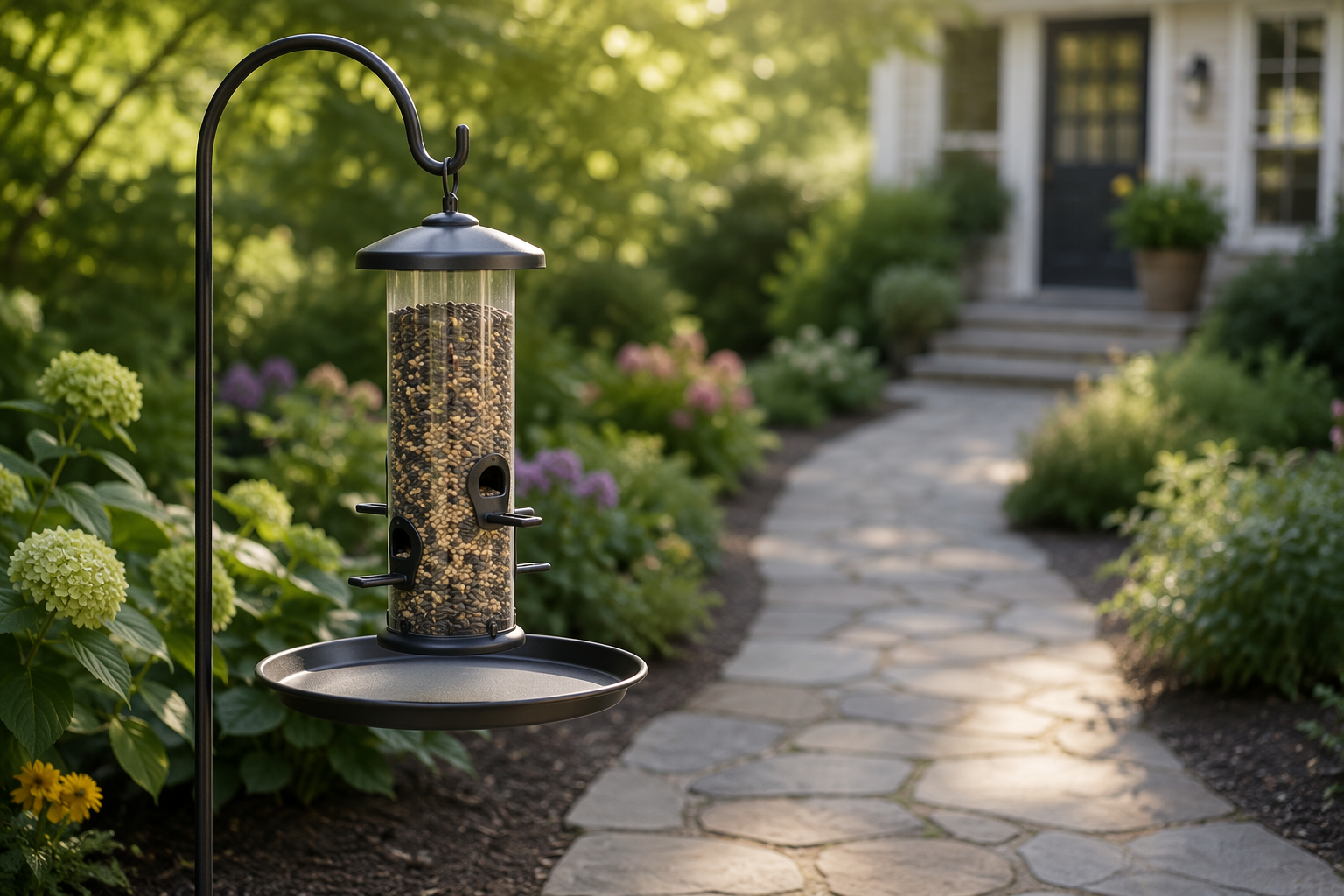
A feeder over a walkway is a fall setup even before wildlife enters the scene. Seed scatters, shells collect, birds drop pieces, and a person may step into the debris while looking up instead of down. Move feeders several feet away from primary walking routes, add a catch tray where practical, and keep the ground below clean enough that it does not become a feeding station for rodents. Humane World includes birdseed among the food sources that can attract wildlife when it is accessible.[3]
Placement matters more than perfection. A feeder visible from a kitchen window may be safer than one that requires crossing wet grass every morning. A pole-mounted feeder set away from the main path is better than a feeder hanging from the porch rail above the step. If filling the feeder requires carrying a bag of seed over gravel, move the storage container closer to a stable surface or switch to a smaller container that is easier to handle.
- Keep feeders away from steps, ramps, door thresholds, and the path to trash bins.
- Use a catch tray or low-mess feeding setup when seed regularly lands on the ground.
- Store seed in a sealed container that does not require bending into a deep bag.
- Set a realistic cleanup routine; if weekly cleanup never happens, the feeder location needs to change.
Treat Animal-Triggered Falls as a Real Mechanism, Not a Wildlife Statistic
There is a useful data point here, but it has to be handled honestly. CDC data discussed by Psychology Today estimated roughly 87,000 fall-related emergency department visits each year in the United States linked to cats and dogs.[4] Ohio’s Department of Aging also treats pets as a fall-prevention issue, noting that animals can get underfoot and create tripping hazards in the home.[5] That is domestic-pet evidence, not wildlife evidence.
No dedicated research was identified that quantifies wildlife-triggered falls among seniors in backyards. That gap should prevent exaggeration, not prevent action. The fall mechanism is easy to recognize: an animal appears, a person startles, turns, steps backward, reaches for balance, or changes course onto a bad surface. The yard work should target those conditions rather than pretend there is a precise wildlife injury rate.
This is also why backyard advice should not be borrowed wholesale from hiking safety guides. Road Scholar’s senior-focused wildlife safety guide is aimed at hikers and campers, with trail and wilderness situations in view.[6] A person taking kitchen scraps to the compost bin does not need a lecture on wilderness encounters. They need fewer attractants near the door, a visible path, and a way to avoid stepping backward into a hole.
Fix the Ground Before Asking Someone to Be More Careful
Repeated reminders are weak protection against a bad surface. A stable path does more work than a dozen warnings, especially when someone is carrying a watering can, watching a bird, or reacting to movement near a shrub. The CDC STEADI materials emphasize clear walkways, stable surfaces, and adequate lighting as part of reducing fall hazards.[2] In the yard, that means looking hard at holes, gravel, hoses, edging, moss, roots, and the soft places where a foot sinks or slides.
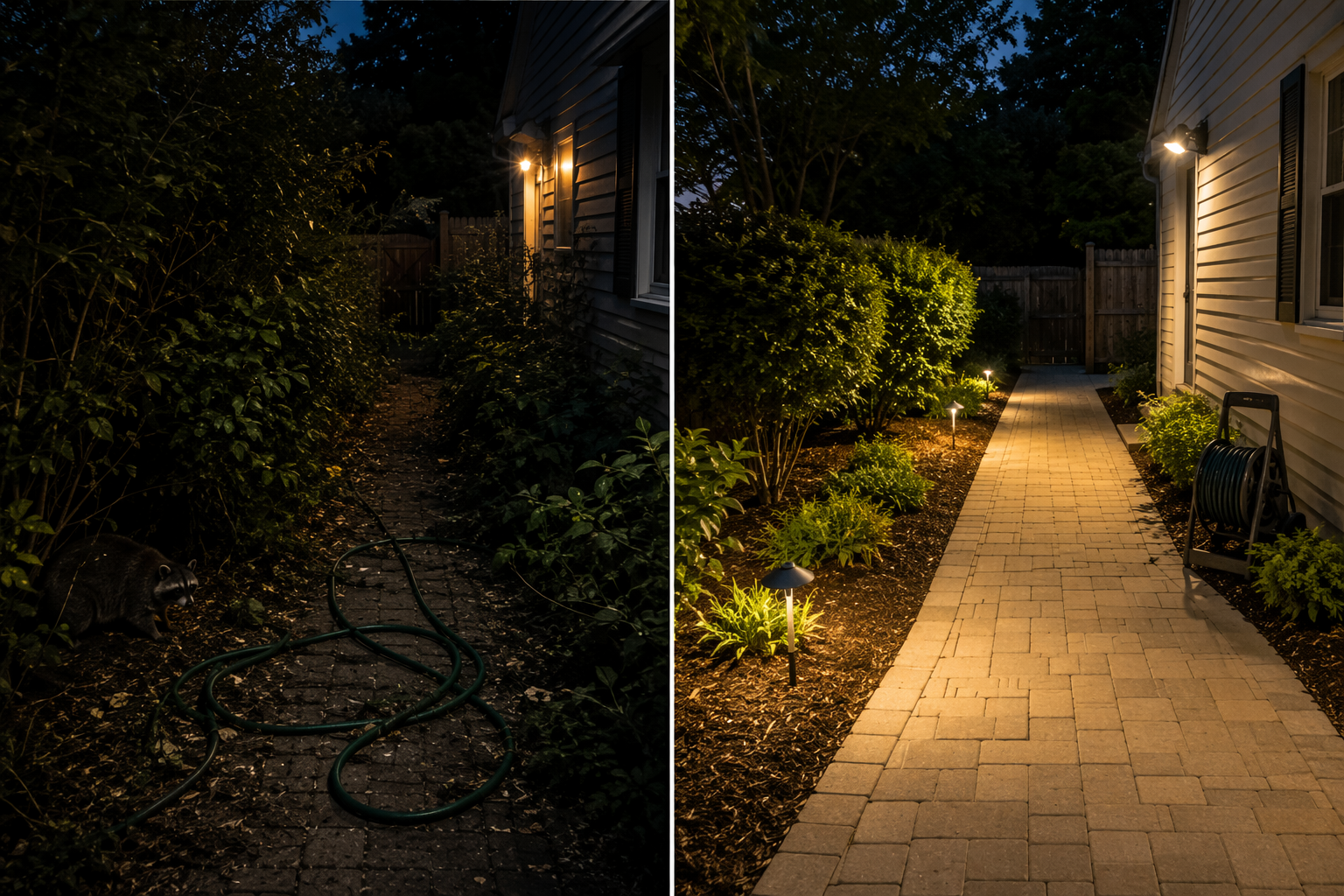
Loose gravel deserves special attention because it often looks tidy from the kitchen window while behaving badly underfoot. Right at Home identifies gravel as an outdoor surface that can increase fall risk for older adults.[7] It also catches seed, food scraps, and small debris in ways that make cleanup harder. If the main route to a feeder, bin, or garden bed crosses loose stone, replace that section with a firmer surface or create a narrower stable path through it.
Holes and low spots are not just lawn problems. They become worse when hidden by leaves, tall grass, or the shadow beside a shed. Fill holes where animals have dug, level sunken spots near edging, and keep the walking line wide enough that a person does not have to brush past shrubs. Clearing overgrowth also removes cover that can make animals feel close before anyone sees them.
- Coil hoses off the walking route every time, not only before company comes.
- Trim shrubs back from paths so feet, edges, and surface changes are visible.
- Fill holes promptly, especially near feeders, compost areas, fences, and garden beds.
- Replace loose stepping stones that rock, tilt, or sit at different heights.
- Keep tools, watering cans, bags of soil, and plant cages out of the route between the door and the garden.
Use Lighting to Remove Surprises, Not to Turn the Yard Into a Parking Lot
Good lighting is one of the rare fixes that helps almost everyone without changing the purpose of the yard. It lets an older adult see the back step, the hose they forgot to move, the edge of the walkway, and the animal near the bin before they are close to it. Motion-sensor lights can be especially useful around trash, compost, gates, and the first few steps outside, where people often assume they know the ground by memory.
The goal is not harsh brightness everywhere. It is enough light in the places where feet make decisions: thresholds, steps, turns, bin handles, feeder access, and the change from path to grass. A light mounted too high behind someone can cast shadows over the surface they need to see. A small solar light half-buried in mulch may mark a border but do little for balance. Test lighting by walking the route at the time it is usually used.
If nighttime trips to the trash are common, the better fix may be changing the routine. Put a small indoor container near the kitchen for late waste and empty it in daylight. That one change removes a food source from the porch, reduces the chance of meeting an animal at the bin, and avoids a low-value trip outside when visibility and balance are worse.
Make the Saturday Checklist Short Enough to Finish
Families rarely need a full landscape redesign to make the yard safer. They need a sequence that respects time, money, and the older adult’s routines. If everything cannot be done at once, choose the changes that affect the most-used route first.
- Secure food sources on walking routes: trash, recycling, pet food, birdseed, fallen fruit, and compost.
- Move bird feeders away from steps and paths, then add seed control rather than removing a valued routine by default.
- Stabilize the ground where someone walks every day, especially gravel, holes, rocking stones, soft edges, and hose crossings.
- Trim overgrowth enough to expose edges, holes, and animals before they are underfoot.
- Add lighting where the route begins, turns, changes surface, or reaches trash, compost, or feeders.
After a fall, the yard is not the only concern. Families who are dealing with an immediate incident may need a broader response plan, including medical follow-up and short-term supervision; a practical next step is what to do in the first 24 hours after your elderly parent falls. For families still planning ahead, yard changes fit naturally beside other aging-in-place home modifications, because the back step and path to the garden are part of the home in daily practice.
The best version of this work does not make the yard feel forbidden. It makes the ordinary routes less cluttered, less attractive to animals, easier to read, and easier to keep using. Remove attractants from walking routes, make surfaces stable, make hazards visible, and protect the outdoor habits that still make the day feel like the person’s own.
References
- Facts About Falls, CDC
- Patient & Caregiver Resources, CDC
- How to Keep Wild Animals Out, Humane World
- Pets as a Risk Factor in Fall-Related Injuries, Psychology Today
- Pets and Falls, Ohio Department of Aging
- Wildlife Safety Tips for Hikers and Campers, Road Scholar
- Summer Outdoor Fall Prevention Tips, Right at Home
Related reading
Noticed something outdated or inaccurate on this page? Flag a correction. We review every report against CDC, NIA, and AARP HomeFit guidance before updating a page.
Part of the Fall Prevention section.