
Does Medicare Cover GPS Trackers for Dementia Patients?
Last reviewed: — Review date is particularly important for Medicare coverage, device specifications, and clinical guidance, which change frequently.
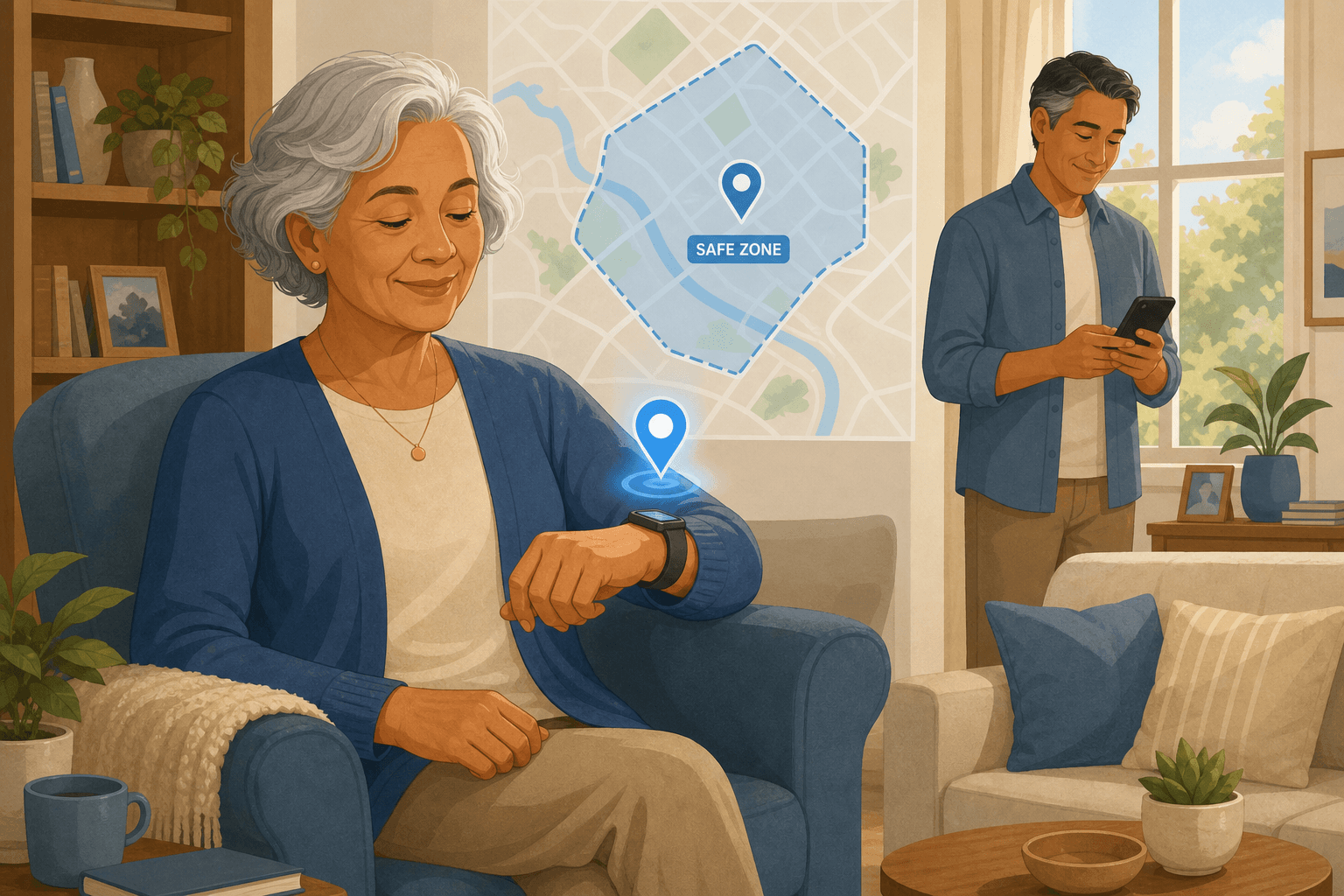
Quick Answer: Does Medicare Cover GPS Trackers for Dementia?
The short answer is no — Original Medicare (Part A and Part B) does not cover GPS trackers for dementia patients. Medicare classifies these devices as safety or convenience items, not as durable medical equipment (DME), which means they fall outside the program's coverage rules. However, that is not the end of the story. Some Medicare Advantage (Part C) plans, certain state Medicaid waivers, and select Long-Term Care Insurance policies may help with the cost. For most families, though, paying out of pocket is the most straightforward path — and the costs are more manageable than many expect.
Why Original Medicare Says No: The DME Definition and Custodial Care Exclusion
To understand why Medicare will not pay for a GPS tracker, you need to look at how the program defines durable medical equipment. Medicare covers DME — items like walkers, hospital beds, and oxygen equipment — only if they serve a therapeutic medical purpose and are primarily used in the home. A GPS tracker does not meet that standard. Its function is location monitoring and safety supervision, not treatment or rehabilitation of a medical condition.
There is a second, equally important reason. Medicare explicitly excludes what it calls custodial care — non-skilled supervision and assistance with daily activities. Tracking a person with dementia to prevent wandering falls squarely into that category. As LTC News states plainly, "Medicare does not cover long-term supervision for dementia" and "Medicare does not cover GPS trackers."
- GPS trackers are not DME: They do not treat, diagnose, or cure a medical condition — they monitor location.
- Wandering prevention is custodial care: Medicare does not pay for supervision, even when it is medically necessary for safety.
- No Part B DME benefit applies: Unlike a glucose monitor or a nebulizer, a GPS tracker has no therapeutic billing code in Medicare's system.
This is not a loophole or an oversight — it is a deliberate policy boundary. Medicare covers medical care, not daily safety management. For families, that distinction is frustrating, but understanding it is the first step toward finding alternative funding.
What About Medicare Advantage (Part C)? The CHRONIC Care Act and SSBCI Benefits
Medicare Advantage plans operate differently from Original Medicare. Private insurers contract with Medicare to offer Part C plans, and they have more flexibility to add supplemental benefits. The CHRONIC Care Act of 2018 expanded that flexibility further by allowing plans to offer Special Supplemental Benefits for the Chronically Ill (SSBCI) — items and services that are not covered by Original Medicare but that "have a reasonable expectation of improving or maintaining the health or overall function of the enrollee as it relates to their chronic disease," according to CMS.
This is where GPS trackers may enter the picture. Some Medicare Advantage plans now include safety devices, home modifications, and non-medical home care as SSBCI benefits. A GPS tracker for a person with documented wandering risk could qualify under this category. However — and this is a critical caveat — coverage varies dramatically by plan, carrier, and state. Not all Medicare Advantage plans offer SSBCI benefits, and among those that do, the specific items covered differ.
There is one additional development worth watching. According to a 2025 market report from Dataintelo, the GPS SmartSole received FDA 510(k) clearance as a Class II medical device in July 2025. This regulatory classification could broaden Medicare Advantage reimbursement eligibility for that specific device, since it now carries a formal medical device designation. If your plan covers SSBCI benefits, a device with FDA clearance may be easier to get approved than an unclassified consumer product.
Medicaid Waivers: A State-by-State Option
Medicaid is a joint federal and state program, and its coverage rules vary significantly depending on where you live. For dementia caregivers, the most relevant pathway is Home and Community-Based Services (HCBS) waivers. These waivers are designed to help people remain in their homes rather than moving to institutional care, and they often cover Assistive Technology Services — a category that can include GPS tracking devices.
As Caring.com notes, "only certain Medicaid waivers in some states will pay for tracking device costs." This is not a universal benefit. Some states explicitly include GPS trackers in their HCBS waiver assistive technology allowances; others do not. There is no single national list, which means you need to investigate your specific state's programs.
Long-Term Care Insurance: An Overlooked Funding Source
Long-Term Care Insurance (LTCI) is often thought of as a way to pay for nursing homes or home health aides, but many policies also cover assistive technology. According to LTC News, "some Long-Term Care Insurance policies may cover assistive technology or reimburse costs depending on the policy." This means a GPS tracker could qualify as a covered expense under your parent's LTCI policy — but only if the policy includes an assistive technology or home safety benefit.
The key is to read the policy carefully. Look for terms like "assistive technology," "durable medical equipment," "home modification," or "safety devices." If the language is vague, call the insurance company and ask directly: "Does this policy cover GPS tracking devices for a person with dementia who is at risk of wandering?" Get the answer in writing. If the policy does cover assistive technology, you may be able to submit the device purchase and monthly subscription fees for reimbursement.
Out-of-Pocket Costs: What to Expect for Device and Subscription
For most families, paying out of pocket is the most realistic option. The good news is that GPS tracker costs have come down significantly in recent years, and the market is competitive. The global dementia GPS tracker market was valued at $3.2 billion in 2025 and is projected to reach $7.9 billion by 2034, according to Dataintelo. That growth is driving innovation and price competition.
Here is a realistic breakdown of what you can expect to pay, based on current market data from multiple sources:
| Device Type | Hardware Cost | Monthly Subscription | Key Features |
|---|---|---|---|
| Wearable watch (e.g., Tranquil, AngelSense) | $229 – $945 | $44.95 – $64.99/month | Two-way talk, geofencing, tamper-proof strap, fall detection |
| Shoe insert (e.g., GPS SmartSole) | $359 | $29.95/month | Discreet, rechargeable, geofencing, FDA-cleared (July 2025) |
| Pendant or clip-on (e.g., Theora Connect) | $247.97 | $29.97/month | Waterproof, one-touch call, GPS + cellular location |
| Compact wearable (e.g., Medical Guardian MGMini) | $149.95 | $39.95+/month | Bluetooth alerts, GPS tracking, two-way talk |
Read the Full Guide
FAQs provide a concise answer. For comprehensive coverage, see these related guides.
- Are Home Monitoring Cameras Legal for Elderly Parents? A Privacy and Consent Guide
A practical FAQ for family caregivers navigating the legal and ethical questions around installing cameras in an aging parent's private home — covering federal and state consent rules, cognitive capacity, placement restrictions, and privacy-respecting alternatives.
- What Medications Increase Fall Risk in Older Adults?
Many common prescription and over-the-counter medications — including sleep aids, antidepressants, blood pressure drugs, and antihistamines — significantly increase fall risk in older adults through sedation, dizziness, and balance impairment. This FAQ explains which drug classes are most dangerous, why older adults are especially vulnerable, and what family caregivers can do to reduce medication-related fall risk.
- Does Medicare Cover PERS? A Complete Breakdown of Original Medicare, Medicare Advantage, Medicaid, and Other Coverage Paths
Original Medicare does not cover personal emergency response systems (PERS), but multiple other funding paths exist. This decision-support guide for adult children explains why Original Medicare excludes PERS, then maps out every practical coverage option — Medicare Advantage supplemental benefits, Medicaid HCBS waivers, VA benefits, PACE programs, and FSA/HSA savings — with specific dollar ranges, program names, and step-by-step verification steps.
Comments
Join the discussion with an anonymous comment.