
Fall Prevention Exercises for Seniors: A 4-Level Balance and Strength Progression Ladder
Last reviewed: — Review date is particularly important for Medicare coverage, device specifications, and clinical guidance, which change frequently.
Why a Progression Ladder Matters for Fall Prevention
Each year, more than 25% of adults aged 65 and older experience a fall, and approximately 3 million are treated in emergency departments for fall-related injuries, according to data cited by Johns Hopkins Medicine. The consequences can be severe — a broken hip or a head injury can mark the beginning of a steep decline in independence. Yet the vast majority of falls are not inevitable. They are the result of a gradual erosion of balance and strength that can be slowed, stopped, and even reversed with the right kind of exercise.
The problem is that most fall prevention advice stops at a list of exercises. Do this. Do that. But balance is not a fixed trait — it is a skill, and like any skill, it must be progressively challenged to improve. A systematic review of 8 randomized controlled trials involving 200 older adults (mean age 75.1 years) found that structured balance training produced improvements of 16% to 42% compared to baseline across different intervention types. Meanwhile, control groups that received no intervention showed declines of 5% to 23% over the same period. In other words, doing nothing is not neutral — it is actively harmful.
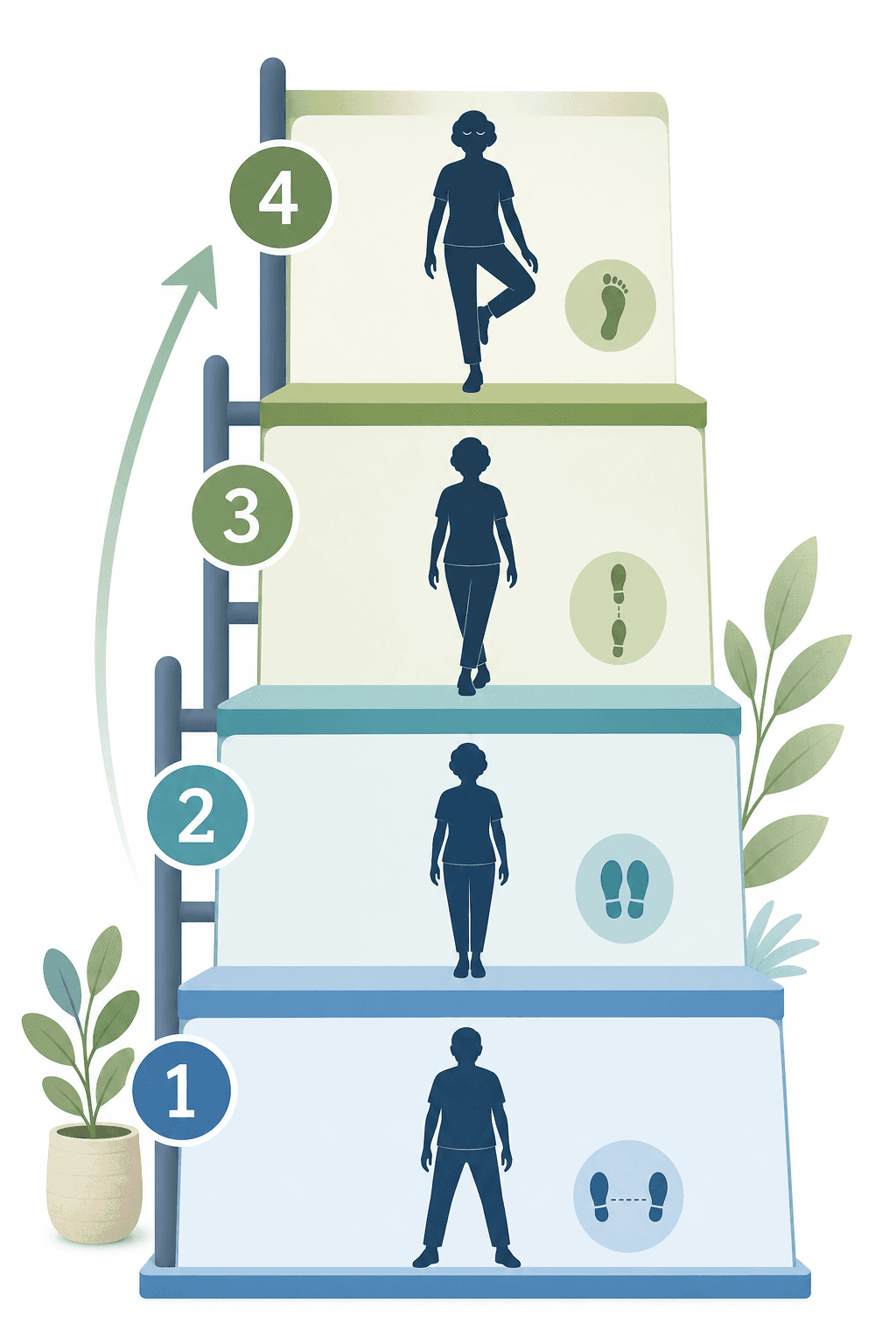
This guide takes a different approach. Instead of a flat list of exercises, it provides a structured 4-level progression ladder — from foundation to advanced — with clear, measurable gate criteria for moving from one level to the next. The goal is to give seniors and their caregivers a concrete path from unsteady to confidently balanced, with no guesswork about when to advance.
Read the Full Guide
FAQs provide a concise answer. For comprehensive coverage, see these related guides.
- Grab Bars for Bathroom Safety: A Complete Installation Guide for Family Caregivers
A correctly placed and properly mounted grab bar is one of the highest-impact, lowest-cost steps a caregiver can take to reduce bathroom fall risk — but common installation errors can nullify the benefit or create new hazards. This guide walks family caregivers through bar selection, ADA-aligned placement by bathroom zone, wall-surface anchoring methods, load testing, when to hire a certified professional, and concrete funding options including Medicare Advantage and VA grants.
- Nighttime Fall Prevention: How to Make the Bed-to-Bathroom Route Safe for Older Adults
The most dangerous moment for an older adult is the nighttime trip from bed to bathroom — when grogginess, poor lighting, and urgency collide. This guide provides a focused strategy for family caregivers to reduce fall risk along that critical path.
- Balance Exercises to Prevent Falls in Older Adults: An Evidence-Based Guide for Seniors and Family Caregivers
Structured balance and strength exercises are the most evidence-supported way to reduce fall risk in older adults — cutting falls by 15–58% depending on the program — yet most caregivers and seniors lack a safe, practical starting point. This guide explains what the research shows, how to begin at home, how to progress safely, and when to involve a physical therapist.
Comments
Join the discussion with an anonymous comment.