
Senior Health Care Services: A Family Guide to the Full Continuum of Care
Last reviewed: — Review date is particularly important for Medicare coverage, device specifications, and clinical guidance, which change frequently.
Why Understanding the Full Continuum Matters Before a Crisis
Most family caregivers first encounter the senior care system the same way: in a hurry, under stress, and with incomplete information. A parent falls and breaks a hip. A dementia diagnosis arrives. A spouse can no longer manage the stairs. In that moment, the instinct is to find a solution — fast — and the options that surface first are often the most expensive or the most institutional, simply because they are the most visible.
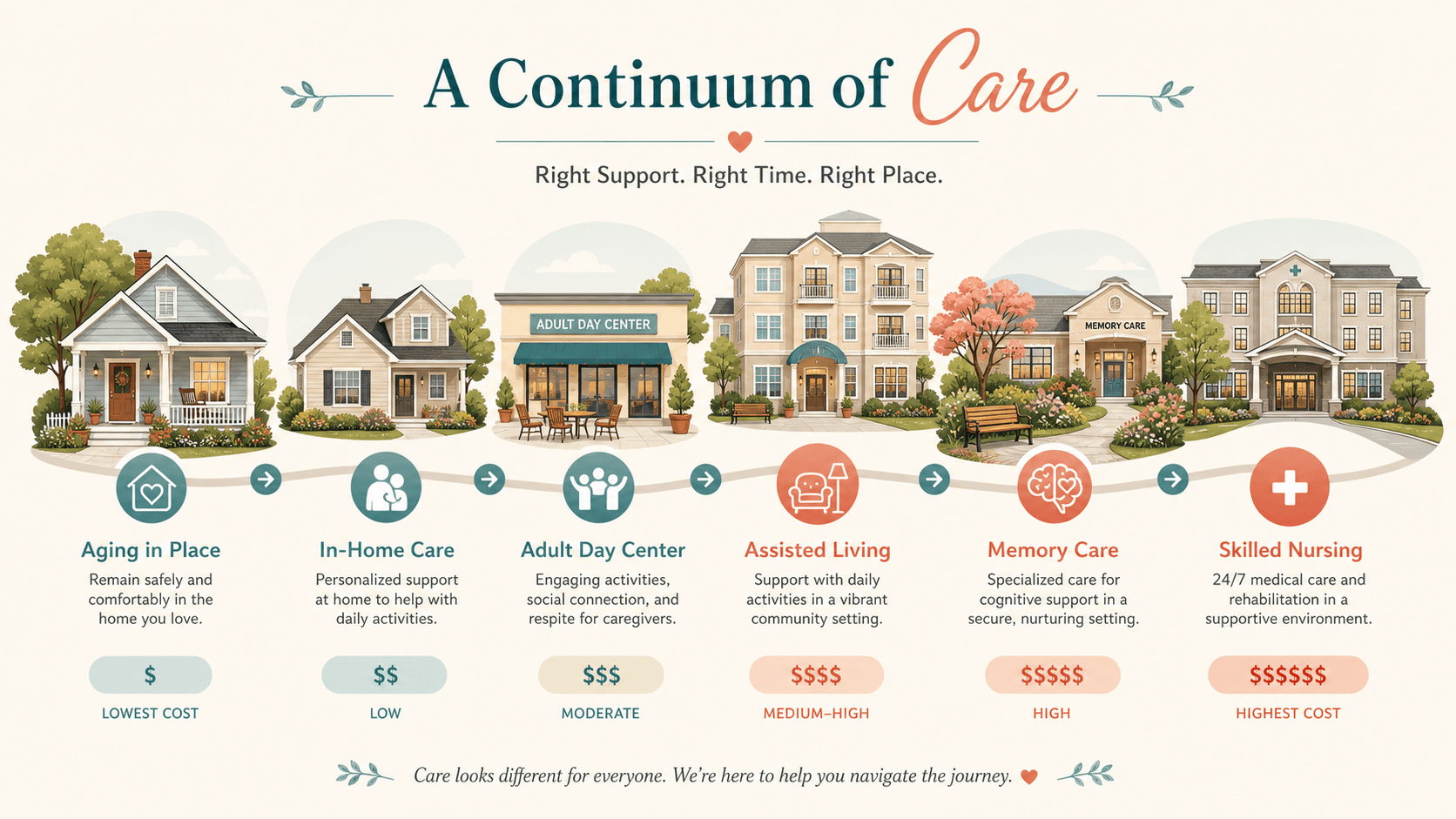
This guide takes a different approach. It is written for the early-stage caregiver — the person who senses that care needs are emerging but has not yet hit a crisis point. The core argument is straightforward: the senior health care services system is not a collection of unrelated options. It is a continuum that runs from light-touch, low-cost services like volunteer companionship all the way to round-the-clock skilled nursing. Families who understand this continuum before they need it make decisions that are less expensive, less emotionally costly, and better matched to the actual needs of the person they care for.
The Senior Care Continuum: A Framework for Matching Care to Changing Needs
The continuum of care is a simple but powerful idea: as a person's functional abilities change, the type and intensity of support they need changes too. At one end, a healthy older adult may need nothing more than a weekly phone check-in and a ride to the grocery store. At the other end, a person with advanced dementia or multiple chronic conditions may need 24-hour nursing supervision. Between those two poles lies a wide range of services — many of which families never learn about until they are already past the point where those options would have been most useful.
Read the Full Guide
FAQs provide a concise answer. For comprehensive coverage, see these related guides.
- Medication Management Technology for Family Caregivers: From Simple Apps to Smart Dispensers
Family caregivers managing a loved one's medications now have technology options beyond the pill organizer—from pharmacy blister packs and mobile apps to smart dispensers that alert you to missed doses. This guide helps you choose the right tool based on your situation, with evidence on adherence and cost.
- In-Home Senior Care Cost in 2026: Hourly Rates, Monthly Projections, and State-by-State Guide
A comprehensive cost guide for adult children researching in-home care for a parent. Covers the national median hourly rate ($34–$35), monthly costs at different care schedules, full state-by-state data, agency vs. private hire premiums, and annual projections to help families build an accurate budget.
- How to Pay for Senior Health Care Services: A Family Guide to Medicare, Medicaid, Private Pay, and Everything in Between
This comprehensive guide helps adult children and spousal caregivers navigate the complex landscape of paying for senior care. It covers the full continuum of services—from hospital stays and skilled nursing to assisted living and nursing homes—explaining what Medicare actually covers, how Medicaid works, and the full range of private pay, insurance, and government benefit options available.
Comments
Join the discussion with an anonymous comment.