
Clinical term
Alpha-Gal Syndrome Symptoms and Management in Older Adults
Last verified 2026-08-25

The meal was not unusual: maybe beef stew, pork chops, lamb, venison, or a burger after a day outside. The older adult went to bed feeling fine. Then, around 2 a.m., stomach cramps started. Maybe nausea, vomiting, diarrhea, heartburn, itching, dizziness, or a frightening weak feeling followed. It is easy to call that indigestion, food poisoning, reflux, or “something that happens at this age.”
Alpha-gal syndrome belongs on the list when symptoms start hours after eating mammal meat or being exposed to mammal-derived ingredients, especially in someone who gardens, hikes, hunts, farms, or lives in an area where tick bites are common. The delay is the trap. CDC says symptoms often appear 2 to 6 hours after exposure; Mayo Clinic and the American Academy of Allergy, Asthma & Immunology describe a 3 to 8 hour delay, which is why reactions may wake people in the middle of the night.[1][2][3]
This article is for education and planning, not a diagnosis. Anyone with possible alpha-gal syndrome should be evaluated by a clinician, and emergency symptoms should be treated as emergencies.
First: know the emergency line
Do not wait to see whether a severe reaction “settles down.” Call 911 for trouble breathing, throat tightness, swelling of the lips, tongue, throat, or eyelids, faintness, a drop in blood pressure, collapse, or signs of anaphylaxis. CDC lists shortness of breath, low blood pressure, swelling, dizziness or faintness, and anaphylaxis among possible alpha-gal syndrome symptoms.[1]
If epinephrine has been prescribed, use it for a severe allergic reaction as directed, then still seek emergency care. Epinephrine is not a reason to stay home after a serious reaction; it is the bridge to emergency treatment.[7]
What alpha-gal syndrome is
Alpha-gal syndrome, often shortened to AGS, is an allergy related to a sugar molecule called alpha-gal. Alpha-gal is found in most mammals and in some products made from mammals. In the United States, AGS is most often associated with tick bites, especially bites from the lone star tick.[6]
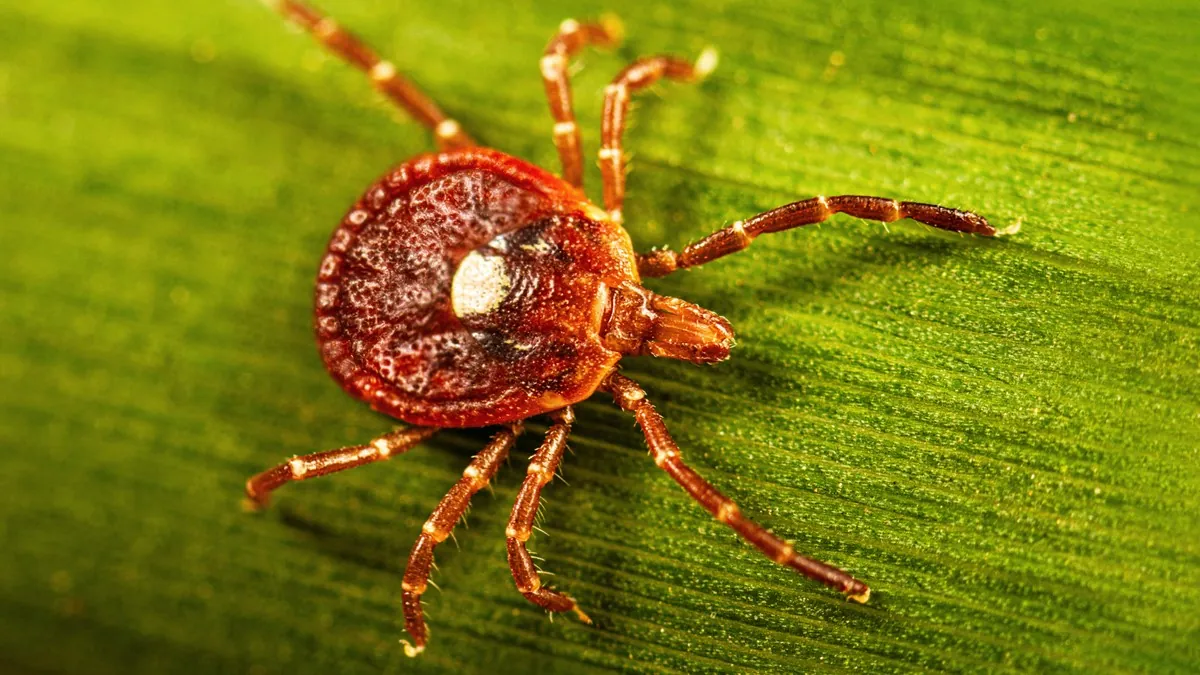
The foods that most often raise the question are mammal meats: beef, pork, lamb, venison, rabbit, and organ meats. Some people also react to dairy or to ingredients made from mammals, including gelatin, broths, lard, tallow, and suet.[7][8]
Chicken, turkey, fish, eggs, fruits, and vegetables do not contain alpha-gal and are generally listed by CDC as foods that people with AGS can eat, unless they have a separate allergy or another medical reason to avoid them.[8]
Why older adults and caregivers miss the pattern
There is no good evidence that older adults have a special geriatric version of alpha-gal syndrome. The problem is more ordinary than that: delayed stomach symptoms in an older adult are often explained away. A spouse may clean up after vomiting and blame dinner. An adult child may hear “my stomach was bad again” and think reflux, a virus, IBS, medication side effects, or age.
The condition is still relevant to older adults. In a CDC analysis of alpha-gal IgE test results from 2017 through 2022, most reported U.S. cases were in adults. Among tested people aged 70 and older, 44.6% had a positive alpha-gal IgE result, and positive results were more common in older people than in those with negative results.[4]
Those numbers do not mean that nearly half of all people over 70 have alpha-gal syndrome. They describe people who were tested, not the whole older-adult population, and a positive antibody test alone is not a diagnosis. A 2026 blood-donor serosurvey also estimated higher alpha-gal IgE seroprevalence in older donor groups — 24.3% in ages 65 to 74 and 25.8% in ages 75 and older — but blood donors are still a selected group, not a direct measure of symptomatic disease in every community.[5]
The symptom pattern to track
The useful question is not just “Did symptoms happen after eating?” It is “What was eaten, what products or medicines were used, and how many hours later did symptoms start?”
| What to notice | Why it matters |
|---|---|
| Symptoms begin 2 to 6 hours after exposure, per CDC, or 3 to 8 hours in Mayo Clinic and AAAAI descriptions | The delay can make dinner look unrelated to a 2 a.m. reaction |
| Stomach symptoms: nausea, vomiting, severe stomach pain, heartburn or indigestion, diarrhea | AGS can look like ordinary gastrointestinal trouble |
| Skin symptoms: hives, itchy rash, flushing, or swelling | Skin findings may help connect the episode to allergy rather than reflux or a stomach virus |
| Breathing, blood pressure, or neurologic symptoms: cough, shortness of breath, dizziness, faintness, low blood pressure | These can signal a severe reaction and need urgent attention |
| Foods or ingredients: beef, pork, lamb, venison, rabbit, organ meats, dairy for some people, gelatin, broths, lard, tallow, suet | The trigger may be obvious meat or a hidden mammal-derived ingredient |
| Recent tick exposure: gardening, hiking, brush clearing, hunting, farm chores, pets that bring ticks indoors | A bite weeks or months earlier may be the clue that makes the delayed food reaction make sense |
CDC’s symptom list includes hives or itchy rash, nausea or vomiting, severe stomach pain, heartburn or indigestion, diarrhea, cough or shortness of breath, low blood pressure, swelling of the lips, throat, tongue, or eyelids, dizziness or faintness, and anaphylaxis.[1]
The stomach-first version is the one many families miss. If an older adult has repeated nighttime vomiting, diarrhea, or severe abdominal pain after mammal-meat dinners, write down the timing before memory smooths it over. “Pork roast at 6:30, asleep by 10, vomiting at 1:45” is much more useful than “bad stomach overnight.”
A tick bite does not have to be fresh
Many people do not connect last month’s tick bite, or a bite they never noticed, with this week’s reaction. That is one reason to include outdoor exposure in the notes. Gardeners, hikers, hunters, dog owners, and people who work around brush or fields may have tick exposure without thinking of themselves as “outdoorsy.”
How clinicians confirm it
Diagnosis is not made from a single clue. CDC describes diagnosis as a combination of a patient history, physical exam, and a blood test for alpha-gal IgE antibodies.[6]
This distinction matters. A positive alpha-gal IgE test can show sensitization, but by itself it does not prove that the person’s symptoms are caused by alpha-gal syndrome. The meal history, timing, symptoms, tick exposure, and clinician’s exam all matter.[6]
Bring the notes. Include foods, symptom start time, medicines and supplements taken that day, recent vaccines or procedures if relevant, outdoor exposure, and whether there were skin, breathing, swelling, dizziness, or fainting symptoms. For an adult child helping a parent, a two-week meal-and-symptom log may be more helpful than a long verbal story.
Management is a four-part routine
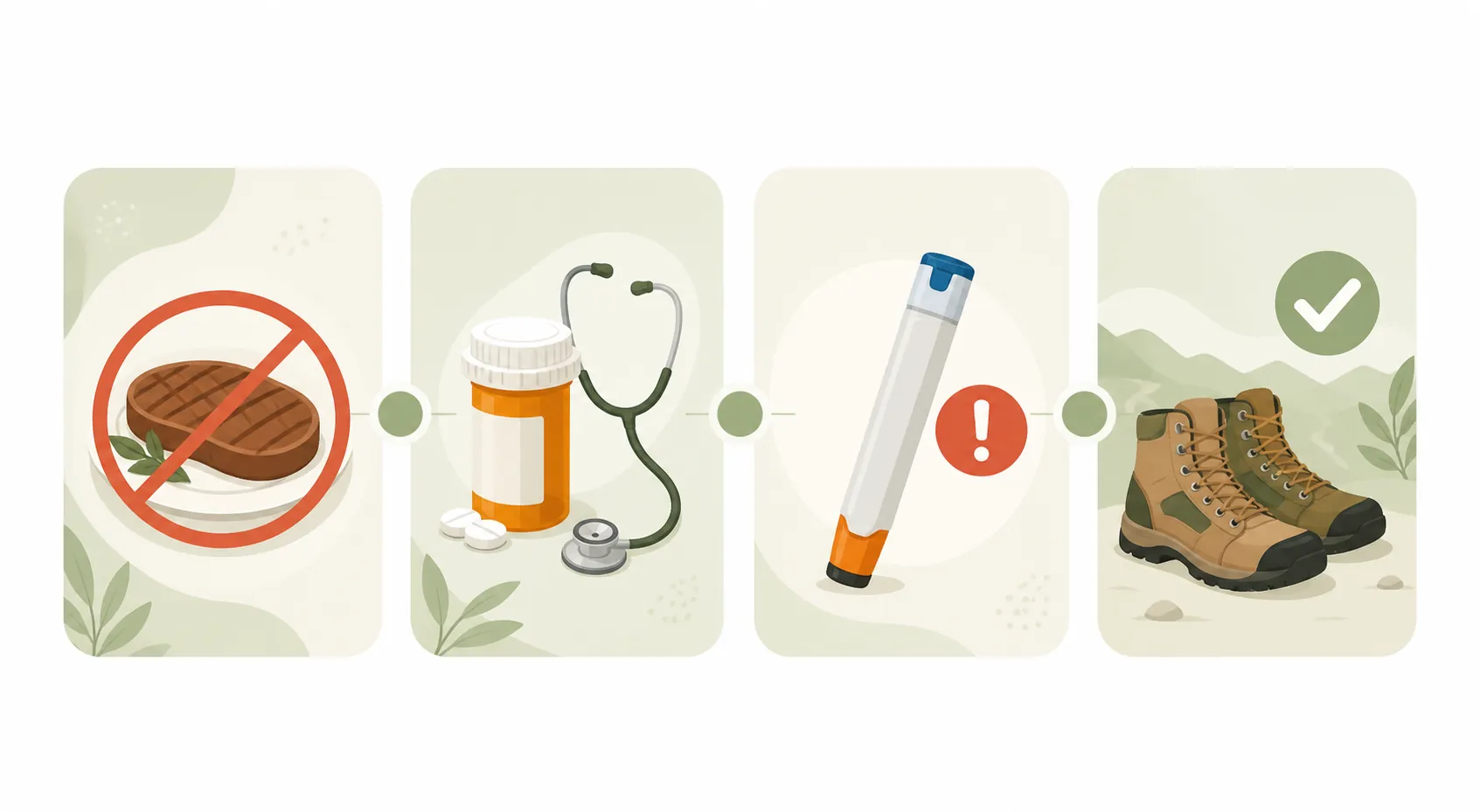
Once alpha-gal syndrome is suspected or diagnosed, “avoid red meat” is too thin to be a plan. Day-to-day management usually has four working parts: avoid known food and ingredient triggers, review medicines and medical products with clinicians, stay ready for severe reactions, and prevent new tick bites.[7]
1. Make the food plan specific
The first pass is the obvious one: avoid mammal meats such as beef, pork, lamb, venison, rabbit, and organ meats if they trigger symptoms. For some people, dairy also causes symptoms; for others it does not. That decision belongs with the treating clinician or allergist, not with guesswork after one bad night.[7]
The second pass is where families often find surprises: gelatin, broths, meat stocks, gravies, lard, tallow, suet, and other mammal-derived ingredients. CDC notes that products containing alpha-gal can include foods, medicines, and other products, and that cow’s milk is the only alpha-gal-containing ingredient that must be identified on U.S. labels under the federal food allergen labeling law.[8]
At home, this means reading labels on soups, sauces, snacks, supplements, and desserts with the same seriousness used for any other allergy. In restaurants, it means asking about broth, gravy, cooking fat, sausage, bacon, gelatin-containing desserts, and whether vegetables were cooked with mammal fat or meat stock.
2. Review medicines, vaccines, and procedures without stopping them on your own
This is especially important for older adults who take several prescriptions. Some medications and medical products may contain mammal-derived ingredients or be made with them. CDC and Mayo Clinic list items to discuss with a clinician, including gelatin, glycerin, magnesium stearate, bovine extract, heparin, cetuximab, some antivenoms, porcine pancreatic enzymes, bioprosthetic heart valves, and gelatin-containing vaccines.[7][9]
That list is not a reason to stop blood thinners, heart medicines, diabetes medicines, pancreatic enzymes, vaccines, or any other prescribed treatment without medical advice. It is a reason to tell every prescriber, pharmacist, dentist, surgeon, and vaccine provider about suspected or confirmed alpha-gal syndrome before a new medicine, injection, procedure, implant, or emergency treatment when there is time to do so.
A practical step is to keep an allergy note in the medication list: “Possible/confirmed alpha-gal syndrome — review mammal-derived ingredients.” Ask the pharmacist to check inactive ingredients when a medicine changes manufacturer, because the pill may look similar while the excipients differ.
3. Keep epinephrine available if prescribed
People with severe reactions may be prescribed epinephrine, including an auto-injector or nasal spray. CDC advises using epinephrine for severe reactions as prescribed and still seeking emergency care.[7]
For an older adult living alone, the plan needs to be more concrete than “carry it.” Keep epinephrine where it can be reached at night. Teach a spouse, neighbor, or nearby adult child where it is and when to use it. Check expiration dates. If arthritis, tremor, vision loss, or memory problems make the device hard to use, ask the clinician or pharmacist for hands-on practice with a trainer device or another option.
4. Prevent new tick bites
Tick prevention is not just about avoiding Lyme disease or other tick-borne infections. CDC includes avoiding tick bites as part of alpha-gal syndrome management, because new tick bites may reactivate or worsen reactions.[7]
For older gardeners and hikers, the useful habits are plain: use EPA-registered repellents as directed, treat clothing and gear when appropriate, stay out of brush and tall grass when possible, shower and check for ticks after outdoor time, and check pets that may carry ticks indoors. Caregivers helping a parent who still hikes can use the site’s senior hiker tick-safety checklist as a practical companion for post-outdoor checks and removal steps.
For families with farm, pasture, barn, or machinery-area exposure, tick prevention may need to be folded into broader outdoor safety routines. The farm-safety guide on protecting aging parents from farm accidents may be useful if the older adult’s tick exposure comes from daily chores rather than recreation.
What to write down after a possible reaction
The notes do not have to be elegant. They have to be specific. After any possible reaction, record:
- Time symptoms began and time of the last meal or snack.
- All mammal foods eaten: beef, pork, lamb, venison, rabbit, organ meats, dairy, gelatin-containing desserts, broths, gravies, lard, tallow, or suet.
- Medicines, supplements, injections, vaccines, or medical products used that day.
- Symptoms: stomach pain, nausea, vomiting, diarrhea, heartburn, hives, itching, swelling, cough, shortness of breath, dizziness, faintness, or collapse.
- Recent tick exposure: gardening, hiking, hunting, brush clearing, pet contact, farm chores, or known tick bites.
- What helped: antihistamine, epinephrine, emergency care, or time.
If symptoms include breathing trouble, swelling, faintness, low blood pressure, or signs of anaphylaxis, the note-taking can wait. Get emergency care first.
Can alpha-gal syndrome go away?
There is no cure or vaccine for alpha-gal syndrome. Some people may regain tolerance over time, especially if they avoid additional tick bites, but this is individualized and should be discussed with an allergist rather than tested alone at home.[7][10][11]
That uncertainty is one more reason the routine matters. If a tick-exposed older adult has delayed nighttime stomach symptoms, hives, swelling, breathing symptoms, dizziness, faintness, or collapse after mammal-derived foods or products, treat the severe signs as urgent, write down the timing and exposures, seek medical evaluation, and build the daily plan around food avoidance, medication review, epinephrine readiness, and tick-bite prevention.
References
- Symptoms of Alpha-gal Syndrome — CDC
- Alpha-gal syndrome - Symptoms and causes — Mayo Clinic
- Alpha-gal and Red Meat Allergy — American Academy of Allergy, Asthma & Immunology
- Geographic Distribution of Suspected Alpha-gal Syndrome Cases — United States, January 2017–December 2022 — MMWR, July 28, 2023
- Seroprevalence of Alpha-gal Immunoglobulin E Antibodies Among Blood Donors — United States, 2024 — MMWR, 2026
- About Alpha-gal Syndrome — CDC
- Managing Alpha-gal Syndrome — CDC
- Fast Facts: Products That May Contain Alpha-gal — CDC
- Alpha-gal syndrome - Diagnosis and treatment — Mayo Clinic
- Alpha-gal Syndrome — Cleveland Clinic
- Alpha-gal syndrome: Recognizing and managing a tick-bite–associated meat allergy — Cleveland Clinic Journal of Medicine
Browse more in the Glossary.