
STEADI: Intervene
A Tick Safety Checklist Every Senior Hiker Needs
A CDC-based, three-phase tick safety checklist for older hikers — what to do before a hike, on the trail, and after coming home — plus the minutes-after steps for finding and safely removing an attached tick, and why the senior-specific stakes make the routine worth following.
An older hiker may remember the water bottle, the trekking poles, the weather app, and the extra layer, then miss the two parts of tick prevention that matter most: what happens before the boots go on, and what happens after the hike feels finished. That is why a tick safety checklist for senior hikers deserves its own place beside the usual fall, heat, and balance planning.
The senior-specific reason is not guesswork. In a CDC Emerging Infectious Diseases analysis of Medicare claims, researchers identified 88,485 Lyme disease diagnoses among Medicare beneficiaries age 65 and older during 2016–2019. The average incidence was 123.5 diagnoses per 100,000 person-years, roughly seven times the 16.6 per 100,000 surveillance-reported rate for the same age group and period. That finding is about Medicare claims diagnoses among beneficiaries 65 and older; it is not proof that every older hiker is likely to get Lyme disease, and it should not be read that way.[1]
It does tell us something practical: the ordinary surveillance numbers may not show the whole burden among older adults. In April 2026, CDC also reported that weekly emergency department visit rates for tick bites were at the highest level for that time of year since 2017 in all U.S. regions except the South Central region; the same release cited about 31 million tick bites each year and about 476,000 people treated for Lyme disease annually.[2] Those are different kinds of measures — ER visits, estimated bites, and treated Lyme disease — and they should stay separate. Together, they are enough reason to make tick prevention automatic, not enough reason to give up the trail.

This checklist is prevention guidance, not a diagnosis or treatment plan. If you have a new rash, fever, unusual fatigue, joint pain, confusion, weakness, or symptoms that worry you after a bite, contact a clinician. For help sorting possible tick-borne illness from changes that get blamed too easily on aging, use the follow-up guide on tick-borne illness symptoms older adults often miss.
The three-phase routine: before, on the trail, after
CDC guidance is usually organized around preventing tick bites before going outdoors and checking for ticks after coming indoors. For hikers, it is easier to make that guidance stick as a three-phase routine: before the hike, on the trail, and after coming home.[3] The point is to remove decisions from the tired part of the day.
| When | What to do | Why it matters |
|---|---|---|
| Before the hike | Treat clothing and gear correctly; choose an EPA-registered skin repellent; dress so ticks are easier to see. | Most protection is set up before you reach the trailhead. |
| On the trail | Walk near the center of the trail, avoid brush and tall grass, and reapply repellent according to the product label. | This reduces contact with the places ticks wait for a host. |
| After coming home | Put clothes in the dryer, shower within 2 hours, and check the seven key body zones. | This is where many bites are found before they become longer attachments. |
| If you find an attached tick | Remove it with fine-tipped tweezers, clean the area, and watch for symptoms. | Prompt, proper removal lowers risk and avoids the old home remedies that waste time. |
Before the hike: set up protection before packing the car
The biggest mistake is treating tick prevention as something to remember at the trailhead. By then, people are finding restrooms, adjusting poles, greeting friends, and deciding whether to carry the rain shell. The reliable work starts at home.
Use permethrin on clothing and gear, not on skin
CDC recommends treating boots, pants, socks, and other gear with products containing 0.5% permethrin. The CDC Yellow Book is clear about the boundary: permethrin is for clothing and gear only, not for direct application to skin.[3][4]
For a senior hiker, socks are worth calling out. A tick that crawls up from leaf litter reaches socks and pant cuffs first, not the brim of a hat. Treated socks and pants do not make a person invincible, but they make the most likely contact points less welcoming.
Treat clothing 24–48 hours before packing so items can dry before use, following the product label. Factory-treated clothing is another product-neutral option. If treating items yourself, keep the job out of the morning scramble and away from skin application habits; this is a laundry-and-gear step, not a lotion step.[4]
Choose a repellent by active ingredient, not by the front label
For exposed skin, CDC recommends EPA-registered insect repellents. Common active ingredients include DEET, picaridin, IR3535, oil of lemon eucalyptus, para-menthane-diol, and 2-undecanone.[3] For practical shopping, Wisconsin Department of Health Services lists these working concentration ranges for tick bite prevention: 20–30% DEET, 10–20% picaridin, 15–20% IR3535, and 30–40% oil of lemon eucalyptus.[5]
Protection time varies by ingredient and concentration. Harvard Health’s Lyme prevention guidance notes that 20–35% DEET generally lasts about 2–4 hours, higher DEET concentrations may last up to 8 hours, and 20% picaridin may last 8–14 hours. The same source notes that do-it-yourself permethrin treatment on clothing lasts about 6 weeks or 6 washes.[6]
That does not mean everyone needs the strongest possible product for every walk. A short, dry, open path near home is not the same as a half-day hike through shaded woods after rain. The useful habit is to read the active ingredient and duration, then carry the bottle if the hike will outlast the protection window.
If you use sunscreen, put it on first
For sunny hikes, apply sunscreen first and repellent second. CDC Yellow Book guidance notes that DEET applied over sunscreen can reduce the sunscreen’s SPF by about one-third, so older hikers who burn easily should not treat the two products as interchangeable.[4]
A simple order works best: sunscreen at home, repellent before the trail, repellent again later if the label says the protection window has passed. If someone else helps apply repellent to the back of the neck, ankles, or sleeves, have them wash their hands afterward.
Dress for finding ticks, not for looking like a catalog
Light-colored long pants, long sleeves, and socks make crawling ticks easier to spot. Tucking pants into socks is not elegant, but it closes the direct route from ankle to knee. On a humid day, some hikers will compromise; if so, keep the strongest protection where contact is most likely: shoes, socks, pant cuffs, ankles, and lower legs.
- Treat boots, socks, pants, and daypack with 0.5% permethrin according to the label, 24–48 hours before packing.
- Pack an EPA-registered repellent with a known active ingredient and enough duration for the hike.
- Apply sunscreen first, then repellent.
- Wear light-colored clothing when practical so ticks are easier to see.
- Decide before leaving home where the post-hike tick check will happen: bathroom, mudroom, laundry area, or motel room.
On the trail: keep the habit small enough to remember
On-trail tick safety is blessedly short. Walk near the center of the trail. Avoid brushing against tall grass, leaf litter, and overgrown edges when there is a clear path available. CDC includes both actions in its prevention guidance.[3]
This is especially useful advice for group hikes, where the person at the back may step aside for faster walkers or drift toward vegetation while talking. If the trail narrows, move through and then check socks and pant legs at the next stop rather than standing in brush to rearrange the whole group.
Reapply repellent according to the label and the expected protection time. Sweat, rain, a long lunch stop, or a hike that stretches beyond the plan can all make the original application less dependable. The goal is not to spray constantly; it is to avoid discovering at hour five that the repellent you chose was a two-hour product.
After coming home: do this before lunch, errands, or the easy chair
This is the part that saves trouble and gets skipped. People come home hungry. Dogs need water. Someone wants to unload the cooler. The tick check becomes “in a minute,” and the minute disappears.
Make the first move mechanical: take off hiking clothes and put them in the dryer. CDC says to tumble dry clothes on high heat for 10 minutes to kill ticks after coming indoors; damp clothes may need more time.[3] Wisconsin DHS gives the useful home-rule version: tumble dry clothes on high heat for 10 minutes, or 60 minutes if they are damp.[5]
If clothes must be washed first, use hot water when the fabric allows it. CDC notes that cold and medium-temperature water will not kill ticks effectively.[3] The dryer step is still the one to protect; it is easier to remember if hiking clothes never land on a chair, bed, or laundry pile first.
Shower within two hours
CDC recommends showering within two hours of coming indoors and notes that it has been shown to reduce the risk of getting Lyme disease. A shower can wash off unattached ticks and give you a natural time to look closely at skin.[3]
For older hikers with stiff shoulders, limited vision, or balance concerns, the shower is not the whole check. Use a handheld mirror, a wall mirror, or a trusted hiking partner or spouse for the hard-to-see places. This is not fussing; it is the same kind of practical adaptation as using poles on a rocky descent.
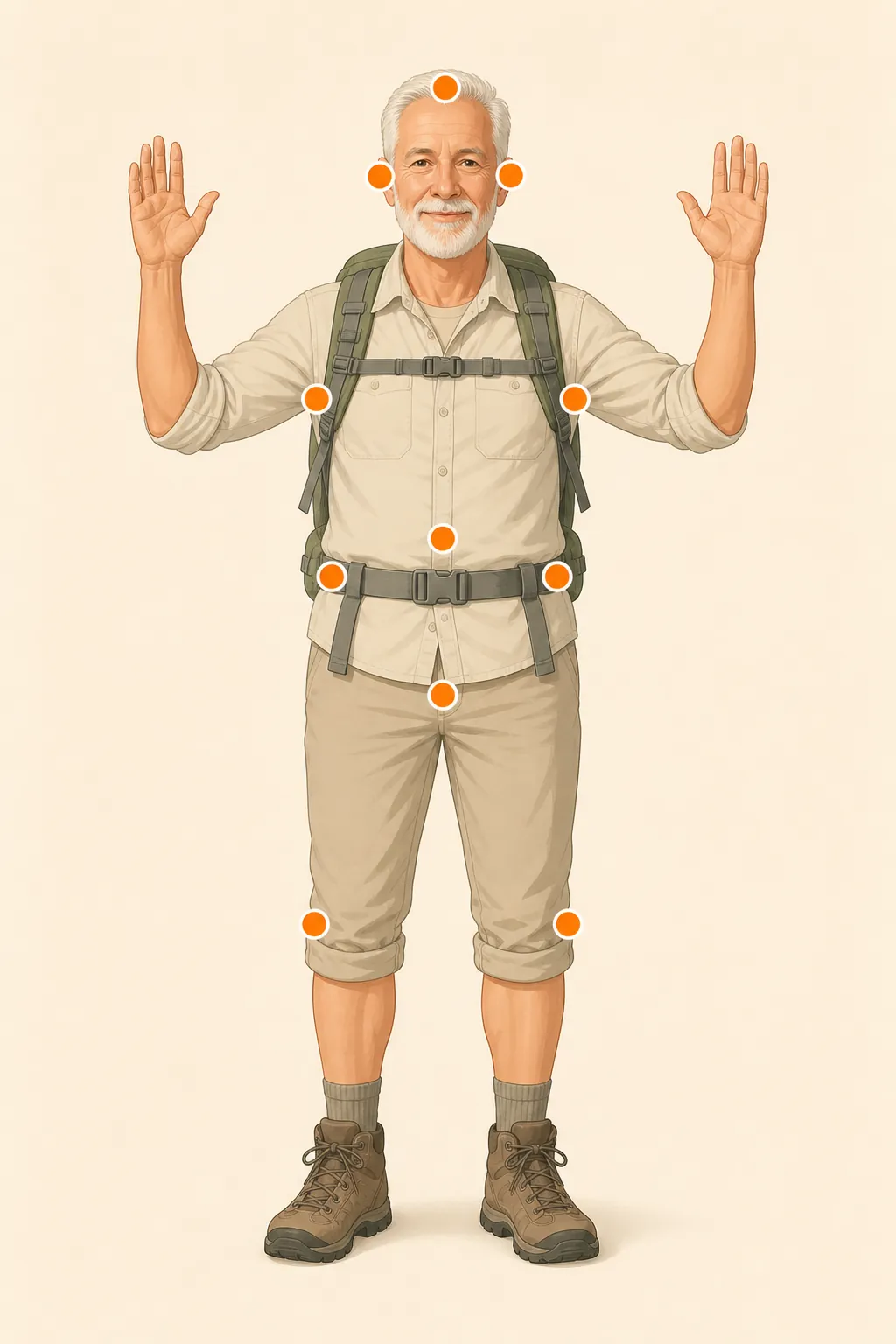
Check the seven CDC body zones
CDC tells people to check the body carefully after being in tick habitat, including seven easy-to-miss areas: under the arms, in and around the ears, inside the belly button, back of the knees, in and around the hair, between the legs, and around the waist.[3]
- Under the arms
- In and around the ears
- Inside the belly button
- Back of the knees
- In and around the hair and hairline
- Between the legs
- Around the waist
Add the places your own clothing creates: sock lines, bra bands, waistband folds, watchbands, knee braces, compression sleeves, and the edge of a hiking boot. Ticks like sheltered spots. Hiking gear creates sheltered spots.
If you find an attached tick, do this now
Finding an attached tick is the moment when people reach for folklore: matches, petroleum jelly, nail polish, alcohol before removal, twisting, squeezing. Do not give the tick extra time while trying to annoy it into backing out.
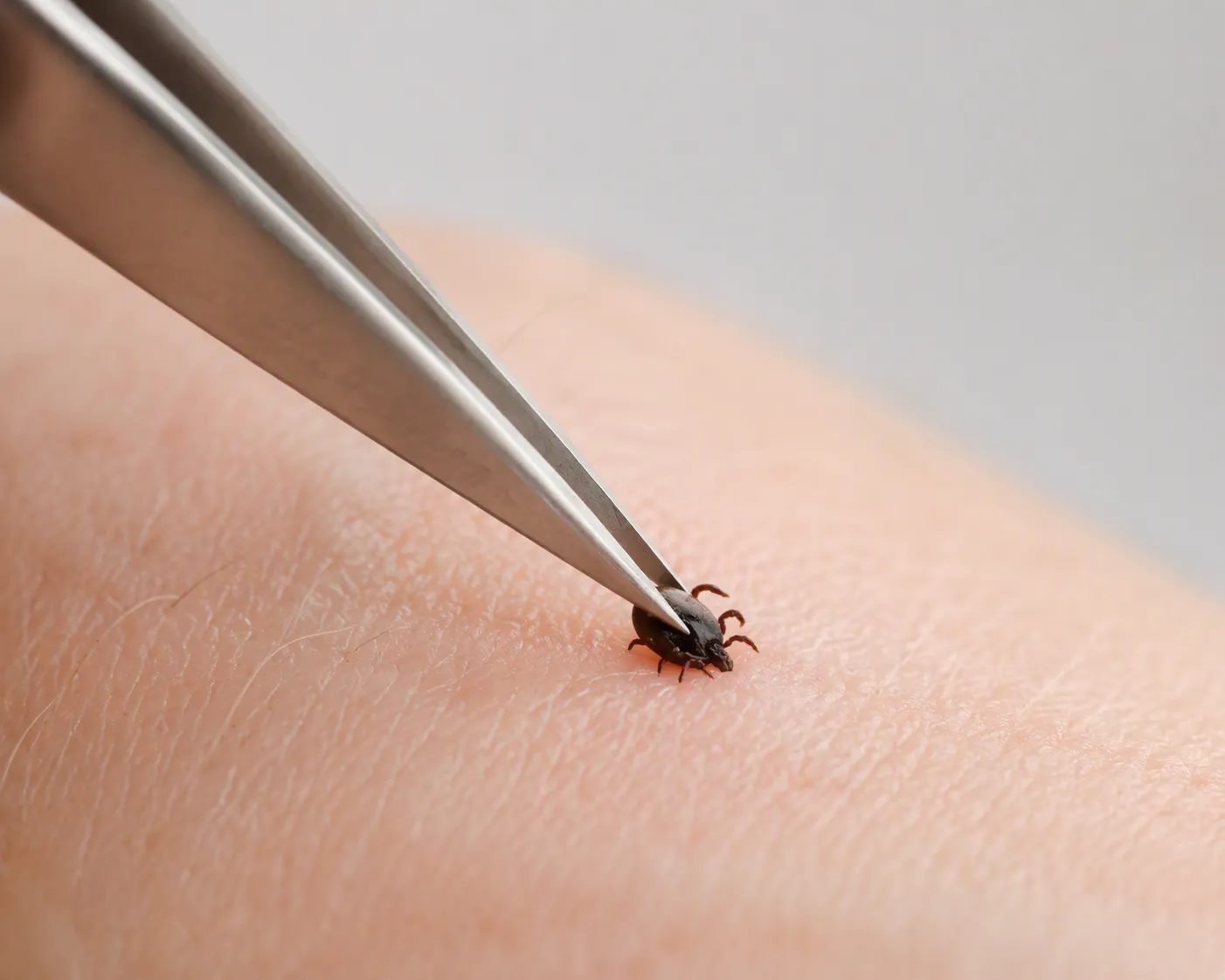
CDC’s method is plain and good: use clean, fine-tipped tweezers to grasp the tick as close to the skin’s surface as possible. Pull upward with steady, even pressure. Do not twist or jerk the tick, because that can cause mouthparts to break off and remain in the skin.[7]
- Get fine-tipped tweezers. If you hike often, keep a pair in the first-aid kit and another at home.
- Grasp the tick close to the skin, not by the swollen body.
- Pull straight upward with steady, even pressure.
- If mouthparts remain and can be removed easily with tweezers, remove them. If not, leave them alone and let the skin heal.
- Clean the bite area and your hands with rubbing alcohol or soap and water.
- Dispose of the tick by putting it in alcohol, sealing it in a bag or container, wrapping it tightly in tape, or flushing it down the toilet.
CDC specifically advises against using petroleum jelly, nail polish, or heat to detach a tick. The aim is not to make the tick let go on its own; the aim is to remove it as quickly as possible with tweezers.[7]
Time matters. Johns Hopkins Lyme Disease Research Center advises that removing an attached tick within the first 24 hours dramatically reduces the risk of Lyme disease.[8] That does not make every later bite a medical emergency, and it does not mean every tick carries Lyme disease. It does mean the after-hike check should happen the same day, not after a good night’s sleep.
After removal, note the date and the likely location of the bite. Watch for a rash, fever, or other new symptoms in the following weeks, and contact a clinician if symptoms develop. Older adults sometimes have aches, fatigue, or balance changes for unrelated reasons, which is exactly why a clear bite date and a short symptom note are more useful than trying to remember later.
Printable tick safety card for senior hikers
| Phase | Checklist |
|---|---|
| Before the hike | Treat boots, socks, pants, and gear with 0.5% permethrin for clothing and gear only; do it 24–48 hours before packing. Choose an EPA-registered skin repellent. Apply sunscreen first, repellent second. |
| At the trailhead | Check that repellent, fine-tipped tweezers, and a small bag or container for a removed tick are in the daypack. |
| On the trail | Walk near the center of the trail. Avoid brushing tall grass and overgrown edges. Reapply repellent according to the label. |
| Back home | Put dry hiking clothes in the dryer on high heat for 10 minutes; use longer drying for damp clothes. Shower within 2 hours. |
| Body check | Check under arms, in and around ears, belly button, back of knees, hair and hairline, between legs, and around waist. |
| If attached tick is found | Use fine-tipped tweezers close to the skin. Pull upward steadily. Clean the bite and hands. Do not use heat, petroleum jelly, or nail polish. |
| After removal | Write down the bite date and location. Watch for rash, fever, or new symptoms, and contact a clinician if they appear. |
For the rest of the hike-safety picture — falls, heat, pacing, medications, footwear, and balance — use this as the tick-specific companion to the senior hiking safety checklist. If your main concern is trail falls, see why falls are the biggest hiking risk for older adults. For storm planning, add lightning safety for senior hikers to the same folder or glove box.
References
- Lyme Disease Diagnosis by Alternative Case Definitions, Medicare Claims Data, 2016–2019 — CDC Emerging Infectious Diseases, 2024.
- CDC Data Show Weekly ER Visits for Tick Bites Higher than Usual — CDC, April 2026.
- Preventing Tick Bites — CDC.
- Mosquitoes, Ticks, and Other Arthropods — CDC Yellow Book.
- Tick Bite Prevention — Wisconsin Department of Health Services.
- Preventing Tick Bites — Harvard Health.
- What to Do After a Tick Bite — CDC.
- 5 Tips for Preventing Tick Bites and Lyme Disease — Johns Hopkins Lyme Disease Research Center.
Related reading
Noticed something outdated or inaccurate on this page? Flag a correction. We review every report against CDC, NIA, and AARP HomeFit guidance before updating a page.
Part of the Fall Prevention section.