
Clinical term
Why Cyclospora Symptoms Raise Fall Risk in Older Adults
Last verified 2026-08-04
Last verified: August 4, 2026. This guide is for education and home fall-safety planning, not for diagnosis or treatment. Medical review: CareWise Guide named clinical reviewer.
Cyclospora outbreak symptoms and risks for older adults should be read through a practical lens: prolonged watery diarrhea can drain fluids, and fluid loss can bring weakness, dizziness, lightheadedness, and unsteady bathroom trips. CDC describes watery diarrhea as a common symptom and notes that untreated illness can last from a few days to a month or longer, sometimes improving and returning; expert commentary for older adults links dehydration complications with weakness, dizziness, and falls. [1][2]
That is why “just a stomach bug” is the wrong frame for an older adult living at home. The dangerous moment may be the walk from bed to toilet, not the parasite itself.
What symptoms should caregivers watch for?
The symptom pattern matters because cyclospora does not always behave like a quick, one-day stomach upset. CDC says symptoms usually begin about one week after exposure, but they can start as early as 2 days or as late as 2 weeks or more. If untreated, symptoms may last from a few days to a month or longer, and they can come and go. [1]
| Symptom or pattern | Why it matters at home |
|---|---|
| Watery diarrhea | This is the central symptom to take seriously because repeated fluid loss can lead to dehydration. |
| Loss of appetite and weight loss | An older adult may drink and eat less at the same time they are losing fluid. |
| Cramping, bloating, increased gas, and nausea | These can make a person avoid meals, fluids, and movement. |
| Fatigue | Fatigue can change how safely someone gets up, walks, and transfers. |
| Vomiting or low-grade fever | CDC lists these as less common, but vomiting can add to fluid loss when it occurs. |
| Symptoms that fade and return | A relapse-like course can make families lower their guard too early. |
For a caregiver, the timing can be frustrating. A salad, berries, herbs, or other fresh produce exposure may be long forgotten by the time symptoms appear. The useful question is not always “What did they eat yesterday?” but “How long has the diarrhea been going on, is it watery, and is the person getting weaker?”
Why dehydration changes the risk picture
Older adults often have less room for error when fluid balance shifts. CDC notes that people in poor health or with weakened immune systems are at higher risk for severe or prolonged cyclospora illness. AARP’s expert commentary also points to underlying conditions and medications that can affect fluid balance, with possible complications including electrolyte problems, acute kidney injury, weakness, dizziness, falls, and worsening of chronic conditions. [3][2]
At home, this can unfold quietly. The person may be embarrassed by diarrhea, may avoid drinking because they do not want another bathroom trip, or may insist they are fine because the cramps eased for a few hours. Meanwhile, watery stool continues, intake drops, and the next time they stand up, they feel lightheaded.
The warning signs to notice are not subtle “comfort” details. Excessive thirst, dry mouth or dry skin, little or no urination, weakness, dizziness, lightheadedness, fatigue, and dark-colored urine are dehydration signs listed in the AARP piece. Cleveland Clinic highlights confusion, dizziness, dark-colored urine, and reduced urination as severe dehydration signs that warrant emergency care. [2][4]
Johns Hopkins Medicine adds a useful standing-up test for this illness: if diarrhea is severe and the person is dizzy when standing or feels the heart rate speed up, they should seek care at an urgent care center or hospital. [5]
When to watch closely, call, or seek urgent care
Current sources do not provide a reliable older-adult fall rate for cyclospora. The safer and more honest approach is to treat dehydration signs as action signals.
| What you see | What to do |
|---|---|
| Watery diarrhea with appetite loss, fatigue, or mild weakness, but the person is alert and able to drink | Watch closely, support fluids, reduce walking demands, and keep checking urine color, urination frequency, dizziness, and strength. |
| Diarrhea that is continuing, symptoms that fade and return, or an older adult with fragile health, immune problems, kidney disease, heart disease, diabetes, or fluid-sensitive medications | Call the person’s clinician for individualized guidance, especially before changing medicines or using over-the-counter diarrhea products. |
| Confusion, dizziness, dark-colored urine, or reduced urination | Seek emergency care for possible severe dehydration, consistent with Cleveland Clinic’s warning signs. [4] |
| Severe diarrhea plus dizziness when standing or a racing-heart feeling | Seek care at an urgent care center or hospital, consistent with Johns Hopkins Medicine guidance. [5] |
Hydration advice can get complicated quickly in older adults because some people have heart, kidney, or medication restrictions. For a fuller home-care discussion focused specifically on fluids, see Why Dehydration Is the Real Cyclospora Risk for Older Adults. For general older-adult dehydration planning during heat or power interruptions, the same warning-sign discipline appears in How to Keep Seniors Safe in a Heat Wave Power Outage.
Make bathroom trips safer until strength returns
During active diarrhea, fall prevention belongs next to symptom monitoring. Senior-care guidance notes that older adults may not always feel thirsty and that caregivers should encourage fluids throughout the day while adding fall-risk-reduction measures when weakness or dizziness develops during recovery. [6]

- Clear the route from bed or chair to bathroom. Remove laundry baskets, throw rugs, cords, shoes, and low stools.
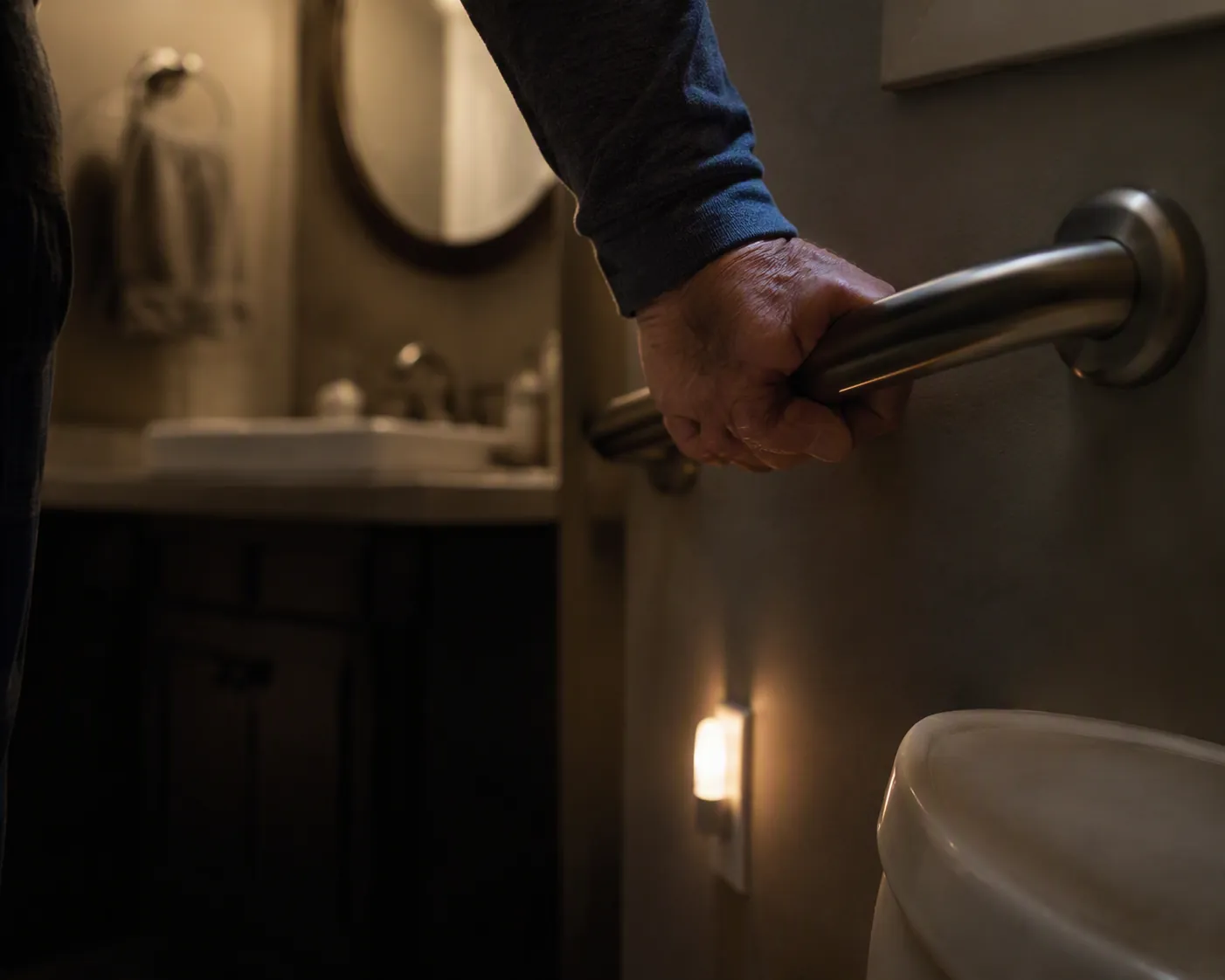
- Add light before it is needed. Use nightlights in the bedroom, hallway, and bathroom so the person is not walking half-awake in the dark.
- Encourage slow position changes. Sit at the edge of the bed, pause, stand, pause again, then walk.
- Keep a phone, medical alert button, or call bell within reach of the bed, favorite chair, and bathroom.
- Do not let a towel bar serve as a grab bar. If the person is reaching for something during diarrhea illness, it needs to be stable.
- Reduce unnecessary walking. Bring water, broth, tissues, wipes, clean clothing, and trash bags close enough that the person is not making extra trips.
- Treat new weakness as temporary mobility impairment. A walker, cane, supervised walk, bedside commode, or resting chair in the hallway may be reasonable until fluids and strength recover.
Nighttime deserves special attention because urgency, darkness, and sleepiness stack together. If bathroom trips are already a fall concern in the home, the sleep-and-lighting issues discussed in How Permanent DST Affects Seniors’ Sleep and Fall Risk become more relevant during any diarrheal illness.
What to know about the 2026 outbreak
The 2026 cyclospora situation is active, and case counts can change. CDC’s surveillance page notes an estimated 6-week reporting lag, so a number seen in the news or on a state page may not describe what is happening today. Use CDC’s live surveillance and outbreak pages for the current federal view. [8][9]
For this fall-safety guide, the live count is less useful than the home decision: if an older adult develops the symptom pattern above during an outbreak period, watch for dehydration early and make the path to the bathroom safer immediately.
Produce safety after a cyclospora warning
Cyclospora prevention is not perfect because washing produce helps but cannot guarantee removal of the parasite. CDC says cooking produce to at least 158°F, or 70°C, kills Cyclospora, and it advises washing produce even when the label says it is pre-washed. [7]
- Wash hands, utensils, cutting boards, and counters before preparing produce.
- Wash fruits and vegetables under running water, including items labeled pre-washed.
- Use extra caution with raw produce during an active outbreak if the older adult is frail, immunocompromised, or recovering from recent diarrhea.
- When practical, choose cooked produce for higher-risk older adults, since CDC identifies adequate cooking as a way to kill the parasite.
The immediate caregiver frame is simple: know the cyclospora symptom pattern, take watery diarrhea seriously when it lasts or returns, escalate when dizziness, confusion, dark urine, or reduced urination appear, and make the home temporarily safer for bathroom trips until strength and fluid balance recover.
References
- Signs and Symptoms of Cyclosporiasis — CDC.
- Cyclospora Outbreak: What Older Adults Need to Know — AARP.
- About Cyclosporiasis — CDC.
- Cyclosporiasis — Cleveland Clinic.
- Cyclosporiasis Outbreak — Johns Hopkins Medicine.
- Cyclospora Outbreak: What Seniors and Families Need to Know — Amada Senior Care, July 2026.
- Preventing Cyclosporiasis — CDC.
- Cyclosporiasis Surveillance — CDC.
- Cyclosporiasis Outbreak Investigations — United States, 2026 — CDC.
Browse more in the Glossary.