
STEADI: Intervene
How to Keep Seniors Safe in a Heat Wave Power Outage
When a heat wave knocks out power, an older adult's home can become a heat trap within hours. Here is a step-by-step plan for the next 72 hours without air conditioning — cooling and hydration, food and medication safety, and the exact signs it's time to leave or call 911.
If the power is already out and the house is getting hot, start with the person, not the outage map. If the older adult is confused, faints, has hot red dry skin, or has a body temperature of 104°F or higher, call 911 first. While help is coming, move them to a cooler place, loosen clothing, cool them with wet cloths, misting, fanning, or a cool bath if you can do that safely, and do not give them drinks unless emergency responders or a clinician tells you to. Those are heat-stroke signs, and this is no longer a “wait and see” situation at home.[1]
For everyone else, the working question is narrow: can this older adult safely stay in this home for the next stretch of time without air conditioning? Heat wave safety for seniors during a power outage depends less on reassurance and more on a few checks you can repeat: indoor temperature, symptoms, urine color, access to cooling, medication storage, and whether there is a real ride to a cooler place.
Why an indoor outage can become dangerous fast
The dangerous misconception is that heat deaths mostly happen to people who are outside. In British Columbia’s 2021 heat dome, 619 people died from heat-related causes; most were older adults, and the vast majority died inside homes.[2] During Washington state’s 2021 heat wave, the state health department reported 157 heat-related deaths, with 67% among people age 65 and older.[3] Those are event-specific figures, not annual averages, but they point to the same practical lesson: a closed-up home without cooling can become the hazard.
That matters because the early signs are easy to excuse. A person may say they are “just tired,” avoid admitting they have barely urinated, or insist the power company said service will be back soon. During a heat wave, “soon” is not a safety plan. The room temperature and the person’s body are giving more useful information than the estimated restoration time.
The 72-hour decision plan at a glance
| When | Check | Action |
|---|---|---|
| Now | Confusion, fainting, hot red dry skin, or temperature 104°F or higher | Call 911, start cooling, and do not give drinks. |
| First hour | Indoor temperature and cooler rooms | Move away from sun-facing rooms; close shades; use wet cloths, misting, and cool water. |
| Every 1–2 hours while awake | Urine color, dizziness, weakness, sweating changes, mental status | Encourage fluids if allowed; escalate if symptoms appear or worsen. |
| When indoor temperature rises | Fan usefulness | Use fans cautiously below about 90°F; do not rely on fans as the main protection in hotter rooms. |
| At 4 hours and beyond | Refrigerator, freezer, medications | Limit door opening; check food and refrigerated medications against discard thresholds. |
| Any time a threshold is crossed | Transportation and destination | Leave for an air-conditioned place or call for help if leaving cannot be done safely. |
Keep the plan visible. If the older adult lives alone, read it aloud with them before the outage season and mark the phone numbers that are actually reachable: a neighbor, family driver, building manager, local nonemergency line, 211, and the utility outage line. A number that goes to voicemail is not a transportation plan.
First: cool the person and the room you can control
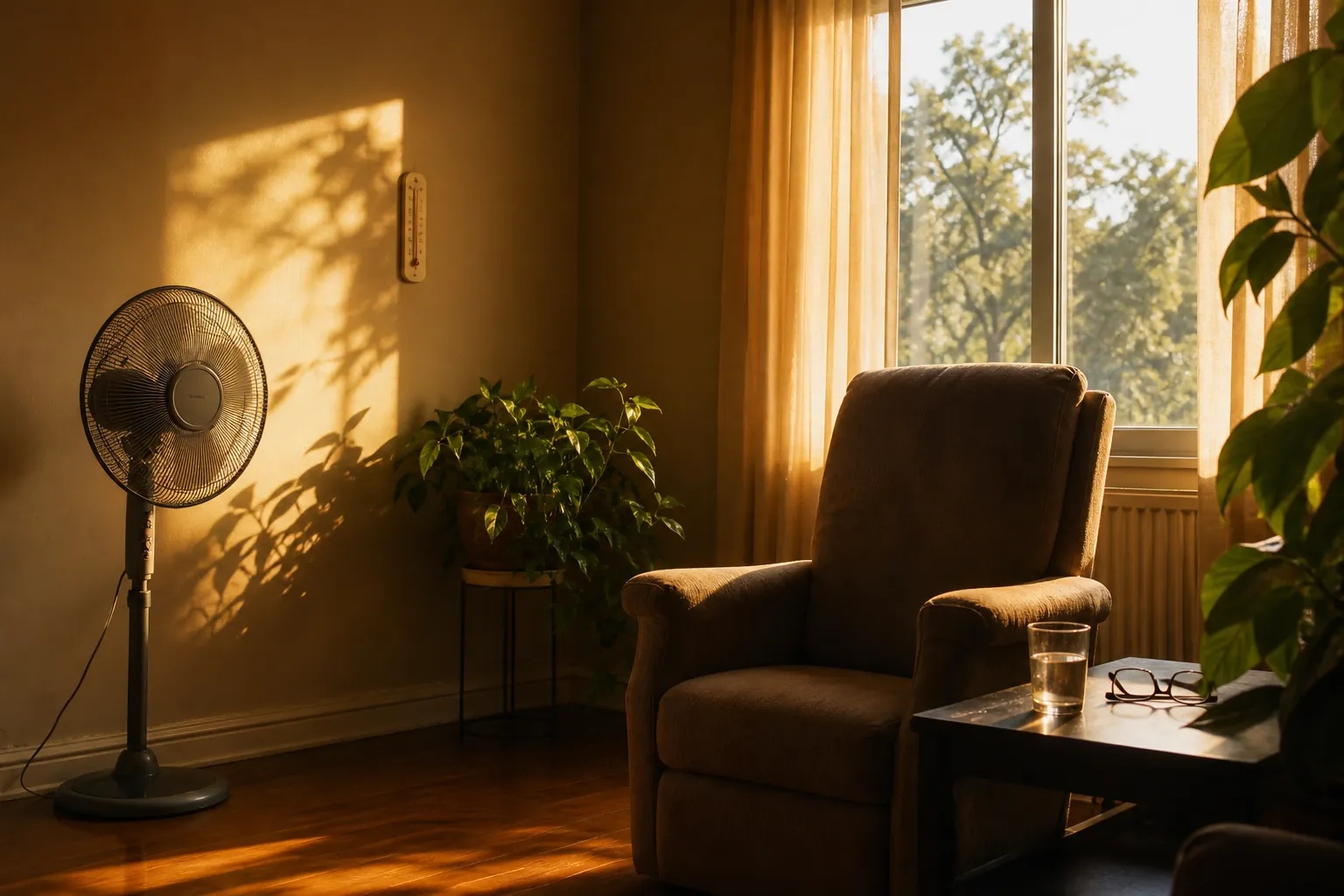
Start with the thermometer’s location. A thermometer sitting on a porch, in a sunny window, or beside a heat-producing appliance is not telling you what the older adult’s body is living in. Put an indoor thermometer near the chair, bed, or room where they are spending time, out of direct sun. If you do not have one, treat the lack of a measurement as a reason to be more cautious, not less.
If the home is above roughly 80°F and the older adult has chronic medical conditions, do not wait for the room to become unbearable. AARP, quoting CDC Director Dr. Aaron Bernstein, advises acting at about that point by moving to a cooler part of the home or to an air-conditioned location.[4] That threshold is especially useful because many older adults will not complain early enough for comfort to be a reliable warning.
- Move them to the coolest part of the home: a shaded room, lower floor, interior hallway, or room away from sun-facing windows.
- Close blinds, curtains, or shades on the sunny side. If outdoor air is hotter than indoor air, keep windows closed; if evening air becomes cooler, open windows only if it is safe to do so.
- Remove extra layers, heavy socks, blankets, and dark clothing. Keep clothing loose and light.
- Use damp washcloths on the neck, wrists, armpits, and groin area. Replace or rewet them often.
- Use a spray bottle or misting cloth if the person tolerates it. Evaporation can help, but it is not a substitute for leaving if symptoms or unsafe temperatures appear.
- If they can bathe safely, use a cool—not icy—shower, sponge bath, or foot soak. Do not leave a weak, dizzy, or confused person alone in a bathroom.
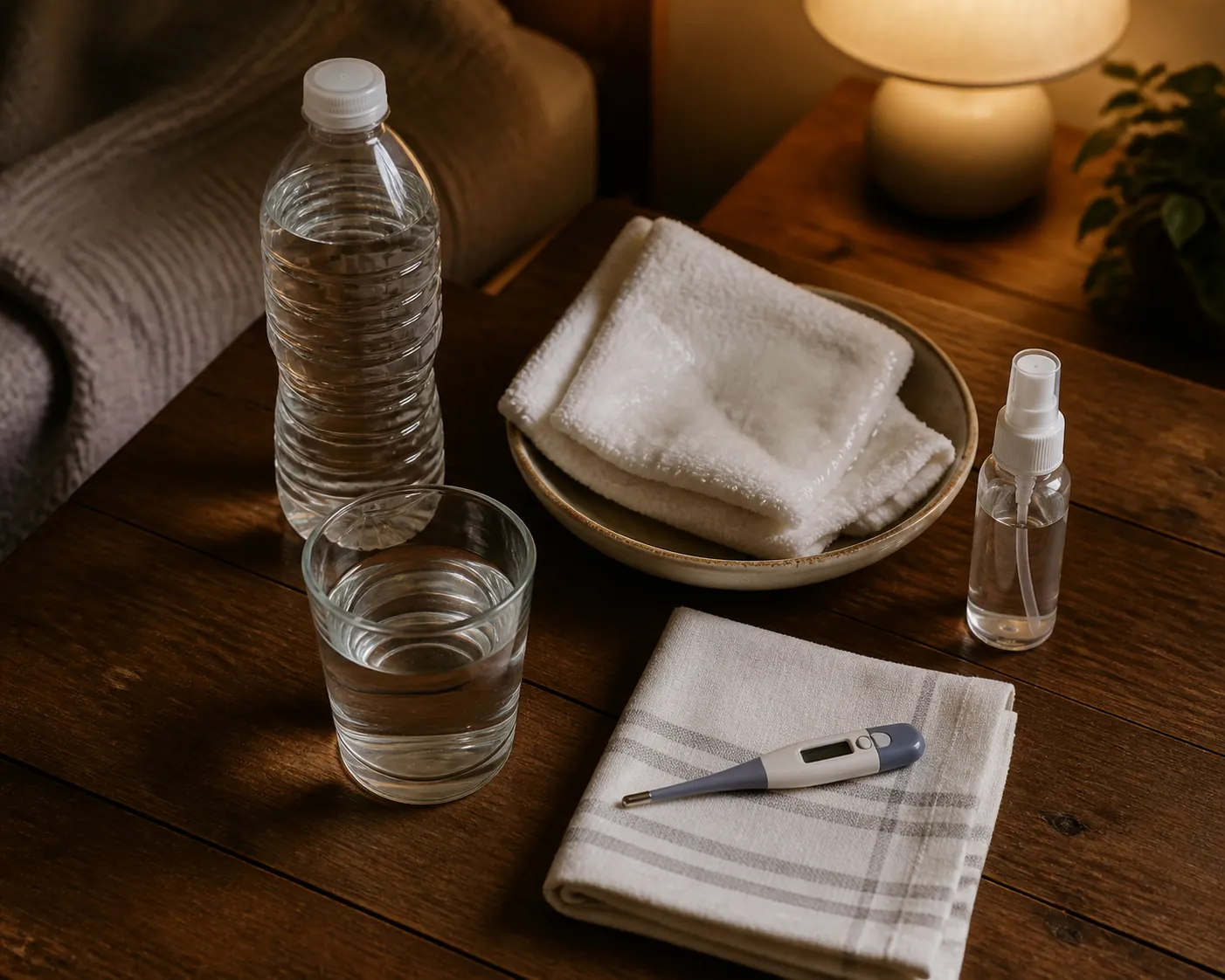
The bathroom deserves extra caution. Heat can make someone lightheaded, and a power outage often means dim rooms, misplaced flashlights, and no working night-lights. If the person is unsteady, bring cooling supplies to them instead of asking them to walk across a dark hallway.
Hydration: check the body, not just the glass
The American Red Cross recommends about three-quarters of a gallon of water per average person per day and says households should set aside at least one gallon per person per day for outages and disasters.[1] That stored water is not only for drinking. It may also be needed for medications, cooling cloths, and basic hygiene.
Do not wait for thirst. The CDC notes that older adults may have reduced thirst sensation and are at higher risk in heat, especially with chronic conditions or medications that affect fluid balance.[5] A practical at-home check is urine color: pale yellow is generally a better sign than dark yellow or amber. Also pay attention to frequency. “I haven’t gone much today” is a warning worth taking seriously, even if the person is embarrassed to say it.
- Offer small amounts often instead of a large glass once in a while.
- Keep water within arm’s reach of the chair or bed, not across the room.
- Use reminders tied to checks: each time you rewet a cloth or check the room temperature, offer fluids if they are allowed.
- If the person has heart failure, kidney disease, low-sodium problems, dialysis, or a clinician-ordered fluid restriction, follow that medical plan and call the clinician, nurse line, or pharmacist if you are unsure how to adjust during heat.
Do not give drinks to someone who has heat-stroke signs, is severely confused, is fainting, cannot swallow safely, or is losing consciousness. That is an emergency, not a hydration problem to solve at home.
Fans help only within limits
A fan can make a room feel less stagnant, and if the room is still below about 90°F it may help with comfort when paired with misting or wet cloths. But the CDC warns that electric fans may provide comfort but will not prevent heat-related illness when temperatures are in the high 90s, and may increase body temperature in some conditions.[6] The Red Cross gives similar caution that fans alone are not enough in extreme heat.[1]
This is one of the messier parts of heat guidance. Research in older adults is still evolving: a 2017 study by Gagnon and colleagues examined electric fan use in older adults under simulated heat-wave conditions, and later reporting has noted that some findings complicate simple “fans are bad” messaging.[7][8] For a home safety guide, the default should still be the conservative official threshold: once the indoor room is around 90°F or hotter, do not count a fan as the plan that keeps an older adult safe.
If the fan is running because a generator or battery is available, check what the air is doing. A fan pointed at a dry, overheated person in a very hot room is not the same as a fan helping evaporate mist or damp cloths in a cooler room. If the person is getting weaker, more confused, dizzy, nauseated, or stops sweating normally, the fan debate no longer matters. Leave or call for emergency help.
The leave-now and call-now thresholds
There are two different decisions here. One is leaving for a cooler place before the person is in crisis. The other is calling 911 because the person may already have heat stroke or another emergency. Do not blur them.
Call 911 first if any of these appear
- Confusion, unusual agitation, or not acting like themselves
- Fainting, collapse, or inability to stay awake
- Hot red dry skin
- Body temperature of 104°F or higher
- Trouble swallowing, severe weakness, or any condition that makes drinking unsafe
After calling, begin cooling while waiting for help. Move the person out of direct sun, loosen clothing, apply wet cloths, mist the skin, or use a cool bath if it can be done without creating a fall or drowning risk. Do not try to drive a severely confused or fainting person yourself if emergency medical help is available; they may worsen on the way.[1]
Leave for an air-conditioned place if staying is no longer safe
Leaving before an emergency is often the safer, quieter decision. Go to a cooling center, library, mall, senior center, community center, friend’s home, or hotel with air conditioning. The Red Cross recommends using local cooling centers during extreme heat, and communities often route information through 211, emergency management pages, public health departments, or state cooling-center finders.[1]
- Leave if the indoor temperature is rising and the person has chronic conditions, especially once the home is above roughly 80°F and you cannot create a cooler room.
- Leave if the person cannot keep fluids down, is urinating very little, or has dark urine despite repeated offers of fluids, unless a clinician has given a different fluid plan.
- Leave if the only cooling left is a fan in a hot room near the CDC/Red Cross caution range.
- Leave if the caregiver cannot keep checking in. A promise to stop by later is not enough if no one can verify symptoms, room temperature, water intake, and safe walking.
- Leave if the home is dark enough that bathroom trips, stairs, oxygen tubing, clutter, or extension cords have become a fall setup.
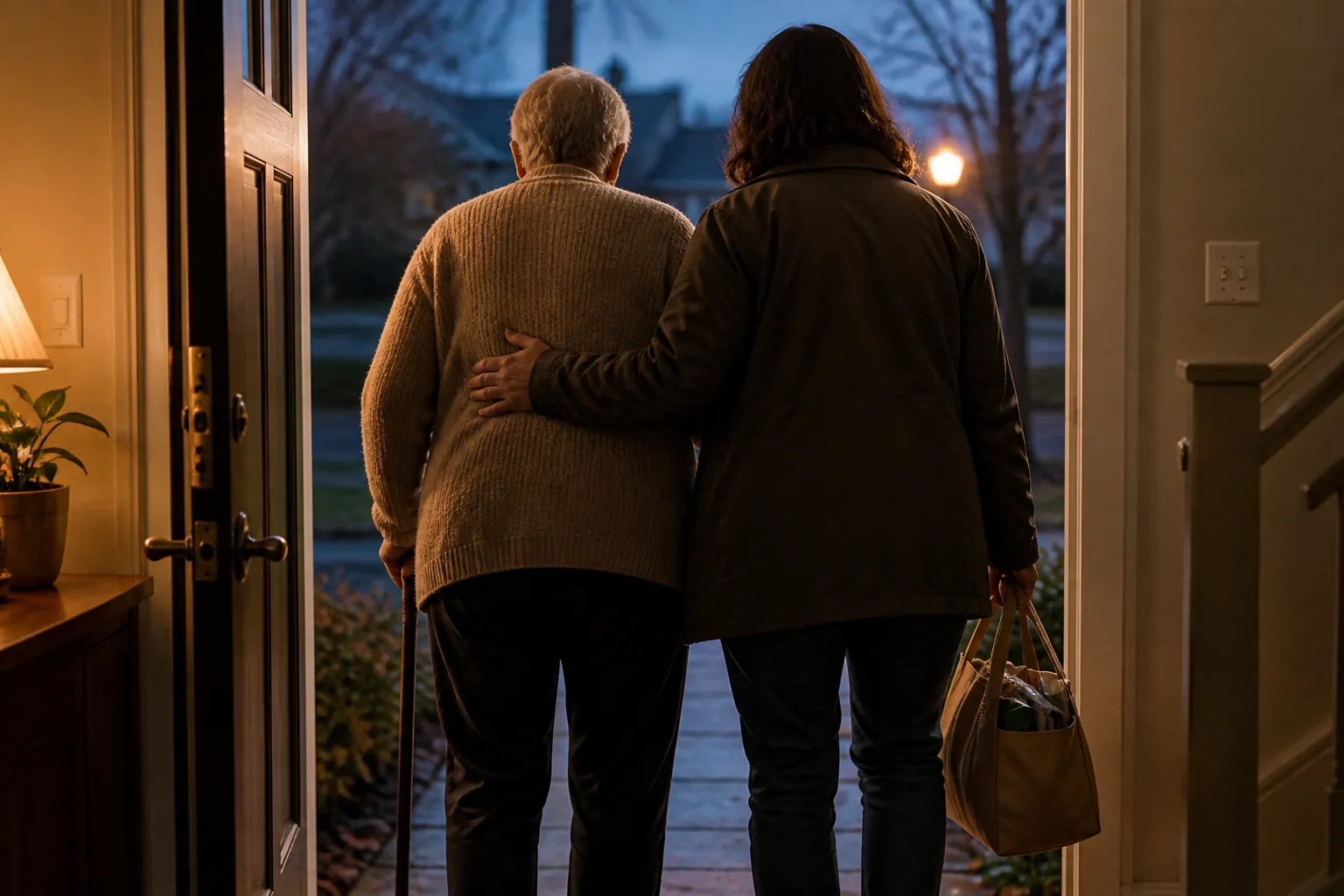
Before leaving, pack only what matters: medications, medication list, ID, phone and charger, glasses, hearing aids, mobility device, incontinence supplies, water if available, a light layer, and any medical equipment instructions. If oxygen, powered mobility equipment, or refrigerated medication is involved, call the supplier, pharmacist, clinician, or emergency management line early. Waiting until the backup battery is nearly gone removes options.
Food and refrigerated medications: check the clock and the temperature
The refrigerator and freezer are part of the safety plan because food poisoning or spoiled medication can arrive after the heat emergency feels over. Ready.gov says a refrigerator will keep food cold for about 4 hours if the door stays closed, and a full freezer will keep temperature for about 48 hours if the door stays closed.[9]
- Keep refrigerator and freezer doors closed as much as possible.
- Use appliance thermometers if you have them. Guessing by touch is not reliable.
- Discard perishable food that has been at 40°F or higher for 2 hours or more.
- Do not taste food to decide whether it is safe.
- If the power is out for more than a day, discard refrigerated medications unless the medication label says otherwise or a pharmacist gives different instructions.
Medication safety also includes how heat affects the person, not only how heat affects the bottle. CDC medication guidance notes that some medicines can increase heat risk by affecting sweating, fluid balance, blood pressure, alertness, or kidney function.[10] During an outage, do not stop prescribed medication on your own, but do call a pharmacist, clinician, or nurse line if the older adult takes diuretics, blood pressure medicines, sedatives, psychiatric medicines, anticholinergic medicines, or multiple medications and is becoming dizzy, weak, confused, or dehydrated.
Recheck on a schedule, not by mood
A check-in that does not change the next action is only conversation. During the first day without power, set a repeated check every 1 to 2 hours while the person is awake. Overnight, the plan depends on the room temperature, symptoms, and whether someone can stay with them or call reliably. If the home is hot, the person is frail, or the bathroom path is unsafe in the dark, sleeping through the risk is not a plan.
| Ask or check | What you are looking for | What changes the plan |
|---|---|---|
| Room temperature near the person | Is it rising? Is it above about 80°F in someone with chronic illness? Near 90°F where fan reliance becomes unsafe? | Move to a cooler room, add active cooling, or leave. |
| Mental status | Are they newly confused, unusually sleepy, agitated, or not making sense? | Call 911 if confusion is new or severe. |
| Urine | Is it pale yellow? Are they urinating at normal intervals? | Offer fluids if allowed; escalate if urine is dark or very limited. |
| Walking | Are they dizzy standing up? Is the path to the bathroom dark or cluttered? | Assist every trip, bring supplies closer, or relocate. |
| Cooling supplies | Are cloths still damp? Is water within reach? Is the fan being overtrusted? | Reset the cooling setup or leave if the room is too hot. |
| Food and medications | How long has the refrigerator been off? Are medications temperature-sensitive? | Follow discard thresholds and call a pharmacist. |
| Transportation | Is the person who promised to drive reachable now? | Call the backup driver, 211, local emergency management, or nonemergency services before symptoms worsen. |
If you are checking by phone, ask for actions, not impressions. “Are you okay?” often gets “I’m fine.” Better: “What does the indoor thermometer say?” “When did you last urinate?” “What color was it?” “Are the washcloths wet?” “Is your water beside your chair?” “Can you read me the name of the person who is driving you if we decide to leave?”
When the power returns
Do not let the lights coming back on end the safety check. Cooling equipment may restart, but the person may still be dehydrated, weak, or unsteady. Recheck symptoms, fluids, urine color, and room temperature. Throw away unsafe food instead of trying to rescue it. Review refrigerated medications before the next dose if the outage lasted long enough to cross the medication threshold.
Then walk the home while it is lit. Move the flashlight back beside the bed or chair. Clear cords from fans, chargers, oxygen equipment, and temporary lights. Check the bathroom route, rugs, thresholds, and stairs. A heat outage can expose the same hidden risks that show up after other disasters; the site’s guide to flood recovery hidden fall risks is useful for that kind of room-by-room thinking, even when the disaster was heat instead of water.
If the outage showed that the older adult could not cool one room, reach water, get to the bathroom safely, protect medication, or leave without improvising, schedule a plan-ahead safety review before the next heat alert. The CDC STEADI home fall prevention checklist, the three-layer fall prevention system, and a primary-care medication and fall-risk review can turn the next outage from a scramble into a known route.
This guide is for safety planning during a heat-wave outage and is not a substitute for medical care. In the moment, the safest decision is the one that responds to the measurable signs in front of you: the room is too hot, the urine is dark or scarce, the medication has crossed its storage limit, the person is confused or fainting, or the ride needs to happen now.
References
- Extreme Heat Safety, American Red Cross
- Extreme Heat and Human Mortality: A Review of Heat-Related Deaths in B.C. in Summer 2021, BC Coroners Service, June 7, 2022
- Heat Wave 2021, Washington State Department of Health
- How to Keep Older Adults Safe During Extreme Heat, AARP, updated June 30, 2026
- Older Adults and Extreme Heat, Centers for Disease Control and Prevention
- About Heat and Your Health, Centers for Disease Control and Prevention
- Evaluating the Effects of Electric Fan Use on Older Adults During Extreme Heat and Humidity, JAMA, 2017
- Study: Electric fans may help seniors in extreme heat, despite CDC warning, McKnight’s Long-Term Care News, 2023
- Power Outages, Ready.gov
- Heat and Medications – Guidance for Clinicians, Centers for Disease Control and Prevention, September 18, 2025
Related reading
Noticed something outdated or inaccurate on this page? Flag a correction. We review every report against CDC, NIA, and AARP HomeFit guidance before updating a page.
Part of the Fall Prevention section.