
Clinical term
What Longevity Habits Support Healthy Aging for Seniors?
Last verified 2026-07-31
Healthy aging is about functional ability, not a magic age
For seniors, the most useful way to talk about healthy aging and longevity habits is to start with the goal. The World Health Organization defines healthy ageing as “the process of developing and maintaining the functional ability that enables wellbeing in older age.” Functional ability is the important phrase: getting out of a chair, walking safely to the bathroom, preparing a meal, managing medications, staying connected, and recovering from setbacks without losing independence all belong in the conversation.[1]
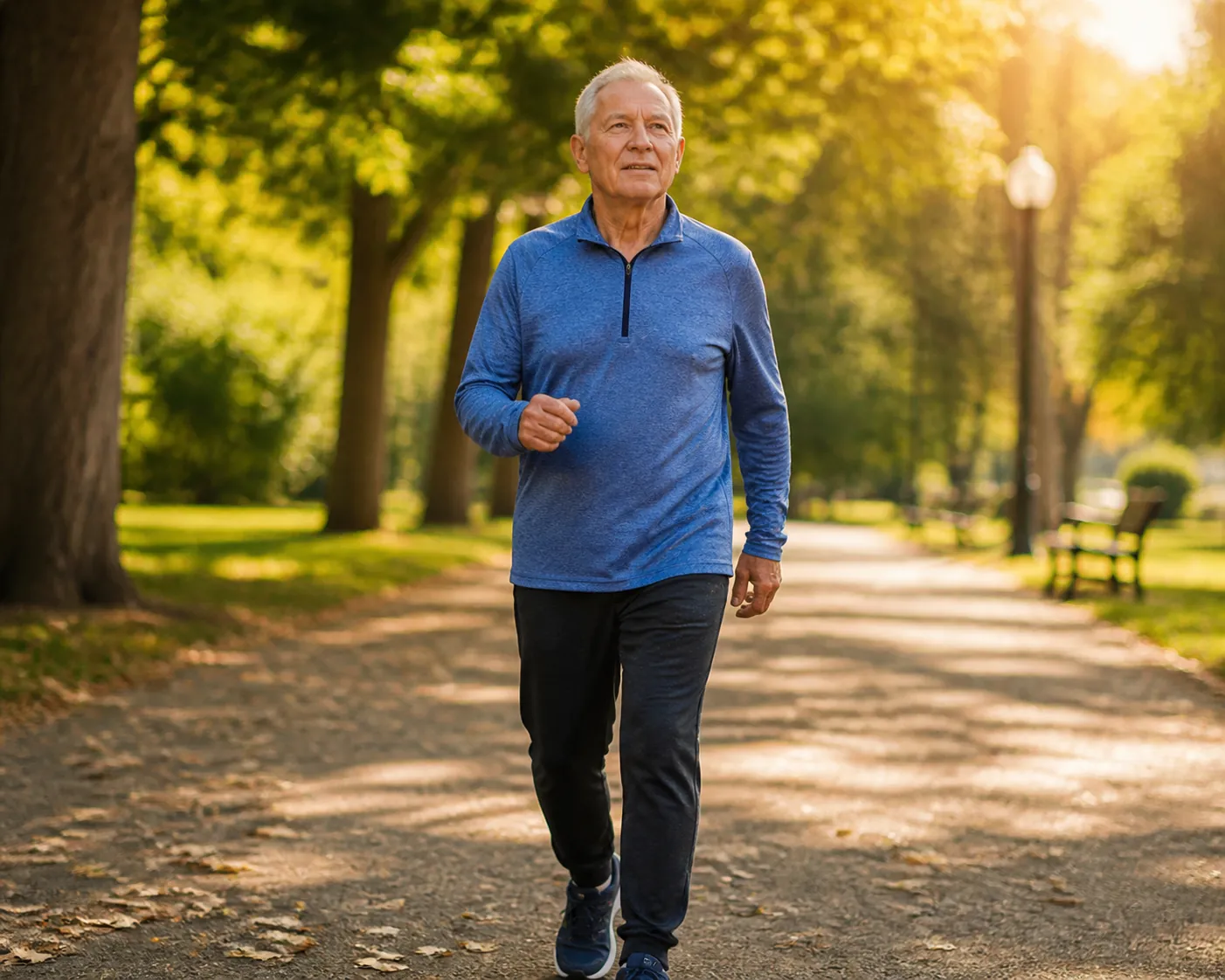
That is different from the way “longevity” is often sold. A modeled lifespan number can sound exciting, especially when it is presented as if one habit change could add decades. But for someone in their 70s, 80s, or 90s, the more honest and more useful measure is healthspan: the years lived free of significant disease or disabling decline. Healthspan does not ignore lifespan. It asks whether the added years are years a person can use.
The stakes are not theoretical. The American Heart Association reported that average healthspan in the United States fell from 65.3 years in 2000 to 63.9 years in 2021. The same report noted that 79% of adults age 60 and older have two or more chronic conditions.[2] Those numbers do not mean decline is inevitable. They do mean the best habits for older adults should be judged by whether they preserve strength, mobility, sleep, resilience, and connection—not by whether they promise an unusually long life.
This article is educational and is not a substitute for medical care. Seniors with heart disease, diabetes, kidney disease, osteoporosis, recent falls, unexplained weight loss, new pain, dizziness, shortness of breath, or major medication changes should use these targets as conversation starters with a clinician, not as private instructions to push harder.
The habits with numbers behind them
Most older adults do not need a complicated longevity protocol. The strongest starting points are measurable enough to put on a calendar or grocery list.
| Habit | Plain target | What it protects |
|---|---|---|
| Physical activity | 150 minutes a week of moderate-intensity aerobic activity, plus strength work at least 2 days a week and balance activities for older adults | Walking ability, fall resistance, stamina, independence |
| Adequate protein | About 1.0–1.3 grams per kilogram of body weight daily; roughly 68–88 grams a day for a 150-lb person | Muscle maintenance, recovery, strength training response |
| Sleep | Aim for 7–9 hours when possible | Attention, recovery, daytime steadiness, cognitive health |
| Social connection | Regular contact that is real enough to notice absence: calls, meals, visits, groups, faith communities, neighbors | Emotional support, routine, survival-associated connection |
The table is not a ranking of moral virtue. It is a way to separate habits that can be acted on this week from vague advice such as “age better” or “stay positive.”
Physical activity: the habit most directly tied to daily function
The CDC’s older-adult activity guidance gives three practical targets: at least 150 minutes a week of moderate-intensity aerobic activity, muscle-strengthening activities at least 2 days a week, and balance activities for older adults.[3] For many seniors, the aerobic part is walking. It can also be water exercise, stationary cycling, or another activity that raises breathing without turning the day into an endurance test.
The weekly number matters because it makes the habit visible. One person might do 30 minutes on 5 days. Another might do 10 or 15 minutes at a time, especially after illness or deconditioning. The useful question is not whether the routine looks impressive. It is whether the person is steadily accumulating movement without triggering unsafe symptoms.
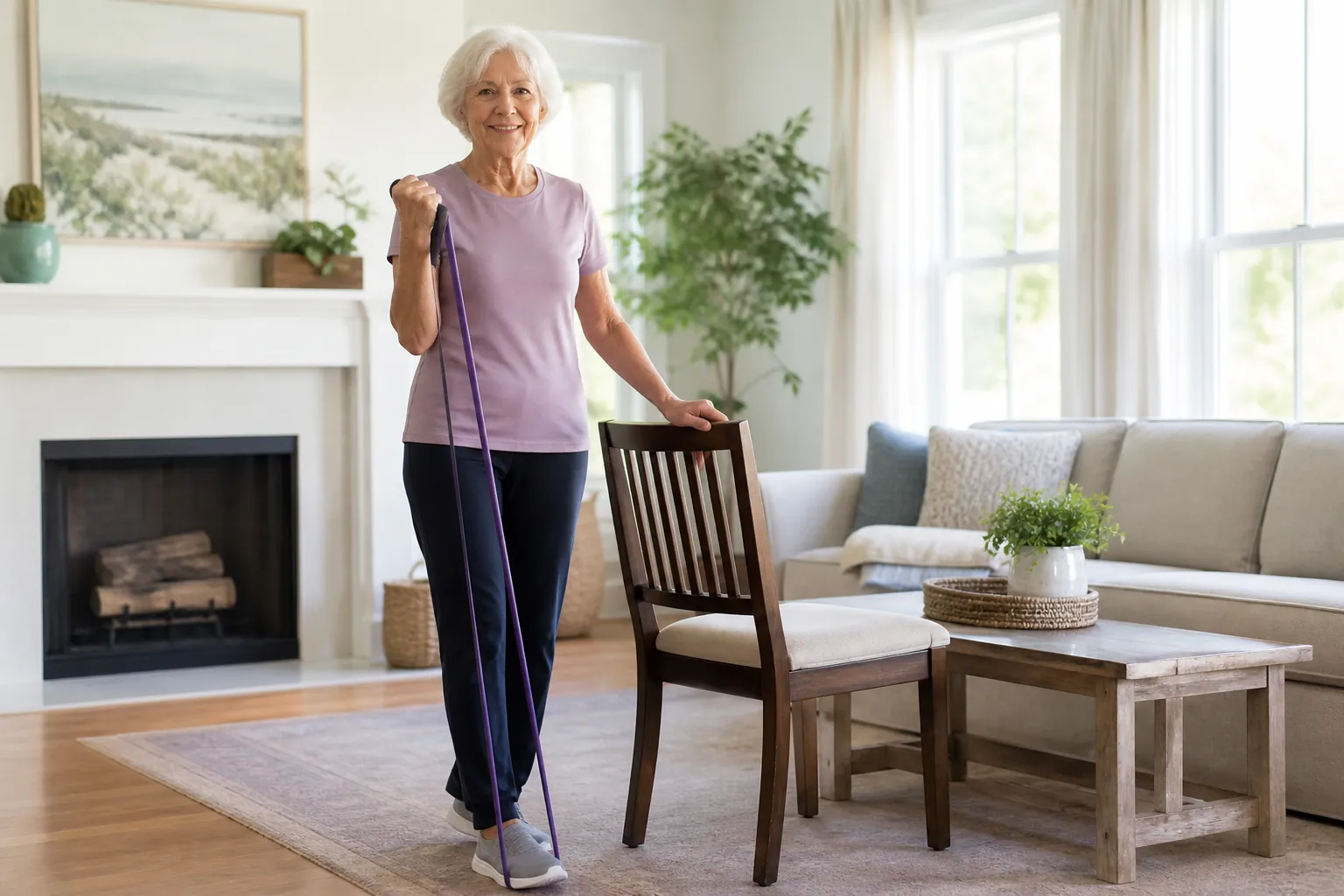
Strength work deserves more attention than it usually gets in longevity conversations. A senior who can rise from a chair, climb a few steps, carry groceries, and steady themselves during a stumble has a different aging trajectory from someone who is losing those abilities. Strength training can be simple: sit-to-stands from a stable chair, wall pushups, heel raises at a counter, resistance-band rows, or supervised gym machines. The right version depends on joints, balance, vision, pain, and confidence.
Balance activities belong beside strength, not as an afterthought. Practicing weight shifts, supported single-leg standing, heel-to-toe walking, or tai chi-style movements may be appropriate for some older adults. But balance work should be scaled to the person. A kitchen chair, counter, or therapist-supervised plan is not a sign of failure; it is how training stays useful instead of becoming another fall risk.
After a fall, a near-fall, a hospital stay, new dizziness, chest discomfort, sudden weakness, or a major change in medications, the next step is not to “push through.” It is to get the fall risk and recovery plan reviewed. Caregivers who are trying to organize that process can use this step-by-step guide to activating senior health services after a fall. If a parent resists fall-prevention changes after a hospital stay, this caregiver-focused fall-prevention article may be a better starting point than another lecture about exercise.
Protein: a daily number that makes strength training possible
Protein is not a wellness flourish for older adults. It is part of maintaining muscle, and muscle is part of staying mobile. Stanford Medicine’s healthy aging guidance for adults in their 60s and 70s gives a practical range of about 1.0–1.3 grams of protein per kilogram of body weight daily. For a 150-lb person, that works out to roughly 68–88 grams per day.[4]
That number is easier to use when it is spread across the day. A hypothetical day might include protein at breakfast, lunch, dinner, and one snack rather than trying to make dinner carry the whole load. The source can vary: eggs, Greek yogurt, fish, poultry, beans, lentils, tofu, cottage cheese, or other foods that fit the person’s chewing ability, digestion, budget, culture, and medical needs.
The caution is important. Someone with kidney disease, swallowing difficulty, poor appetite, unintended weight loss, diabetes complications, or complex medication issues should not copy a protein target without medical advice. The goal is not to turn every meal into a math problem. It is to notice whether the current pattern gives the body enough material to maintain strength.
Sleep: the target is plain, but the causes are not always simple
A reasonable adult sleep target is 7–9 hours.[4] For older adults, the practical question is often not whether they have heard that number. It is why sleep is being interrupted: pain, nighttime urination, untreated sleep apnea, restless legs, medication timing, anxiety, alcohol, irregular naps, caregiving stress, or a bedroom setup that makes nighttime bathroom trips risky.
Poor sleep can show up the next day as foggier thinking, slower reaction time, weaker motivation to move, or more unsteadiness. That does not mean one bad night causes a fall or cognitive decline. It does mean sleep belongs in the same household plan as mobility, medication review, lighting, and bathroom safety.
Caregivers should pay special attention when snoring, witnessed breathing pauses, morning headaches, daytime sleepiness, or unexplained fatigue are brushed off as “just aging.” Older women in particular may not fit the stereotypical picture of sleep apnea. For more on that risk, see this guide to sleep apnea misdiagnosis in older women.
Social connection: not a pill, but not optional either
Social connection is sometimes treated as a soft topic, as if it belongs after the “real” health habits. The evidence argues against that. A meta-analysis discussed by Stanford Lifestyle Medicine found that stronger social relationships were associated with roughly 50% higher odds of long-term survival.[5] That is an association, not proof that one phone call works like a medication. Still, it is too large and too human to ignore.
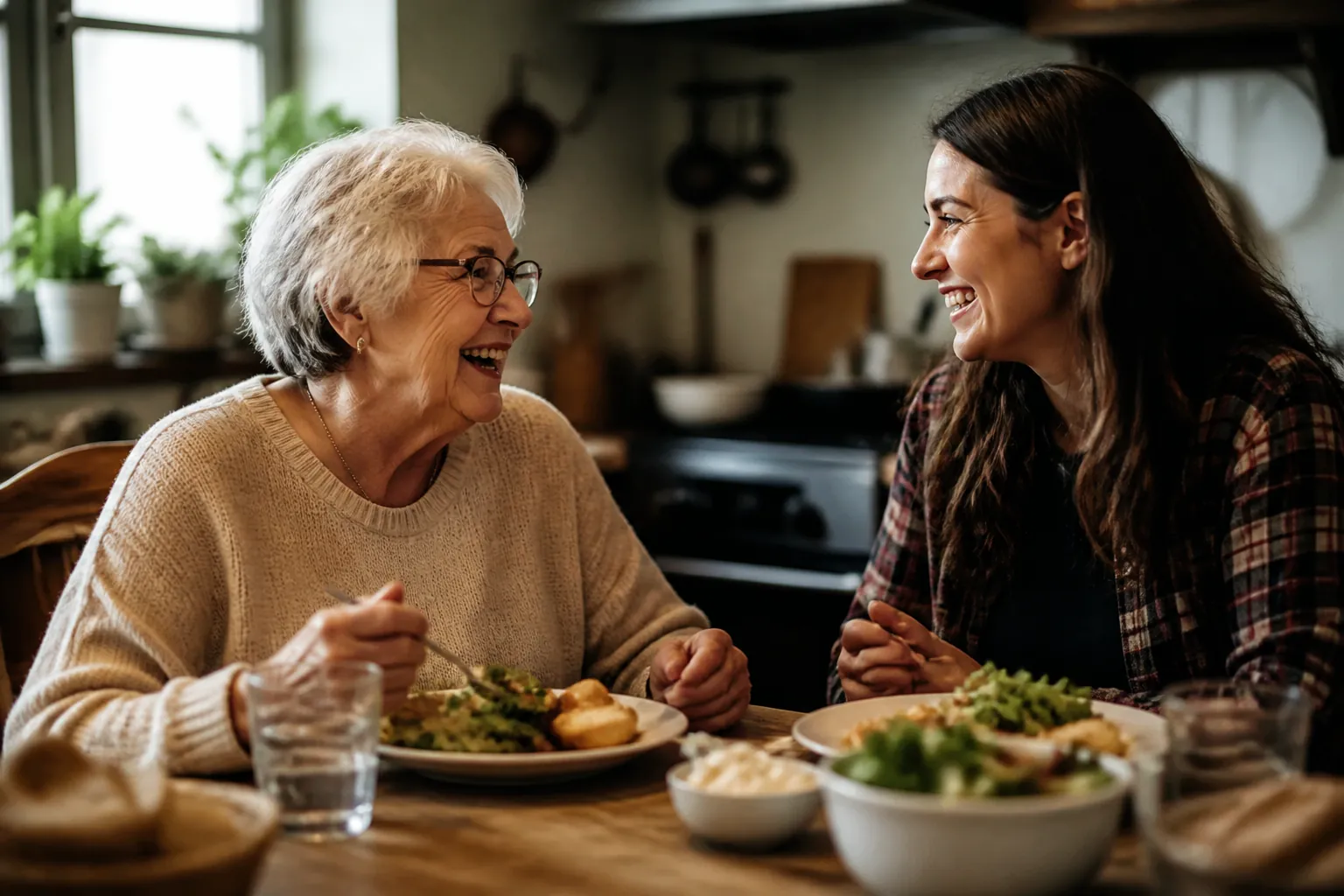
For a senior living alone, connection may be the thing that makes every other habit more likely. Someone notices if the walker is suddenly unused, if mail piles up, if meals shrink, if the person stops answering calls, or if a normally steady parent sounds confused. A shared meal, a weekly class, a faith-community ride, a neighbor check-in, or a scheduled call can become part of the safety system.
The plan should be specific enough that absence is visible. “Stay social” is not a plan. “Lunch with Sam on Tuesdays, church ride on Sundays, daughter calls after dinner on Monday and Thursday, building coffee hour once a week” is closer. For families weighing whether aging in place is still realistic, social isolation is one of the conditions worth facing directly; this aging-in-place reality check can help frame that conversation.
What to be careful with in longevity claims
The habits above are worth taking seriously. They still do not justify turning population research into a personal lifespan forecast. If a study models benefits from a much younger starting age, it should not be handed to a 78-year-old as if the same number of added years is waiting at the end of a walking program. Starting later can still matter; the likely gain is more often better capacity, safer movement, steadier recovery, and a better chance of maintaining routines.
Be equally careful with simple pass/fail tests that spread online. A balance observation may prompt a useful conversation, especially if someone is newly unsteady. It should not become a home diagnosis, a reason to panic, or a substitute for a clinician’s assessment of vision, medications, blood pressure, neuropathy, strength, footwear, home hazards, and recent falls.
Blue Zones stories, supplement stacks, cold exposure routines, and dramatic “biological age” claims may be interesting to some readers. They are not the first place to spend effort when the basics are missing. For most seniors and caregivers, the more useful questions are simpler: Is the person moving most days? Are they doing some strength and balance work safely? Are meals providing enough protein? Is sleep disrupted in a treatable way? Would someone notice quickly if the person became isolated?
A realistic starting point
A senior does not have to fix every habit at once. One safe walk after breakfast, one chair-based strength routine twice a week, one protein check at breakfast, one sleep concern brought to a clinician, or one standing meal with another person can be the beginning of a healthier pattern.
The strongest longevity habits for seniors are not valuable because they promise miracle lifespan extension. They are valuable because they are measurable, repeatable, and closely tied to the parts of aging that families feel every day: balance, strength, recovery, clear thinking, independence, and quality of life.
References
- Decade of Healthy Ageing, World Health Organization.
- What is healthspan, and how can you maximize yours?, American Heart Association, January 14, 2025.
- Older Adults, Centers for Disease Control and Prevention.
- Five healthy habits for successfully aging in our 60s and 70s, Stanford Medicine, January 2026.
- How Social Connection Supports Longevity, Stanford Lifestyle Medicine.
Browse more in the Glossary.