
Clinical term
How Sleep Apnea Misdiagnosis Puts Older Women at Risk
Last verified 2026-07-24
The warning signs may not look like a sleep problem at first. An older woman falls in the hallway, then again stepping off the porch. She naps in the recliner every afternoon but says she is “not really sleepy.” She forgets a bill, loses the thread of a conversation, wakes with headaches, and tells her daughter she feels foggy. At the next appointment, the explanation lands where it often lands: age, mood, menopause leftovers, maybe just less stamina.
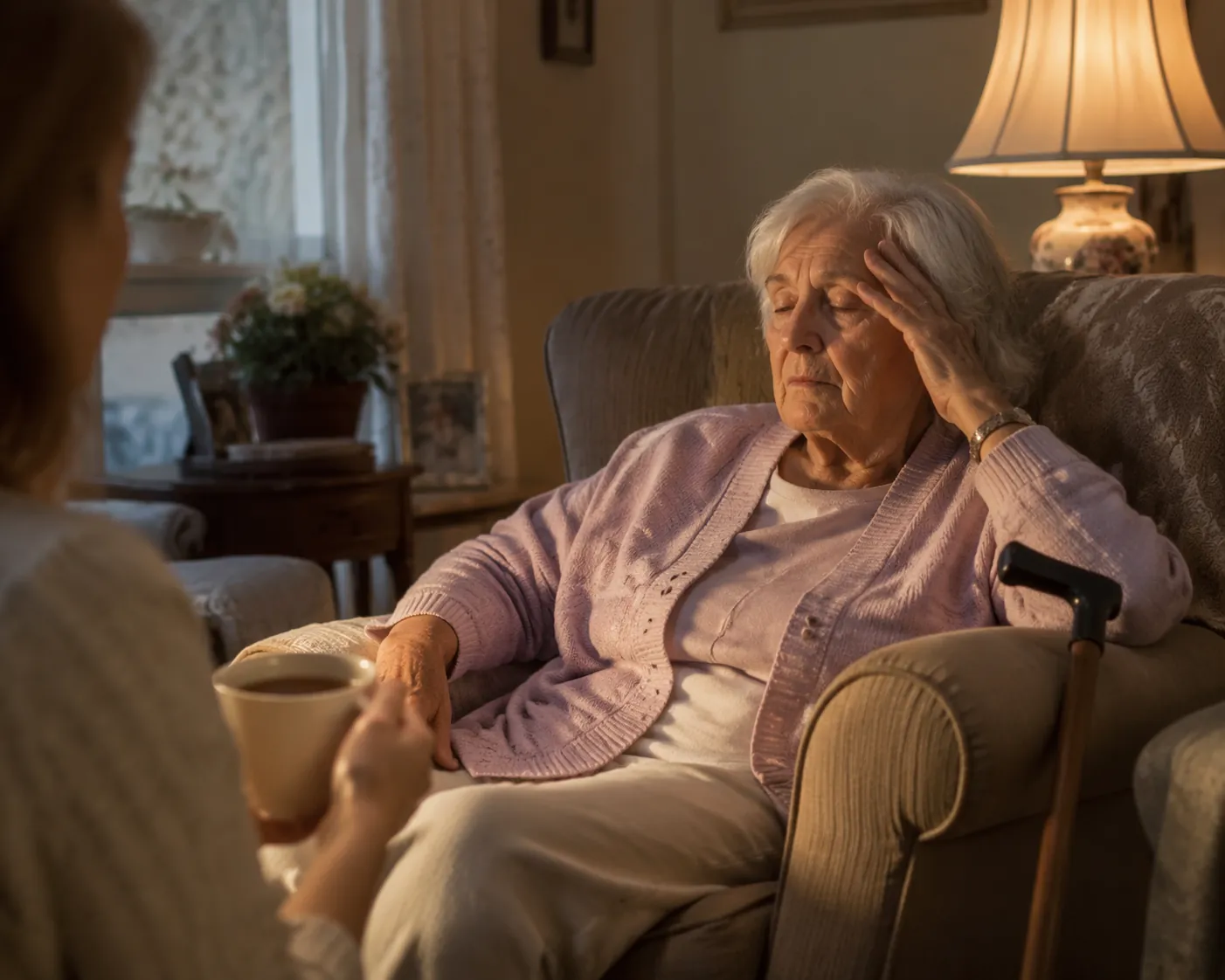
That may be true in some cases. Falls, fatigue, and memory changes have many causes, and no caregiver can diagnose obstructive sleep apnea from the living room. But sleep apnea misdiagnosis in older women deserves a much lower threshold for concern than it usually gets, because women often do not fit the classic sleep-apnea picture that clinicians and screening tools are built to recognize.
The practical question is not “Does she snore like the stereotype?” It is: has anyone seriously considered whether disrupted breathing during sleep could be contributing to the daytime problems now threatening her independence?
The older-woman pattern is easy to miss
Obstructive sleep apnea is often taught and imagined as a loud-snoring, gasping, very sleepy man. Women can have those signs too, but the pattern is often less tidy. Reviews of obstructive sleep apnea in women describe more reports of insomnia, fatigue, depression, anxiety, morning headaches, and restless legs, while the National Heart, Lung, and Blood Institute also notes that women’s symptoms may include trouble falling or staying asleep, headache, tiredness, depression, and anxiety rather than only obvious snoring and pauses in breathing.[1][2]
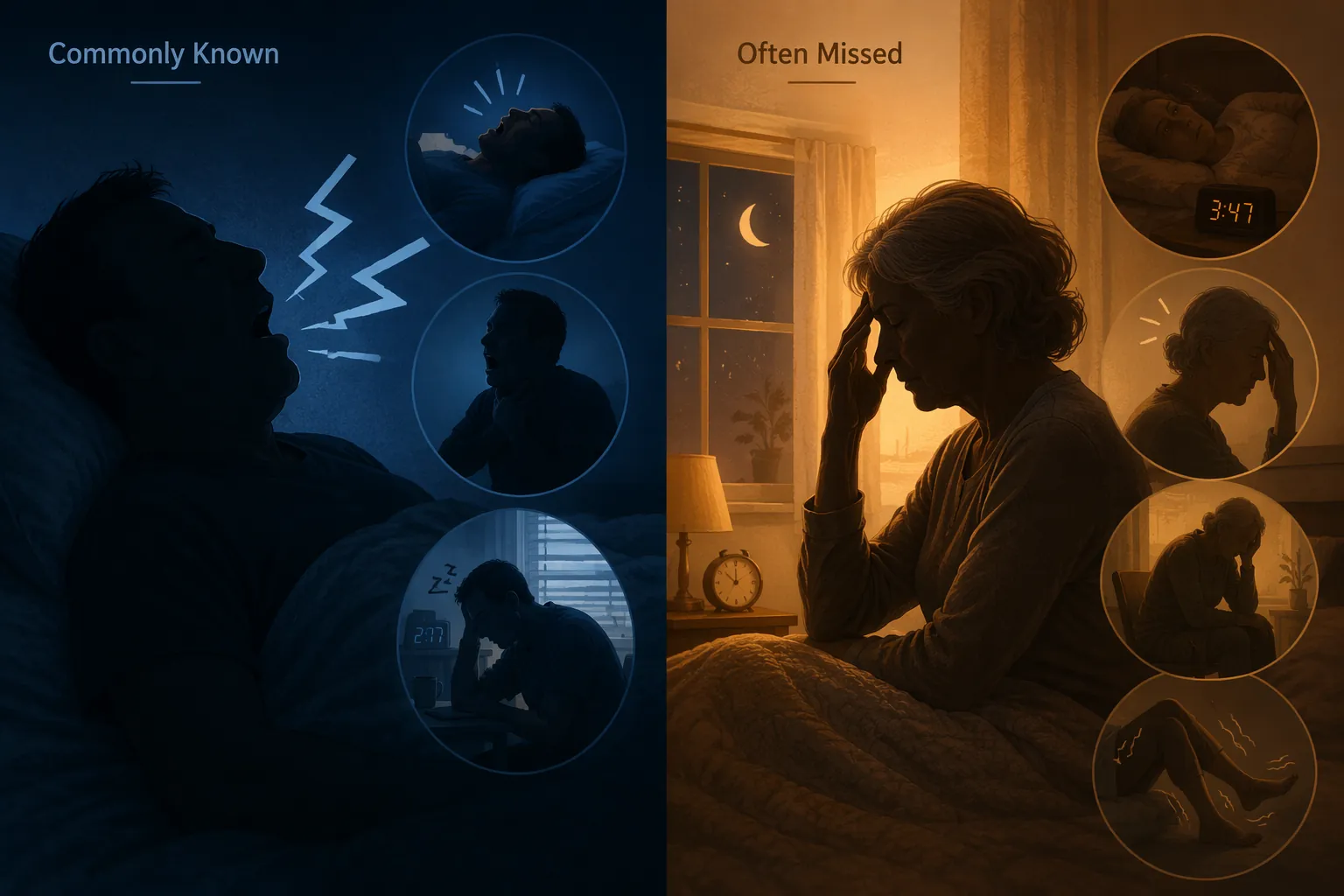
That difference matters in a clinic visit. A woman who says she is exhausted, anxious, waking often, and foggy may be routed toward mood, stress, menopause history, medication side effects, or “normal aging.” Those possibilities may need evaluation. The problem is when they become the whole explanation before sleep-disordered breathing has been checked.
The underdiagnosis gap is large. The British Academy of Dental Sleep Medicine reported in March 2026 that 93% of women with moderate-to-severe obstructive sleep apnea remain undiagnosed, compared with 82% of men; that figure comes from research on middle-aged adults, so it should not be treated as an older-women-only statistic.[3] Even with that qualification, it points to a pattern families recognize: women can live for years with symptoms that are real, disabling, and repeatedly mislabeled.
A negative screen should not always end the conversation
Caregivers often hear some version of “she does not screen positive.” That sounds reassuring until you ask what the screen was designed to catch.
STOP-BANG, one of the common screening tools, gives points for factors such as snoring, tiredness, observed apneas, blood pressure, body mass index, age, neck circumference, and male sex. A review of obstructive sleep apnea in women cites research finding that STOP-BANG has unacceptably low sensitivity in women and that sex-specific cutoffs are needed. The same review notes that the Epworth Sleepiness Scale, which asks about the chance of dozing in daytime situations, does not correlate well with mild-to-moderate obstructive sleep apnea in women.[1]
This is where family observation becomes useful. Not as proof, and not as a substitute for a physician, but as evidence that the brief appointment may not capture. A daughter may know that her mother has stopped gardening because she is too tired by noon, that she wakes at 3 a.m. most nights, that morning headaches have become routine, or that she now grips the furniture when walking from the bedroom to the bathroom.
When those observations are present, the next question for the clinician can be specific: “Could sleep apnea still be possible even though her screen was negative?” That is different from demanding a diagnosis. It asks whether the screening result fits the person in front of them.
Why the dementia numbers change the stakes
Memory changes in an older parent carry a special kind of dread. Families may quietly begin planning for supervision, driving limits, medication management, or whether living alone is still safe. That is why the dementia research around sleep apnea matters: it connects an often-missed sleep condition with an outcome families are already trying to prevent or delay.
A 2024 study by Braley and colleagues, using Health and Retirement Study data from 18,815 participants, found that women with known or suspected obstructive sleep apnea had a 4–7% higher cumulative incidence of dementia by age 80 compared with women without obstructive sleep apnea.[4] The same report estimated that the population-attributable risk of dementia due to obstructive sleep apnea was 10.3% in women, meaning roughly 1 in 10 dementia cases in women may be attributable to obstructive sleep apnea.[4]
That does not mean sleep apnea explains every memory lapse. It does not mean treatment guarantees protection from dementia. The point is narrower and still important: when an older woman has cognitive changes plus fatigue, insomnia, morning headaches, or other possible sleep-apnea symptoms, leaving sleep apnea out of the evaluation may overlook a modifiable risk factor.
For families trying to preserve aging-in-place capacity, this is not abstract. Untreated conditions can make an older adult look more frail, less reliable, and less safe than she might be with the right diagnosis and treatment plan. Before interpreting every new lapse as proof that home is no longer workable, it is worth pairing medical investigation with a practical review of the home environment and support system. CareWise Guide’s senior home assessment guide can help families separate warning signs that require more supervision from problems that may improve when treatable contributors are addressed.
Falls deserve the same broader lens
A fall is rarely caused by one thing. Vision changes, medications, blood pressure drops, pain, muscle weakness, poor footwear, clutter, loose rugs, bathroom hazards, and cognitive distraction can all stack together. Sleep apnea may belong in that same risk conversation, but the evidence needs careful wording.
A 2024 Sleep Medicine protocol describes obstructive sleep apnea as a potentially modifiable risk factor for falls in older adults and outlines a randomized controlled trial testing whether continuous positive airway pressure treatment can reduce fall-risk markers.[5] Because that publication is a study protocol, not completed trial proof, it should not be read as evidence that sleep apnea treatment has already been shown to prevent falls.
Still, the direction of concern is reasonable. If a woman is sleeping poorly, waking unrefreshed, feeling foggy, and moving through the house with slower reactions, her medical risks and home hazards can compound each other. While the physician investigates sleep apnea and other medical causes, the family should not wait to reduce obvious fall hazards. A room-by-room home safety checklist is often the fastest way to catch the things everyone has stopped seeing: the throw rug at the bedroom door, the dim hallway, the towel bar being used as a grab bar, the lamp cord crossing the walking path.
Medical evaluation and home modification are not competing strategies. They answer different parts of the same safety problem. One looks for the physiology that may be making her less steady; the other changes the environment so a bad moment is less likely to become a fracture, hospitalization, or permanent loss of confidence.
What to bring to the physician
The most useful appointment is not built around a vague concern that “Mom is declining.” It is built around a pattern. Write it down before the visit, because the small details that seem ordinary at home are often the details that change the medical question.
- Falls or near-falls: when they happened, where they happened, whether she felt dizzy, confused, rushed, or unusually tired.
- Sleep symptoms: insomnia, frequent waking, morning headaches, restless legs, dry mouth, snoring, witnessed pauses in breathing, or waking short of breath.
- Daytime changes: fatigue, naps, fogginess, slower thinking, mood changes, anxiety, depression symptoms, or reduced activity.
- Screening history: whether STOP-BANG, Epworth, or another sleep questionnaire was used, and whether a negative result ended the discussion.
- Other contributors: medication changes, alcohol use, pain, new urinary urgency at night, vision problems, blood pressure issues, or recent illness.
Then ask directly: “Given her falls, fatigue, memory changes, insomnia, and morning headaches, is sleep apnea testing warranted even if she does not look like the typical patient?” If the answer is no, it is reasonable to ask what alternative explanation best fits the full pattern and what would trigger reconsideration.
This conversation should sit alongside the larger aging-in-place plan. If fatigue and fogginess are making stairs, bathing, cooking, or nighttime bathroom trips more dangerous, families may need to prioritize changes that reduce consequences now. CareWise Guide’s home modification prioritization guide can help decide which fixes matter first when money, time, and cooperation are limited.
A careful concern, not a living-room diagnosis
Sleep apnea should not become the new explanation for everything. An older woman with falls and confusion may need evaluation for medication effects, heart rhythm problems, blood pressure changes, infection, neurological disease, vision loss, dehydration, depression, pain, or environmental hazards. A caregiver’s job is not to narrow the possibilities too soon.
The mistake to avoid is the opposite one: accepting vague decline as normal when the pattern includes symptoms commonly seen in women with obstructive sleep apnea. The combination of missed diagnosis, screening limitations, dementia risk, and emerging fall-risk research is enough to justify a specific medical question.
CareWise Guide provides educational information for caregivers and is not a substitute for medical advice, diagnosis, or treatment. If an older woman has unexplained falls, persistent fatigue, memory changes, morning headaches, insomnia, mood symptoms, or daytime fogginess, ask her physician whether sleep apnea testing is warranted, and mention that women may screen negative despite clinically relevant symptoms. While that question is being investigated, keep working on fall prevention at home.
References
- Obstructive Sleep Apnea in Women: Specific Issues and Interventions, Yale Journal of Biology and Medicine, 2021.
- Sleep Apnea and Women, National Heart, Lung, and Blood Institute.
- Why patients with sleep problems get misdiagnosed, British Academy of Dental Sleep Medicine, March 2026.
- Sleep apnea raises dementia risk in older women, News-Medical, November 6, 2024.
- Effectiveness of continuous positive airway pressure in reducing falls risk in older people with obstructive sleep apnoea: protocol for a randomised controlled trial, Sleep Medicine, 2024.
Browse more in the Glossary.