
Glossary entry
Will the 2027 Social Security COLA Really Be 3.6%?
Last verified 2026-08-25
This is not financial or legal advice. Medicare/Medicaid and benefits rules vary by state and change over time — verify current rules with your state Medicaid office or Area Agency on Aging.
Last verified: Aug. 25, 2026. CareWise Guide is not affiliated with the Social Security Administration, and this article is for benefits-literacy purposes only, not financial, tax, or legal advice.
No — the 2027 Social Security COLA is not officially 3.6% yet. The 3.6% figure showing up in headlines is The Senior Citizens League’s Aug. 12, 2026 projection, not the rate that will be applied to benefit checks. The official 2027 COLA is scheduled to be announced by Social Security on Oct. 14, 2026.[1][2]
That distinction matters because a projection can be useful and still not be safe to treat as “the raise.” If you are trying to decide whether next year’s benefit will cover a higher grocery bill, Medicare costs, taxes, or a home-safety purchase, the question is not whether 3.6% is a wild guess. It is whether you can use it yet as a settled number. As of Aug. 25, 2026, you cannot.

Why the 3.6% number should have a source and date attached
The cleanest way to read the current headline is this: “TSCL projected a 3.6% 2027 COLA on Aug. 12, 2026.” That is a useful planning datapoint. It is not an SSA announcement.
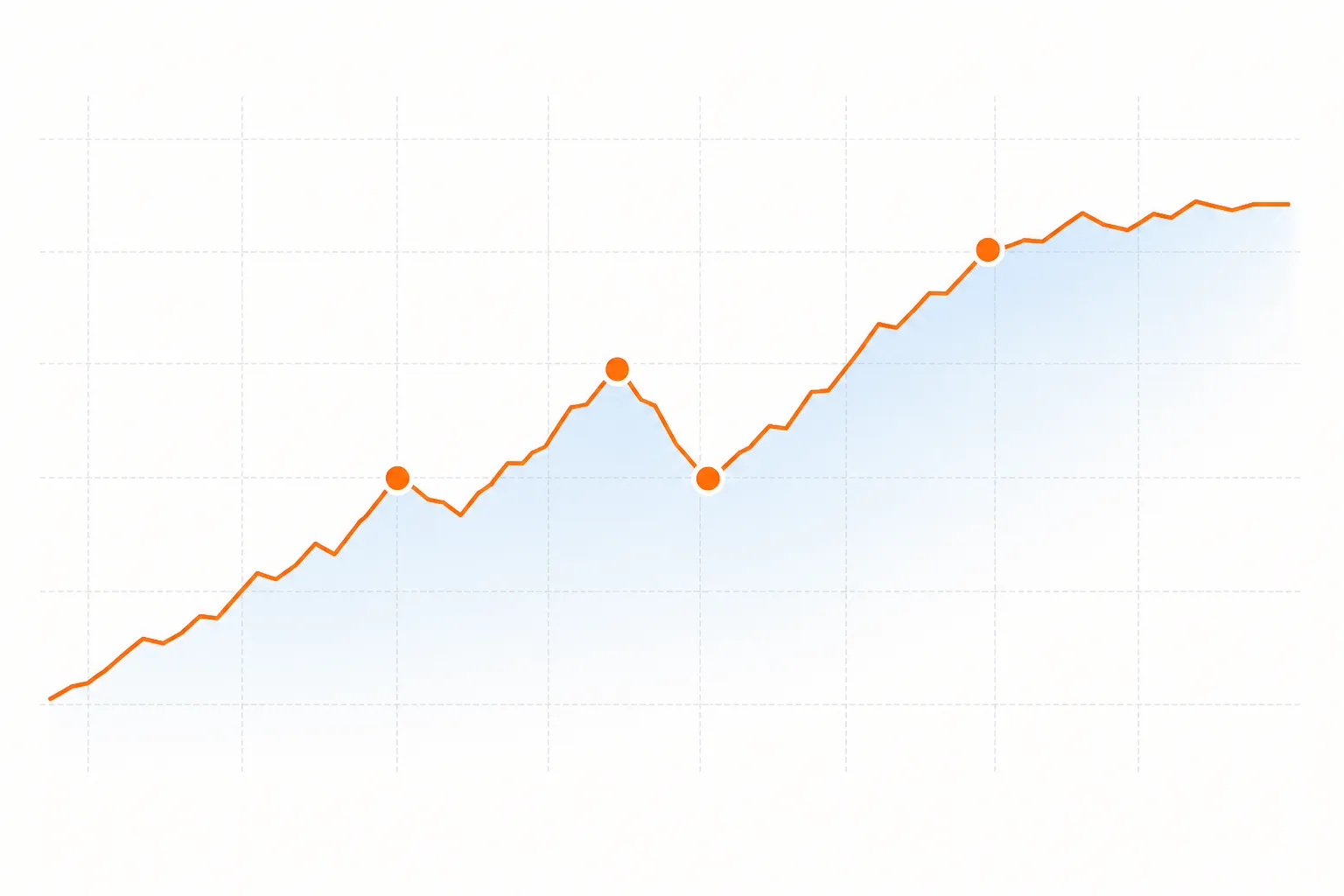
The problem with stripping off the source and date is that the same forecast series has already moved several times this year. The 3.6% estimate is not floating by itself; it is the latest stop in a changing monthly path.
| When the estimate appeared | TSCL’s projected 2027 COLA | What that tells you |
|---|---|---|
| January–March 2026 | 2.8% | Early-year projections were lower, before the COLA measurement quarter arrived.[3] |
| April 2026 | 3.9% | The estimate jumped, showing how sensitive pre-October forecasts can be.[3] |
| May–June 2026 | 3.8% | The projection stayed near the higher range, but still was not official.[3] |
| July–August 2026 | 3.6% | The latest TSCL figure had fallen from the spring estimate with two months remaining before the announcement.[1][3] |
That table is the main reason to be careful. A retiree who heard “2.8%” early in the year, then “3.9%,” then “3.8%,” and now “3.6%” did not misunderstand four different official announcements. They heard forecasts at different points in the year, before the final calculation was complete.
The official COLA depends on three CPI-W months, not the whole year
Social Security’s COLA calculation uses the Consumer Price Index for Urban Wage Earners and Clerical Workers, or CPI-W. For the 2027 COLA, SSA compares the average CPI-W for July, August, and September 2026 with the average for the same three-month period in the prior year.[2]

This is why the calendar matters. A forecast made before July has no actual 2026 measurement-quarter data. A forecast made after July has only one of the three months. A forecast made after August has more information, but still not the full quarter. Until September CPI-W is known and SSA applies the formula, the estimate remains exposed.
That does not make outside estimates useless. It means they are conditional. A forecast can become more informed as each CPI-W month arrives, but it does not become official just because it is closer to October.
Energy prices are one reason the estimate can still move
TSCL specifically flagged oil as a wild card in its Aug. 12 release, noting that crude oil was about 24% higher year over year as of Aug. 6, 2026.[1] That matters because energy prices can feed into inflation readings during the exact stretch of months that determines the COLA.
The recent CPI-W pattern helps explain why forecasters have been cautious. CBS News reported that CPI-W inflation was 2.2% in January 2026, rose to 4.4% in May, then cooled to 3.5% in June and 3.4% in July.[4] Those are not tiny wiggles when the final COLA is built from a narrow three-month window.
So if oil prices stay elevated, drift down, or move sharply again before the final measurement is complete, a pre-October COLA estimate can change with them. The important word is “can.” The available material supports a volatility warning, not a promise that one particular energy move will produce one exact COLA.
The current outside forecasts are close, but not identical
By late August, several published estimates were clustered in the mid-3% range. That makes 3.6% a reasonable planning estimate, but not the only defensible one.
| Source | Published estimate or scenario | How to read it |
|---|---|---|
| The Senior Citizens League | 3.6% as of Aug. 12, 2026 | A dated projection, not the official SSA COLA.[1] |
| AARP | 3.5% | AARP described its estimate, based on CPI-W through July 2026 and Cleveland Fed inflation projections, as “our best guess.”[5] |
| Mary Johnson, reported by Money | 3.4% | A separate analyst estimate; useful as part of the range, not as a final number.[6] |
| Kiplinger | 3.5% if oil prices stay up; 3.3% if oil prices drop | An explicitly oil-dependent scenario from staff economist David Payne.[7] |
This is not a contest where the highest or newest number wins. It is a set of dated estimates trying to anticipate the same SSA formula before the final CPI-W quarter is complete. The narrower lesson is useful: reasonable forecasts can differ by a few tenths of a percentage point because they are making assumptions about data that are not fully in yet.
What you can safely do with 3.6% before Oct. 14
You can use 3.6% as a rough planning placeholder. You should not use it as a promise that your January check will rise by exactly that amount, and you should not assume that a gross COLA percentage is the same as your net monthly increase.
A practical way to handle the waiting period is to separate decisions into “reversible” and “hard to unwind.” Updating a draft budget with a 3.6% placeholder is reversible. Signing up for a new recurring expense on the assumption that the net check is already known is not.
- For a dollar-based estimate of what different COLA percentages could mean, use the site’s 2027 Social Security COLA estimate guide rather than turning 3.6% into a final benefit amount yourself.
- If Medicare premiums are part of the household budget, check the Medicare Part B and 2027 COLA offset explainer before treating the gross COLA as take-home money.
- If taxes affect your household, review the Social Security COLA and tax guide before assuming the increase is fully available to spend.
- If the possible increase is being earmarked for grab bars, better lighting, or other safety upgrades, the home-safety budgeting guide for the 2027 COLA is the better place to think through purchases.
- For broader context on fixed-income pressure and safety tradeoffs, see how inflation affects seniors on fixed income.
The safe line, for now, is plain: 3.6% is The Senior Citizens League’s Aug. 12 projection. It is reasonable to keep it in a planning column. It is not the official 2027 Social Security COLA, and it is not stable enough to lock in a budget decision that depends on the exact net check.
This tracker should be refreshed after SSA’s scheduled Oct. 14, 2026 announcement, when the article can stop tracking estimates and use the final official number.[2]
References
- COLA Projection Falls to 3.6% With 2 Months Remaining to 2027 Announcement, The Senior Citizens League, Aug. 12, 2026
- Cost-of-Living Adjustment (COLA) Information, Social Security Administration
- COLA Watch, The Senior Citizens League
- Social Security COLA 2027 Forecast: What Retirees Need to Know, CBS News
- Social Security COLA 2027 Increase Estimate, AARP
- Social Security's 2027 Raise: What Changed?, Money, Aug. 19, 2026
- Social Security COLA 2027, Kiplinger
Browse more in the Glossary.