
STEADI: Intervene
How Inflation Affects Home Safety for Fixed-Income Seniors
Inflation doesn't just tighten budgets for seniors on fixed incomes — the trade-offs it forces, like skipped meals and deferred home repairs, map directly onto fall risk. This guide shows which cuts endanger safety at home and how to protect against them with benefits already available and low-cost fixes.
The 2026 Social Security cost-of-living adjustment is 2.8 percent, which works out to about $56 more per month for the average retired-worker benefit. That is the income-side headline for many fixed-income seniors this year: one small increase trying to cover groceries, copays, utilities, transportation, and the repair no one wants to mention because it sounds “not urgent.”[1]
This is where the question of how inflation affects seniors on fixed income stops being only a money question. If a parent has an extra $56 but the grocery list, medication counter, electric bill, and loose stair rail are all asking for a piece of it, the budget can look balanced while the house gets less safe.
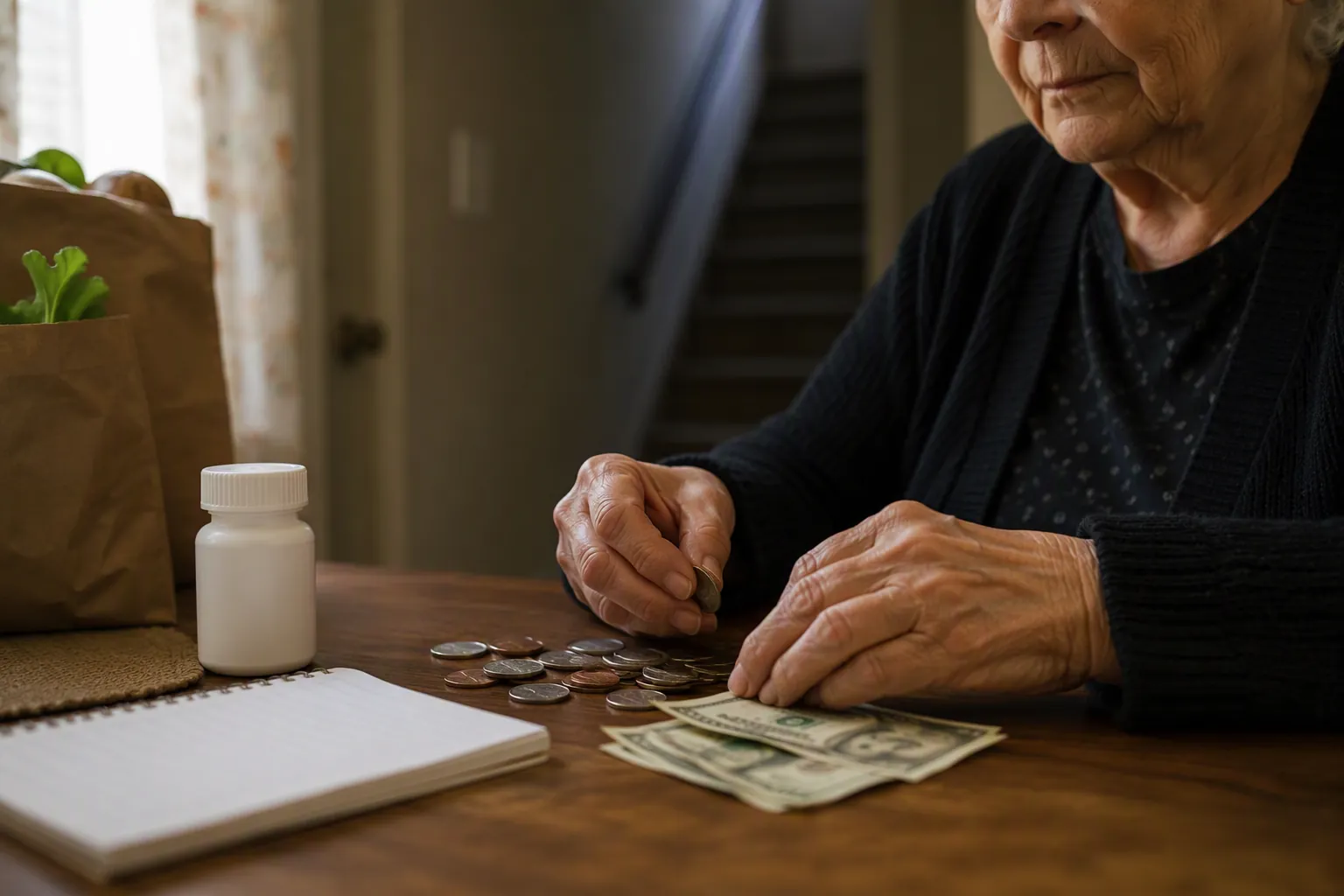
AARP’s 2026 Financial Security Trends Survey helps explain why the check arriving on time does not necessarily make the month feel stable. In that survey, 69 percent of older adults said prices were rising faster than their income, 37 percent felt financially insecure, and 60 percent worried about their money lasting through retirement.[2] Those are attitudes, not proof that every household is cutting the same thing. But they are a loud signal that many older adults are triaging.
The Center for Retirement Research gives the structural reason retirees can feel the squeeze harder than people who are still near retirement. Social Security is inflation-indexed, but much of retirees’ other income is less protected from inflation, and retirees tend to hold less fixed-rate debt that would otherwise be paid back with cheaper dollars.[3] In plain household terms: the part of the income that adjusts may not be the whole income, and the bills do not politely rise only by the same amount as the benefit increase.
The budget gets smaller after medical costs, not before
When an older adult says, “I can manage,” it is worth asking what “manage” means after health costs. A 2026 Center for Retirement Research update found that the median retiree had only 71 percent of Social Security income left after out-of-pocket medical costs. For 5 percent of retirees, out-of-pocket medical costs left essentially none of their Social Security income.[4]
That finding is not about a rare luxury expense. It is about the ordinary drain of staying treated, monitored, mobile, and housed. Once medical costs have taken their share, the remaining money has to cover everything else that keeps a person steady at home: enough food, working lights, safe shoes, transportation to appointments, heat or cooling, and the small repairs that prevent a near-miss from becoming a fracture.
This is also why adult children can miss the danger. They may see that rent or the mortgage is paid. They may hear that the electric bill is current. What they do not see is the skipped lunch, the half-dose taken without telling the doctor, the hallway bulb left burned out, or the bath mat that still slides because replacing it keeps falling behind more visible bills.
The most dangerous cuts are the ones that reduce strength, treatment, or traction
Not every cut has the same safety consequence. Canceling a subscription and delaying a handrail repair are not equal. Buying a cheaper brand of cereal and skipping dinner are not equal. The cuts that matter most for fall prevention are the ones that change the body’s steadiness or leave a known home hazard in place.
| Cut or coping behavior | Why it matters for home safety | What to look for |
|---|---|---|
| Skipping meals or stretching groceries too far | Less food can mean less energy for walking, transfers, bathing, and recovering balance after a stumble. | Sparse refrigerator, repeated “I’m not hungry,” weight loss, unopened meal deliveries, fewer protein foods. |
| Delaying care, prescriptions, or needed supplies | Untreated symptoms, dizziness, pain, poor sleep, or unmanaged chronic conditions can make ordinary movement less steady. | Medication bottles lasting longer than expected, canceled appointments, complaints about copays, use of old supplies. |
| Leaving home hazards unrepaired | Loose rugs, dim stairs, missing handholds, cluttered walkways, and slick bathrooms increase the chance that one misstep becomes a fall. | Burned-out bulbs, loose stair rail, towel bar used as a grab bar, rug corners curling, extension cords across paths. |
Food cuts show up in the body before they show up in the bank account
A 2022 survey reported by FoodService Director found that 14 percent of 1,000 surveyed seniors said they had skipped meals because of inflation, and about 44 percent worried about covering groceries or household essentials.[5] AARP Public Policy Institute analysis reported that 10.4 percent of adults age 50 and older — 12.7 million people — were food-insecure in 2024.[6]
Those two findings should not be blended into one claim. The meal-skipping survey asked about inflation directly; the food-insecurity analysis describes a broader condition among adults 50 and older. Together, they point to the same practical problem: food is one of the first places people try to make the math work because it can be reduced quietly.
Quiet is the problem. A parent may still offer coffee, keep the kitchen tidy, and insist they eat “plenty.” Look inside the refrigerator anyway. Look for meals that can actually become breakfast, lunch, and dinner without standing for forty minutes, opening difficult packaging, or needing a trip to the store after dark. If cooking has become tiring or expensive, start with simple options that protect protein and calories; CareWise Guide’s low-effort meal ideas for elderly adults can help with that part.
Medical cuts can hide behind good intentions
The CRR medical-spending finding does not prove that every retiree is skipping medication. It does show how much of the Social Security check can be absorbed before food, utilities, and home safety are addressed.[4] That pressure is enough reason to ask direct, non-accusing questions.
- “Are any prescriptions costing more than you expected?”
- “Have you delayed any appointments because of copays or transportation?”
- “Are you taking anything differently than the label says so it lasts longer?”
- “Do you have the eyeglasses, hearing aids, cane tips, wound supplies, or diabetes supplies you need right now?”
The answer may be embarrassing. That is why the tone matters. The goal is not to scold someone for stretching a prescription; it is to get the prescriber, pharmacist, insurer, Medicare plan, or benefits office involved before a money-saving workaround creates a balance, vision, pain, or dizziness problem at home. This article is general education, not medical, financial, or legal advice; medication and benefit decisions should be checked with the appropriate professional or official program source.
Home repairs are a predictable pressure point, not a measured statistic
The research here directly documents income strain, medical-cost burden, meal skipping, and food insecurity. It does not directly measure how many older adults postponed grab bars, stair rails, lighting upgrades, rug removal, or bathroom fixes because of inflation. That connection is a reasoned inference from the budget squeeze, not a statistic.
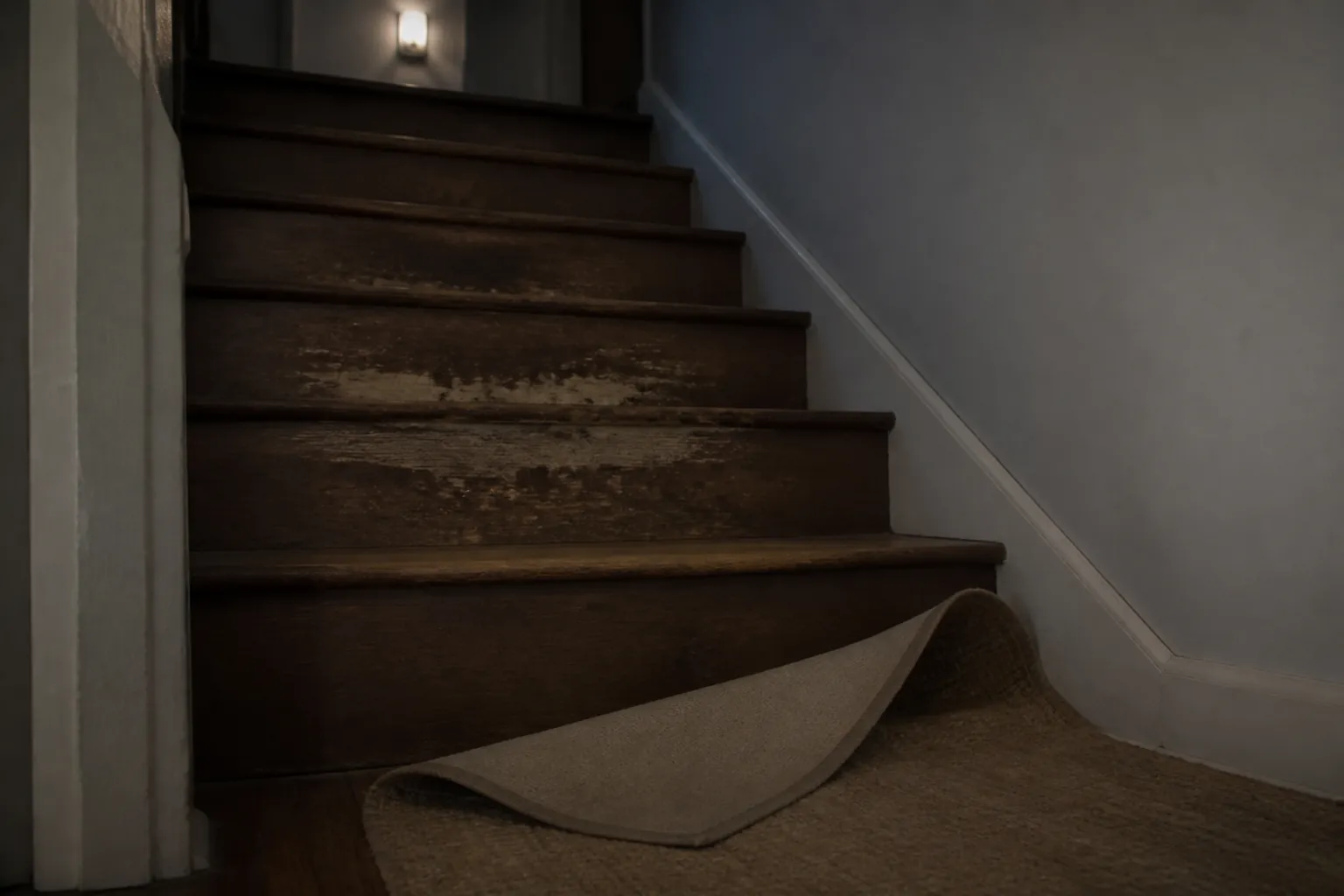
It is still the inference families should take seriously. When essentials consume the check, the home-safety category becomes easy to postpone because the hazard is familiar. The rug has been there for years. The stair light has been dim for years. The towel bar has been used as a handhold for years. Familiar does not mean safe; it often means the household has learned to step around the problem until a tired, dizzy, rushed, or underfed day removes the margin.
This is different from place-based poverty, where distance, service gaps, and transportation barriers can drive fall risk in their own way. If that is the situation in your family, the sibling guide on rural poverty and fall risk is the better next read. Inflation pressure can happen in a city apartment, a suburban ranch house, or a rural home; the mechanism is the monthly squeeze forcing unsafe trade-offs.
What to protect before anything else gets cut
A fixed-income household may not be able to control inflation. It can control the order of cuts. For fall prevention, the first job is to protect the spending and routines that keep the person fed, treated, visible, supported, and able to move through the home without improvising.
| Protect this first | Why it belongs in the safety budget | Low- or no-cost action to try before cutting |
|---|---|---|
| Meals with enough substance | Strength, alertness, and stamina affect transfers, stairs, bathing, and walking. | Simplify meals, batch easy foods, accept meal help, use shelf-stable backups, and check food-benefit eligibility through official or dated sources. |
| Medication access and medical follow-up | Dizziness, pain, poor vision, poor sleep, and untreated symptoms can change fall risk quickly. | Call the prescriber or pharmacist before stretching doses; ask about lower-cost options, plan review, or assistance programs. |
| Lighting | A person cannot avoid a hazard they cannot see. | Replace burned-out bulbs, move lamps closer to paths, add night lights where available, and keep switches reachable. |
| Handholds and stable supports | Furniture, towel bars, and door frames are poor substitutes for reliable support. | Tighten existing rails if safe to do so, stop using towel bars as grab bars, and prioritize real handholds where transfers happen. |
| Clear walking paths and traction | Loose rugs, cords, clutter, and slick surfaces turn small balance losses into falls. | Remove loose rugs, tape down cord routes away from walkways, clear laundry and boxes, use non-slip mats that do not bunch. |
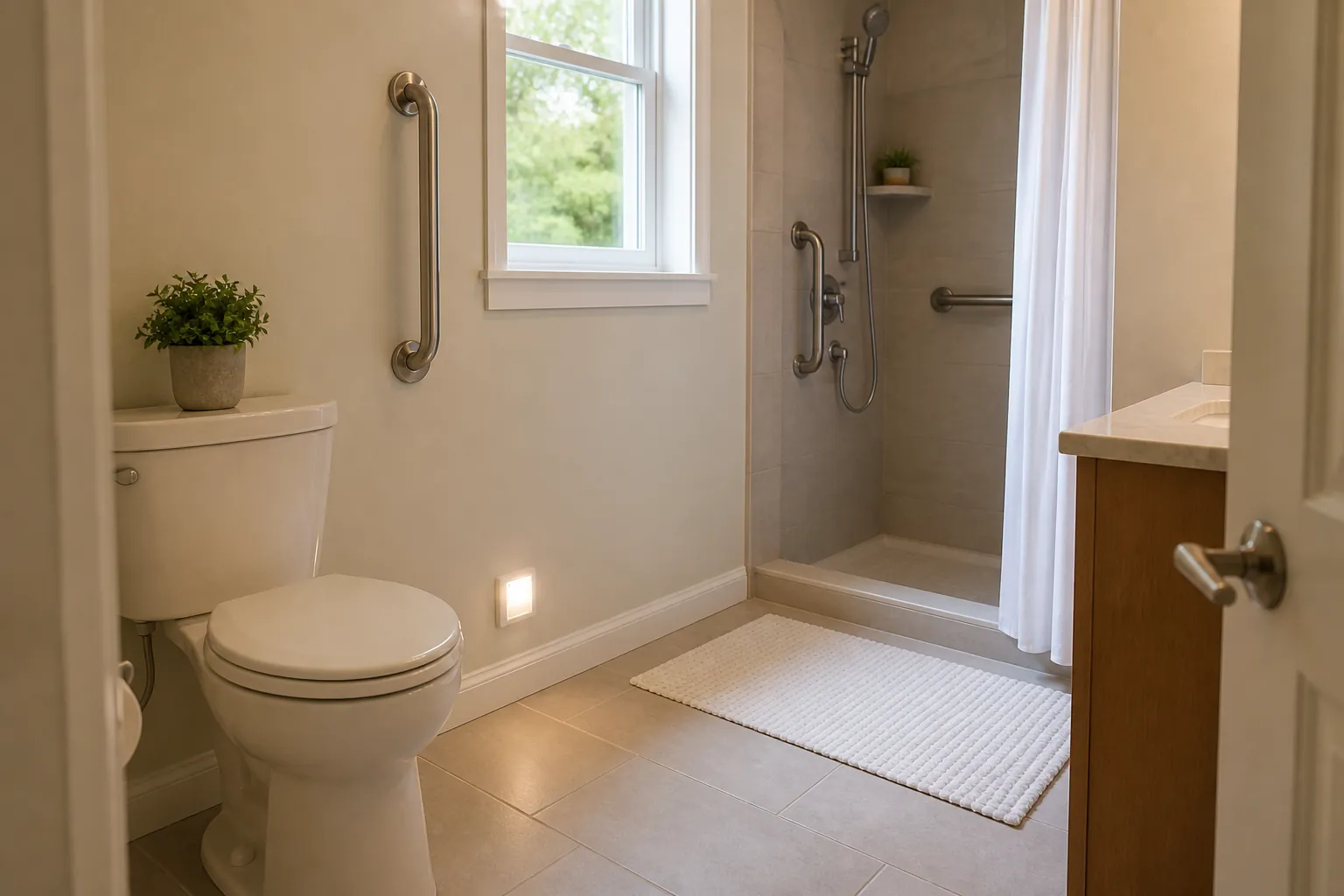
Notice what is missing from that table: a promise that safety requires a major renovation. Sometimes it does; many homes eventually need bigger changes. But when money is tight, waiting for the perfect project can leave the obvious hazard in place. Remove the loose rug today. Replace the bulb today. Move the extension cord today. Put a sturdy chair where shoes are put on today. Then decide what needs a landlord, contractor, benefits program, or family contribution.
Check benefits before trimming the safety budget
Benefit-program details change, and eligibility depends on the household. Last verified for this article: August 25, 2026. Before assuming a parent has to choose between food, medication, and a safer bathroom, check official Social Security, Medicare, state Medicaid, state nutrition-assistance, local aging-services, utility-assistance, and veterans-benefit sources as applicable. Use dated official pages or call the administering agency; do not rely on an old screenshot, a neighbor’s rule of thumb, or a mailer that looks official but is selling something.
The 2026 COLA is already built into Social Security benefits, but it should not disappear into the general blur of rising prices without a safety conversation.[1] If there is any room from an increase, refund, benefit adjustment, or family help, earmark part of it for the hazard most likely to cause a fall: the missing handhold, the dark hall, the slick bathroom, or the nutrition gap. For families thinking ahead to the next benefit increase, the CareWise Guide companion on the 2027 Social Security COLA increase discusses how to reserve a COLA bump for safety needs instead of letting it vanish bill by bill.
If care needs are growing and the home is still the goal, benefits literacy matters even more. Medicaid rules are state-specific and should be checked through official channels, but families can start by learning the basic idea of Medicaid long-term care at home before assuming paid help or home support is completely out of reach.
How adult children can spot quiet cutting
The family script usually starts with, “Are you okay?” The answer is usually, “I’m fine.” That question is too broad. Inflation-related risk shows up in places a person may not think to report: the pantry, the pill organizer, the utility corner, the bathroom floor, and the route from bed to toilet.
- Open the refrigerator and pantry with permission. Look for actual meals, not just condiments, crackers, and tea.
- Check whether medication bottles match the refill schedule. A bottle lasting too long can be as concerning as one running out.
- Walk the night route: bed to bathroom, bathroom to kitchen, chair to door. Turn off the overhead lights and see what the path looks like at 2 a.m.
- Test the supports being used in real life. If your parent pushes off a rolling chair, grabs a towel bar, or leans on a wobbly table, that is the support system.
- Ask what has been postponed. Use concrete choices: “Which would help more this month — groceries, the prescription copay, or fixing this rail?”
For a fuller home walk-through, use the red-flag safety checklist for elderly parents. The point here is narrower: when prices rise faster than income, assume some corner may be getting cut and look for the corner that could put someone on the floor.
A practical order of operations
If the budget is already tight, do not start with a perfect spreadsheet. Start with the cuts that would cause the most harm if they continued another month.
- Stabilize food for the next seven days. Make sure there are easy, realistic meals, not just ingredients.
- Confirm medications and essential health supplies. If anything is being stretched, call for help before changing doses or skipping care.
- Fix visibility and path hazards immediately. Replace bulbs, remove loose rugs, clear cords, and make the bed-to-bathroom route obvious.
- Identify the one support failure most likely to cause a fall. That may be a missing grab bar, loose rail, unstable chair, or slick tub floor.
- Check benefits and local help before paying out of pocket. Use official, current sources and document whom you spoke with.
Housing decisions can come later if the numbers no longer support safe aging in place. If the family is starting to compare home support with another living arrangement, the guide to staying home versus senior housing costs can help frame that larger question. But do not let a future housing decision delay tonight’s lighting, food, medication, and walkway fixes.
Inflation cannot always be controlled at the household level. The order of cuts can. Food, medication access, lighting, handholds, and hazard removal are not optional leftovers after the “real” bills are paid. For a fixed-income senior, they are part of fall prevention.
References
- Cost-of-Living Adjustment (COLA) Information — Social Security Administration
- Older Americans Feeling Financial Strain as Costs Rise — AARP, May 28, 2026
- How Does Inflation Impact Near Retirees and Retirees? — Center for Retirement Research
- How Much Does Health Spending Eat Away at Retirees’ Income? An Update — Center for Retirement Research, February 2026
- 14% of seniors report skipping meals due to inflation — FoodService Director
- Food Insecurity: Adults 50 and Older — AARP Public Policy Institute
Related reading
Noticed something outdated or inaccurate on this page? Flag a correction. We review every report against CDC, NIA, and AARP HomeFit guidance before updating a page.
Part of the Fall Prevention section.