
Clinical term
How to Respond When a Parent Has Frontotemporal Dementia
Last verified 2026-08-25
Clinically reviewed by Marisa Chen, OTR/L, CAPS. This article is educational support for caregivers. It is not a diagnosis, medication plan, legal advice, financial advice, or a substitute for individualized care from your parent’s clinician, attorney, or financial professional.
You explained it carefully. You reminded your parent what the doctor said. You pointed to the unpaid bill, the rude comment at dinner, the unsafe purchase, the shower they have skipped for days. And still they looked at you as if you were the one being unreasonable.
That failed conversation is often where real support has to begin. Learning how to support a parent with frontotemporal dementia means making one hard shift: respond to the behavior as a symptom of brain change, not as a debate you can win.

FTD does not usually announce itself like memory loss
Frontotemporal dementia, or FTD, is a group of disorders involving the frontal and temporal lobes of the brain. Those areas help regulate personality, judgment, behavior, language, impulse control, and social awareness. Mayo Clinic notes that FTD often begins between ages 40 and 65 and accounts for roughly 10% to 20% of dementia cases, which is one reason families can be shocked when the diagnosis arrives before anyone expected “dementia” to be part of the conversation [1].
This is one of the cruelest differences between FTD and the dementia story many families know. In Alzheimer’s disease, early memory loss is often the signal everyone notices. In FTD, memory may be less impaired early while personality, judgment, language, empathy, food habits, sexual boundaries, spending, hygiene, or initiative change first. Family Caregiver Alliance gives a different scope estimate than Mayo, describing FTD as 2% to 5% of dementia cases and estimating 140,000 to 350,000 affected people in the United States; those differences are a reminder not to lean too heavily on a single prevalence number when the practical problem in front of you is behavioral [2].
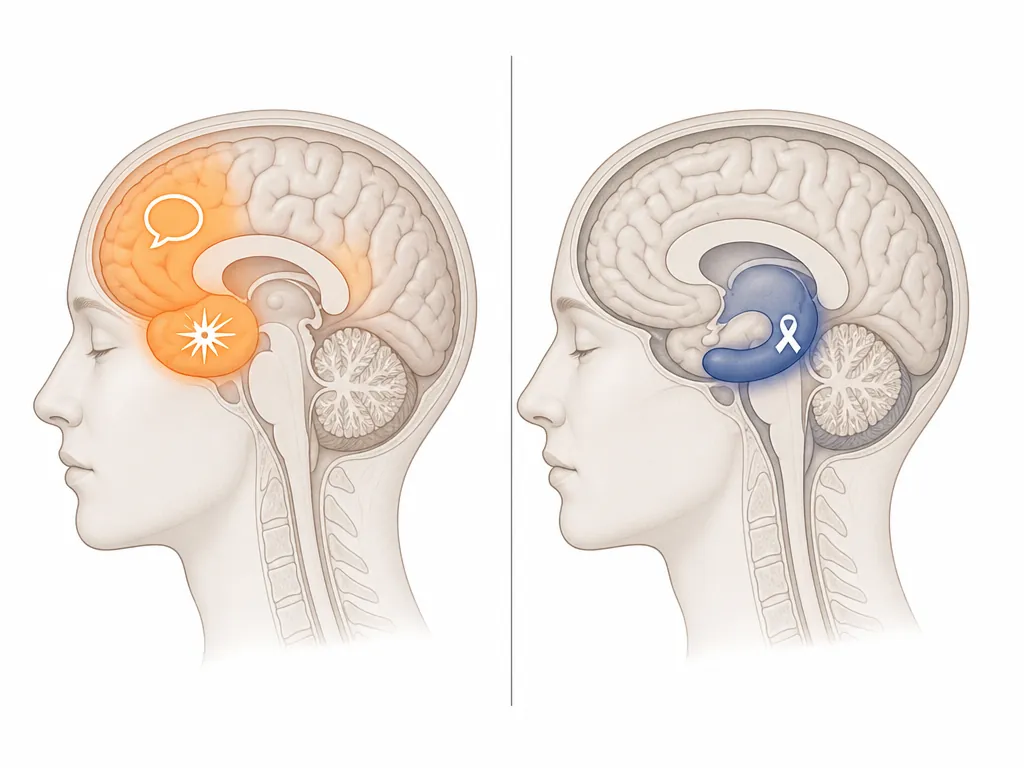
A parent who remembers your birthday may still be unable to stop making offensive remarks. A parent who can describe the route to the grocery store may still buy the same item repeatedly. A parent who used to be considerate may now seem indifferent when you cry. That mismatch is not proof that they are choosing to hurt you. It is often the exact shape of the disease.
The missing piece: anosognosia
Anosognosia means a person cannot recognize their own illness or deficits. In FTD care, it is not a side issue. The Association for Frontotemporal Degeneration describes lack of insight as common in FTD and emphasizes that people may not understand why their behavior is unsafe, inappropriate, or changed [3].

This is why reasoning so often backfires. Reasoning asks your parent to do several things at once: notice the problem, compare current behavior with past behavior, feel concern about the consequence, accept your authority in the moment, and choose a different action. FTD may have damaged the very systems needed for that chain to work.
So when your parent says, “Nothing is wrong with me,” that may not be denial in the ordinary sense. When they accuse you of overreacting, that may not be manipulation. When they repeat the same unsafe action after a painful family argument, it may not mean the argument failed because you chose the wrong words. It may mean words were the wrong tool.
A daily response loop that works better than arguing
The goal is not to find the perfect explanation that finally makes your parent agree. The goal is to reduce the number of times either of you has to depend on impaired insight, impulse control, or flexible thinking.

| When you notice... | Translate it as... | Support by... |
|---|---|---|
| A sudden rude comment, sexual remark, or public outburst | Possible loss of inhibition, social judgment, or empathy | Shorten the situation, reduce the audience, redirect, and leave if needed |
| Repeated purchases, gambling, scams, or obsessive checking of mail | Possible impaired impulse control, judgment, or compulsive behavior | Remove access to credit cards, mail, passwords, or triggering materials; involve appropriate legal or financial support |
| Sitting for hours, refusing activities, or seeming indifferent | Possible apathy or initiation failure | Start the activity with them, simplify the first step, and use routines rather than moral pressure |
| Repeating the same question or demand after you answer | Possible perseveration, language difficulty, anxiety, or reduced flexibility | Use the same brief response, visual cue, or redirection instead of adding more explanation |
| Anger when corrected | Possible threat response to confusion, loss of control, or impaired self-awareness | Stop correcting in the moment; lower stimulation and return later if needed |
That translation step matters. It keeps you from making every incident a referendum on your parent’s character. It also makes the next action clearer. If the problem is access, reduce access. If the problem is overstimulation, reduce stimulation. If the problem is initiation, start smaller. If the problem is insight, stop demanding insight before anything can change.
Change the setup before the confrontation begins
Environmental changes can feel insulting to an adult child at first. Taking away the credit card, hiding donation mail, avoiding a crowded restaurant, or putting out only one shirt may feel like you are “treating them like a child.” But the alternative is often repeated failure: your parent is exposed to a trigger, acts on a damaged impulse-control system, then you correct them, they resist, and both of you leave the day worse than you entered it.
AFTD and a clinical review of non-drug management strategies both emphasize prevention, environmental adjustment, and tailoring the situation to the person’s abilities. Examples include reducing noise and clutter, simplifying social situations, removing access to credit cards or mail when those have become risky, substituting a safer object or activity for a compulsive behavior, and building tasks around what the person can still do [3][4].
If your parent repeatedly buys items from catalogs, the most useful intervention may not be another lecture about money. It may be forwarding the mail, unsubscribing from solicitations, limiting card access, and arranging bill review with the legally appropriate person. If your parent says offensive things in noisy restaurants, the response may be fewer restaurants, quieter times, shorter visits, and an exit plan. If your parent eats compulsively, the setup may need to change before the food is visible.
These changes are not punishments. They are guardrails. A guardrail does not accuse the driver of moral failure; it recognizes where the road has become dangerous.
Use fewer words than feels natural
Most adult children over-explain because they are trying to be respectful. They want their parent to understand the reason behind the change. In FTD, that kind of explanation may add language load, emotional pressure, and another chance for the conversation to become a fight.
The Penn FTD Center’s social-work communication guidance recommends avoiding reasoning and arguing, using short sentences, keeping a calm tone, using open body language, minimizing distractions, adding labels or photo supports when helpful, and taking a break when communication stalls instead of escalating [5].
- Instead of: “Dad, we have talked about this many times. You cannot call the bank again because you keep changing things and I have to fix it.” Try: “The bank is closed for today. Let’s have lunch.”
- Instead of: “Mom, that was rude. You embarrassed everyone and you need to apologize.” Try: “We’re going outside now.”
- Instead of: “You already took a shower yesterday? No, you didn’t. Look, your hair is dirty.” Try: “Here’s your towel. I’ll start the water.”
- Instead of: “You cannot keep eating cookies all afternoon. You know what the doctor said.” Try: “Cookies are done. Here’s tea.”
The shorter version may feel blunt on the page. In the room, it can be kinder. It gives your parent less to process, less to refute, and less to defend against.
When the conversation locks up, stop feeding it
A stalled FTD conversation often has a recognizable rhythm. Your parent repeats. You answer. They object. You clarify. They become more rigid. You become more desperate. Nobody is learning anymore.
That is the moment to pause, not to improve the argument. Step into another room if it is safe. Lower your voice. Turn off the television. Offer a drink, a walk, a familiar task, or silence. You are not conceding the point. You are ending a loop that is no longer useful.
Apathy is not the same as laziness
Apathy may be one of the most misread FTD symptoms. In behavioral-variant FTD, non-drug management literature describes apathy as especially common, and AFTD also emphasizes that non-pharmacological strategies are often the first line for behavioral symptoms [3][4].
From the outside, apathy can look like your parent no longer cares. They do not start breakfast. They do not call friends. They sit in the same chair. They ignore chores they once managed. If you are the adult child doing the laundry, answering the messages, and making every appointment, it is easy to experience that as indifference.
Support usually works better when you treat apathy as an initiation problem. Do not ask, “What do you want to do today?” if open-ended choice leads nowhere. Put the socks in their hand. Set out the breakfast bowl. Start folding towels beside them. Walk to the mailbox together. Use a familiar routine, not a motivational speech.
Preserved abilities matter here. A former gardener may still sort seed packets or water one planter even if they cannot plan the garden. A former bookkeeper may still match socks by color or organize coupons if the financial accounts are no longer safe. The activity does not have to be productive by your old standard. It has to be structured enough to begin and safe enough to continue.
When behavior is embarrassing, protect dignity and shorten the exposure
Disinhibition is one of the symptoms that can make families dread leaving the house. A parent may comment on a stranger’s body, take food from another table, make sexual remarks, laugh at the wrong time, or say something racist or cruel that would have horrified their former self.
You may still need to protect the person who was harmed. You may need to apologize, leave, or set a boundary. But a public correction aimed at making your parent feel remorse may fail, and it may increase agitation. In the moment, use movement more than explanation: “We’re going this way.” “Bathroom break.” “Time for the car.”
Afterward, change the conditions. Visit at quieter times. Sit near an exit. Keep gatherings shorter. Warn trusted relatives privately that arguing will not help. If a certain person, place, show, app, or pile of mail reliably triggers the behavior, treat that trigger as part of the care plan.
The burden on adult children is real
FTD caregiving can feel lonely in a particular way. Other people may see a parent who can walk, talk, remember names, and look physically well. They do not see the hours spent undoing financial mistakes, absorbing insults, managing sexual or social boundary problems, or trying to explain a disease that does not look like the dementia they expected.
In a Neurology study on the social and economic burden of frontotemporal degeneration, 67% of caregivers reported declining health. The study also reported that household income fell from a median range of $75,000 to $99,000 before diagnosis to $50,000 to $59,999 after diagnosis, and 37% of caregivers were no longer employed after diagnosis [6].
Comparative caregiver-burden research has also found higher time-dependency burden among FTD caregivers than Alzheimer’s caregivers, with apathy reported as the most frequent symptom in that study [7]. Non-drug management literature describes FTD caregivers reporting loss of emotional attachment, isolation, and anger; those reactions are not proof that you are failing your parent [4].
There is also a younger-family version of this strain. In a small, self-selected AFTD task-force survey of 24 young adults who had lived at home when a parent had FTD, 57.9% reported providing regular or significant care as children or teens, and many described feeling sad, angry, scared, and confused. That survey should not be treated as a population estimate, but it does capture a reality many families recognize: FTD often asks children and adult children to carry responsibilities before they have language for what is happening [8].
Safety still matters, but this is the behavior plan
Some FTD behaviors create direct physical danger: wandering or roaming, unsafe cooking, falls, driving risk, eating non-food items, choking risk, or leaving the home at night. Those issues deserve a home-safety plan, not just better communication. For room-by-room adaptations, see the Frontotemporal Dementia Home Safety Guide for Families. If nighttime roaming is part of the problem, the related guide on wandering and sundowning safety planning may be more useful than trying to solve that risk inside a conversation.
The same principle applies to responsibilities your parent can no longer manage safely. If bills, medications, transportation, caregiving for someone else, firearms, cooking, or home maintenance are now risky, do not wait for perfect agreement before you plan the transition. The article on signs an elderly parent may need to step back from responsibilities can help you think through those handoffs without making every change a fight.
When to bring in the care team
Call your parent’s clinician or care team when there is sudden worsening, a new medical symptom, medication side-effect concern, aggression, unsafe driving, financial exploitation risk, choking or eating danger, wandering, falls, suicidal statements, hallucinations, severe sleep disruption, or caregiver exhaustion that is becoming unsafe. A behavior that is “part of FTD” can still need medical review, social-work help, legal planning, respite, or a higher level of supervision.
Daily support is not about making your parent see what the disease prevents them from seeing. It is about changing the setup, shortening the language, reducing the trigger, substituting the action, and asking for help before the whole household is organized around repeated arguments no one can win.
References
- Frontotemporal dementia - Symptoms and causes, Mayo Clinic.
- Frontotemporal Dementia, Family Caregiver Alliance.
- Managing Care for Frontotemporal Degeneration, The Association for Frontotemporal Degeneration.
- Non-pharmacological Management of Behavioral Symptoms in Frontotemporal and Other Dementias, Current Neurology and Neuroscience Reports.
- Social Work Corner - Effective Communication Strategies, Penn FTD Center.
- The social and economic burden of frontotemporal degeneration, Neurology.
- Comparison of caregiver burden in frontotemporal dementia and Alzheimer’s disease.
- Denny et al. study on young adults who lived at home with a parent with frontotemporal dementia.
Browse more in the Glossary.