
Room checklist
Frontotemporal Dementia Home Safety Guide for Families
Frontotemporal dementia creates a distinct home-safety profile that generic aging or Alzheimer's guidance misses: same-route roaming, backward falls, eating non-food items, and stress-related incontinence. This guide walks family caregivers through room-by-room, behavior-specific home adaptations and safety measures that can work even when the person lacks insight into their own risk.
- Room
- whole-home
- Modification type
- grab bars, lighting, flooring, thresholds
- Reviewed by
- Editorial Team
The usual home-safety checklist starts too late and assumes too much. It assumes the person will notice the grab bar, agree to use the walker, stop at the locked cabinet because a caregiver explained why, or keep a tracking device on because everyone had a calm conversation about safety. Frontotemporal dementia often does not leave families that kind of cooperation to work with.
For families, the better starting question is not “What does a safe home for dementia look like?” It is “What does this person actually do when no one is right beside them?” In FTD, that may mean repeating the same walking route, trying to leave for a familiar drive, putting unsafe objects in the mouth, moving too fast without judging balance, falling backward, or having accidents when the house is too confusing or the moment is too stressful.
That is why safety planning for FTD has to be behavior-first. A room-by-room checklist still matters, but only after you know which behaviors the rooms must survive.
Start with the behavior, not the room
FTD is not one neat set of household problems. Some people are restless and repetitive. Some lose judgment around food or objects. Some develop movement symptoms that make balance unreliable. Some can still sound persuasive while having very little insight into danger. The home audit has to catch those differences.
Before buying equipment, spend several days writing down incidents without softening them. “He went outside” is less useful than “He left by the side door at 7:40 p.m. and followed the old dog-walking route.” “She gets into things” is less useful than “She opened the bathroom drawer and put toothpaste, cotton swabs, and lotion in her mouth.” The second version tells you what to lock, move, label, remove, or supervise.
| Observed behavior | What it changes in the home-safety plan |
|---|---|
| Repeats the same walk, bike ride, or drive | Exit doors, gates, car access, ID, GPS backup, and companion plans become more important than simple reminders. |
| Does not recognize personal risk | Safety measures must work even if the person argues, removes devices, ignores signs, or bypasses instructions. |
| Falls backward or moves impulsively | Hallways, bathrooms, stairs, chairs, beds, thresholds, and floor surfaces need closer attention than décor or convenience. |
| Eats too much, eats unsafe items, or mouths objects | Kitchens, bathrooms, bedrooms, garages, trash areas, medication storage, and small-object storage need secure limits. |
| Has accidents during stress or confusion | Bathroom access, clothing, lighting, laundry flow, and dignity-preserving cleanup matter. |
This audit is not meant to prove the person is “bad” or “stubborn.” It is meant to remove wishful thinking from the house. A person who lacks insight may sincerely deny the danger five minutes after the incident. The environment still has to be changed.
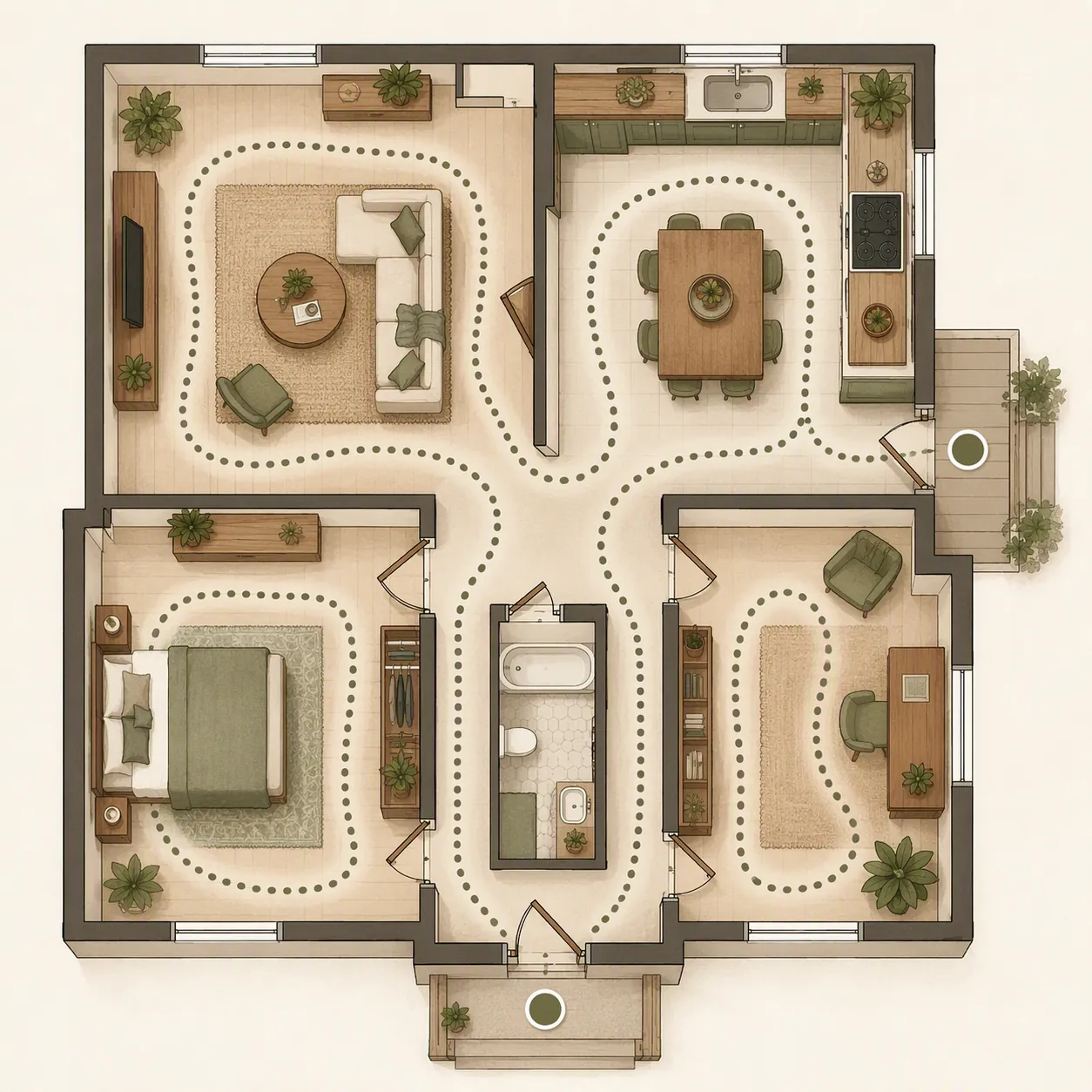
Roaming is not the same problem as vague wandering
Families are often handed Alzheimer’s-style wandering advice. Some of it helps. Much of it misses the shape of FTD. The Association for Frontotemporal Degeneration distinguishes FTD “roaming” from Alzheimer’s-type wandering: the person may compulsively walk, bike, or drive the same route, sometimes over large distances. AFTD names practical safety measures such as companions, GPS tracking, medical alert bracelets, and FTD awareness cards for these situations.[1]
That distinction matters inside the house. If the person is not randomly lost but pulled toward a familiar route, the front door, garage door, bicycle, car keys, side gate, and old walking path all become part of one safety problem.
Map the route as if it will be repeated
Draw the actual route. Start at the chair, bed, kitchen table, or hallway where the movement usually begins. Mark every door, gate, stair, curb, driveway, and street crossing on the path. If the person uses a bike, include the shed, garage, lockup area, helmet storage, and the place the bike is usually parked. If the person drives, include the key hook, spare keys, garage remote, driveway, and the familiar destination.
The point is not to turn the home into a prison. The point is to stop pretending that a verbal agreement will hold at 10 p.m. when the person feels the need to go.
- Put alarms or chimes on the doors that actually get used, including side doors, garage doors, and patio exits.
- Secure gates and exterior doors in ways the person cannot easily defeat during a repetitive exit attempt.
- Move coats, shoes, bags, bike helmets, and car keys out of the visible launch zone if seeing them triggers leaving.
- Create a safer indoor or supervised outdoor walking loop when pacing itself is not the danger but leaving the property is.
- Keep current photos and a simple description ready for neighbors or emergency responders if the person leaves.
Companion plans need to be concrete. “Someone should go with him” is not a plan unless it says who, at what times, through which door, and what happens if that person is in the shower, asleep, or on a call. If the person’s repeated route is predictable, share the concern with a small circle of trusted neighbors or building staff rather than waiting for a crisis.

Treat driving as an exit risk, not just a transportation issue
Driving is where families often lose time because the person with FTD may still look capable in familiar settings. The danger is not limited to getting lost. It may be poor judgment, impulsive decisions, emotional rigidity, or a compulsive pull toward the same route. If the person is roaming by car, the house has to be adapted around car access.
Start with the boring mechanics. Remove keys from hooks, bowls, purses, bedside drawers, jacket pockets, and the garage. Find spare keys. Disable access to the garage remote if needed. Do not leave the car positioned as the easiest next step in the person’s repeated route. If a clinician or licensing authority has already said driving should stop, the home should reflect that decision immediately, not after one more “test drive.”
Families sometimes try to negotiate: only daytime, only familiar roads, only with someone in the passenger seat. Those rules may fail if the person cannot remember, accept, or judge them in the moment. A safer setup removes access rather than depending on repeated persuasion.
Use identification that does not require explanation
AFTD’s suggestions of GPS tracking, medical alert bracelets, and FTD awareness cards are useful because they do not depend entirely on the person giving a clear account of what is happening.[1] The bracelet or card should use plain language: diagnosis, emergency contacts, communication cautions, and any urgent medical or behavioral information responders need. Keep duplicates in wallets, coat pockets, frequently used bags, and near exit points.
GPS tools are backups, not permission to leave risk unmanaged. They can be removed, forgotten, uncharged, or left on a table. If a family uses one, assign a person to charging, wearing checks, app access, and response. A device no one monitors is just another object in the house.
Falls and impulsive movement need a stricter audit
Falls are not a side issue when FTD includes movement symptoms such as progressive supranuclear palsy. In PSP, falls are common and damaging: one study reported that 58% of patients fell in the first year after diagnosis and 83% within about 3.7 years of onset; 28.6% of people with PSP developed a fracture from falling.[2]
Those numbers make “we’ll keep an eye on him” sound as thin as it is. A caregiver cannot watch every backward step, sudden turn, bathroom transfer, nighttime trip, or reach for a high shelf. The house has to reduce the consequences of the movement pattern.
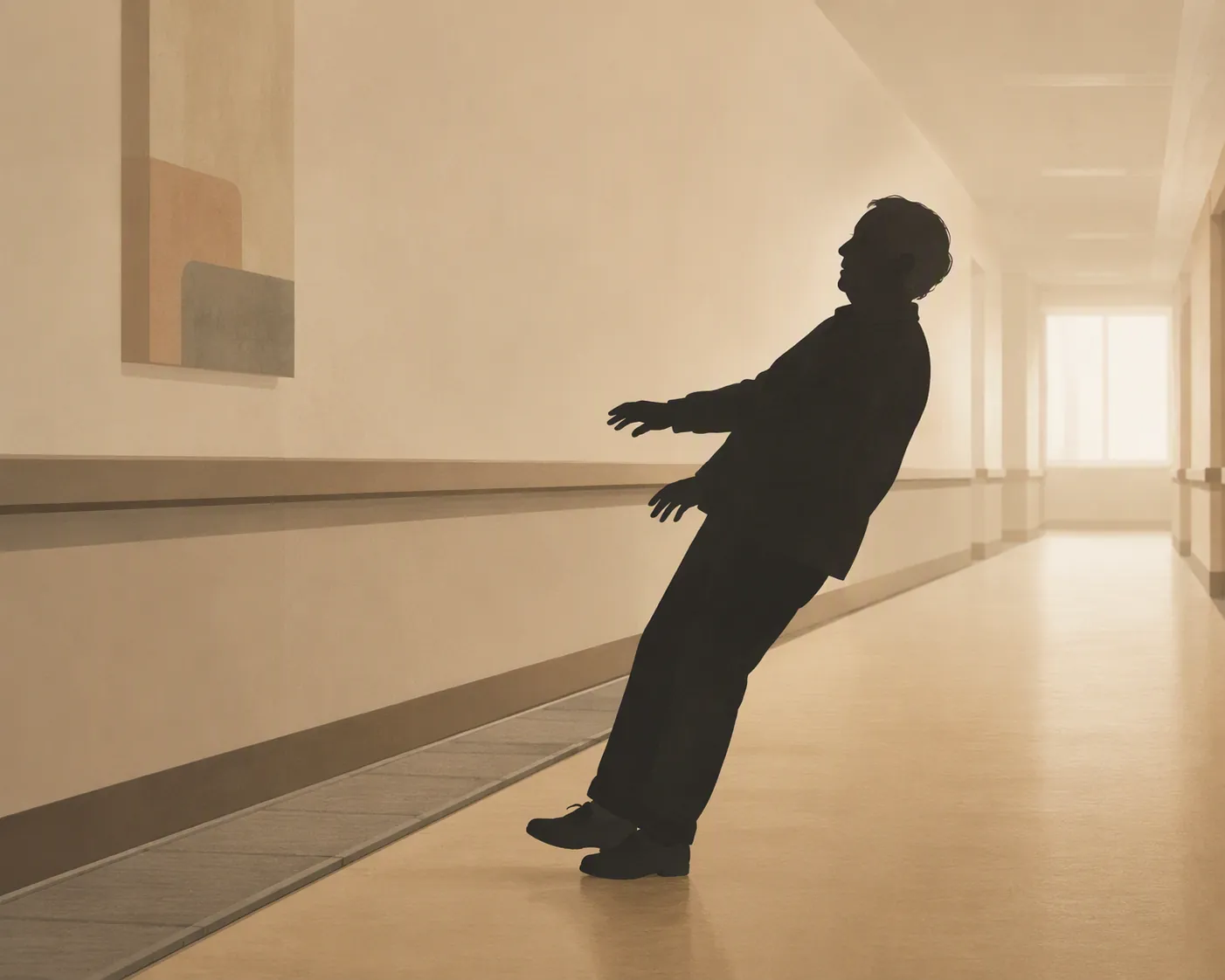
Look behind the person, not only under their feet
Many fall-prevention lists focus on rugs, cords, and clutter. Remove those, yes. But for backward falls, also look at what the person’s head, shoulders, hips, and elbows would hit if they suddenly tipped backward. Hallway corners, pedestal tables, hard chair arms, bed frames, bathroom fixtures, and low shelves become part of the hazard map.
- Clear narrow hallways so a backward step does not end against a sharp corner or unstable table.
- Remove throw rugs and loose mats, especially near beds, toilets, showers, doors, and kitchen sinks.
- Use stable chairs with arms where the person actually sits, not decorative chairs that slide or tip.
- Improve lighting along the path from bed to bathroom and from favorite chair to kitchen.
- Keep frequently used items at waist to chest height so the person is not reaching up, bending low, or climbing.
- Pad or remove furniture edges in places where falls have already happened or nearly happened.
Stairs deserve a hard look. If impulsivity is part of the picture, a sign saying “Please wait for help” may be meaningless. Consider whether the person can live mostly on one level, whether stair access should be limited at certain times, and whether laundry, snacks, clothing, and bathroom supplies are forcing unnecessary trips between floors.
Bathrooms need transfer safety, not just grab bars
Grab bars help only if they are placed for the person’s real movements and installed strongly enough to take weight. Watch the transfer: how the person approaches the toilet, turns, lowers, stands, reaches for toilet paper, steps into the shower, and exits wet. That sequence tells you where support belongs.
A shower chair, handheld showerhead, non-slip flooring, raised toilet seat, or bedside commode may be more useful than another lecture about asking for help. If the person rushes, locks the door, or becomes impatient with assistance, change the setup so fewer decisions are required once they are inside.
Bedrooms are fall sites at night
Night safety is not solved by telling someone to call before getting up. Put the lamp, water, glasses, tissues, urinal or commode if used, and walking aid within a predictable reach. Clear the route from bed to bathroom. Use motion-sensor night lights if the person will not reliably turn lights on. Check bed height: too low can make standing harder; too high can make sliding or stepping down unsafe.
If a walker, cane, or other mobility aid has been prescribed but is often abandoned, do not stop at “remind him.” Ask where it gets left and why. Is it blocked by furniture? Hard to turn in the hallway? Out of reach from the chair? Embarrassing to use in front of visitors? Some problems can be fixed by layout. Some require supervision. Some mean the device is not the right one.
Hyperorality changes kitchens, bathrooms, bedrooms, and garages
When FTD affects eating behavior or oral exploration, the home has to be treated differently. The issue may be overeating, unsafe food choices, spoiled food, alcohol access, eating too fast, or putting non-food items in the mouth. A neat counter is not enough if the person opens drawers, checks trash, or mistakes household products for something edible.
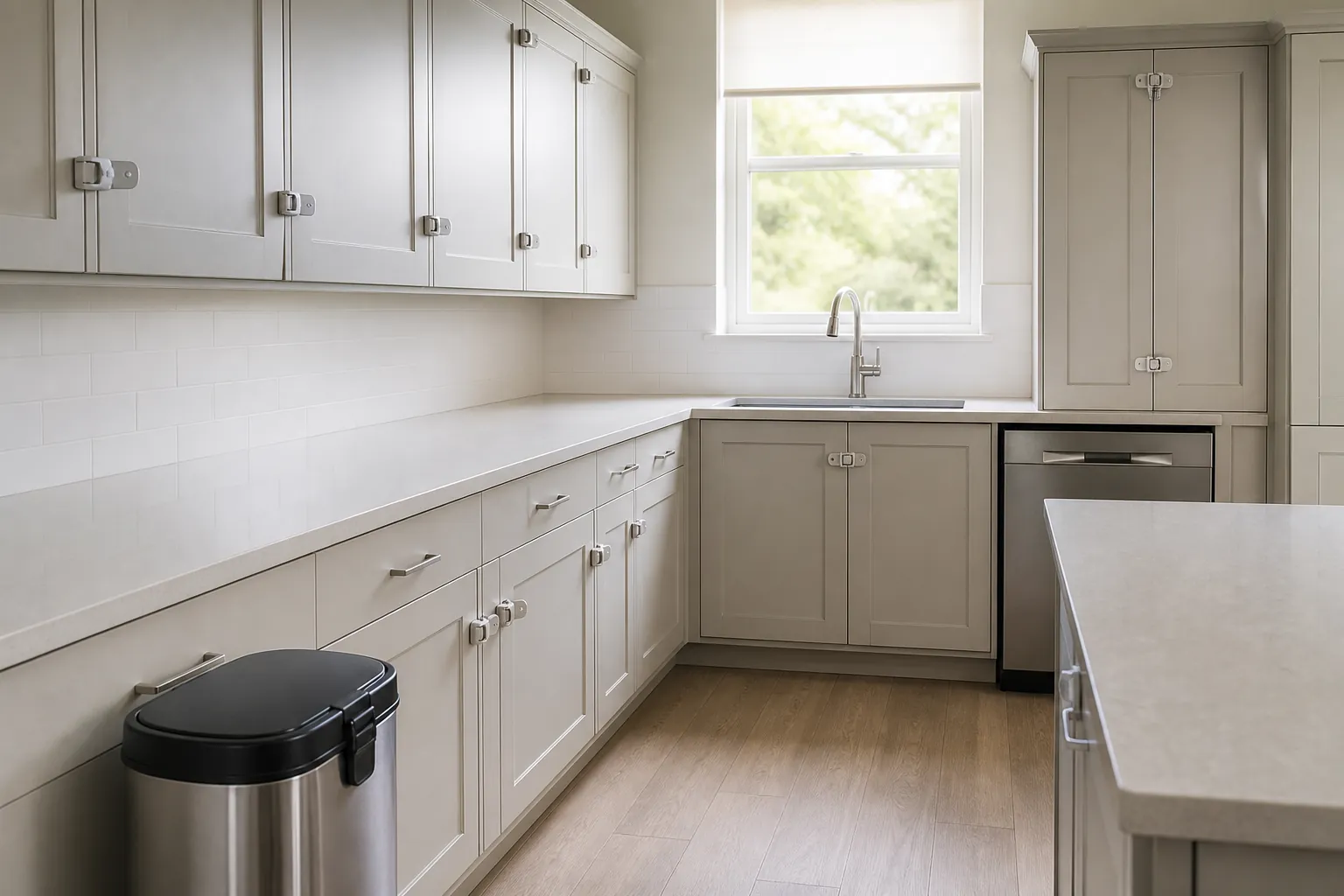
Kitchen: reduce access, not just temptation
Start with the refrigerator, pantry, counters, trash, junk drawer, and cleaning cabinet. Move or lock alcohol, medications, vitamins, choking hazards, sharp tools, cleaning products, spoiled food, pet food, and concentrated seasonings. Use cabinet latches or locks where needed. If the person compulsively eats available food, store portions rather than bulk containers in easy reach.
Appliance safety belongs in the same audit. If the person turns on burners, forgets pans, opens the oven, or microwaves unsafe objects, consider stove knob covers, shutoff devices, unplugging small appliances when not in use, or limiting unsupervised kitchen access. The right measure depends on what has actually happened, not on what a generic checklist says every household needs.
Bathroom: assume products may be tasted
Bathrooms contain many small, scented, or brightly packaged items that can look harmless until someone starts tasting them. Lock or remove medications, razors, toothpaste backups, mouthwash, lotions, cosmetics, nail products, cleaning sprays, toilet tablets, and loose hygiene items if they have become targets. Keep only what is needed for the current routine visible.
Bedroom and living areas: small objects count
Coins, batteries, jewelry, buttons, sewing supplies, remote batteries, candy dishes, pill organizers, and craft materials can all become hazards if the person mouths objects. Look at nightstands, recliner side tables, sofa cushions, laundry areas, drawers, and hobby stations. The danger is often not the room itself; it is the collection of small reachable things accumulated over years.
Garage, basement, and utility spaces: lock early
Garages and basements are easy to underestimate because families think of them as adult spaces. They may contain pesticides, solvents, fuel, tools, fertilizers, paint, sharp hardware, automotive fluids, and old food storage. If hyperorality, impulsivity, or poor judgment is present, these spaces should not remain casually accessible. Use locked storage or restrict entry.
Incontinence planning is about flow and dignity
Stress-related or early incontinence can turn a manageable day into a household crisis if the path to the bathroom is confusing, blocked, dark, or too far away. This part of home safety is not glamorous, and it is not minor. It affects skin, laundry, sleep, caregiver strain, and whether the person is allowed to move through the home without constant embarrassment.
- Keep the bathroom route clear, lit, and visually simple.
- Use clothing that is easier to remove quickly if buttons, belts, or layers are causing delays.
- Place washable pads where accidents actually happen, such as favorite chairs, beds, or car seats.
- Keep wipes, gloves, bags, spare clothing, and laundry supplies in predictable locations.
- Consider a commode or urinal if distance, stairs, or nighttime urgency is part of the problem.
Do not make the person pass through a maze of closed doors, rugs, laundry baskets, and dim hallways and then call the accident “behavioral.” The setup may be doing part of the damage.
Room-by-room, after the behavior audit
Once the risky behaviors are named, the room-by-room walk-through becomes much more useful. Move through the house with one behavior at a time in mind. First trace exits. Then trace falls. Then trace food and mouth hazards. Then trace bathroom access. Trying to see every risk at once usually turns the walk-through into anxious staring.
Entry, hallway, and exits
- Install door alerts where they will actually be heard.
- Move keys, wallets, coats, shoes, and bags out of sight if they trigger leaving.
- Remove unstable console tables, plant stands, and slippery mats.
- Add lighting to the route used at night.
- Keep identification and emergency information near exits and in commonly worn outerwear.
Living room
- Choose seating that is stable, easy to rise from, and not on a sliding rug.
- Clear the route from favorite chair to bathroom, kitchen, and exit.
- Remove small objects if mouthing or swallowing non-food items is a concern.
- Keep cords out of walking paths.
- Avoid low tables with sharp corners in areas where backward falls or sudden turns happen.
Kitchen and dining area
- Lock or relocate unsafe food, alcohol, medicines, cleaning products, sharp tools, and choking hazards.
- Use portion control if compulsive eating is creating risk.
- Secure trash if the person retrieves food or objects from it.
- Check stove, oven, microwave, toaster, and kettle use against actual incidents.
- Keep floors dry and remove mats that bunch or slide.
Bathroom
- Install grab bars where transfers actually happen.
- Use non-slip surfaces and consider a shower chair or handheld showerhead.
- Remove or lock medications, razors, cleaners, cosmetics, mouthwash, and extra toiletries if they are unsafe.
- Make the toilet visible and reachable, especially at night.
- Avoid bathroom door locks that trap the person inside during a fall or urgent care situation.
Bedroom
- Clear the bed-to-bathroom route.
- Set up lighting that does not depend on the person remembering a switch.
- Place mobility aids, glasses, and essentials within safe reach.
- Remove loose rugs, clutter, and small objects that may be mouthed.
- Review bed height and bedside furniture for fall consequences.
Laundry, garage, basement, and storage
- Lock chemicals, tools, fuel, pesticides, paint, and sharp hardware.
- Move laundry supplies out of reach if tasting, spilling, or misuse is possible.
- Keep stairs and utility areas well lit and uncluttered.
- Restrict access to bikes, car supplies, and garage exits if roaming routes begin there.
- Do not store spare medications, alcohol, or old food in secondary spaces and then forget they are accessible.
Do not build the plan around cooperation
Families often get advice framed as encouragement: encourage use of the walker, encourage the bracelet, encourage asking for help, encourage staying inside. Encouragement is fine when it works. It is not a safety system.
For FTD, every safety measure should pass a blunt test: what happens if the person does not agree, does not remember, does not understand the risk, removes the device, or repeats the old behavior anyway?
| If the plan depends on this | Add a backup that does not depend on it |
|---|---|
| Remembering not to leave | Door alerts, secured exits, companion routines, neighbor awareness, ID, and GPS backup |
| Promising not to drive | Removed keys, controlled garage access, disabled remotes, and clear transportation alternatives |
| Using a walker every time | Cleared routes, reachable aids, supervised transfers, and review of whether the aid fits the space |
| Not eating unsafe items | Locked storage, cleared counters, secured trash, and removal of small reachable objects |
| Calling before toileting | Clear bathroom route, easier clothing, night lighting, commode options, and supplies in place |
This is not disrespect. It is the opposite. It stops treating a neurological symptom as a character flaw. The person may not be able to carry the safety plan. The home and the caregiving system have to carry more of it.
When to escalate beyond home modifications
Some problems cannot be fixed by rearranging furniture. Repeated exit attempts, driving risk, frequent falls, unsafe eating or mouthing, aggression during care, fire risk, or nighttime activity that leaves the caregiver unable to sleep should trigger a higher level of planning with clinicians, therapists, social workers, and respite or care services.
Ask specifically for help tied to the behavior: a fall and mobility assessment, occupational therapy home visit, driving evaluation or driving retirement guidance, swallowing or eating-behavior input if choking or rapid eating is present, medication review, continence support, or a crisis plan for leaving the home. Vague “supervision” is not enough unless someone has named who provides it and how long they can keep doing it.
A safer FTD home is not the one with the most equipment. It is the one changed around the person’s actual patterns: the route they repeat, the direction they fall, the objects they mouth, the doors they use, the moments when stress overwhelms toileting, and the risks they cannot recognize in time.
References
- Managing Care for Frontotemporal Degeneration (FTD), Association for Frontotemporal Degeneration.
- Falls in Progressive Supranuclear Palsy, Mov Disord Clin Pract.
Related reading
Need a professional assessment?
Find a CAPS-credentialed professional or local aging services through our outbound resource list — we never name or rank individual contractors.
Find Local HelpNoticed something outdated or inaccurate on this page? Flag a correction. We review every report against CDC, NIA, and AARP HomeFit guidance before updating a page.