
Clinical term
How to Recognize Tapeworm Infection Symptoms in Elderly
Last verified 2026-07-31
Start with the decision: emergency, doctor call, or symptom tracking
If you are worried about tapeworm infection symptoms in elderly parents, the first question is not “Could every stomach complaint be a parasite?” It is “Is there a clue specific enough to call the doctor, or a red flag serious enough to seek urgent care?” Most intestinal tapeworm infections cause no symptoms, and when symptoms occur they are often mild: stomach discomfort, nausea, diarrhea, appetite changes, weight loss, gas, or fatigue.[1][2]
For a caregiver, the two most actionable non-emergency clues are visible tapeworm segments in stool and unexplained weight loss or fatigue that does not fit the person’s usual baseline. Seizures, new confusion, severe headache, dizziness, or vision changes belong in a different category because they may suggest larval cyst involvement, including neurocysticercosis, and should be medically evaluated urgently.[3][4]
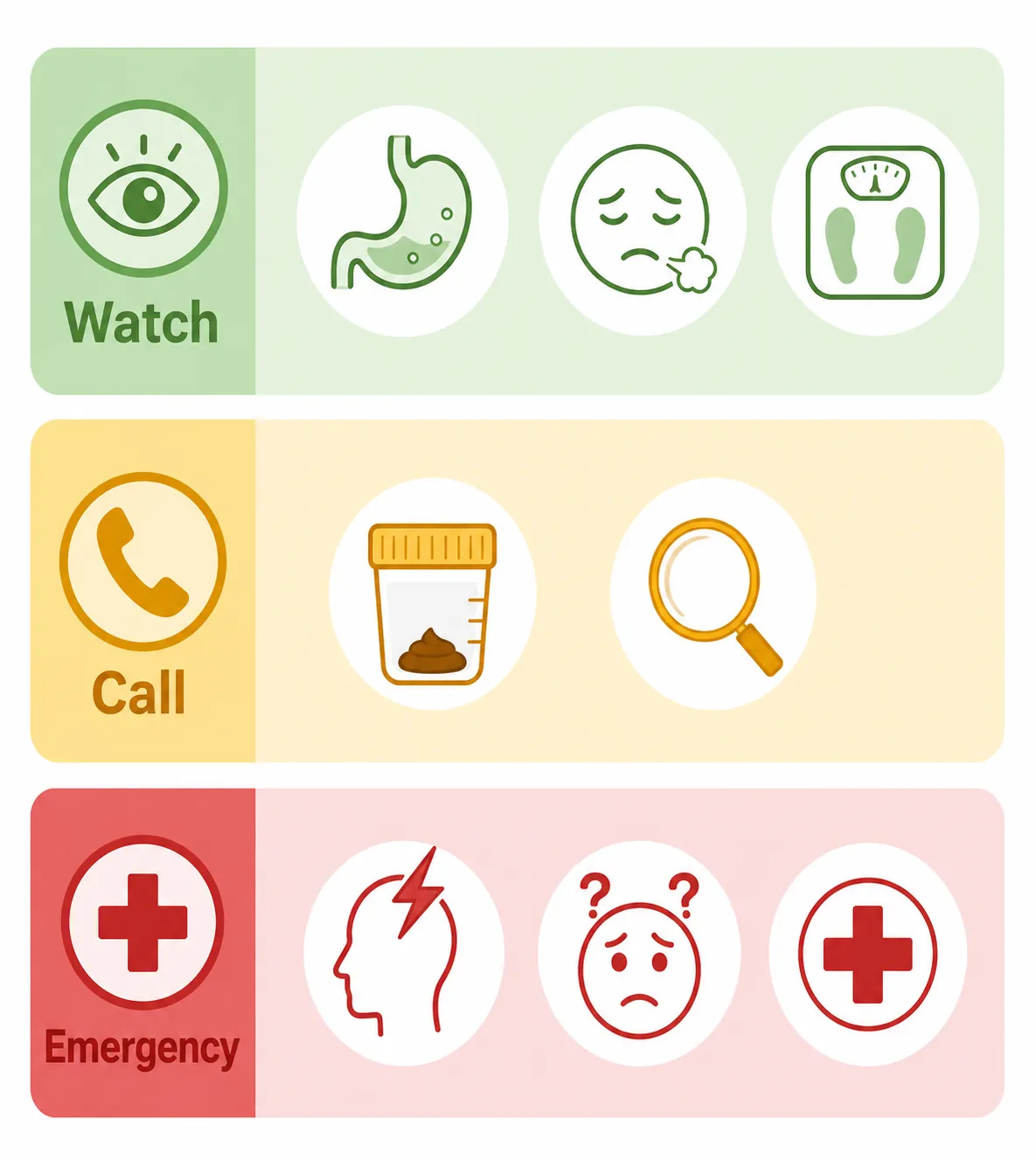
- Seek urgent medical care now: seizure, sudden or worsening confusion, severe headache, dizziness with other concerning symptoms, vision changes, fainting, or any rapid change in mental status.
- Call the doctor soon: rice-grain-like white or pale segments in stool or underwear, unexplained weight loss, persistent fatigue, or ongoing digestive symptoms after a risk exposure.
- Track, but do not diagnose at home: mild gas, loose stool, nausea, appetite changes, or abdominal discomfort by themselves. These are real symptoms to write down, but they are not specific to tapeworm.
This guide is for recognition and triage, not a diagnosis. In an older adult, a new symptom pattern deserves the same practical respect whether the cause turns out to be infection, medication side effects, dehydration, a GI condition, or something else.
1. Look first for visible stool segments
The stool clue matters because it is much more specific than fatigue or stomach upset. Tapeworm segments, called proglottids, may pass in stool. They are often described as white or pale yellow, flat, and rice-grain-like; Cleveland Clinic describes them as roughly 0.5 to 1 inch long and sometimes moving.[2][5]
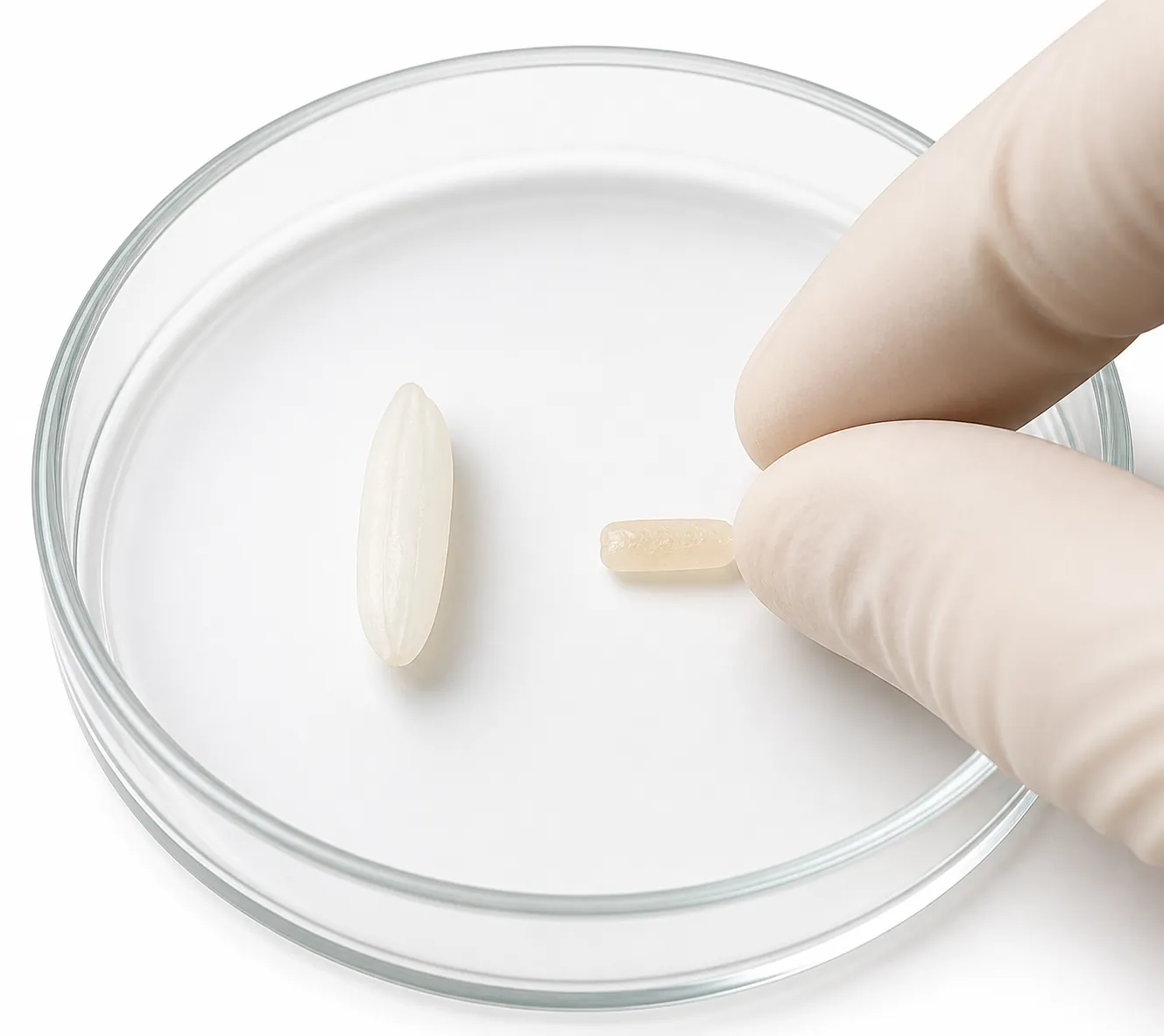
A caregiver does not need to inspect every bowel movement with a magnifying glass. What helps is noticing and documenting something unusual: small pale pieces on the stool surface, in the toilet bowl, or sometimes in underwear. If you see this, take a clear photo if possible, write down the date, and call the clinician’s office to ask whether they want a stool sample and how to collect it safely.
Do not be embarrassed when you describe it. “I saw several white, rice-like pieces in the stool” is medically useful language. It gives the office something concrete to act on and is more helpful than saying only “I think there may be worms.”
2. Treat unexplained weight loss and fatigue as call-worthy when they are new
Weight loss and fatigue are not specific to tapeworm. In an older adult, they can come from medication changes, depression, thyroid disease, cancer, poor sleep, dental trouble, dehydration, infection, or simply not eating enough. That is exactly why they should not be waved away when they are new, persistent, or out of character.
Tapeworm sources consistently list weight loss, appetite changes, abdominal discomfort, nausea, diarrhea, gas, and fatigue among possible symptoms, while also emphasizing that many people have no symptoms at all.[1][2][3] So the useful caregiver question is not “Does fatigue prove tapeworm?” It does not. The useful question is “Has this fatigue or weight loss changed enough that the doctor should know?”
| What you notice | Why it is easy to misread | What to do |
|---|---|---|
| Less appetite or “I’m just not hungry” | Can look like normal aging, grief, medication effects, dental pain, constipation, or loss of routine | Write down meals skipped, appetite changes, and any recent food or travel exposures |
| Loose stool, diarrhea, gas, or nausea | Common with diet changes, antibiotics, laxatives, supplements, and many GI conditions | Track duration, frequency, dehydration signs, and whether symptoms are worsening |
| Abdominal discomfort | May be dismissed as indigestion or constipation | Note location, timing after meals, severity, and whether it is new for this person |
| Fatigue that does not improve with rest | Often blamed on age, poor sleep, inactivity, or caregiving stress | Call the clinician if it is persistent, unexplained, or paired with weight loss |
| Weight loss without trying | May be missed if no one is checking weight regularly | Record weights if available and call the doctor, especially if appetite or stool changes are also present |
Absence of symptoms does not rule out infection. A normal-looking stool after a recent risky meal also does not settle the question; timing and testing matter.
3. Use risk factors to decide how much weight to give vague symptoms
Tapeworm infection is not something to assume is common in U.S. older adults. Cleveland Clinic describes tapeworm infections as rare in the United States, and the main risk factors are eating raw or undercooked beef, pork, or freshwater fish, or travel to places where these infections are more common.[2][3]
That risk history changes the conversation. Mild diarrhea after a new laxative is one thing. Mild diarrhea plus recent undercooked pork, raw freshwater fish, or travel to an endemic region is more worth mentioning when you call the doctor. The symptom still does not diagnose tapeworm, but it gives the clinician a reason to consider parasite testing.
Older adults can also be harder to assess because symptoms may not present neatly. A parent with memory problems may not report diarrhea accurately. Someone on several medications may already have nausea or appetite changes. MedlinePlus notes that older adults may be more likely than younger adults to need an ova and parasite test when symptoms warrant, partly because they can have weaker immune systems.[6] That does not mean tapeworm is likely; it means persistent symptoms should be described clearly instead of filtered through “maybe this is just age.”
The same practical approach applies to other infections in older adults: symptoms can be subtle, and context matters. If you are comparing infection warning signs more broadly, our guide to Legionnaires’ disease in seniors follows a similar caregiver decision pattern.
4. Neurologic symptoms are not “wait and see” symptoms
Intestinal tapeworm symptoms and neurologic symptoms should not be treated as the same level of concern. A mild stomachache can usually start with a doctor call unless other warning signs are present. A seizure, new confusion, severe headache, dizziness, or vision changes need urgent medical evaluation because they may point to larval cysts affecting the nervous system, including neurocysticercosis.[3][4][7]
CDC’s clinical overview states that seizures occur in 70% to 90% of symptomatic neurocysticercosis cases.[4] That number does not mean most people with intestinal tapeworm will have seizures. It means that when neurocysticercosis is symptomatic, seizure is a major presentation, and caregivers should not try to manage that kind of change at home.
For an older parent, “confusion” can be hard to judge. The useful threshold is change: suddenly not knowing where they are, being much sleepier than usual, speaking strangely, having a new severe headache, losing vision, or behaving in a way that is clearly not their baseline. If the symptom is sudden, severe, or paired with weakness, fainting, seizure, fever, or injury, seek emergency help.
5. What testing can and cannot do
There is no reliable way for a caregiver to confirm tapeworm infection at home. A clinician may order a stool ova and parasite test, often called an O&P test, to look for parasite eggs, larvae, or other evidence in a stool sample.[6][8]
One negative stool test may not end the question if suspicion remains. CDC recommends examining three stool specimens collected on different days to increase the chance of detecting Taenia eggs or proglottids.[4] CDC also notes that eggs or proglottids may not be present until 2 to 3 months after infection, which is one reason timing matters when you describe the exposure history.[4]
If neurologic symptoms are present, stool testing alone may not be the central issue. The clinician may evaluate for complications differently, depending on symptoms. The caregiver’s job is not to choose the test; it is to report the symptom pattern, timing, risk exposures, and any visible stool findings without minimizing them.
6. Treatment is clinician-directed and usually medication-based
Intestinal tapeworm infection is treatable, but treatment should be handled through a healthcare professional. WHO lists praziquantel and niclosamide as medicines used for taeniasis, and Cleveland Clinic describes treatment as antiparasitic medication with follow-up testing to confirm the infection is gone.[2][7]
Do not use leftover medication, pet dewormer, or internet parasite cleanses. In an older adult, that can be especially risky because of other prescriptions, kidney or liver disease, dehydration, or frailty. If treatment is prescribed, ask the office how and when they want follow-up stool checks and what symptoms should prompt a same-day call.
7. Prevention starts with food temperature
For caregivers who cook for an older parent, prevention is less about dramatic parasite warnings and more about ordinary kitchen control. Cook whole cuts of meat and fish to at least 145°F, or 63°C, and allow a 3-minute rest; cook ground meat to 160°F, or 71°C.[1][3]
Freshwater fish needs particular care if it will not be fully cooked. CDC says freezing fish at −4°F, or −20°C, for 7 days, or at −31°F, or −35°C, for 15 to 24 hours, can kill Diphyllobothrium parasites; CDC also warns that salting, smoking, or pickling fish does not reliably kill the parasite.[9]
If your parent enjoys raw fish, undercooked meat, homemade cured fish, or meals prepared while traveling, keep that history in mind if digestive symptoms, weight loss, or fatigue appear later. It is not proof of infection, but it is worth telling the clinician.
What to have ready before you call
A focused call gets better answers than a vague one. Before you call, write down the facts that help the office decide whether to order testing, schedule a visit, or send you for urgent evaluation.
- A description or photo of any rice-like stool segments, including when you first saw them
- Current symptoms: diarrhea, nausea, gas, abdominal discomfort, appetite change, fatigue, or weight loss
- Whether symptoms are new, worsening, intermittent, or improving
- Recent weight changes, if you have weights available
- Recent raw or undercooked beef, pork, freshwater fish, cured fish, or travel exposures
- Medication changes, antibiotic use, laxatives, supplements, or new diet changes
- Any neurologic symptoms, even if they seemed brief: confusion, seizure-like activity, severe headache, dizziness, or vision changes
If symptoms are mild and not urgent, a planned visit can still be useful for organizing concerns. A Medicare Annual Wellness Visit can help surface broader changes such as weight loss, falls, medication issues, and cognitive concerns, but visible stool segments or unexplained weight loss should be handled as a direct medical concern rather than saved for a routine checklist.
Most vague stomach symptoms in an older adult will not turn out to be tapeworm. But rice-grain-like stool segments, unexplained weight loss or fatigue, and any seizure, confusion, severe headache, dizziness, or vision change give you a concrete reason to stop guessing and involve medical care.
References
- Tapeworm Infection — Merck Manual Consumer Version
- Tapeworm Infection — Cleveland Clinic
- Tapeworm infection — Mayo Clinic
- Clinical Overview of Taeniasis — CDC
- DPDx Taeniasis — CDC
- Ova and Parasite Test — MedlinePlus
- Taeniasis/cysticercosis fact sheet — WHO
- How to Tell If You Have a Tapeworm — Verywell Health
- About Diphyllobothrium — CDC
Browse more in the Glossary.