
Clinical term
Testosterone Therapy Benefits and Risks for Aging Men
Last verified 2026-07-27
For an aging man asking about testosterone therapy, the first useful question is not which gel, shot, or clinic to choose. It is whether he has actually crossed the medical threshold where treatment belongs on the table. The American Urological Association sets that gate at total testosterone below 300 ng/dL on two separate morning blood tests, paired with symptoms or signs that fit testosterone deficiency.[1]
That threshold matters because fatigue, less muscle, lower libido, and slower recovery are common after 60. They can come from poor sleep, medications, depression, weight gain, heart disease, diabetes, pain, grief, alcohol, inactivity, or normal aging. Testosterone therapy for aging men has benefits and risks, but the benefits are not evenly spread across every tired man who wonders whether his testosterone is “low.”

A practical decision usually moves through five checks: confirm the diagnosis, match the symptoms, weigh the benefits against the risks, try or continue the non-drug controls that affect the same complaints, and agree to monitoring before the first prescription is filled. If any one of those pieces is missing, the conversation should slow down.
Step 1: Prove Low Testosterone Before Treating It
The AUA diagnostic rule is deliberately plain: clinicians should use a total testosterone level below 300 ng/dL as a reasonable cutoff, and the diagnosis should be made only after two separate early-morning measurements.[1] One low afternoon result, one home-kit number without context, or one lab taken during an acute illness should not carry the decision.
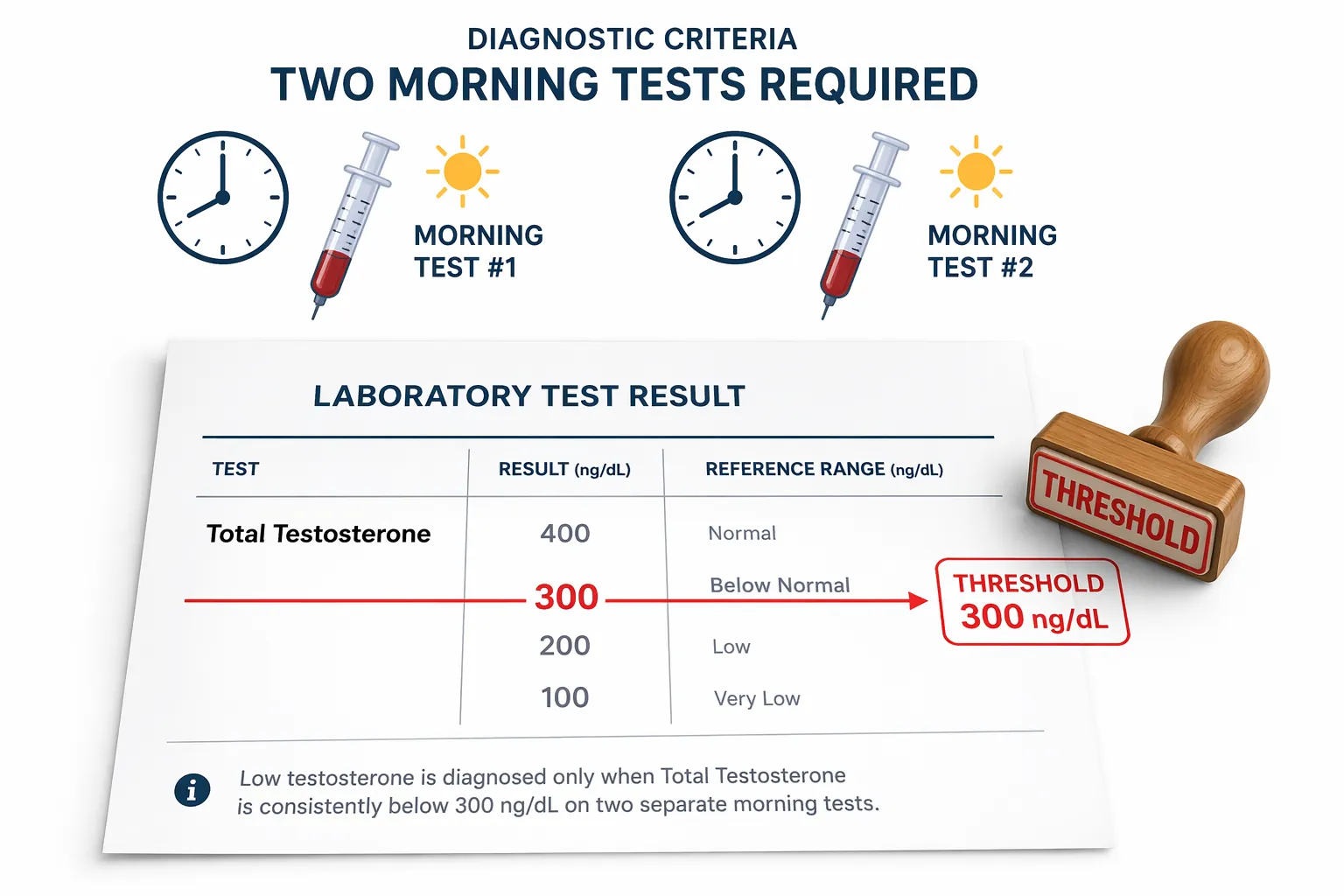
Morning testing is not a bureaucratic detail. Testosterone varies during the day, and the point of repeating the draw is to avoid turning a temporary dip into a long-term prescription. The AUA also recommends using accurate assays; when available, a CDC-certified laboratory is the safer standard.[1]
This is where a spouse or adult child can help without taking over the appointment. Ask for the actual numbers, the time of day each blood draw was taken, and whether both tests were below 300 ng/dL. If the answer is vague—“a little low,” “borderline,” or “low for your age”—that is not the same as meeting the treatment threshold.
The need for that discipline is not theoretical. The AUA reports that up to 25% of men prescribed testosterone therapy did not have testosterone levels checked before treatment, and nearly half are not monitored after starting therapy.[1] For older patients, that is not a harmless shortcut. It can mean adding a hormone with real downstream obligations to a body already carrying sleep, heart, mobility, or medication issues.
Step 2: Make the Symptoms Fit the Diagnosis
Low testosterone on paper is not enough by itself. The clinical question is whether the man has symptoms that testosterone deficiency plausibly explains. Sexual symptoms—lower sexual desire, fewer spontaneous erections, erectile problems, reduced sexual activity—fit the evidence better than a broad complaint of “I’m tired.” Loss of body hair, low bone density, anemia, depressed mood, and reduced muscle mass may also enter the conversation, but they still need medical sorting rather than guesswork.
Most men with fatigue alone are not good candidates. That may sound unsympathetic, but it protects the man whose exhaustion is coming from untreated sleep apnea, a medication effect, heart disease, alcohol use, depression, or caregiving stress in his own home. Testosterone can distract from those causes, and in the case of untreated sleep apnea, it may worsen the problem rather than solve it.[2]
There is also a difference between low-normal testosterone and unequivocally low testosterone. In the TEAAM trial, men with low-normal levels did not see improvement in overall sexual function or quality of life over three years of testosterone therapy.[3] That finding is awkward for marketing but useful in the exam room: being older and feeling less vigorous does not automatically mean the hormone is the missing piece.
| Question to Bring to the Appointment | Why It Matters |
|---|---|
| Were there two separate morning total testosterone tests? | One result can misclassify a man whose level fluctuates. |
| Were both results below 300 ng/dL? | This is the AUA diagnostic cutoff for considering testosterone deficiency. |
| Which symptoms are we trying to treat? | Sexual symptoms have stronger trial support than fatigue alone. |
| Are sleep apnea, prostate cancer, recent cardiovascular events, and fertility plans being considered? | These issues can change whether treatment is appropriate or safe. |
| What will make us stop or adjust treatment? | TRT should be a monitored trial, not an open-ended anti-aging plan. |
Step 3: Put the Benefits in the Right Size
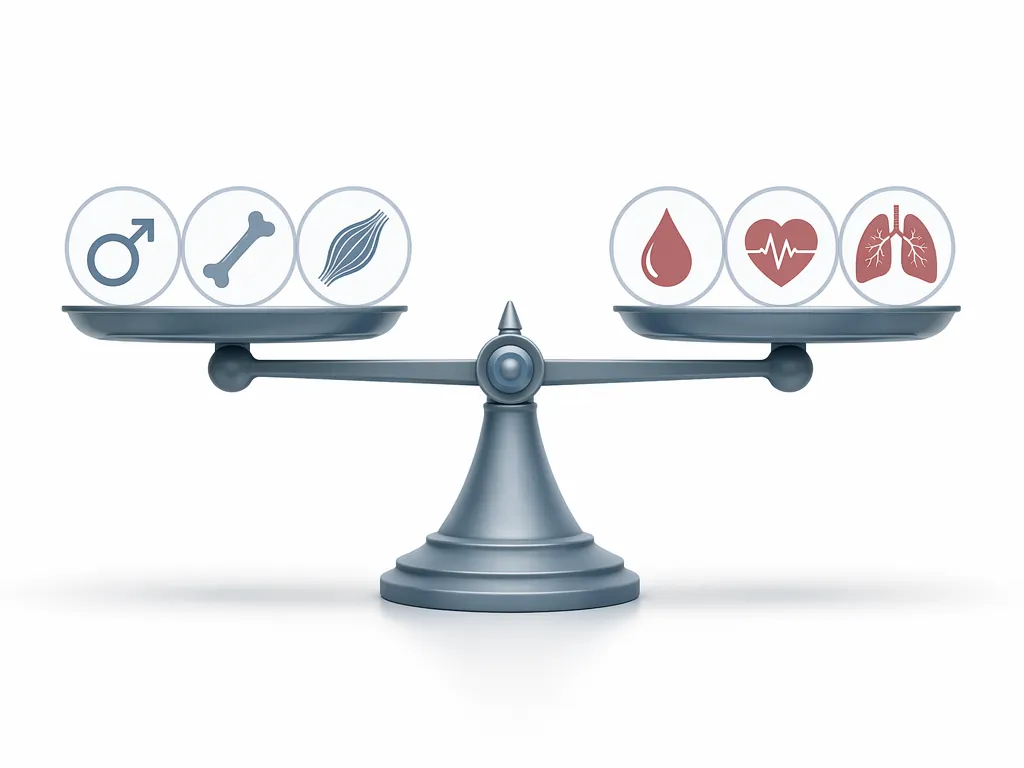
The best case for testosterone therapy in older men is not rejuvenation. It is more modest and more specific: some men with confirmed low testosterone may gain sexual function, bone density, and lean muscle mass. Those outcomes matter. They can affect confidence, intimacy, fracture vulnerability, and the daily work of getting out of a chair. But they should not be sold as a general reset button.
The Testosterone Trials enrolled 790 men age 65 and older with low testosterone. Testosterone treatment produced moderate improvements in sexual desire and sexual activity, with statistically significant findings, but did not significantly improve vitality or walking distance as primary endpoints.[4] That split is important: a man seeking help for libido is asking a different question than a man hoping a prescription will restore his old energy.
Bone and muscle findings are also real but should be read carefully. Evidence summarized in reviews of testosterone treatment in older men reports lumbar spine bone mineral density gains of 7.5% and lean muscle mass gains of 5.7%.[3] Those are not trivial outcomes, especially for a man already showing low bone density or muscle loss.
Still, stronger bone density is not the same thing as proving fewer fractures in every treated older man. A family worried about falls should keep the larger fall-risk picture in view: vision, medications, footwear, blood pressure drops, home layout, sleep, and strength training all matter. For that broader decision, it may help to read more about when falls signal the need for 24/7 home care.
| Possible Benefit | What the Evidence Supports | How to Interpret It |
|---|---|---|
| Sexual desire and activity | Moderate improvement in the Testosterone Trials | Most relevant when sexual symptoms are a main complaint and testosterone is clearly low. |
| Bone density | Reported lumbar spine bone mineral density gain of 7.5% | Potentially meaningful for men with bone loss, but not a stand-alone fall-prevention plan. |
| Lean muscle mass | Reported gain of 5.7% | May help body composition, but still needs resistance training to matter functionally. |
| Vitality and walking distance | No significant improvement as primary endpoints in the Testosterone Trials | Weak support for prescribing TRT for age-related tiredness alone. |
| Mood or quality of life | Limited and mixed evidence | Worth tracking if treatment begins, but not the strongest reason to start. |
Step 4: Weigh the Risks Beside the Benefits, Not After Them
The risk conversation should happen before anyone gets comfortable with the idea of treatment. Testosterone therapy can raise hematocrit, causing polycythemia—blood that is too concentrated. That is one reason follow-up blood work is not optional. It can also worsen untreated sleep apnea, contribute to acne or fluid retention, suppress sperm production, and lead to testicular shrinkage.[2]
Sleep apnea deserves special attention in older men because the complaint that brings a man into the office—fatigue—may be coming from poor sleep in the first place. If a partner reports loud snoring, breathing pauses, morning headaches, or daytime sleepiness, testosterone should not become a way to skip the sleep evaluation. Poor sleep also affects balance and alertness; families tracking nighttime rest and fall risk may find this discussion of hot-weather sleep loss and senior falls useful.
Cardiovascular risk is the part of the decision that resists a clean answer. The AUA states that it cannot be said definitively whether testosterone therapy increases or decreases cardiovascular events.[1] That is not fence-sitting; it is an honest reading of an evidence base that includes different populations, formulations, time frames, and baseline risks.
The TRAVERSE trial provides the strongest recent cardiovascular safety data. It included 5,246 men ages 45 to 80 and did not show an increase in major adverse cardiovascular events such as heart attack or stroke, but it did find higher rates of atrial fibrillation and pulmonary embolism in the testosterone group.[5] For a man with a history of clotting, rhythm problems, unexplained shortness of breath, or complex heart disease, those signals belong in the main conversation, not the fine print.
TRAVERSE also does not close the book on long-term safety. The strongest safety reassurance is limited to roughly three years, and the FDA’s labeling history still matters: a cardiovascular risk warning was added in 2015, and a blood pressure labeling update followed in February 2025.[5] A man starting therapy at 68 may be asking his family and clinician to manage the consequences for much longer than the best trial window.
Frailty changes the tone even more. A 2010 trial in frail older men with mobility limitation was stopped early after 23 cardiovascular events occurred among 106 men receiving testosterone.[3] That does not mean every older man faces the same risk. It does mean a fall-prone, mobility-limited, medically fragile man should not be treated as if he were simply a healthy retiree with a disappointing lab value.
Step 5: Treat Lifestyle Measures as Controls, Not Moral Lectures
Resistance training, sleep optimization, weight management, and vitamin D status belong in this decision because they affect the same problems men often hope testosterone will fix: strength, fatigue, falls, bone health, mood, and sexual function. They are not a purity test a man must pass before receiving medical care. They are controls that help reveal what the hormone is—and is not—doing.
- Resistance training: useful before and during treatment because lean mass on a scan does not automatically become better balance, safer transfers, or stronger stair climbing.
- Sleep evaluation: especially important when fatigue, snoring, morning headaches, or daytime sleepiness are present.
- Weight management: excess weight can affect testosterone levels, sleep apnea risk, cardiovascular risk, and mobility.
- Vitamin D and bone health review: relevant when low bone density, falls, fractures, or limited sun exposure are part of the picture.
These measures also give the family a fairer way to judge treatment. If a man starts testosterone while also beginning strength training, treating sleep apnea, changing medications, and losing weight, improvement may not come from one source. That does not make the improvement less welcome, but it should make everyone cautious about giving the injection or gel all the credit.
Monitoring Is Part of the Prescription
Testosterone therapy is not a “try it and see” product in the casual sense. It is a monitored medical trial. Before starting, the clinician should document the baseline testosterone results, symptoms being targeted, hematocrit, prostate-related evaluation when appropriate, sleep apnea status, cardiovascular history, medications, fertility goals, and the plan for follow-up.
Monitoring should happen at 3, 6, and 12 months. At those visits, the practical questions are simple: Has the target symptom improved? Is testosterone in an appropriate range? Has hematocrit risen too high? Are urinary, prostate, sleep, blood pressure, clotting, or rhythm concerns emerging? Is the man or caregiver actually able to keep up with the schedule?
| Time Point | What Should Be Reviewed |
|---|---|
| Before starting | Two morning testosterone results, symptom target, contraindications, hematocrit, prostate and cardiovascular history, sleep apnea risk, fertility plans. |
| 3 months | Symptom response, testosterone level, hematocrit, side effects, blood pressure or cardiovascular symptoms, correct use of the medication. |
| 6 months | Whether benefits are meaningful enough to justify continuing, plus repeat safety checks. |
| 12 months | Longer-term reassessment of benefit, burden, risks, and whether treatment still matches the original reason for starting. |
Stopping or adjusting therapy should be discussed before starting it. Reasons include hematocrit rising into an unsafe range, worsening untreated sleep apnea, new or concerning cardiovascular symptoms, lack of meaningful symptom improvement, difficulty completing monitoring, or a new diagnosis that changes the risk-benefit balance. A man should not have to fail dramatically before anyone questions whether the treatment still makes sense.
A Caregiver’s Role in the Decision
Adult children often enter this topic carefully. No one wants to embarrass a father about libido, masculinity, or aging. But the family may be the one noticing falls, missed appointments, untreated snoring, shortness of breath, medication confusion, or a parent being persuaded by a clinic that moves too quickly from complaint to prescription.
The most useful caregiver stance is procedural: help gather lab dates and times, list symptoms, name sleep or heart concerns, ask what will be monitored, and write down the stop points. If the whole household is already strained by appointments and health decisions, it is reasonable to acknowledge that monitoring burden. Caregivers who are carrying too much may also need support of their own; this guide on caregiver burnout may help frame that part of the conversation.
There is one more reason to slow down: use of testosterone therapy has grown faster than the pool of clearly eligible older men. IQVIA data cited in the Levels guide reports prescription volume rising 50% from 2019 to 2024, from 7.3 million to 11 million, while only about 16% to 18% of men over 65 qualify by blood level.[5] That does not mean a particular man is being overtreated. It means the first defense against overtreatment is the boring part: two correct labs, matching symptoms, contraindication screening, and follow-up.
What to Ask Before Saying Yes
- Do I have two separate morning total testosterone results below 300 ng/dL?
- Which symptom are we treating, and is that symptom one testosterone therapy has been shown to improve?
- Have we checked for untreated sleep apnea, recent cardiovascular events, active prostate cancer, high hematocrit, and fertility concerns?
- What benefit would count as enough improvement by 3 or 6 months?
- What blood tests and safety checks will happen at 3, 6, and 12 months?
- Under what conditions will we lower the dose, pause therapy, or stop?
For a man over 60 with confirmed testosterone deficiency and symptoms that fit, testosterone therapy can be a reasonable medical trial. The likely gains are modest but real in the right domains: sexual function, bone density, and lean muscle mass. For age-related fatigue alone, the case is weak. For men with frailty, untreated sleep apnea, elevated hematocrit, active prostate cancer, recent cardiovascular events, rhythm problems, clotting concerns, or poor access to follow-up, the risks and logistics may outweigh the promise.
The appointment should not end with “your testosterone is low” or “you’re just getting older.” It should end with numbers, symptoms, exclusions, expected benefits, monitoring dates, and a stop plan.
References
- Evaluation and Management of Testosterone Deficiency: AUA Guideline (2024) — American Urological Association, 2024
- Testosterone therapy: Potential benefits and risks as you age — Mayo Clinic
- Is Testosterone Replacement Therapy in Older Men Effective and Safe? — PMC Drugs Aging review
- Effects of Testosterone Treatment in Older Men — New England Journal of Medicine
- The 2026 Levels Guide to testosterone replacement therapy — Levels
Browse more in the Glossary.