
Room checklist
How to Build a Hurricane Emergency Kit for an Elderly Parent
A standard hurricane kit misses critical needs for an elderly parent. This checklist builds a second layer around medications, mobility aids, sensory supplies, incontinence care, refrigeration-dependent items, communication backups, and post-storm fall safety.
- Room
- bedroom
- Reviewed by
- Editorial Team
A standard hurricane kit can look reassuring right up until you pack for an older parent. The water is there. The batteries are there. Maybe there is a weather radio, canned food, and a first-aid kit. Then you notice the real survival system is not in the kit at all. It is in the bathroom drawer, the bedside pill tray, the refrigerator door, the walker basket, the charger cord by the recliner, and the pharmacy account no one else can log into.
That is why a hurricane emergency kit checklist for elderly parents needs a second layer. Ready.gov and the Red Cross basics still matter. They are the floor. For an older adult, the kit also has to protect medication routines, mobility, vision and hearing, continence care, medical equipment, backup power, communication, and the home hazards that appear after the wind stops.
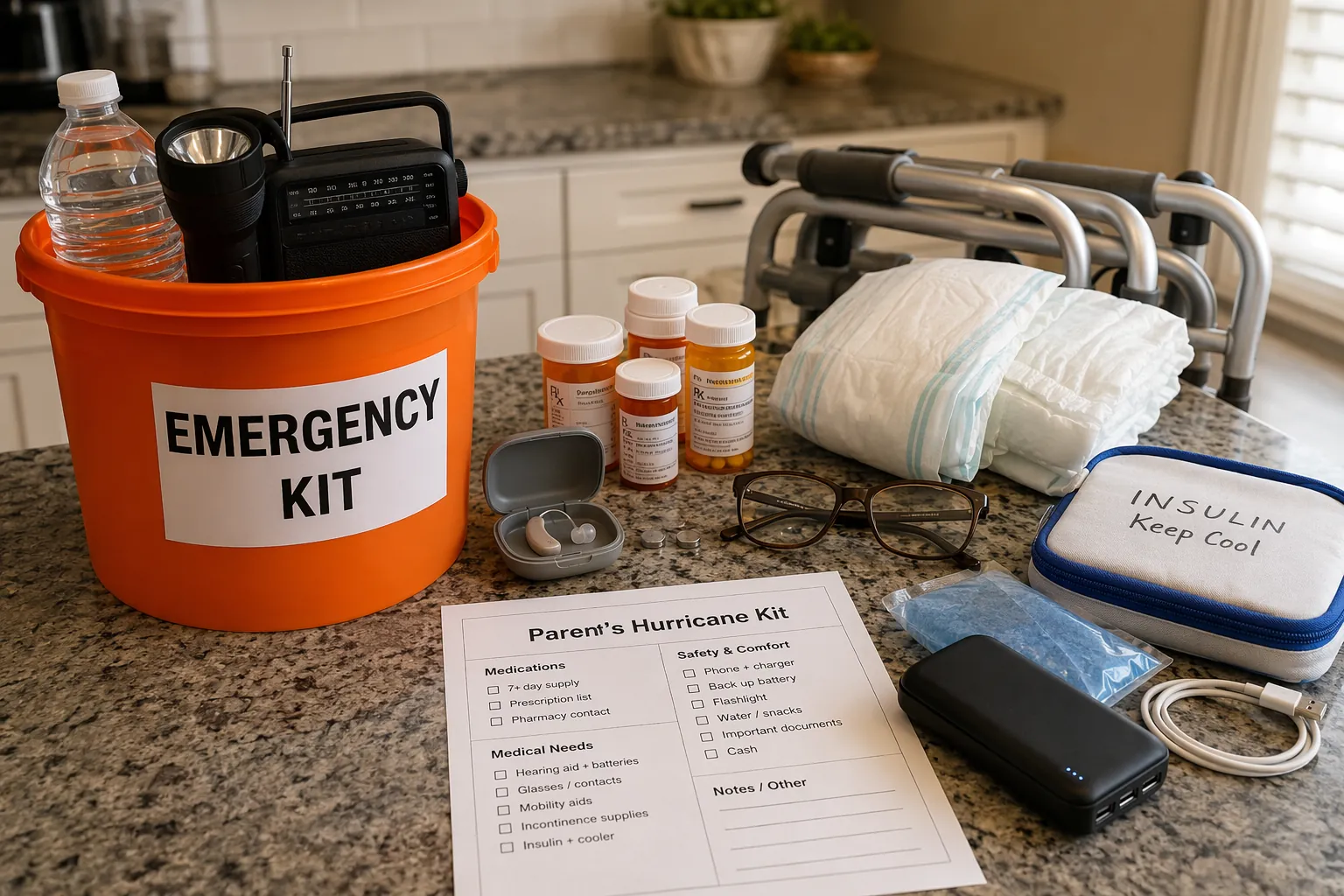
The distinction is not fussy. AARP’s Disaster Resilience Tool Kit reports that people age 75 and older made up about 50% of Hurricane Katrina deaths, while representing only about 6% to 10% of the affected population.[1] The Red Cross also tells older adults to keep a 30-day supply of medications, not just a long weekend’s worth tucked into a bag.[2] Those two facts are enough to change the job. You are not just building a storm kit. You are preserving the routines that keep your parent medically stable and physically safe when the pharmacy, elevator, power, roads, and cell service may all be unreliable.
Start With the Baseline, Then Add the Parent-Specific Layer
Use the official emergency kit as the base: water, nonperishable food, flashlight, radio, batteries, first-aid supplies, sanitation items, copies of documents, and a plan for evacuation or sheltering. Ready.gov’s older-adults page is a practical place to check the standard categories, especially if your parent lives alone or depends on others for transportation.[3]
Then stop thinking like you are packing a camping bin. Walk through one ordinary day in your parent’s house. What has to happen before breakfast? What happens before bed? What supplies are touched without anyone thinking about them? What device has to charge? What item would be hard to replace if the bridge is closed or the pharmacy system is down?
| Domain | What to Check |
|---|---|
| Medication and medical continuity | 30-day prescription supply when possible, OTC medications, medication list, pharmacy details, prescriber contacts, dosing schedule, allergies |
| Power and refrigeration-dependent needs | Insulin storage plan, oxygen or CPAP backup, charged battery packs, safe generator plan, low-tech alternatives where appropriate |
| Mobility | Walker, cane, wheelchair, manual backup, labeled equipment, clear evacuation path, repair or replacement parts |
| Sensory aids | Hearing aid batteries, charger, spare glasses, magnifier, written instructions in readable print |
| Incontinence and hygiene | Adult briefs, wipes, gloves, barrier cream, disposable bags, catheter or ostomy supplies if used |
| Communication | Printed contact list, medical summary, charger cords, backup battery, simple phone plan, out-of-area contact |
| Post-storm fall safety | Flashlights within reach, whistle, sturdy shoes, cleared paths, dry entryway, no walking through debris alone |
Medication Continuity Is the First Place to Get Specific
For many older adults, medication is not one checklist item. It is the whole day. Blood pressure pills, diabetes supplies, inhalers, blood thinners, eye drops, pain medication, antidepressants, laxatives, and over-the-counter products may all be part of the routine. If the kit only says “prescriptions,” it is too vague to help the person who has to pack under a hurricane watch.
The Red Cross recommends that older adults keep a 30-day supply of medications.[2] That may require talking with the prescriber, insurer, and pharmacy before hurricane season, because refill timing can be the obstacle. The caregiver’s job is not to improvise medical changes. It is to make sure the supply, list, and instructions are available before roads and systems are strained.
- Pack current prescription medications in their original labeled containers when possible, especially if evacuation is likely.
- Keep an updated medication list with drug names, doses, timing, prescriber names, pharmacy phone number, allergies, and major diagnoses.
- Include over-the-counter items your parent actually uses, not just generic first-aid supplies: pain reliever, antacids, stool softener, allergy medication, eye drops, or other routine products.
- Photograph medication labels, insurance cards, and the medication list, but also keep paper copies in the kit.
- If your parent uses a weekly pill organizer, pack it with the source bottles or a printed list so another caregiver can verify what is inside.
This is also where family communication matters. One sibling may know the cardiologist. Another may know the pharmacy password. A neighbor may know where the spare inhaler is kept. Put that information in one place. The Family Caregiver Alliance’s emergency preparedness checklist frames this as caregiver work, not just supply shopping: the plan has to account for who helps, where information is stored, and what happens if the usual helper is unavailable.[4]
Power, Refrigeration, Oxygen, and CPAP Need a Tested Plan
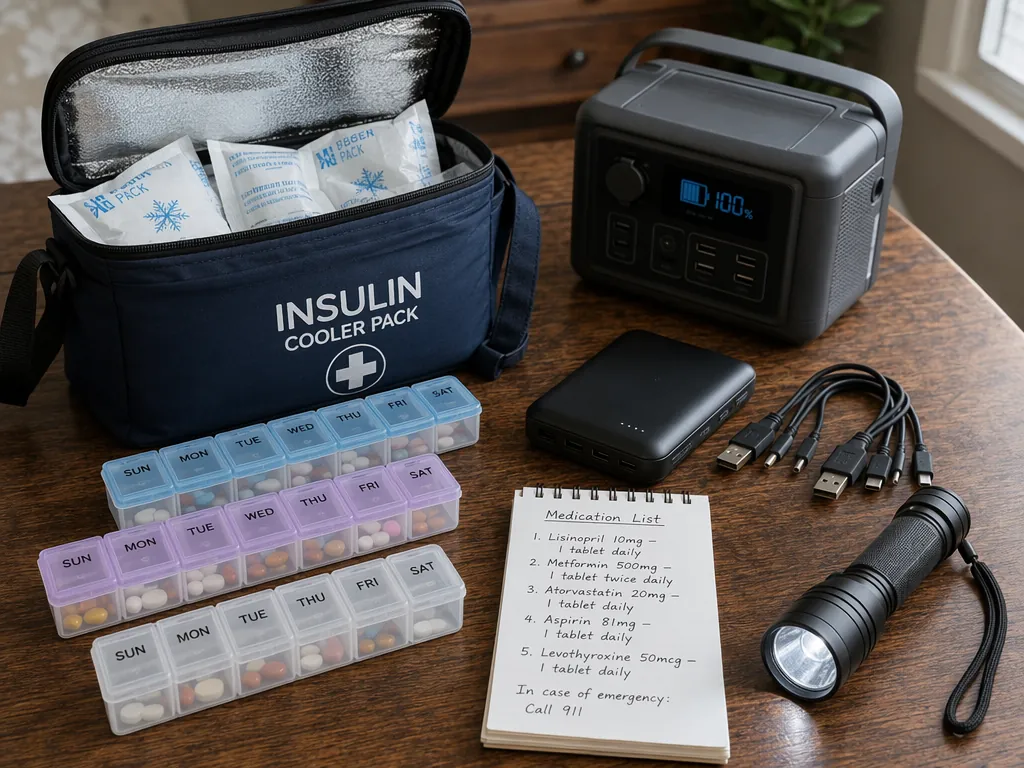
A battery pack still in its box is not a power plan. A cooler without ice packs frozen ahead of time is not a refrigeration plan. A generator no one knows how to place safely is another problem arriving during the first problem.
If your parent uses insulin or another refrigerated medical item, ask the pharmacist or prescribing clinician how it should be stored during an outage. Write that guidance down in plain language and keep it with the medication list. The kit can include a small cooler, cold packs, labels, and a thermometer if recommended, but do not rely on a vague instruction like “keep cold” when the power may be out for an unknown period.
For CPAP, oxygen equipment, power recliners, nebulizers, electric beds, or mobility devices that charge, make a device-by-device plan. Identify what runs on batteries, what needs a wall outlet, what has a manufacturer-approved backup, and what cannot be safely substituted. If your parent depends on oxygen, coordinate with the oxygen supplier and medical team before a storm is forming; this is not a place for last-minute guesses.
- Charge battery packs before hurricane season alerts become urgent, then put recharge dates on the calendar.
- Label each cord with the device it belongs to, using large writing or tape flags.
- Keep manufacturer instructions for CPAP, oxygen concentrators, and other medical devices in the kit or a clearly labeled folder.
- Ask the utility company whether a medical baseline, priority notice, or outage registry exists in your parent’s area, while recognizing that no registry guarantees uninterrupted power.
- Practice the backup setup once on a calm day, including plugging in the device, reading the charge indicator, and confirming your parent can use it.
Generator safety deserves one blunt rule. The CDC says generators should be used outdoors and kept at least 20 feet from windows and doors.[5] Do not put one in a garage, porch, carport, breezeway, or near an open window because the rain is blowing sideways. If a generator is part of the plan, the person expected to operate it needs written instructions and the physical ability to do the setup safely.
Mobility Supplies Should Be Packed Around the Way Your Parent Actually Moves
A parent who walks independently on a normal afternoon may not move the same way during a storm. The floor is darker. The porch is wet. The elevator may be out. Patio furniture may have been shoved into the hallway. The walker that is usually beside the chair may be folded in the garage because someone “put things away” before the wind arrived.
Pack and position mobility items as if the house will be cluttered, dim, and stressful. If your parent uses a cane, walker, rollator, wheelchair, scooter, or transfer belt, label it with name and phone number. Keep the primary device inside the living area before the storm, not behind outdoor furniture or storage bins. If a power wheelchair or scooter is used, discuss whether a manual wheelchair backup is realistic for evacuation or short-term movement.
- Store a cane or walker where your parent shelters, even if another device is usually kept by the bed.
- Attach a small flashlight or reflective tape to a walker if it helps visibility without creating a snag hazard.
- Pack sturdy, closed-back shoes and socks with the kit; slippers are poor footwear for wet thresholds and debris.
- Keep a copy of equipment model numbers, supplier contacts, and repair information with the documents.
- If evacuation is possible, confirm who can lift or transport the device and whether it fits in the vehicle.
Hearing, Vision, and Instructions Need Redundancy
Storm instructions often assume the person can hear alerts, read small print, unlock a smartphone, and remember which charger goes with which device. Many older adults can do some of that on a normal day and none of it quickly under stress.
Pack sensory aids as daily-function supplies, not accessories. Hearing aid batteries belong in the kit even if there are usually extras in a drawer. A hearing aid charger needs its cord labeled and a backup power source if it is part of the plan. Spare eyeglasses should be in a hard case. If your parent uses a magnifier, large-button phone, amplified phone, captioning device, or written cue cards, include those in the hurricane setup.
- Print the emergency contact list in large, high-contrast type.
- Write the shelter-in-place location, evacuation address, and caregiver phone numbers on paper.
- Put hearing aid batteries, cleaning tools, and charger cords in a zip bag labeled in large print.
- Keep spare glasses, sunglasses, and any reading magnifier with the kit.
- Use simple labels: “CPAP,” “PHONE,” “HEARING AIDS,” “INSULIN COOLER,” not a tangle of black cords in one pouch.
Do Not Treat Incontinence and Hygiene as Afterthoughts
Incontinence supplies are easy to underpack because no one wants to count them out loud. Count them anyway. A parent who uses adult briefs, pads, disposable underwear, wipes, barrier cream, gloves, bedside commode liners, catheter supplies, or ostomy supplies needs enough to get through delays without rationing dignity.
This part of the kit should be boring, labeled, and easy to reach. Put supplies in waterproof bags or bins. Keep disposal bags and hand sanitizer with them. If a caregiver may need to help, include gloves and written notes about brand, size, skin products used, and any supplies that cannot be substituted comfortably.
- Adult briefs, pads, or disposable underwear in the correct size and absorbency
- Wipes, toilet paper, hand sanitizer, soap, and disposable gloves
- Barrier cream or skin-protection products already used by your parent
- Seal-top disposal bags and a small covered trash plan
- Catheter, ostomy, or wound-care supplies if part of the normal routine, with clinician or supplier instructions kept separate from guesswork
Communication Backups Should Not Depend on a Smartphone
A smartphone is useful until it is dead, lost under a blanket, locked by a passcode no one knows, or sitting in a room with no signal. For an older parent, communication planning has to include paper, simple devices, and a clear order of calls.
Print a one-page emergency profile and put copies in the kit, wallet, evacuation bag, and on the refrigerator or another agreed location. Include name, date of birth, emergency contacts, physicians, pharmacy, diagnoses, medications, allergies, medical devices, insurance information, and preferred hospital if relevant. If your parent lives in a senior community, include the community office number and after-hours contact, but do not assume staff will be able to manage personal supplies during a regional emergency.
- Choose one out-of-area contact who can receive updates if local calls are difficult.
- Write down who calls whom: parent, adult child, neighbor, community office, pharmacy, medical equipment supplier.
- Keep a basic charger, car charger, and labeled backup battery with the phone.
- If your parent cannot reliably use text messages, do not build the plan around texting.
- Tape a short call script near the phone if panic or memory problems make emergencies harder: “I am at home. I have power/no power. I have my medicines. I need help with…”
The Fall-Risk Check Starts Before the Storm and Matters More After It
Families often prepare for wind and forget the hallway. That is a mistake. A parent may get through the storm and then fall while reaching for a flashlight, stepping over a threshold, checking a leak, or walking outside to see what happened. The house that was safe on Tuesday can become a different house after one night of water, darkness, extension cords, moved furniture, and debris.
Before the storm, clear the route from bed to bathroom, bedroom to shelter area, and shelter area to exit. Move loose rugs, cords, plant stands, and small tables out of those paths. Put flashlights where your parent can reach them without standing on tiptoe or crossing a dark room. Put one by the bed, one by the main chair, and one in the bathroom area if the layout allows.
After the storm, the rule should be simple: no inspection walks alone. Not to the mailbox, not to the carport, not to “just look” at a branch. Wet leaves, broken screens, lifted mats, loose shingles, and scattered patio items are enough to cause a fall. If your parent insists on independence, give them a safer role: sit near a window with a charged phone or whistle while someone else checks the exterior.
- Place flashlights and fresh batteries at the bed, chair, bathroom path, and kit location.
- Pack a whistle or wearable alert device if your parent can use it.
- Keep sturdy shoes beside the bed before the storm starts.
- Move patio furniture, planters, and cords away from walking routes rather than into them.
- Make a post-storm walk-through checklist for the first person who arrives: entryway dry, bathroom path clear, bedroom path clear, extension cords secured, debris removed from threshold.
Where to Store the Kit So It Can Actually Be Used
One giant bin in the garage may be tidy and still useless. The better system is usually one main hurricane bin plus smaller, reachable packets where the need occurs. Medications and documents may need to travel. Flashlights need to be near hands. Incontinence supplies need to be near the bathroom or sleeping area. Mobility aids need to be inside the path, not stored behind plywood, gas cans, or lawn chairs.
| Location | What Belongs There |
|---|---|
| Main kit bin | Waterproof document copies, basic emergency supplies, hygiene extras, batteries, labeled cords, spare sensory aids |
| Medication go-bag | Current medications, medication list, pharmacy and prescriber contacts, insurance cards, refrigerated-item instructions |
| Bedside area | Flashlight, sturdy shoes, glasses, hearing aids or charger, whistle, phone or alert device |
| Bathroom or continence area | Adult briefs or pads, wipes, gloves, barrier cream, disposal bags, hand sanitizer |
| Shelter area | Walker or cane, flashlight, water, phone charger, printed contact list, comfort items |
Label containers in large print. Use clear bags inside bins. Put the printed checklist on top, not buried under supplies. If more than one family member may respond, take photos of where everything is stored and share them before hurricane season.
A Printable Elderly Parent Hurricane Kit Checklist
Use this as the working copy, then mark it up for your parent’s actual needs. The point is not to own every item. The point is to know which items are essential for this parent, in this home, with this body and this routine.
Baseline Emergency Supplies
- Water and nonperishable food
- Flashlights, radio, batteries, and first-aid supplies
- Sanitation supplies, trash bags, and hand hygiene items
- Copies of identification, insurance cards, medical cards, and key documents
- Cash, spare keys, evacuation route, and shelter information
Medication and Medical Information
- 30-day medication supply when feasible under pharmacy, insurance, and prescriber rules
- Medication list with names, doses, timing, prescribers, pharmacy, allergies, and diagnoses
- Original prescription bottles or clearly labeled packaging
- Over-the-counter medications and routine supplements your parent actually uses
- Copies of insurance cards, Medicare or Medicaid cards if applicable, and advance directive or health care proxy documents if available
Power and Refrigeration
- Charged backup batteries for phone, hearing aids, CPAP, or other approved devices
- Labeled charging cords and adapters
- Written storage instructions for insulin or other refrigerated medical items
- Cooler, cold packs, and temperature-monitoring supplies if recommended by the pharmacist or clinician
- Generator instructions and safe outdoor placement plan if a generator is used
Mobility and Evacuation
- Cane, walker, rollator, wheelchair, scooter charger, or manual backup as appropriate
- Name and phone number label on mobility equipment
- Sturdy shoes and socks
- Transfer belt or other caregiver-assist equipment already used safely
- Vehicle plan for moving both parent and equipment
Hearing and Vision
- Hearing aids, charger, cleaning tools, and extra batteries if used
- Spare eyeglasses in a hard case
- Magnifier, large-print instructions, or other reading aids
- Labeled device cords in separate bags
- Written emergency instructions in large, high-contrast type
Incontinence and Hygiene
- Adult briefs, pads, disposable underwear, or liners
- Wipes, toilet paper, gloves, soap, and hand sanitizer
- Barrier cream or other skin products already in use
- Disposal bags and waterproof storage bags
- Catheter, ostomy, or wound-care supplies if part of the normal care routine
Communication and Documents
- Printed emergency contact list
- One-page medical profile
- Phone charger, car charger, and backup battery
- Out-of-area contact and call order
- Senior community contact information if your parent lives in one
Post-Storm Fall Safety
- Flashlights within reach of bed, chair, bathroom path, and shelter area
- Whistle or alert device
- Clear walking paths before the storm
- Dry entryway plan with towels or mats that do not slide
- No-solo-inspection rule for outside areas, wet thresholds, and debris
When the Kit Is Actually Finished
The kit is not finished when the supplies are bought. It is finished when someone has walked through the day with your parent and answered the practical questions: How will morning medications be taken? What happens if the refrigerator is off? Which device must charge? Can your parent find the flashlight from bed? Can they hear instructions? Can they manage hygiene? Can they reach help without depending on a smartphone? Who checks the wet entryway and the blocked path after the storm?
Print the checklist. Put one copy in the kit, one on the refrigerator or inside a cabinet door, and one with the adult child or neighbor most likely to respond. Cell service and caregiver availability have a way of failing at exactly the wrong moment. Ready.gov and Red Cross basics are still the right starting point. Build the parent-specific second layer now, before a normal caregiving errand turns into a rushed evacuation problem.
References
- Disaster Resilience Tool Kit, AARP
- Older Adults, American Red Cross
- Older Adults, Ready.gov
- Emergency Preparedness Checklist for Caregivers, Family Caregiver Alliance
- Stay Safe After a Hurricane or Other Tropical Storm, Centers for Disease Control and Prevention
Related reading
Need a professional assessment?
Find a CAPS-credentialed professional or local aging services through our outbound resource list — we never name or rank individual contractors.
Find Local HelpNoticed something outdated or inaccurate on this page? Flag a correction. We review every report against CDC, NIA, and AARP HomeFit guidance before updating a page.