
Room checklist
Room-by-Room Hurricane Safety for Seniors Living Alone
A room-by-room hurricane preparation checklist for seniors living alone, covering fall prevention during power outages, mobility aid clearance, and medical backup plans — adapted from AARP HomeFit and FEMA guidelines.
- Room
- multiple rooms
- Install complexity
- DIY to professional
- Reviewed by
- AARP HomeFit guidelines
A hurricane safety checklist for seniors living alone has to start with an uncomfortable gap: 60% of adults 50 and older say they feel prepared for a natural disaster, but fewer than one in three have actually made an emergency plan.[1] That difference shows up fast when the power goes out. A person may have bottled water in the pantry and still be unable to reach the interior hallway safely with a walker, find the flashlight batteries, or keep an oxygen concentrator running.
For an older adult living alone, hurricane preparation is not only a food-and-water problem. It is a fall-prevention problem, a mobility-clearance problem, and a medical-power problem. The right question is not “Do I have supplies?” It is “Can I use this plan when I am alone, tired, in low light, and moving from the bed, bathroom, kitchen, or safe room without someone else there to fetch, lift, call, or improvise?”
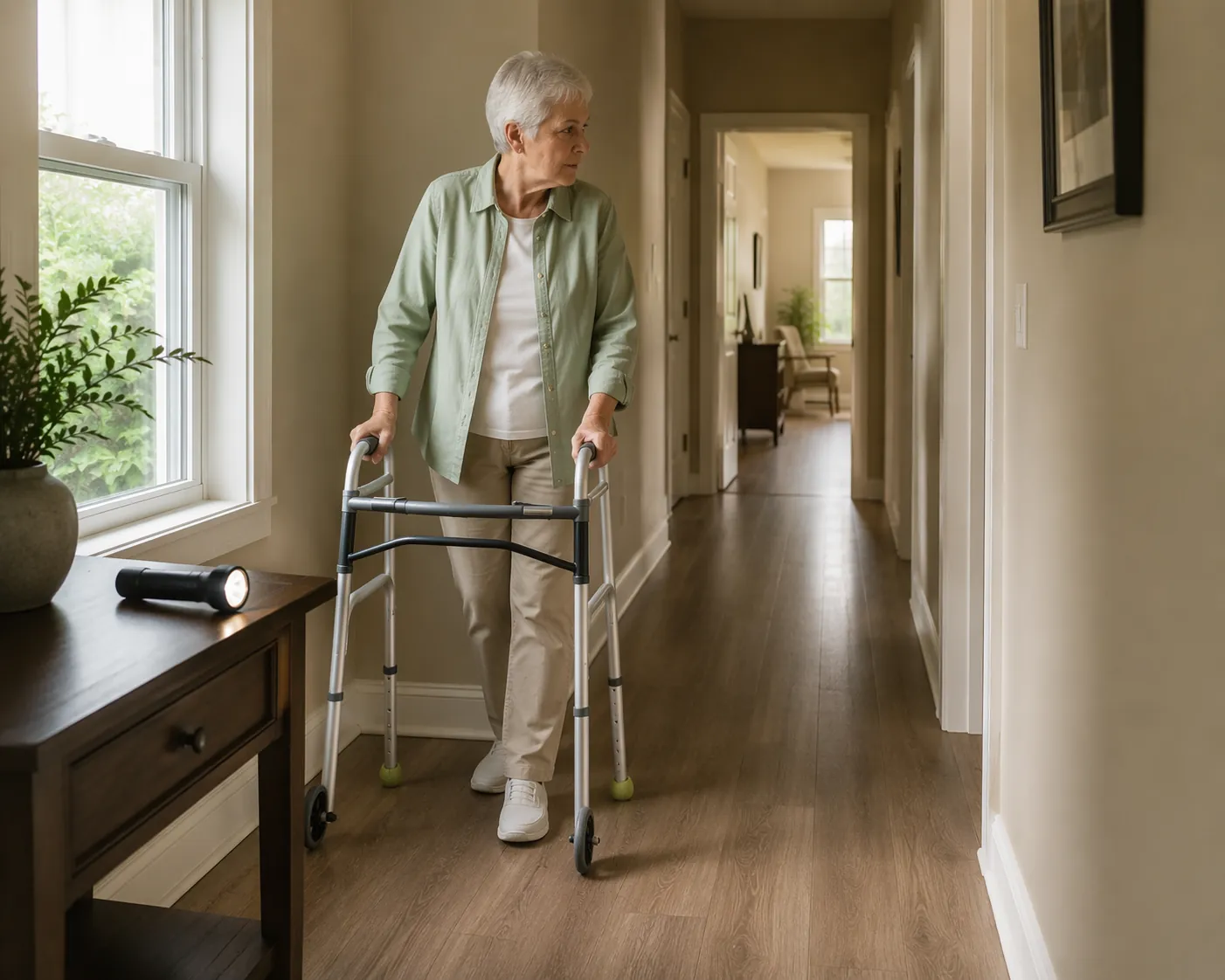
Start Before June 1, Then Fix What Cannot Wait
Atlantic hurricane season runs from June 1 through November 30, so the best time for a full home walkthrough is before June 1.[2] If the season has already started, do not wait for a named storm. Some items are annual habits, such as testing backup power and checking the safe room. Others are immediate corrections, such as moving a loose rug out of the hallway or putting shoes and a flashlight next to the bed tonight.
A caregiver can help with this walkthrough in one visit or by video call, but the standard should stay the same: every item must work for the person who lives there. A neatly packed kit on a high shelf does not count if the senior cannot reach it. A safe room does not count if a walker cannot turn inside it. A backup battery does not count if nobody has tested it with the actual medical device.
| Part of the Home | What to Verify | Why It Matters During a Hurricane |
|---|---|---|
| Exterior | Outdoor items secured, drainage cleared, shutters or plywood ready | Wind and water problems begin before anyone moves indoors |
| Safe room | Interior, low, low-window room with reachable supplies and mobility clearance | This is where the plan must still work after the warning becomes real |
| Hallways and living areas | Clear route, no loose rugs or cords, flashlights and night lighting placed | Power outages turn ordinary clutter into fall hazards |
| Bedroom | Shoes, flashlight, walker or cane, phone, and device backups within reach | Many storm decisions begin from bed, not from the front door |
| Bathroom and kitchen | Grab bars, bathroom light, water, food, manual can opener, medication plan | Basic needs become harder when transportation, power, and pharmacies are disrupted |
Make the Outside Pass Efficiently
The outside pass comes first because wind turns loose objects into hazards. Bring in or firmly secure patio furniture, planters, grills, garden tools, trash cans, flags, and decorative items before tropical-storm-force winds arrive. Senior-specific hurricane guidance and general emergency-preparedness guidance both put outdoor-item control near the top because it is one of the simplest ways to reduce preventable damage around the home.[3][4]
- Store patio furniture, umbrellas, and lightweight planters indoors or in a secure enclosed area.
- Trim dead branches before hurricane season; do not wait until a storm is approaching.
- Clear gutters, downspouts, and visible drainage paths so water has somewhere to go.
- Check that shutters work, or keep pre-cut plywood labeled by window with the needed fasteners.
- Confirm door and window seals, especially around rooms where water intrusion would block a walking route.
If a senior cannot lift or move outdoor items alone, that is not a personal failure; it is a scheduling problem that needs a name and a date. The helper should be identified before the season, not during a warning, when neighbors may be tying down their own homes.
Choose the Safe Room Like Someone Has to Reach It in the Dark
A safe room for hurricane sheltering should be an interior room on the lowest livable floor with few or no windows. That basic rule matters, but it is not enough for a senior living alone. The room also has to be reachable, usable, and stocked within arm’s reach once the person is inside.
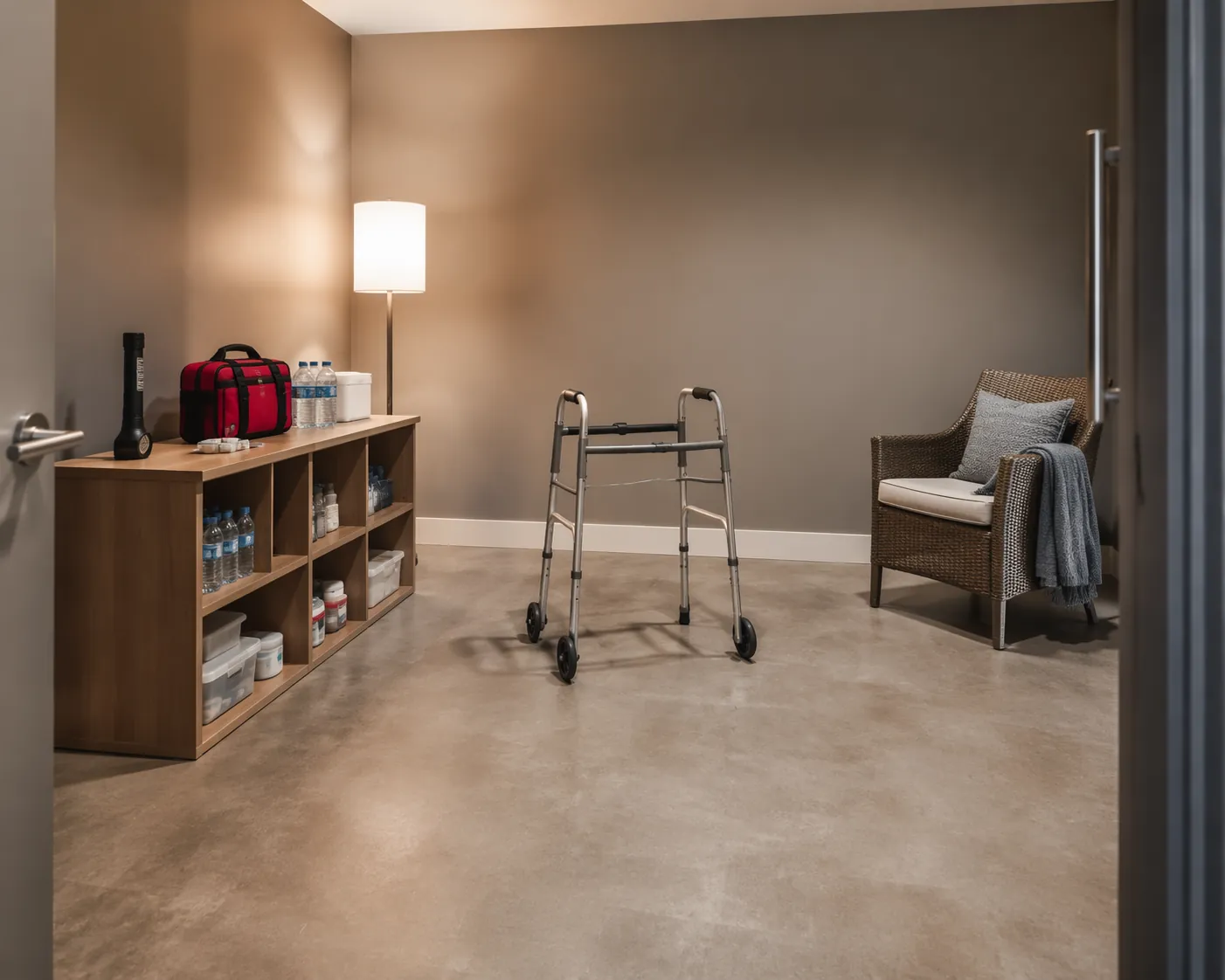
Use 36 inches of clear path as the practical clearance target for walker and mobility-aid movement, adapted from AARP HomeFit-style accessibility planning. A room that looks large when empty may fail once a laundry basket, storage bin, oxygen tubing, or folding chair is in the way. The doorway, the turn into the room, and the space beside the chair all matter.
- Stand at the usual chair or bed and walk the exact route to the safe room with the cane, walker, or rollator normally used.
- Turn into the safe room without moving furniture out of the way; if furniture has to be moved during the drill, the room is not ready.
- Sit down in the safe-room chair and reach the flashlight, phone charger, water, medications, glasses, hearing-aid batteries, and emergency contacts without standing.
- Keep the floor clear of storage boxes, laundry, pet bowls, loose bags, and electrical cords.
- Place the emergency kit low enough to reach, but not on the floor where it blocks feet or walker wheels.
The safe room also needs communication and power planning. Ready.gov advises older adults to build support networks and plan for medical, mobility, and communication needs before an emergency.[5] For someone living alone, that means the phone charger, backup battery, written contact list, and county emergency information need to be in the room, not somewhere else in the house.
What Belongs Within Reach
- Flashlight with tested batteries, plus spare batteries in packaging the senior can open.
- Charged phone power bank and the correct charging cable.
- Water, shelf-stable snacks, and any medication that must not be missed during sheltering.
- Glasses, hearing aids, hearing-aid batteries, dentures, and mobility-device accessories.
- Written contacts, medication list, device instructions, insurance information, and local emergency numbers.
Treat Hallways and Living Areas as Outage Routes
A hallway that is safe at noon can be unsafe at midnight with the power out. Keystone Health’s emergency-preparedness guidance for seniors specifically warns that power outages create low-light conditions where unsecured rugs and obstructed paths become dangerous.[6] This is where a room-by-room hurricane walkthrough earns its keep.
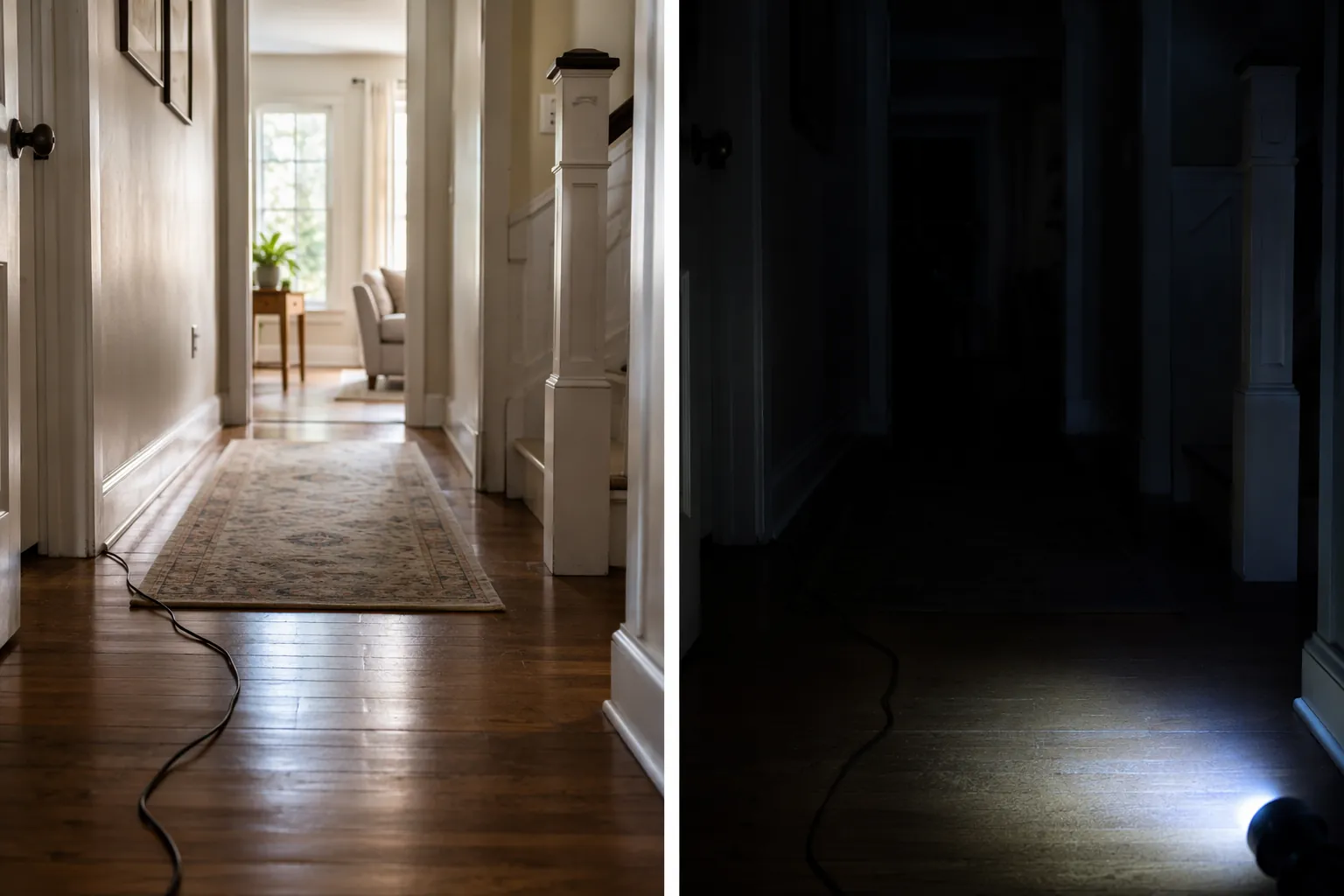
Walk the route from the bedroom to the bathroom, from the favorite chair to the safe room, and from the kitchen to the safe room. Do it once in daylight, then again in low light with the flashlight normally kept nearby. The second pass is the honest one.
- Remove small area rugs from the safe-room route, or secure them so the edges cannot curl or catch a foot, cane, or walker wheel.
- Move electrical cords away from walking paths; do not stretch charging cables across a room during storm season.
- Clear newspapers, shoes, pet toys, baskets, footstools, and decorative stands from the route.
- Place a flashlight in every room used daily, especially the living room, bedroom, bathroom, kitchen, and safe room.
- Use battery-operated nightlights or motion-sensor lights along the bedroom-to-bathroom-to-safe-room path.
Heavy furniture deserves one quick look, too. If a bookcase, tall cabinet, or television stand is already unstable, secure it before the season. The main hurricane concern in this walkthrough is not redecorating the living room; it is keeping the walking route open when noise, wind, darkness, and fatigue are all working against steady movement.
Stage the Bedroom for the First Five Minutes After the Lights Go Out
Many plans assume a person begins the storm fully dressed, standing in the kitchen, with a phone in hand. A senior living alone may wake from a nap, hear the power click off, and need to get to the bathroom or safe room before checking anything else. The bedroom setup should answer that moment.
- Keep sturdy shoes or non-slip slippers beside the bed, not across the room.
- Place a flashlight on the nightstand and test it at the start of hurricane season.
- Keep the walker, cane, rollator, or wheelchair in the same reachable position every night.
- Charge the phone before bed when a storm is expected, and keep a backup power bank at bedside.
- Move oxygen tubing, CPAP cords, extension cords, and charging cables away from the first steps out of bed.
This is also where medical-device planning becomes physical. A CPAP machine, oxygen concentrator, hospital bed, lift chair, nebulizer, refrigerated medication, or powered mobility device needs a backup plan that has been tested before the storm. Miami Jewish Health’s senior hurricane guidance and The Conversation’s hurricane-planning guidance for aging parents both emphasize that electricity-dependent medical needs require planning before evacuation orders and outages arrive.[3][7]
Test the Medical Backup, Not Just the Box It Came In
Write down every device that depends on electricity or batteries. Next to each one, write how long it can run without wall power, what backup it uses, where the backup is stored, who knows how to operate it, and when it was last tested. A battery that cannot run the actual equipment long enough is not a backup; it is a delay.
| Device or Need | Question to Answer Before the Storm |
|---|---|
| Oxygen concentrator | What is the backup oxygen or power source, and has it been tested with the prescribed setup? |
| CPAP or BiPAP machine | Can it run from the backup power source, and where is the correct cable? |
| Hearing aids | Are extra batteries or charging options in the safe room and bedroom? |
| Powered wheelchair or scooter | Is it fully charged, and is the route to the safe room wide and clear? |
| Refrigerated medication | What cooler, ice, or pharmacy plan is in place if power is out? |
If a generator is part of the plan, test it at the start of hurricane season and confirm that the senior knows what not to do with it. Generator safety details vary by model and home setup, so written instructions and a named helper matter. A generator that requires lifting, fueling, or outdoor setup by a person who cannot safely do those tasks alone should not be the only plan.
Use the Bathroom Checklist to Prevent Falls, Not Just to Store Supplies
The bathroom is one of the least forgiving rooms during an outage. Tile, water, urgency, and low light are a bad mix. If there is only time for a short bathroom pass, check the grab bars, lighting, and path first.
- Confirm grab bars are installed into secure support and do not wiggle when pulled.
- Keep a flashlight within reach from the toilet or bathroom entrance.
- Remove loose bath mats from the walking path during storm conditions, or replace them with secure non-slip options.
- Keep necessary hygiene supplies reachable without standing on tiptoe or bending into a low cabinet.
- Make sure the route from bed to bathroom has the same lighting and clearance standard as the route to the safe room.
A caregiver doing one in-person visit should physically pull on the grab bars, not just look at them. Adhesive towel bars, decorative rails, and suction handles can give false confidence if they are mistaken for weight-bearing support.
Stock the Kitchen for a Longer Senior Timeline
The Red Cross and Ready.gov recommend emergency supplies that cover at least three days.[2][5] That minimum is useful, but seniors living alone often need a longer working window for medication, food, water, and medical supplies because transportation may be limited, pharmacies may close, and recovery services may reopen unevenly after a storm. Senior-specific guidance commonly pushes medication planning into a 7- to 14-day range.[3][7]
For food, choose items the senior already eats and can open without power. A pantry full of cans is not helpful if the only opener is electric, the cans are too heavy, or the food conflicts with medical instructions. Keep a manual can opener in the same place every year and test whether it is comfortable to use.
- Store drinking water where it can be reached without climbing, heavy lifting, or blocking the walking path.
- Keep a manual can opener, easy-open foods, and shelf-stable meals that fit the senior’s normal diet.
- Plan for medications earlier than the refill deadline; do not wait until a storm is named.
- Keep a printed medication list in the kitchen kit, bedroom, safe room, and go-bag if evacuation may be needed.
- Check expiration dates at the start of hurricane season and rotate food the senior will actually use.
Water and food storage should not create a new hazard. Cases stacked in a hallway, cans stored on a top shelf, or supplies placed behind a walker path solve one problem by creating another. Keep the kit reachable, but keep the route cleaner than it is on an ordinary day.
Register for Help Before Evacuation Orders
Older adults with medical, mobility, or transportation needs should check local special-needs registry rules before hurricane season. Miami Jewish Health notes that Florida’s Special Needs Registry and Miami-Dade’s Emergency and Evacuation Assistance Program are designed for residents who may need help during emergencies, and that registration should happen before evacuation orders because registration closes once those orders are issued.[3]
Registration is not a guarantee that every need will be solved at the door. It is one layer in the plan. The senior still needs a written contact list, transportation plan, medication list, device instructions, and a backup person who knows where those papers are kept.
Run the Drill From the Chair, Bed, Bathroom, and Safe Room
A checklist that only works from the front door is not finished. Run the plan from the places where the senior actually spends time: the favorite chair, the bed, the bathroom, and the safe room. From each place, check whether the person can reach a light, phone, mobility aid, shoes, water, medication, and the next safe destination.
- From the favorite chair: reach the flashlight and phone, then travel to the safe room without moving objects.
- From the bed: put on shoes, grab the walker or cane, turn on light, and reach the bathroom or safe room.
- From the bathroom: return to the bedroom or safe room using backup lighting.
- From the safe room: sit down and reach supplies, contacts, medication, water, and charging equipment.
- From the kitchen: reach food and water without lifting heavy items or blocking the route back.
If a caregiver is helping remotely, ask for the camera to show the floor, not just the shelves. Look at rug edges, cords, door thresholds, narrow turns, and where the flashlight actually sits. If the senior uses a walker, watch the walker make the turn into the safe room. That one movement tells more truth than a full pantry.
Make It an Annual Routine
At the start of each hurricane season, repeat the same home pass: outside first, safe room second, then the bedroom-to-bathroom-to-safe-room route, living areas, kitchen, medication, and medical equipment. Replace batteries, test backup power, update contacts, check registry status, and move anything that has crept back into the walking path.
The plan is ready when it can be used by the person who lives there, without assuming another adult will be present. That is the standard: reachable from the chair, reachable from the bed, reachable from the bathroom, usable in low light, and tested before the storm.
References
- Older Adults Need a Disaster Plan, FEMA Says — AARP
- Older Adults Emergency Preparedness — American Red Cross
- Hurricane and Emergency Preparedness for Seniors — Miami Jewish Health
- What Older Adults Can Do If Disaster Strikes — NCOA
- Older Adults — Ready.gov
- Emergency Preparedness for Seniors — Keystone Health
- 5 tips for hurricane disaster planning with aging parents — The Conversation
Related reading
This change typically needs a professional
Find a CAPS-credentialed professional or local aging services through our outbound resource list — we never name or rank individual contractors.
Find Local HelpNoticed something outdated or inaccurate on this page? Flag a correction. We review every report against CDC, NIA, and AARP HomeFit guidance before updating a page.