
The Hidden Crisis of Sandwich Generation Caregiving: Balancing Aging Parents, Kids, and Career
Nearly half of all family caregivers are part of the sandwich generation, stretched between raising children and caring for aging parents. This data-driven guide explains the structural reality of the triple squeeze on time, money, and emotional bandwidth — and offers systematic strategies for workplace accommodation, financial triage, sibling coordination, and protecting your own health.
Who Are Sandwich Generation Caregivers?
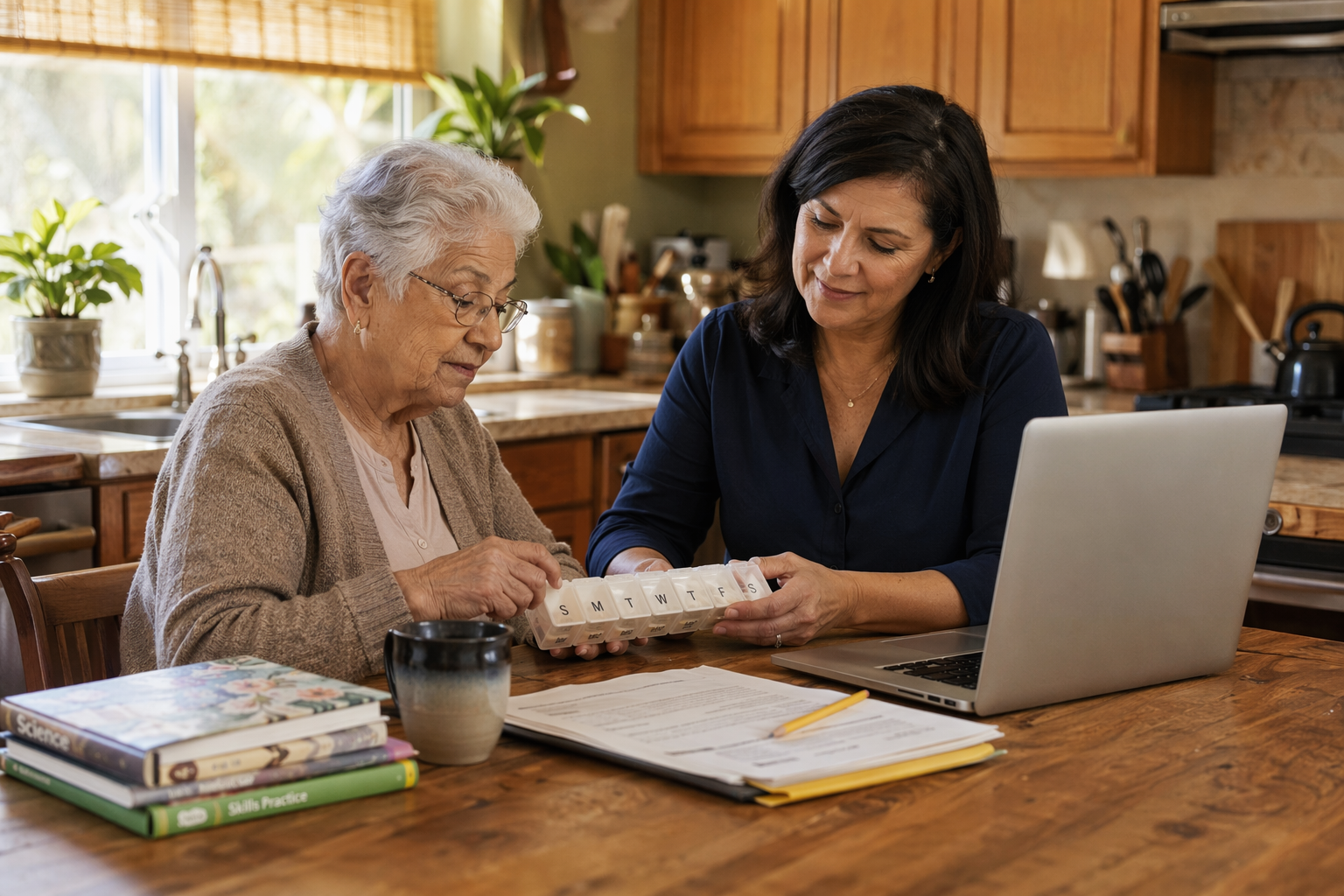
If you are raising children while also helping your aging parents manage doctor appointments, finances, or daily tasks, you are part of a rapidly growing demographic: the sandwich generation. According to a 2025 survey of 1,029 family caregivers conducted by A Place for Mom, 48% of all family caregivers are now sandwiched — caring for both a parent aged 65 or older and at least one child under 18. This is not a niche experience; it is the new normal for millions of American households.
The demographic profile of this group is striking. Data from the Pew Research Center, cited by the Caregiver Action Network, shows that 60% of sandwich generation caregivers are women, and they spend approximately 45 minutes more per day on caregiving tasks than their male counterparts. This gender disparity compounds the financial and emotional toll, as women are also more likely to reduce work hours or leave the workforce entirely to manage care responsibilities.
The financial burden is substantial. Sandwich generation caregivers spend an average of approximately $10,000 per year on out-of-pocket caregiving expenses, according to data from the Caregiver Action Network and AARP. This figure does not account for lost wages, reduced retirement savings, or the cost of childcare, which many are also covering. AARP further reports that 15% of caregivers are financially supporting both their children and their aging parents simultaneously, while 30% struggle to meet basic expenses.
The scale of this phenomenon is accelerating. The 2025 NAC/AARP Caregiving in the US report found that the number of family caregivers has increased by 45% since 2015, reaching an estimated 63 million Americans. Nearly one in four U.S. adults is now a family caregiver. This is not a personal failing or a sign of poor planning — it is a structural shift in how American families function, and it demands systematic solutions rather than individual optimization.
The Triple Squeeze: Time, Money, and Emotional Bandwidth
The sandwich generation experiences a unique form of pressure because the demands come from three directions at once: the needs of aging parents, the needs of growing children, and the demands of a career. This is not simply a matter of being busy — it is a structural overload that affects every dimension of life.
| Dimension | The Data | What It Means for You |
|---|---|---|
| Time | Caregivers average 22.8 hours/week on parent care; 28% provide 31+ hours/week (A Place for Mom, 2025). | This is equivalent to a part-time job on top of full-time work and parenting. |
| Money | Average annual lost income: $21,500. 35% reduced work hours; 11% quit jobs entirely (A Place for Mom, 2025). | Caregiving directly reduces household income and long-term financial security. |
| Emotional Bandwidth | 75% report stress/anxiety monthly; 71% feel overwhelmed; 67% have trouble sleeping (A Place for Mom, 2025). | Chronic stress is the baseline, not an exception. |
Related reading
- When Home Care Isn't Enough: A Decision Framework for Knowing When to Add Professional Help, Palliative Care, or Transition to a Facility
- The Adult Child Caregiver’s First 30 Days: A Staged Action Plan When a Parent Needs Help
- Taking Care of Elderly Parents: A 30-Day Launch Plan for the First Month of Caregiving
Noticed something outdated or inaccurate on this page? Flag a correction. We review every report against CDC, NIA, and AARP HomeFit guidance before updating a page.
Part of the Fall Prevention section.