Senior Care Options for Dementia: When to Move from Home Care to Assisted Living to Memory Care
stage guideearly, middle, late stageReviewed: 2026-06-21
Senior Care Options for Dementia: When to Move from Home Care to Assisted Living to Memory Care
A decision guide for family caregivers of a parent or spouse with Alzheimer's or dementia. Learn how to match the care setting to the disease stage, understand when home care is no longer enough, compare assisted living and memory care costs and features, and navigate the emotional transition with a concrete checklist.
By Editorial Team
memory care
assisted living
home care
dementia care
caregiver decision making
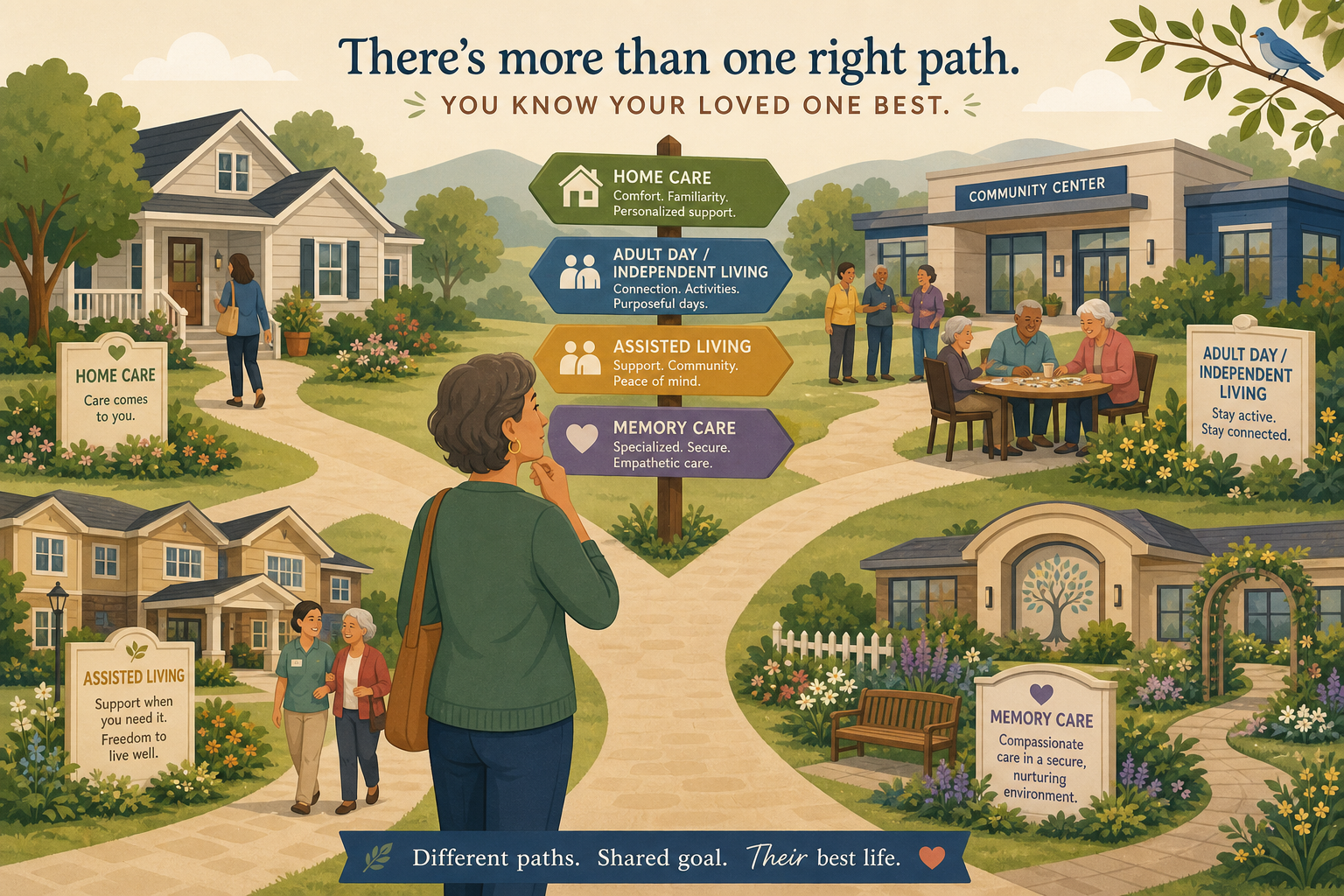
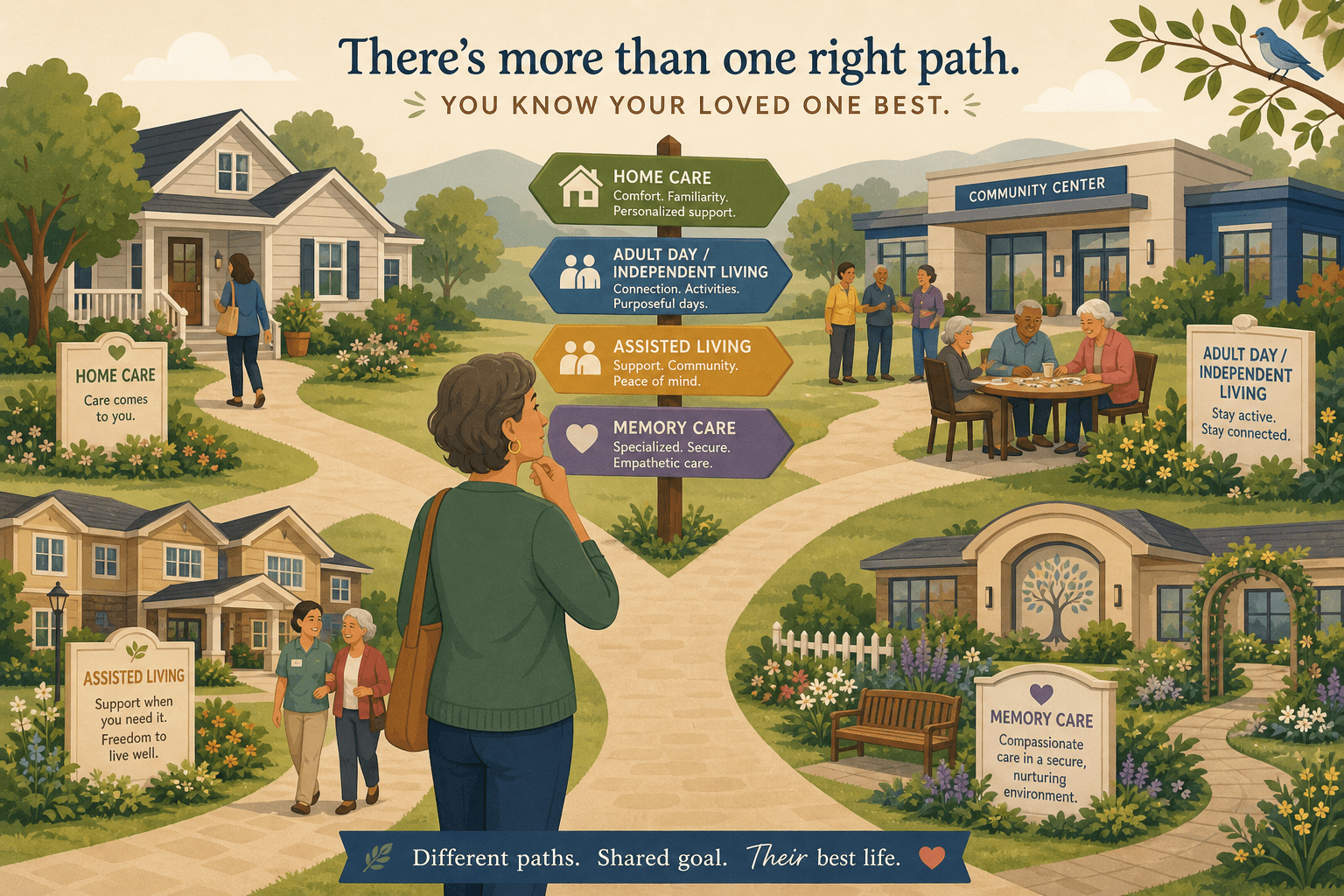
The care continuum is not a ladder of failure — it is a map of options that match your loved one's changing needs.
It’s Not Giving Up — It’s Leveling Up
If you are reading this, you have likely spent months — maybe years — trying to make things work at home. You have rearranged furniture, installed grab bars, hired aides, and adjusted your own sleep schedule to accommodate a parent or spouse whose needs are quietly outgrowing the environment you have built around them. And now a question is pressing on you that feels like a betrayal to even ask: Is it time to move them somewhere else?
Let us reframe that question entirely. Moving through the care continuum — from home care to assisted living to memory care — is not giving up. It is leveling up. It is the act of matching the care environment to the disease stage, because the wrong setting does not just feel uncomfortable; it can actively accelerate decline.
This guide walks you through the full continuum — home care, assisted living, and memory care — using a stage-based framework tied directly to the progression of dementia. You will learn what each setting can and cannot do, how much each costs in 2026, how to pay for it, and how to recognize the moment when leveling up is the safest, most loving decision you can make.
How Dementia Stages Map to Care Settings
Dementia is not a static condition. It progresses through broadly recognized stages — early, middle, and late — and each stage places different demands on the care environment. Matching the setting to the stage is the central task of care planning.
Matching dementia stage to care setting: a simplified framework
Dementia Stage
Typical Needs
Best-Fit Care Setting
Early stage
Minimal supervision; reminders for medications and appointments; social engagement; some help with complex tasks like finances
Home care (a few hours per week) or adult day programs; independent living with support services
Middle stage
Structured daily routine; supervision for safety (wandering risk emerges); assistance with multiple ADLs; behavioral symptom management
Home care (extended hours or live-in); assisted living with memory care services; dedicated memory care unit
Late stage
24/7 skilled nursing or specialized dementia care; full assistance with all ADLs; medical monitoring; end-of-life comfort care
Memory care unit with high staff-to-resident ratio; skilled nursing facility with dementia specialization; hospice in place

Comments
Join the discussion with an anonymous comment.