
Caregiver decision guide
Food Safety for Older Adults During the Cyclosporiasis Outbreak
This guide explains why older adults face higher risk during the 2026 cyclosporiasis outbreak and provides actionable steps for grocery shopping, produce preparation, cooking, and knowing when to call a doctor.
Last reviewed: July 20, 2026. The 2026 cyclosporiasis outbreak is still moving, and public health agencies may update the source, affected products, or case counts after this date. As of July 14, CDC had reported more than 1,645 confirmed cases, 141 hospitalizations, a median patient age of 44, and an age range from 2 to 95 years. [1]
If you are shopping and cooking for an older parent today, the useful question is not whether every berry, herb, or salad leaf is dangerous. It is what you can buy, wash, cook, or skip so dinner is safer without turning the kitchen into a laboratory.
Older adults deserve that tighter routine because foodborne illness does not always stay mild for them. CDC food safety guidance notes that nearly half of adults 65 and older with lab-confirmed foodborne illness are hospitalized. [2] With cyclosporiasis, the practical danger is often not one bad bathroom day. It is prolonged watery diarrhea, then dehydration, then weakness, dizziness, kidney stress, or a fall.
Start With The Grocery Cart
Cyclospora has been linked to fresh produce outbreaks, and past outbreaks have involved bagged salad mixes or kits, cilantro, basil, raspberries, snow peas, and green onions. [3] That does not mean those foods are always unsafe, and it does not mean older adults should stop eating fruits and vegetables. It does mean the grocery aisle needs a little sorting before anything goes in the cart.
| Grocery choice | What to do during an active outbreak |
|---|---|
| Lower-risk substitutions | Choose cooked vegetables, canned vegetables, canned fruit, frozen produce that will be cooked, or peeled fruit when these fit the meal. |
| Whole produce you can handle yourself | Favor whole heads of lettuce over loose or bagged leaves when lettuce is needed; discard outer leaves and wash inner leaves under running water. |
| Higher-caution fresh items | Be more selective with bagged salad mixes or kits, fresh herbs, raspberries, snow peas, and green onions, especially for frail or medically complex older adults. |
| Items to pause or replace | If the older adult is immunocompromised or very frail, consider replacing raw fresh produce with cooked or canned options until outbreak details are clearer. |
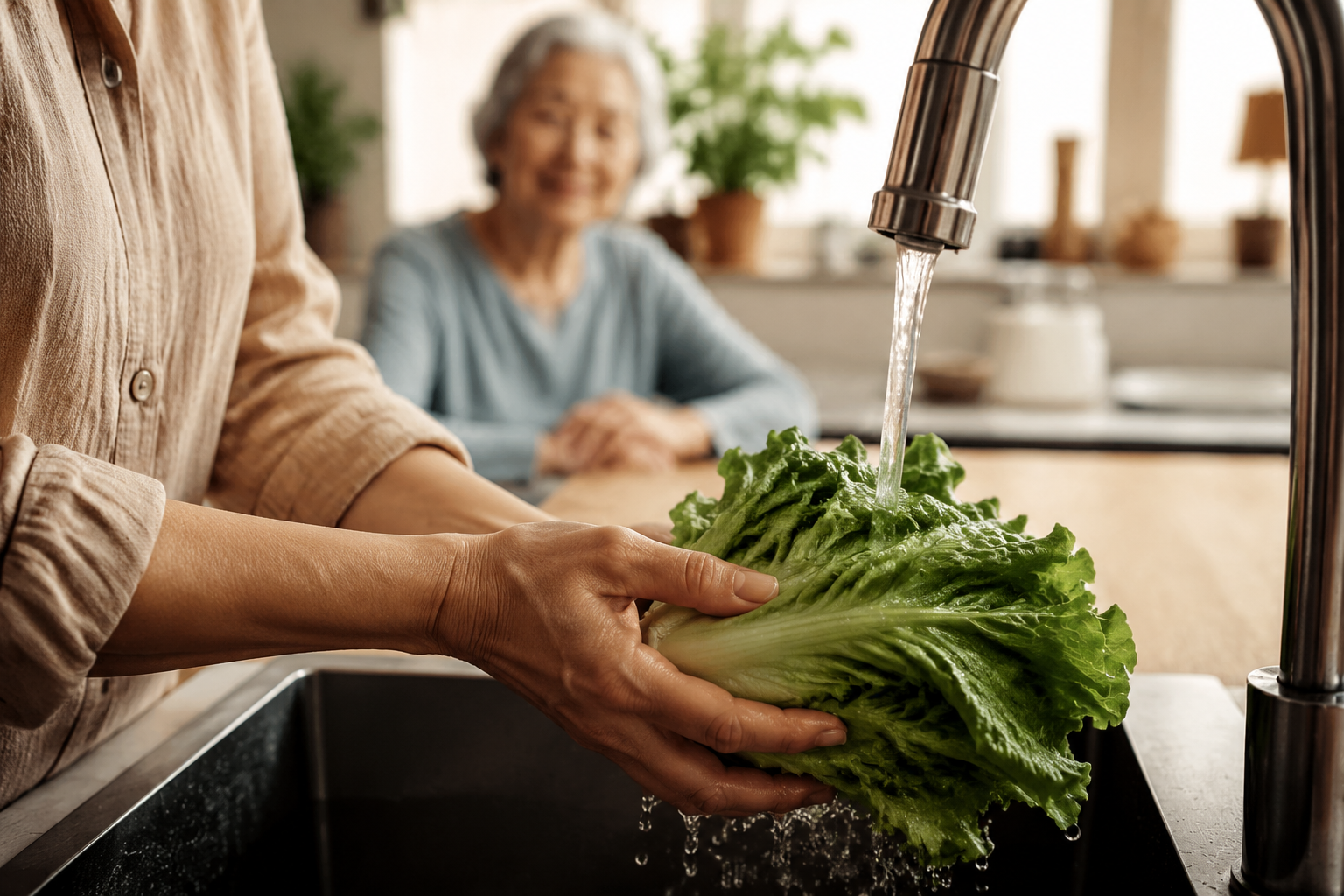
The most usable lettuce advice right now comes from Michigan health officials: buy whole heads of lettuce when possible, remove the outer two to three layers, and wash the inner leaves under running water. [3] That is better than telling a tired caregiver to “wash produce well,” because it names the food, the layer to throw away, and the kind of washing that matters.
Bagged salad is the harder call. It saves labor, which matters if the caregiver is exhausted or older too. But during a cyclosporiasis outbreak, a sealed bag that says “washed” or “ready to eat” should not be treated as a guarantee for a high-risk older adult. If salad is optional, a cooked side dish is the calmer choice. If salad is important to appetite, buy the smallest amount you will use promptly, keep it refrigerated, and do not serve it to a frail older adult after it has sat open for days.
For an older adult with a weakened immune system, the advice can be stricter. Dr. Nuwan Gunawardhana of Columbia University told CNN that immunocompromised people should consider avoiding fresh produce entirely until the outbreak source is identified. [4] That is expert clinical judgment, not a blanket CDC order for every older adult. It is still worth bringing to the doctor who knows the person’s transplant history, cancer treatment, immune-suppressing medication, or frailty.
Wash With Friction, Not Faith In Sanitizer
Cyclospora changes the usual kitchen logic because it is resistant to chlorine. CNN, citing CDC and a Columbia University expert, reported that chemical sanitizers and chlorinated tablets do not eliminate it; risk reduction comes from cooking to 158 F (70 C) or from thorough washing with friction. [4]
That means vinegar bowls, produce sprays, and tablet solutions should not be treated as a rescue plan for questionable produce. They may make someone feel more in control, but the important household moves are plainer: keep produce separate from raw meat, wash hands before handling it, rinse under running water, rub firm surfaces or leaves with your hands, and clean the cutting board, knife, sink area, and counter afterward.
- For lettuce: remove and discard the outer two to three layers, then rinse the inner leaves under running water while rubbing the surfaces gently.
- For herbs: rinse small bunches under running water and move the leaves with your fingers so water reaches more surfaces; consider cooked or dried herbs if the older adult is high risk.
- For berries: rinse only what will be eaten soon, handle gently, and replace with cooked, canned, or frozen-then-cooked fruit when risk tolerance is low.
- For green onions or snow peas: trim, rinse under running water with hand contact, and use cooked preparations when the meal allows it.
- For prewashed greens: remember that “prewashed” lowers labor, not all concern, during an outbreak involving a chlorine-resistant parasite.
Do not soak produce in a sink full of water and call it finished. A sink can carry whatever was on raw meat packaging, dirty hands, or yesterday’s dishes. Running water plus rubbing gives you a better chance of moving contamination off the surface and down the drain.
Also be realistic about labor. If the choice is between a spouse caregiver spending twenty minutes washing delicate salad leaves while already tired, or heating frozen vegetables with dinner, the cooked vegetable is not a failure. It is a safer shortcut.
When Cooking Is The Better Safety Tool
Cooking is the clearer risk reducer. Cyclospora is killed by heating food to 158 F (70 C), according to the CDC information cited in CNN’s outbreak coverage. [4] Caregivers do not need to turn every meal into a temperature chart, but they should know when heat is doing useful work.
Use cooked vegetables when the older adult is frail, immunocompromised, recently dehydrated, recovering from illness, or simply not able to tolerate another stomach upset. Soups, omelets with cooked vegetables, reheated frozen vegetables, canned vegetables, cooked greens, and warm grain bowls with cooked toppings all reduce reliance on raw produce without removing plants from the diet.
Canned fruit or peeled fruit can also be useful when appetite is poor and the person wants something sweet or cool. The point is not to make food joyless. It is to reserve raw produce for times when the benefit is worth the handling work and the person’s medical risk is lower.
Keep Raw Produce Away From The Usual Kitchen Cross-Traffic
CDC and FoodSafety.gov both emphasize that older adults are at higher risk from foodborne illness and should follow careful food safety practices, including clean hands and surfaces, separation of raw foods, safe cooking, and proper chilling. [5][6] Those basics matter more, not less, when the produce itself is getting attention.
At home, unpack produce away from raw meat and poultry. Put raw meat on the lowest refrigerator shelf or in a contained bin so juices cannot drip onto berries, herbs, or lettuce. Wash hands after handling grocery bags, meat packages, trash, or pet food before going back to salad ingredients. Use a clean board for produce, not the board that just held chicken.
If you are coordinating from a distance, make the routine visible. A note on the refrigerator can say: “Use cooked vegetables first. If using lettuce, remove outside leaves and rinse inner leaves under running water. Call me before serving bagged salad.” That kind of note is more useful than a long lecture over the phone.
Symptoms That Should Move You From Kitchen Mode To Medical Mode
Cyclosporiasis commonly causes prolonged watery diarrhea, and that is where older-adult caregiving separates from ordinary food safety advice. Dr. Luis Marcos of Stony Brook Medicine told AARP that dehydration from prolonged diarrhea is the primary danger for older adults and can contribute to acute kidney injury, falls, and worsening chronic conditions. [7]
Call a doctor early if an older adult has persistent watery diarrhea, signs of dehydration, fever, worsening weakness, dizziness, reduced urination, confusion, or symptoms in someone who is frail or immunocompromised. Do not wait several days just because the person is still sipping water. Older adults can look “not too bad” until they stand up, fall, or show kidney strain on labs.
- Mention the 2026 cyclosporiasis outbreak when you call.
- List the raw produce eaten in the past two weeks, especially bagged salad, herbs, berries, snow peas, or green onions.
- Tell the clinician about kidney disease, diabetes, heart failure, immune suppression, recent hospitalization, or medicines that affect fluid balance.
- Ask what hydration plan is safe for that person, especially if they have heart or kidney problems.
Testing is worth naming. CDC’s health advisory and Johns Hopkins guidance note that routine ova and parasite stool exams may miss Cyclospora unless specific testing is ordered, such as Cyclospora PCR or modified acid-fast stain testing. [1][8] A caregiver does not need to diagnose the illness. The useful sentence is: “There is an active Cyclospora outbreak, and she has prolonged watery diarrhea. Does the stool test need to include Cyclospora?”
Treatment is also a clinician conversation, not a home experiment. AARP’s outbreak coverage notes that TMP-SMX is the standard treatment and that it can interact with blood thinners, diabetes medications, and potassium-affecting drugs commonly used by older adults. [7] Bring the medication list when you call or go in. If the person uses warfarin, insulin or other diabetes drugs, blood pressure medicines, diuretics, kidney-related medications, or potassium supplements, say so clearly.
A Safer Routine For This Week
If watery diarrhea starts and keeps going, move sooner than you might for a younger adult. The goal is not panic and not perfect avoidance. It is a tighter routine: choose produce more carefully, wash with friction, cook when risk tolerance is low, and treat prolonged diarrhea in an older adult as a medical issue early.
References
- Health Alert Network (HAN) - 00531: Cyclosporiasis Outbreaks in the United States, CDC, July 2026.
- Food Safety for Older Adults and People with Cancer, Diabetes, HIV/AIDS, Organ Transplants, and Autoimmune Diseases, FDA.
- MDHHS makes recommendations on preventing foodborne illness amid growing cyclosporiasis outbreak, Michigan Department of Health and Human Services, July 4, 2026.
- Cyclosporiasis parasite: How to keep food safe and what to avoid, CNN, July 15, 2026.
- Food Safety Risk Factors, CDC.
- Older Adults, FoodSafety.gov.
- Cyclospora Outbreak: What Older Adults Should Know, AARP.
- Cyclosporiasis Outbreak, Johns Hopkins Medicine.
Questions to bring to a clinician or OT
This is not medical, legal, or a family's final decision — only a framework. Bring these questions to a clinician, occupational therapist, or your local Area Agency on Aging.
Find Local HelpRelated reading
Noticed something outdated or inaccurate on this page? Flag a correction. We review every report against CDC, NIA, and AARP HomeFit guidance before updating a page.