
Caregiver decision guide
What to watch for with GLP-1 weight loss in older adults
Learn what makes GLP-1 weight loss medications different for older adults — from muscle loss and fall risk to medication interactions and nutrition — and get a practical checklist for monitoring your parent's safety.
The first week after an older parent starts a GLP-1 weight loss medication is not the time to relax just because the prescription is finally sorted out. Wegovy, Zepbound, and Saxenda can be reasonable GLP-1 weight loss options for older adults, but the day-to-day safety work looks different than it does for a younger person. The scale matters. So do the breakfast plate, the water glass, the bathroom pattern, the chair-rise, the blood pressure pills, and whether anyone tells the prescriber that nausea has been going on for days.
For caregivers, the practical question is simple: what needs watching this week, this month, and before the next dose increase?

The Short Watch List
If your parent is starting or increasing a GLP-1 dose, do not only track pounds lost. Track whether the treatment is making daily life safer or shakier.
- Appetite and protein: Is your parent eating enough real food, especially protein, or mostly skipping meals because they feel full?
- Fluids and bathroom symptoms: Are nausea, vomiting, diarrhea, or constipation reducing fluid intake or causing dehydration?
- Strength and function: Can your parent rise from a chair, climb steps, carry groceries, and walk safely to the bathroom?
- Dizziness and falls: Is standing up causing lightheadedness, wobbling, or near-falls?
- Medication fit: Has a clinician reviewed blood pressure medicines, diabetes medicines, diuretics, supplements, and appetite-affecting drugs together?
- Weight-loss pace: Is weight dropping faster than the care team expected, or continuing despite poor intake?
These are not side issues. In an older body, losing weight without preserving strength can turn a promising treatment into a fall-risk problem, a dehydration problem, or a medication-confusion problem.
Why Older Adults Need a Different Safety Plan
A 45-year-old and a 78-year-old may receive the same brand name on the box, but they do not bring the same reserve to treatment. Aging already reduces skeletal muscle mass by an estimated 12% to 16% before age 65, and weight loss from GLP-1 therapy can include lean mass as well as fat mass. One 2025 editorial summarized GLP-1-associated weight loss as including roughly 25% to 40% lean mass, depending on the study and measurement method.[1]
That does not mean every older adult on a GLP-1 becomes frail. It means the caregiver cannot treat appetite suppression as a simple win. Less hunger can help with weight loss; it can also make an older parent quietly stop eating the foods that protect muscle.
The trial evidence also gets thinner in the oldest ages. A 2024 review noted that there are no official prescribing guidelines for anti-obesity pharmacotherapy specifically tailored to older adults.[2] Adults 75 and older were sparsely represented in key datasets: fewer than 3% of SUSTAIN participants were at least 75, and only 0.5% of participants in tirzepatide obesity trials were in that age group.[2]
So the right stance is neither panic nor cheerleading. For many older adults, treatment may be appropriate. But once the medication starts, someone needs to notice the small losses before they become a crisis.
Muscle Is the Risk That Hides Behind a Good Scale Number
The most important GLP-1 conversation for many families is not whether the medication works. It is what kind of weight is being lost.
In the STEP 1 DXA substudy, semaglutide was associated with a 9.7% reduction in total lean body mass.[3] In a SURMOUNT-1 DXA substudy, tirzepatide users lost about 10% to 11% lean mass; among participants 65 and older, absolute lean mass loss was about 6 kg, described by the authors as roughly comparable to 10 years of aging-related lean mass loss.[4]
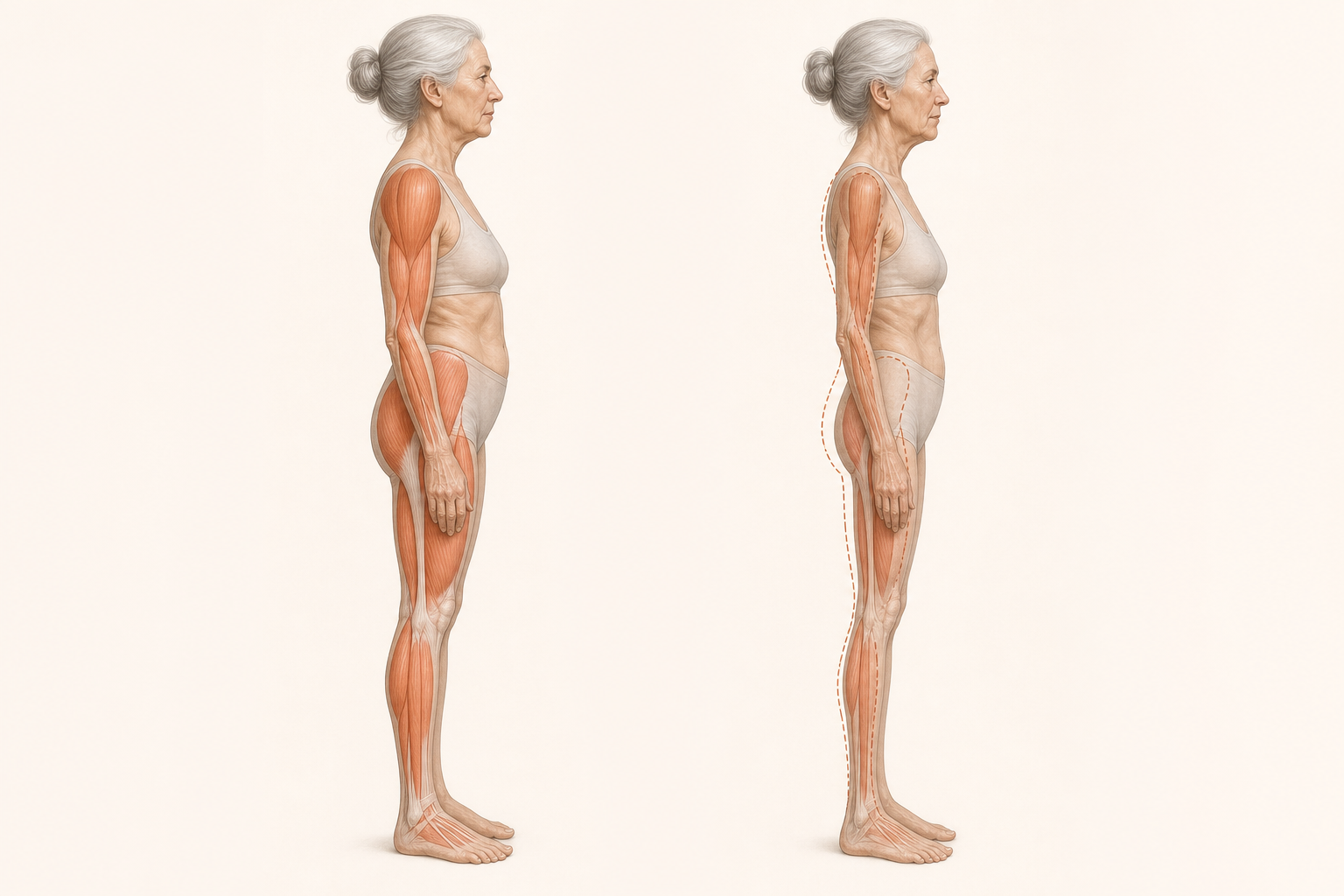
A caregiver does not need a DXA scanner at home to make this useful. The home version is functional tracking: can your parent still get out of a low chair without pushing hard with both arms? Are they avoiding stairs? Are they walking more slowly to the bathroom at night? Are they too tired to prepare food? These changes deserve the same attention as a side-effect rash or a new lab abnormality.
What to Track at Home
- Chair-rise ability: Note whether your parent can stand from a dining chair without help.
- Walking steadiness: Watch for shuffling, grabbing furniture, or needing more rest stops.
- Grip and carrying: Notice whether grocery bags, laundry baskets, or cookware suddenly feel too heavy.
- Activity shrinkage: Track whether your parent stops going out, cooking, gardening, or doing usual errands.
- Dose timing: Write down whether weakness appears after starting treatment or after a dose increase.
Bring those observations to the prescribing clinician. “She lost 8 pounds” is useful. “She lost 8 pounds and now needs her arms to stand up” is a different safety conversation.
Food Has to Become Part of the Prescription
GLP-1 medications reduce appetite. That is part of how they help people lose weight. In older adults, it also means meals may need more planning, not less.
Protein matters because the goal is not simply a smaller body. It is a parent who can still stand, walk, recover from illness, and avoid avoidable falls. Reviews and expert guidance commonly recommend about 1.2 to 1.5 grams of protein per kilogram of body weight per day during GLP-1 therapy, though the right target should be individualized for kidney disease, appetite, swallowing issues, and other medical factors.[5]
For caregivers, the first job is not to calculate perfect nutrition. It is to see whether the day contains enough chances to eat protein before fullness wins.
| What you notice | Why it matters | What to ask |
|---|---|---|
| Breakfast becomes coffee and toast | The day may start with very little protein | Can we add eggs, Greek yogurt, cottage cheese, tofu, or another tolerated protein? |
| Dinner is half-finished most nights | Fullness may be crowding out nutrient-dense food | Should the largest protein serving move earlier in the day? |
| Meat, beans, or dairy suddenly seem unappealing | Food aversion can reduce intake before anyone names it as a side effect | Would smaller portions, softer foods, or a dietitian referral help? |
| Weight keeps dropping while appetite is poor | This can signal malnutrition risk, not just treatment success | Should the dose increase be delayed or the plan changed? |
This is also where family dynamics get real. A parent may say nausea is “nothing.” A spouse may forget to mention diarrhea at the appointment. A doctor may not see the half-finished plate. A simple food-and-symptom note can keep the visit from becoming a vague “she’s eating less” conversation.
Strength Training Is Not Optional Decoration
If the prescriber says “exercise,” it is worth asking what kind. Walking is valuable, especially for mood, circulation, and stamina. But resistance work is the part most directly tied to preserving muscle during weight loss.
In a 2017 randomized trial of 160 older adults with obesity, Dennis Villareal and colleagues found that resistance training plus diet reduced lean mass loss to about 2%, compared with about 5% with aerobic training alone.[6] That trial was not a GLP-1 trial, but it is highly relevant to the problem GLP-1 treatment creates for caregivers: how to help an older person lose weight without giving up strength.

The realistic version may be physical therapy, supervised resistance machines, chair-based exercises, resistance bands, sit-to-stand practice, or a senior exercise program. The best plan is the one your parent will actually do safely.
- Ask the prescriber whether your parent needs physical therapy before or during GLP-1 treatment.
- Ask whether any movement restrictions apply because of heart disease, arthritis, neuropathy, balance problems, or recent surgery.
- Start with function: standing from a chair, stepping safely, carrying light household items, and maintaining balance.
- Treat new weakness as a clinical update, not as normal aging that everyone has to accept.
GI Side Effects Can Become a Fall Problem
Nausea, vomiting, diarrhea, and constipation are often discussed as comfort problems. In older adults, they can become safety problems. Less fluid intake, more bathroom urgency, lower food intake, and lightheadedness can all raise the chance of a fall.
Older adults have been reported to discontinue GLP-1 therapy at higher rates because of gastrointestinal effects in analyses including SUSTAIN data and systematic review findings.[7] Geriatric clinicians have also warned that dehydration from GI side effects can increase fall risk in older patients.[8]
A caregiver can make this visible before it becomes an emergency. Do not wait for a parent to volunteer every symptom. Ask directly and in plain terms: “Any nausea today?” “How many loose stools?” “When did you last have a bowel movement?” “Are you drinking less because your stomach feels full?”
Call the Clinician Promptly If You See
- Repeated vomiting or diarrhea
- Very low fluid intake for more than a day
- Dizziness when standing, fainting, or near-falls
- Confusion, unusual sleepiness, or sudden weakness
- Constipation with pain, bloating, or inability to eat
- Weight loss continuing while your parent is barely eating
The answer may be a slower dose increase, a side-effect plan, medication adjustment, labs, hydration support, or stopping the drug. The caregiver’s role is not to decide alone. It is to get the right facts in front of the clinician early.
Medication Review Has to Include the Whole House
GLP-1 treatment rarely enters an empty medicine cabinet. Many older adults are already taking blood pressure medication, diabetes medication, diuretics, pain relievers, sleep aids, supplements, or drugs prescribed by different specialists. Weight loss, lower intake, dehydration, or vomiting can change how safe that existing routine feels.
Before the first injection, and again before dose increases, make one current list: prescriptions, over-the-counter medicines, vitamins, supplements, eye drops, patches, injections, and anything taken “only sometimes.” Bring the bottles if the list is uncertain.
- Ask whether diabetes medications need adjustment if appetite drops or glucose readings change.
- Ask whether blood pressure medicines or diuretics need review if dizziness, dehydration, or weight loss appears.
- Ask whether constipation-causing medicines are making GLP-1 constipation harder to manage.
- Ask which symptoms should trigger a call before the next scheduled visit.
- Ask the pharmacist to check the full medication list, especially if multiple prescribers are involved.
This is not busywork. It is how the primary care doctor learns what the cardiologist, endocrinologist, pain specialist, and supplement shelf have collectively created.
Frailty and Malnutrition Signals Deserve a Slower Pace
Frailty is not just a label. It changes the margin for error. In July 2026, Reuters reported on an nference study of about 30,000 Zepbound users age 65 and older. Frailty-related conditions were rare overall, affecting fewer than 5% of users, but among affected patients, malnutrition was associated with about a 25-fold higher mortality risk in tirzepatide users. The study had been submitted for peer review but was not yet published, so the signal should be treated as serious but not settled evidence.[9]
Geriatricians have also urged caution around weight loss in older adults. The AAMC reported in December 2025 that weight loss greater than 10% in older men is associated with increased all-cause mortality.[10] That does not prove a GLP-1 caused harm in every case, but it does explain why clinicians may want a slower, more monitored plan in an older parent than in a middle-aged adult.
Reasons to Pause and Reassess
These situations are not automatic lifetime bans, but they should slow the process down and bring the clinician back into the decision:
- Existing frailty, repeated falls, or major difficulty with basic daily activities
- Unintended weight loss before starting the medication
- Known gastroparesis or severe ongoing gastrointestinal symptoms
- Dementia that makes eating, symptom reporting, or safe medication use unreliable; a Cleveland Clinic case report has flagged risks in severe dementia
- Age 75 or older, because trial representation in this group is especially limited
- Repeated dehydration, malnutrition signs, dizziness, or functional decline after starting treatment
In these cases, the question is not “Can an older person ever use this medication?” The better question is “What monitoring, nutrition support, caregiver capacity, and follow-up would make this safe enough to try—or show us it is time to stop?”
Coverage Helps, but Continuity Still Needs Planning
Cost is not a side issue when a caregiver is trying to plan refills, appointments, and whether a parent can stay on therapy long enough for it to make sense. The Medicare GLP-1 Bridge program took effect July 1, 2026, with a $50 monthly copay for Wegovy and Zepbound for eligible Part D beneficiaries; estimates suggest 3 million to 4 million older adults may qualify.[11]
Because the program is temporary and newly launched, families should confirm eligibility, pharmacy availability, prior authorization requirements, and what happens when the bridge period ends. Starting a medication is one decision. Keeping treatment continuous, monitored, and affordable is another.
What to Bring to Each Follow-Up
A short, factual log can change the quality of a visit. It keeps the appointment from depending on memory, embarrassment, or whoever happens to be in the room.
| Bring this | What it helps the clinician decide |
|---|---|
| Weekly weight, not daily panic weights | Whether weight loss is proceeding at an expected pace |
| Typical daily food intake, especially protein | Whether appetite suppression is becoming malnutrition risk |
| Fluid intake and GI symptoms | Whether dehydration, constipation, vomiting, or diarrhea need action |
| Blood pressure or glucose readings if your parent monitors them | Whether other medicines may need adjustment |
| Falls, near-falls, dizziness, or new weakness | Whether safety has changed since starting or increasing the dose |
| Full medication and supplement list | Whether polypharmacy is increasing risk |
| Questions about the next dose increase | Whether to advance, hold, lower, or stop treatment |
If your parent lives with a spouse who attends appointments, send the log with them. If you join by phone, keep the same list in front of you. The goal is not to take over your parent’s care; it is to make sure the quiet details are not missed.
Printable Caregiver Checklist
- Before starting: Confirm why the medication is being prescribed, what success means, what weight-loss pace is expected, and who manages side effects.
- Before starting: Review all prescriptions, over-the-counter medicines, supplements, diabetes medicines, blood pressure medicines, and diuretics with the prescriber or pharmacist.
- Before starting: Ask whether your parent needs a protein target, dietitian referral, resistance exercise plan, or physical therapy.
- Each week: Track weight, appetite, protein intake, fluids, nausea, vomiting, diarrhea, constipation, dizziness, and falls or near-falls.
- Each week: Watch function, not just weight—chair rise, walking steadiness, stair use, grip, household activity, and fatigue.
- Before a dose increase: Ask whether symptoms, food intake, hydration, blood pressure, glucose readings, or strength changes support increasing now.
- Call promptly: Repeated vomiting or diarrhea, poor fluid intake, confusion, fainting, new weakness, falls, severe constipation, or continued weight loss with very poor eating.
- Reassess carefully: Dementia, frailty, gastroparesis, unintended weight loss, age 75 or older, or repeated dehydration or malnutrition signs.
GLP-1 weight loss in older adults is not automatically unsafe. It is also not a simple “take the shot and watch the scale” treatment. For an older parent, the care team has to manage strength, food, fluids, falls, and medication interactions with the same seriousness as the number of pounds lost.
References
- Kakkar et al., Annals of Internal Medicine editorial, Annals of Internal Medicine, June 2025
- Pharmacological Treatment of Obesity in Older Adults, Drugs & Aging, 2024
- Once-Weekly Semaglutide in Adults with Overweight or Obesity, New England Journal of Medicine, 2021
- Pendrey & Sevilla-Martir, Obesity, 2025
- Protein intake recommendations during GLP-1 therapy, PMC consensus review and Healthline expert guidance
- Aerobic or Resistance Exercise, or Both, in Dieting Obese Older Adults, New England Journal of Medicine, 2017
- SUSTAIN pooled analysis, Diabetes, Obesity and Metabolism, 2018
- Yale School of Medicine systematic review and geriatric commentary on GLP-1 side effects in older adults, Yale School of Medicine
- Older Zepbound users with frailty conditions face higher risks, Reuters, July 14, 2026
- Geriatricians urge caution on weight loss drugs in older adults, AAMC, December 2025
- Medicare GLP-1 Bridge program press release, Centers for Medicare & Medicaid Services, July 1, 2026
Questions to bring to a clinician or OT
This is not medical, legal, or a family's final decision — only a framework. Bring these questions to a clinician, occupational therapist, or your local Area Agency on Aging.
Find Local HelpRelated reading
Noticed something outdated or inaccurate on this page? Flag a correction. We review every report against CDC, NIA, and AARP HomeFit guidance before updating a page.