
Caregiver decision guide
What the health disclosure debate for older politicians means for your family
The national debate over health disclosure for aging politicians highlights the same gaps families face when assessing a parent's cognitive health. This article translates the controversy into practical guidance on cognitive screening tools, normal aging versus red flags, and why families need a disclosure norm of their own.
The argument over age and health disclosure for older politicians has a way of sounding far away until it lands at the kitchen table. One minute the news is about candidates, congressional seats, cognitive tests, and what the public has a right to know. The next minute someone in the family is asking whether Dad forgot the appointment because he was tired, because he could not hear the reminder, because a new medication made him foggy, or because something more serious is beginning.
That is why the national debate is worth taking personally, even if your family has no interest in settling the politics of it. A 2023 poll reported that 76% of Americans supported mandatory cognitive tests for politicians over 75, including 84% of Republicans and 70% of Democrats.[1] The number says less about any one officeholder than about a broader unease: people want reassurance, but most do not know what a cognitive test can actually prove.

Public officials also live in a disclosure gray zone. A June 2026 report from Straight Arrow News stated that no federal law requires a politician to disclose a health condition, and it described recent cases in which constituents received limited or delayed information about officeholders' medical circumstances.[2] Because those examples come from a single news account, they should be treated as illustrations of the gap, not as proof of a general pattern. Still, the gap itself is familiar to families: no routine assessment, no agreed standard for when to speak up, and too much room for vague reassurance.
The family version of the disclosure problem
Families rarely start with a clean medical question. They start with small disruptions. A parent repeats a new instruction after lunch but cannot remember it by dinner. A spouse quietly takes over the bills after a late fee. An adult child notices that a medication change, once manageable, now requires three phone calls and a written chart. Someone misses two appointments and blames the calendar, the office staff, or the weather.
None of those details, by themselves, diagnoses dementia. They are also not nothing. They belong in the middle ground where families often behave worst: either explaining away every lapse to protect dignity, or treating every lapse as evidence that an older person can no longer be trusted.
The better question is not, "Is this normal aging or dementia?" It is, "What changed, how often is it happening, what function is affected, and has anyone checked the reversible causes?" That shift matters because cognitive change can come from depression, poor sleep, sleep apnea, medication side effects, thyroid problems, vitamin deficiency, hearing loss, infection, pain, alcohol use, grief, or stress. Dementia is on the list. It should not be the only item on the list.
What a cognitive screen can and cannot tell you
The test most often pulled into the political conversation is the Montreal Cognitive Assessment, usually called the MoCA. In a Harvard Gazette interview, neuropsychologist Brody Magid described it as a 30-point screening tool that samples several abilities: memory, attention, executive function, language, orientation, and visuospatial skills.[3] That range is useful. It is also easy to overread.
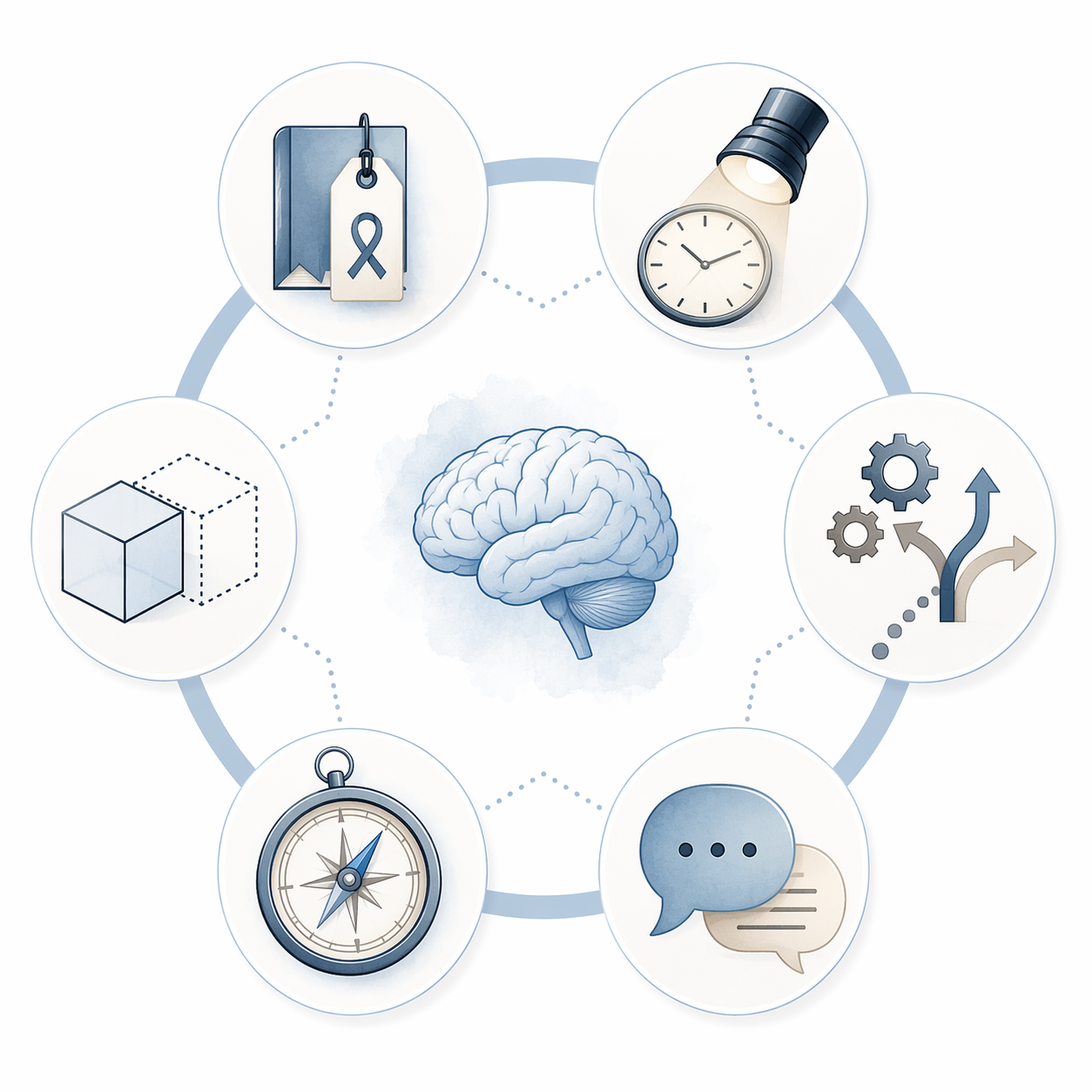
A screening test is a triage tool. It can show that a person is having enough difficulty to warrant a closer look. It can help a clinician decide whether the next step should be lab work, medication review, brain imaging, treatment for mood or sleep, a neurology referral, or a fuller neuropsychological evaluation. It does not, on its own, explain why the difficulty is happening.
| Area screened | What families may notice at home | What a screen can do |
|---|---|---|
| Memory | Repeating new information, losing track of recent conversations, forgetting instructions after a short delay | Flag whether short-term learning and recall deserve closer evaluation |
| Attention | Trouble following a conversation, recipe, TV plot, or medication schedule when there are distractions | Show whether focus and working attention are breaking down |
| Executive function | Difficulty planning errands, adapting to a changed routine, paying bills, or solving a new problem | Identify problems with organization, flexibility, and judgment |
| Language | Word-finding trouble, vague substitutions, or difficulty understanding instructions | Separate occasional searching for a word from broader communication problems |
| Orientation | Confusion about date, place, appointment time, or sequence of events | Check whether the person is grounded in basic time and place information |
| Visuospatial skills | Getting lost in familiar places, misjudging distance, or struggling with visual construction tasks | Suggest whether visual processing and spatial judgment need more testing |
The MoCA can also miss problems in some high-functioning people. Magid noted that a person with strong cognitive reserve may be able to "cruise" through a brief screen despite real decline in daily life.[3] Families should sit with that point. A reassuring score is helpful, but it is not a permission slip to ignore new functional failures at home.
A full neuropsychological evaluation is different. It is longer, more detailed, and designed to compare patterns across cognitive domains. It can help distinguish, for example, whether the main problem is rapid forgetting, slowed processing, attention, language, mood interference, or executive dysfunction. That distinction is exactly what a family needs when the question is not whether someone can answer a few questions on a good morning, but whether they can still manage the tasks their life requires.
Normal aging is real. So are red flags.
Age is a poor shorthand for competence. It is true that some brain changes become more common with age. A BBC Future review reported that the prefrontal cortex loses volume at about 5% per decade, that white matter disease is found in about one-third of people 65 and older, and that processing speed tends to decline from around age 60.[4] Those facts help explain why an older person may need more time, fewer interruptions, better lighting, or written instructions.
The same review also described a less convenient truth for anyone who wants to use age as a blunt weapon: crystallized intelligence, including vocabulary and accumulated knowledge, can improve into the 70s, and some "super agers" in their 80s perform cognitively like people two to three decades younger.[4] Older adults are not a single cognitive category. They are people with different brains, medical histories, educations, jobs, sleep, hearing, mood, medications, and supports.
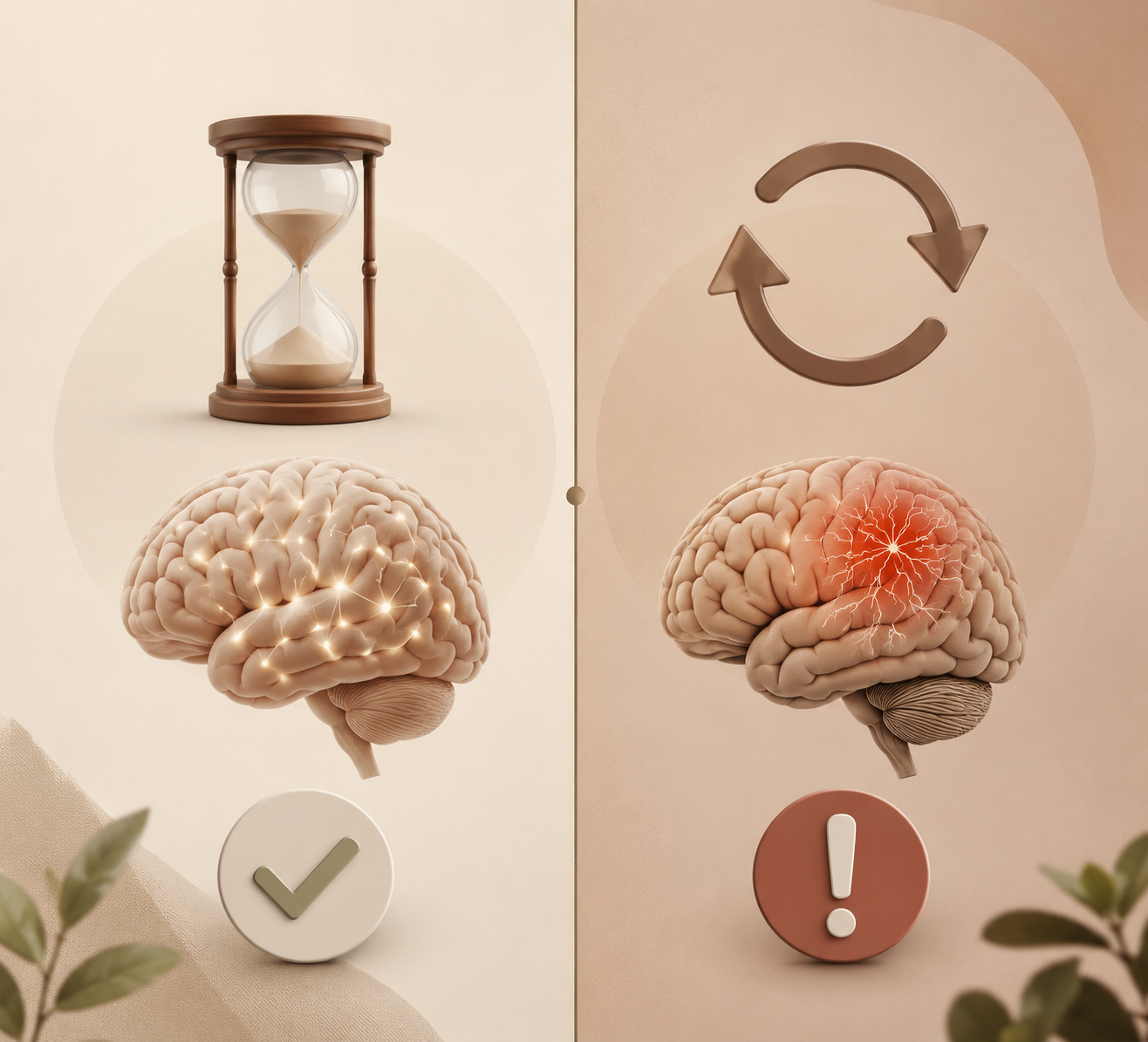
This is where families need more precise language. Occasional word-finding trouble is common. Taking longer to learn a new phone, a new portal, or a new medication routine can be age-related. Needing a quiet room to concentrate is not the same as losing the ability to reason.
The more concerning pattern is change that is persistent, worsening, and functional. Magid contrasted age-appropriate slowing with Alzheimer's-type concerns such as rapid forgetting and repetition.[3] A parent who forgets a name and retrieves it later is in a different situation from a parent who asks the same new question five times, denies receiving the answer, and cannot use a written reminder. A spouse who hates online banking is different from a spouse who suddenly cannot follow a bill-paying routine they handled for years.
Changes worth writing down before the appointment
- New repetition: asking the same question, retelling the same story, or forgetting recent information after a short delay.
- Executive-function trouble: missed bills, unsafe driving decisions, medication errors, poor judgment with scams, or inability to recover when a routine changes.
- Disorientation: confusion about date, place, appointments, or the sequence of recent events.
- Language change: worsening difficulty finding words, following instructions, or expressing a clear thought.
- Visual-spatial problems: getting lost in familiar areas, misjudging distance, or struggling with tasks that require spatial layout.
- Personality or behavior change: new apathy, suspicion, impulsivity, withdrawal, or irritability that is out of character.
Writing these down is not surveillance. It is how a rushed appointment becomes medically useful. A clinician can do more with "she has taken her morning pills twice on three occasions this month" than with "her memory is bad." Specifics protect the older person from both dismissal and exaggeration.
Why disclosure is harder than simply demanding the truth
In politics, the instinct to demand full health disclosure is understandable. Voters want to know whether someone seeking power can do the job. An expert-consensus paper in Politics and the Life Sciences argued for assessment across domains including executive function, memory, attention, language, visuospatial ability, and social cognition, and recommended a universal disclosure norm administered by a neutral panel with public education on how to interpret results.[5] That is an expert proposal, not settled law or medical policy, but it names a real problem: results without context can mislead as easily as they inform.
The family version has the same tension, only with less television and more hurt feelings. Adult children may want answers. A spouse may already know more than anyone else but feel disloyal saying it out loud. The older person may fear losing the car, the checkbook, privacy, or authority in their own home. Those fears are not irrational. Health information can be used to help someone, but it can also be used to diminish them.
Drew Altman of KFF has warned that full disclosure of candidates' health records can bring risks including privacy violations, politicization, Goldwater Rule concerns, and a slippery slope in which medical details are weaponized.[6] Families do not face the Goldwater Rule at the dinner table, but they do face the weaponization problem. A diagnosis, a test score, or even a concern can become a family argument about control.
That is why the right family standard is not "everyone gets to know everything." It is closer to this: the people affected by a cognitive change should know enough, early enough, to reduce harm and arrange care, while the older adult keeps as much privacy and decision-making authority as the situation safely allows.
A practical family disclosure norm
Families do better when they agree on a norm before a crisis forces one. The norm does not need legal language. It needs a shared expectation that cognitive changes affecting safety, money, medication, transportation, medical decisions, or caregiving responsibilities will be discussed and medically checked.
The first step is to separate observation from accusation. "You forgot the cardiology appointment twice after we confirmed it" is different from "you can't remember anything." "The pharmacy changed your blood pressure pill and the new schedule is confusing" is different from "you can't handle your medications." The first version gives everyone a problem to solve. The second gives everyone a role to defend.
The second step is to check the reversible and treatable possibilities. Bring the medication list, including over-the-counter sleep aids and supplements. Ask about hearing and vision. Ask whether depression, anxiety, grief, pain, alcohol, sleep apnea, thyroid problems, vitamin deficiency, or infection could be contributing. If the primary care visit feels too thin for the level of change you are seeing, ask what would justify cognitive screening, lab work, referral to neurology, or neuropsychological testing.
The third step is to decide who needs to know what. A daughter who fills the pillbox may need more detail than a cousin who visits twice a year. A spouse who is being asked to cover missed bills needs enough information to stop pretending this is just absentmindedness. A parent who is still capable of participating should be in the conversation, not managed around like a problem object.
The fourth step is to revisit the plan. Cognitive concerns are rarely settled by one appointment. A normal screen may be reassuring but not final. An abnormal screen may be frightening but not diagnostic. A medication change may improve the situation. A sleep study may matter more than anyone expected. A neuropsychological evaluation may show a pattern that finally explains why one task is falling apart while another remains strong.
A simple script that keeps dignity in the room
A family conversation can begin without declaring a verdict:
- "I've noticed a few changes that seem to be making daily tasks harder."
- "I do not want to assume this is dementia, because there are other causes that should be checked."
- "Can we write down what has happened and bring it to your doctor?"
- "If something affects medication, driving, money, or appointments, we need a plan so you are not left carrying it alone."
That last line matters. Cognitive ambiguity usually creates a hidden worker: the spouse smoothing over lapses, the adult child calling offices, the neighbor driving after a missed turn, the staff member asked to accept a vague explanation. Disclosure is not only about the person with symptoms. It is also about the people quietly absorbing the consequences.
What families can take from the political debate
The debate over older politicians will continue to pull toward extremes. Some will treat every stumble as evidence of incapacity. Others will treat every question as ageism. Both habits are dangerous in a family. Age alone does not tell you whether someone can lead a committee, manage a household, drive safely, or consent to a medical procedure. A single test score does not tell the whole story either.
What helps is a calmer standard: notice functional change, name it specifically, look for reversible causes, use screening tools for what they are, and ask for deeper evaluation when daily life shows a pattern that a brief screen cannot explain. Privacy still matters. So does dignity. But privacy should not become the family word for waiting until the missed bills, medication errors, or unsafe decisions are too large to ignore.
Families do not need to solve the national disclosure debate to learn from it. They need enough shared language to stop treating cognitive change as either a scandal or a secret, and enough seriousness to act before avoidable harm decides the timeline.
References
- Mental competency tests for politicians over 75 see overwhelming support in new poll, The Hill.
- Politicians like Tom Kean don't have to disclose medical conditions, no matter how severe, Straight Arrow News.
- Most voters back cognitive tests for aging politicians. What do they measure?, Harvard Gazette, June 2024.
- Should we be worried about older politicians?, BBC Future, September 2023.
- Cognitive decline and political leadership, Politics and the Life Sciences.
- Risks in full disclosure of presidential candidates' health records, KFF.
Questions to bring to a clinician or OT
This is not medical, legal, or a family's final decision — only a framework. Bring these questions to a clinician, occupational therapist, or your local Area Agency on Aging.
Find Local HelpRelated reading
Noticed something outdated or inaccurate on this page? Flag a correction. We review every report against CDC, NIA, and AARP HomeFit guidance before updating a page.