
Caregiver decision guide
Light Summer Seafood for Seniors with Chewing Challenges
This guide helps family caregivers choose and prepare light summer seafood meals that are naturally soft, easy to chew, and safe for seniors with dentures or chewing difficulties, without sacrificing flavor.
A summer dinner has to be light, soft, and still feel like a real meal when dentures, sore gums, or a weak bite make ordinary proteins hard to finish. That is common: 68% of adults age 65 and older have periodontitis, which helps explain why chewing trouble shows up so often at the table [1].
Start With Texture
Seafood works so well here because many kinds are naturally flaky or soft enough to break apart with a fork. For a caregiver, that matters more than the label on the package: salmon, shrimp, cod, and tilapia are among the most denture-friendly choices because they need very little chewing [2].
| Seafood | How it behaves | Why it belongs on the short list |
|---|---|---|
| Salmon | Moist, flaky, easy to separate | A strong default when you want a soft main dish |
| Cod | Delicate and mild | Useful when you want fish that falls apart gently |
| Tilapia | Tender and simple to portion | Easy to pair with soft vegetables |
| Shrimp | Soft when cooked gently | Best peeled and served in small pieces |
| Canned light tuna | Already soft and easy to flake | Good backup when you need a low-effort meal |
The practical test is simple: if the fish flakes cleanly, stays moist, and can be checked for bones or shell fragments, it belongs in the rotation. Seafood also brings omega-3s, which are linked with gum-health support and reduced inflammation, a useful bonus when periodontal disease is already part of the picture [3].
- Skip fried fish and hard crunchy coatings.
- Skip skin-on fillets with scales unless they are removed before serving.
- Skip bone-heavy or shell-heavy preparations, including raw shellfish.
- Skip sticky sauces that can pull at dentures.
- Serve small bites and inspect each portion before it reaches the plate [2].
Cook For Moisture
Dryness is what turns an easy fish into something that clings to dentures. Poaching, steaming, and foil-packet baking keep seafood moist and tender, and foil packets let vegetables soften in the same steam so the whole plate stays easy to chew [1].
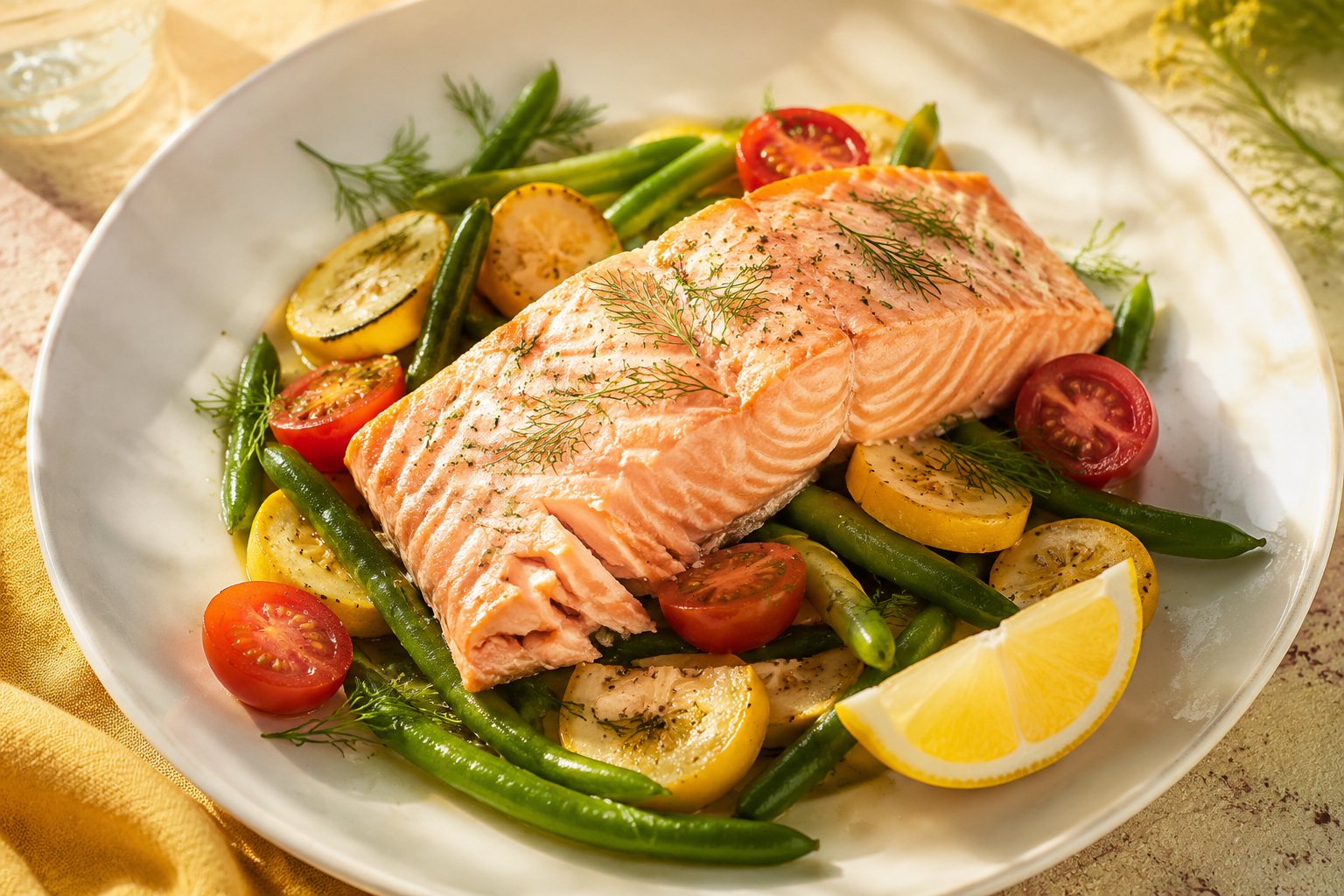
- Poach salmon or cod in lightly seasoned liquid until it flakes, then serve it with soft vegetables such as green beans, yellow squash, or tomatoes.
- Steam tilapia or pollock for a very soft finish when you want the mildest possible texture.
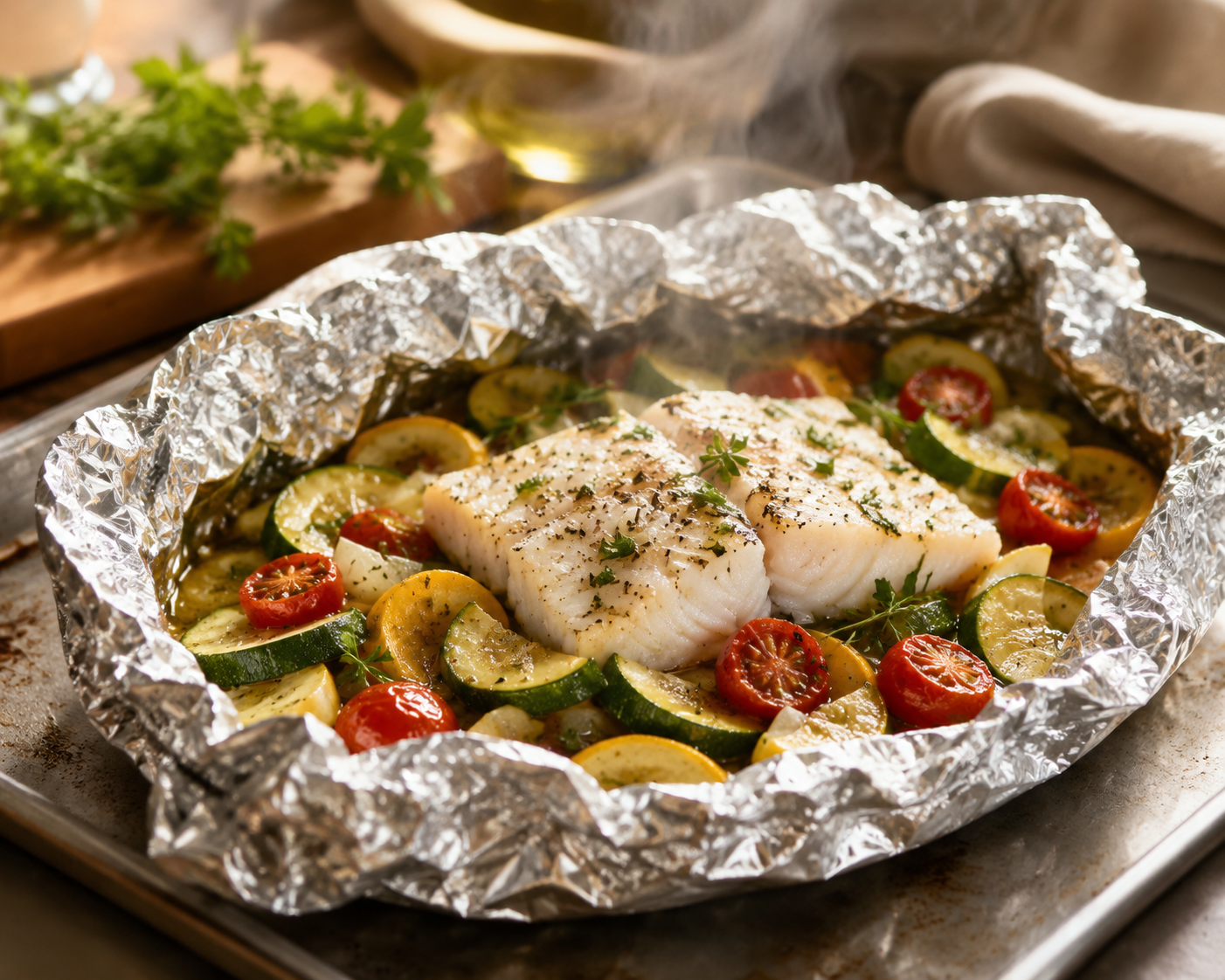
- Bake fish in a foil packet with zucchini, squash, and cherry tomatoes so the heat stays gentle and the moisture stays in the meal.
- Use lemon, dill, herbs, or a thin sauce for flavor instead of crusts, breading, or crunchy toppings.
Meals That Stay Soft
Summer helps, because lighter meals are often easier to digest in hot weather, and older adults may not notice thirst as quickly, so a moist fish dinner can do more than one job at once [5].
- Poached salmon with green beans and yellow squash: keep the fillet skinless, poach it until it separates into soft flakes, and finish with dill and lemon.
- Foil-packet cod with zucchini, squash, and cherry tomatoes: seal everything tightly so the fish steams instead of drying out, then open the packet carefully and check for bones before serving.
- Canned light tuna with soft vegetables: flake the tuna finely so it does not sit in large chunks, then serve it as a chilled or gently warmed meal when the kitchen is already hot.
For shopping, the FDA's lower-mercury 'Best Choices' list includes salmon, sardines, canned light tuna, shrimp, pollock, catfish, cod, tilapia, and trout, and its general adult guidance is to aim for at least 8 ounces of seafood a week [4]. That gives caregivers a practical starting point: choose the fish that is soft enough to eat and easy to keep moist.
References
- Meals for Elderly With No Teeth - The Geriatric Dietitian
- Seafood Lover's Guide to Denture-Friendly Dining - Encanto Family Dental Care
- Seafood Benefits for Older Adults - About Seafood
- Advice About Eating Fish - FDA
- Light Summer Dinner Recipes - Springpoint Senior Living
Questions to bring to a clinician or OT
This is not medical, legal, or a family's final decision — only a framework. Bring these questions to a clinician, occupational therapist, or your local Area Agency on Aging.
Find Local HelpRelated reading
Noticed something outdated or inaccurate on this page? Flag a correction. We review every report against CDC, NIA, and AARP HomeFit guidance before updating a page.