
Caregiver decision guide
What the maximum SSI benefit in 2026 means for seniors
The maximum SSI benefit in 2026 is $994 per month for an individual, but most elderly recipients receive far less. This guide explains why the real-world average is $611 and how income, living arrangements, and resource limits affect your payment — so caregivers can plan with realistic numbers.
The maximum SSI benefit amount in 2026 for an elderly individual is $994 per month. For an eligible couple, the federal maximum is $1,491 per month. Those are the federal Supplemental Security Income benefit rates after the 2026 cost-of-living adjustment, which raised the individual maximum from $967 in 2025.[1]
That is the ceiling, not the planning number most families should write into a monthly budget. In June 2026, the average SSI payment for recipients age 65 and older was $611.12, and SSA counted about 2.5 million SSI recipients in that age group.[2] The difference between $994 and about $611 is not a paperwork detail. It is the grocery money, rent contribution, medication copay, or ride money someone may be expecting and may not actually receive.
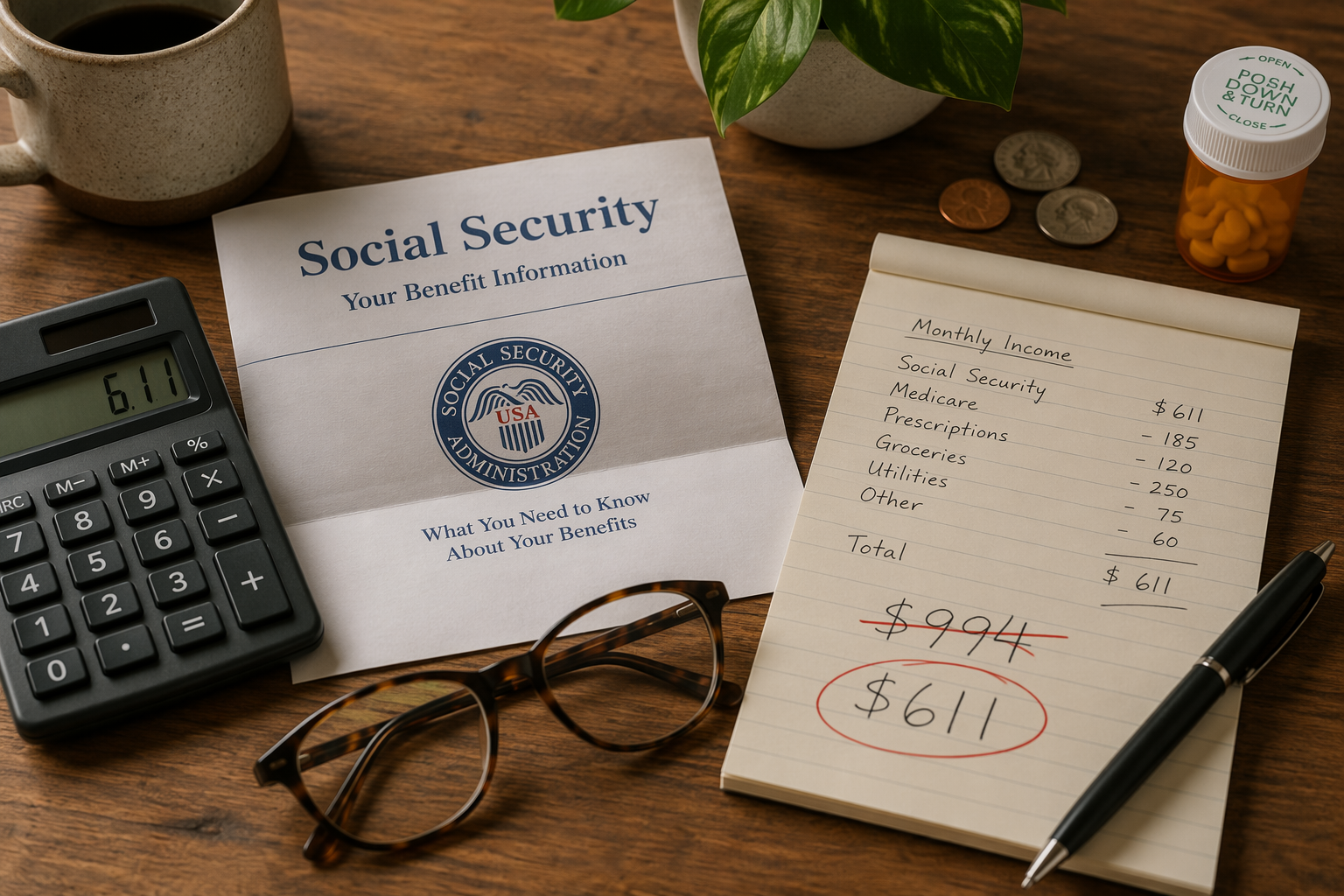
The maximum can be real for a senior with no other countable income, limited resources, and a living arrangement that does not reduce the benefit. But it is not safe to assume just because someone is eligible for SSI. Need-based benefits do not ask only whether a person is poor enough to qualify; they also ask what income, help, housing, and assets are already available.
Why the $994 maximum so often becomes a smaller check
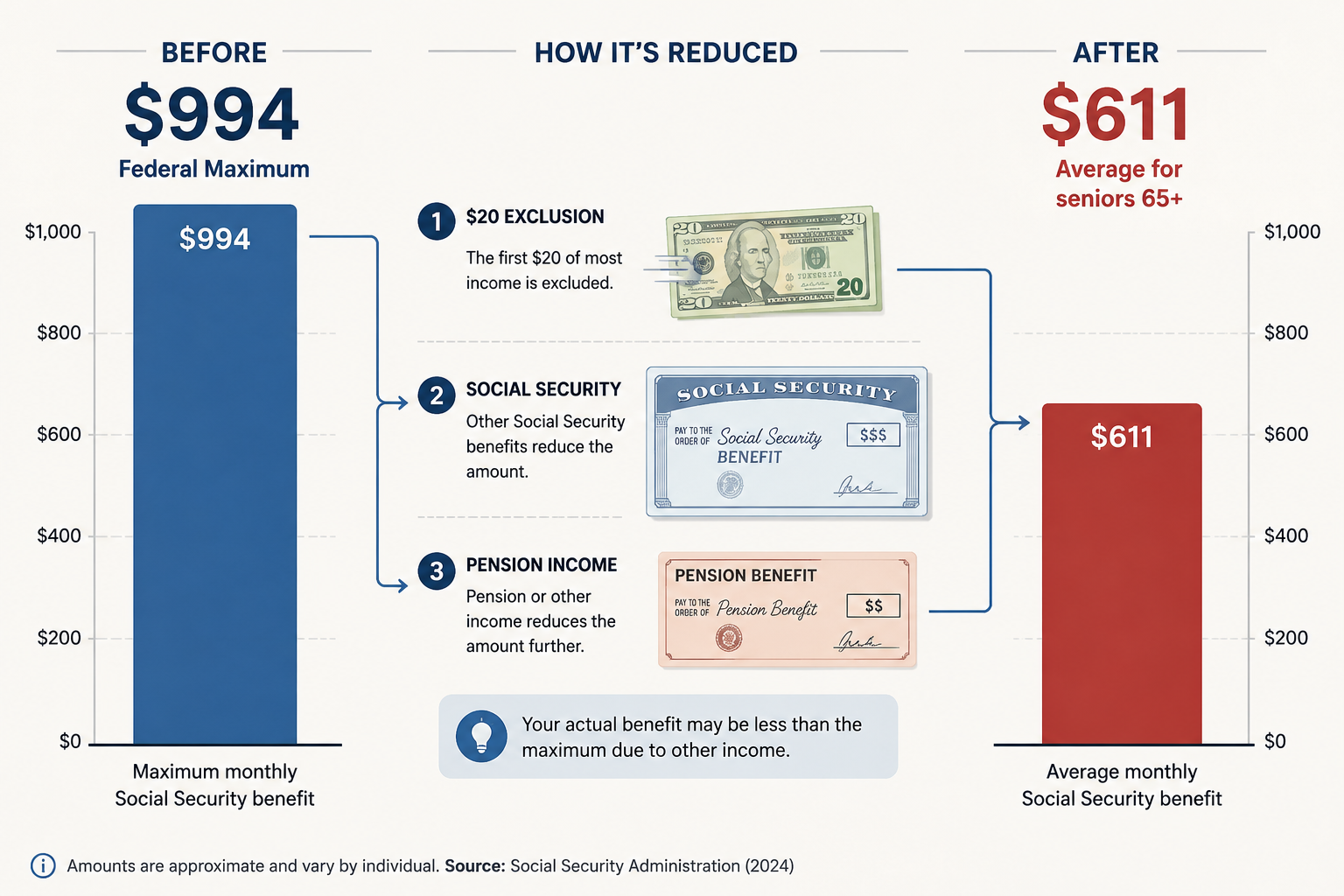
SSI starts with the federal benefit rate and then subtracts countable income. That is the part many families miss. A parent can be financially strained, qualify for SSI, and still receive far less than $994 because Social Security retirement, a small pension, or certain help from others reduces the payment.
This is why the average for older recipients matters. The June 2026 SSA average of $611.12 is not a separate benefit level; it is what payments look like after the rules meet real senior households.[2] Many older applicants have at least some Social Security retirement income. Others have small pensions, family support, or housing help. Those amounts do not always disqualify them, but they can shrink the SSI payment.
There is also a group for whom the federal maximum is much more realistic. NCOA, citing CBPP, reports that 37.4% of elderly SSI recipients have no other income source.[3] For those seniors, SSI may be the main monthly cash support rather than a supplement to Social Security or a pension. That is an important distinction: the maximum is not imaginary, but it belongs to a narrower set of circumstances than many search results imply.
| 2026 SSI figure | What it means for planning |
|---|---|
| $994 per month | Federal maximum for an eligible individual before reductions |
| $1,491 per month | Federal maximum for an eligible couple before reductions |
| $611.12 per month | Average June 2026 payment for SSI recipients age 65 and older |
| 37.4% | Share of elderly SSI recipients reported as having no other income source |
Income is usually the first number to subtract
For an older adult, the most common reason the SSI payment is below the federal maximum is other income. SSA’s SSI rules exclude the first $20 of most income in a month. After that, unearned income generally reduces SSI dollar for dollar.[4]
Unearned income is the category that matters for many seniors. It includes Social Security benefits and pensions. If a parent receives retirement Social Security, SSI does not simply stack $994 on top. SSA counts the other income after the applicable exclusion and reduces the SSI payment. This is the point to check before building a care budget around the full federal amount.
Earned income is treated differently. SSA excludes the first $65 of earned income and then generally counts half of the remaining earnings.[4] That rule can matter for an older person still working part time, but for many SSI applicants age 65 and older, unearned income from Social Security or a pension is the more likely payment reducer.
A simple way to think about it is this: eligibility opens the door, but countable income decides how much of the federal benefit is left. The uncomfortable part is that small, stabilizing income sources can still lower the SSI amount. A modest pension is not a moral failure. A small Social Security check is not a reason to be embarrassed. It is just money SSA is required to count under a need-based formula.
Housing help can reduce SSI even when no cash changes hands
Families often focus on cash income and miss the housing rules. That is where a well-meant arrangement can change the payment. If an elderly parent lives in someone else’s household and does not pay their fair share under SSA’s living-arrangement rules, SSA may apply the one-third reduction rule. In 2026, one-third of the $994 federal benefit is $331.33.[5]
There is also the presumed maximum value, or PMV, rule. When someone receives in-kind support and maintenance, such as help with shelter costs, SSA may reduce the SSI payment by up to one-third of the federal benefit rate plus $20. For 2026, that limit is up to $351.33.[5]
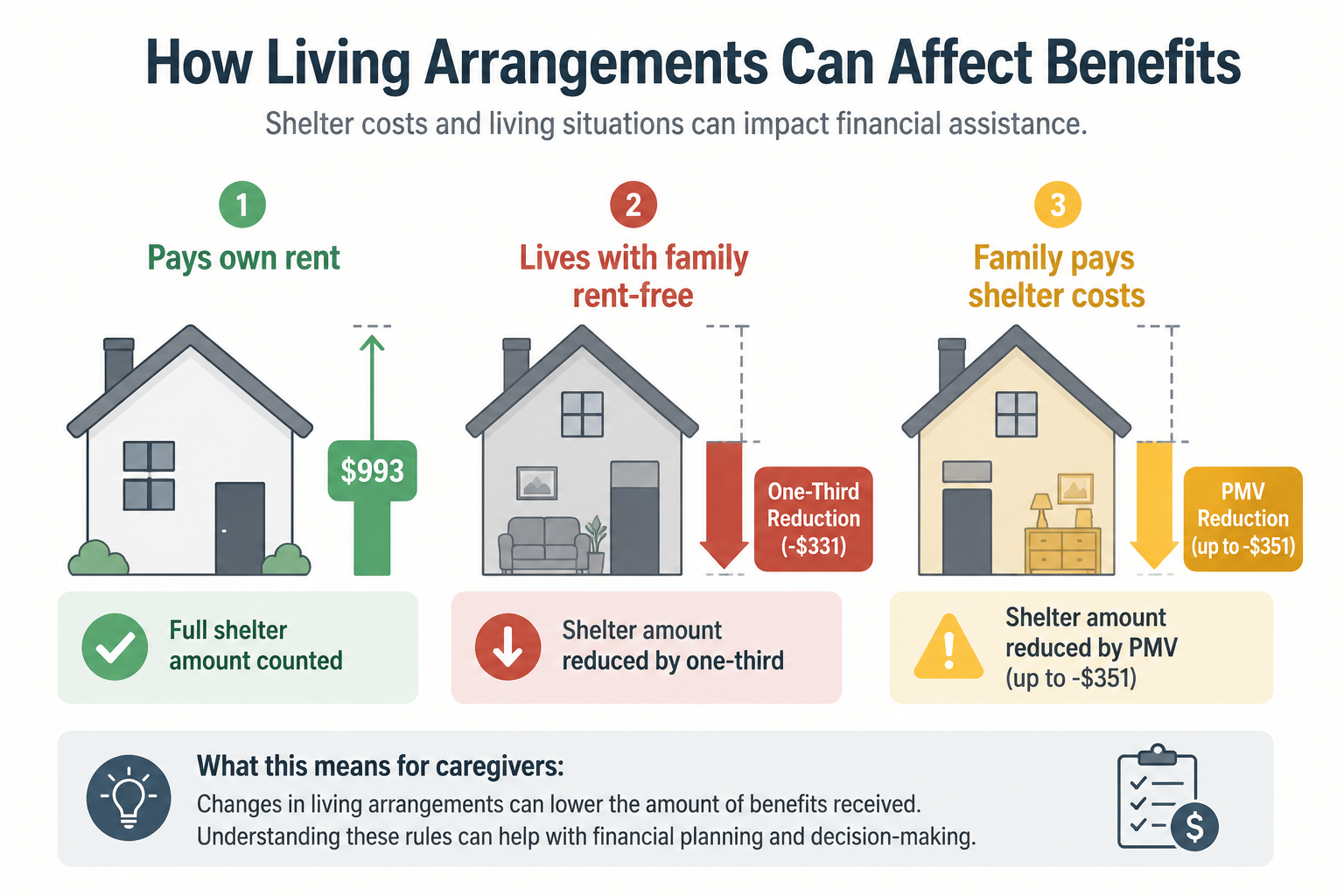
This is not a reason to refuse to house a parent who needs a safe place to live. It is a reason to understand the tradeoff before everyone assumes the SSI deposit will be $994. Rent-free housing can still be the right family decision. It just may mean the SSI payment is lower than the federal maximum.
One current rule is worth separating from older advice families may find online: SSA no longer counts food as in-kind support and maintenance for SSI purposes as of September 30, 2024.[6] Shelter is still the issue to watch. Rent, mortgage, property taxes, heating fuel, gas, electricity, water, sewer, and garbage collection can affect the living-arrangement calculation when someone else pays them.[5]
Resources decide whether SSI is available at all
Resource limits work differently from income reductions. They are not a monthly subtraction from the $994 maximum. They are an eligibility gate. For 2026, the SSI resource limit is $2,000 for an individual and $3,000 for a couple.[7]
That limit is low enough to surprise families who do not think of a parent as having meaningful savings. A small cushion can matter. Before assuming a parent qualifies, check bank accounts and other countable resources against SSA’s rules. Some assets may be excluded under SSI rules, but the basic limit is still the number families need to have in view.
Federal SSI is not the same as a state supplement
The $994 and $1,491 figures are federal amounts. Some states add a state supplement, and the amount can vary by location and living arrangement. That supplement should not be folded into the federal maximum unless SSA or the state agency has confirmed it for the person’s exact situation.
This matters when families compare notes across state lines. A caregiver in one state may hear about a higher total payment and assume the same number applies to a parent somewhere else. It may not. Keep the federal SSI estimate separate from any state supplement until the state-specific amount is verified.
A safer way to budget before SSA gives the exact amount
For a senior with no other income, few countable resources, and no living-arrangement reduction, the 2026 federal maximum of $994 may be a reasonable estimate. For a senior who already receives Social Security, has a pension, lives rent-free with family, or has shelter costs paid by someone else, it is safer to begin closer to the average payment for older recipients and then adjust after SSA calculates the award.
For kitchen-table planning, use three numbers in this order:
- $994 as the 2026 federal upper limit for one eligible person before reductions.
- $611.12 as the more cautious starting point for an older recipient’s likely monthly payment.
- $2,000 as the individual resource limit to check before counting on SSI eligibility.
Then write down the parent’s actual Social Security income, pension income, household arrangement, and who pays shelter costs. Those are the facts most likely to move the SSI number. If SSI will be combined with Medicaid, housing help, VA benefits, PACE, or home- and community-based services, verify each program’s rules before committing family money or signing a care contract.
The right takeaway is not that SSI is too small to bother with. An extra $611 in an older person’s monthly budget can change what bills get paid on time. The mistake is treating $994 as if it will arrive automatically. Apply if SSI may help, but plan as if SSA’s reduction rules will matter—because for most elderly recipients, they do.
References
- SSI Federal Payment Amounts, Social Security Administration, https://www.ssa.gov/oact/cola/SSI.html
- Monthly Statistical Snapshot, Social Security Administration, https://www.ssa.gov/policy/docs/quickfacts/stat_snapshot/
- What Is Supplemental Security Income (SSI)?, National Council on Aging, https://www.ncoa.org/article/what-is-supplemental-security-income-ssi/
- SSI Amount, Social Security Administration, https://www.ssa.gov/ssi/amount
- Understanding SSI - Living Arrangements, Social Security Administration, https://www.ssa.gov/ssi/text-living-ussi.htm
- Spotlight on the One-Third Reduction Provision, Social Security Administration, https://www.ssa.gov/ssi/spotlights/spot-one-third-reduction.htm
- 2026 Social Security Changes, Social Security Administration, https://www.ssa.gov/news/en/cola/factsheets/2026.html
Questions to bring to a clinician or OT
This is not medical, legal, or a family's final decision — only a framework. Bring these questions to a clinician, occupational therapist, or your local Area Agency on Aging.
Find Local HelpRelated reading
Noticed something outdated or inaccurate on this page? Flag a correction. We review every report against CDC, NIA, and AARP HomeFit guidance before updating a page.