
Caregiver decision guide
What Minnesota's Grandparents Happy Hour Law Means for Your Parent
Minnesota's 'Grandparents Happy Hour' law takes effect August 1, 2026, allowing assisted living and nursing homes to serve alcohol at resident events without a liquor license. This article explains what the law does, its safety considerations, and how families can talk to facilities about responsible implementation.
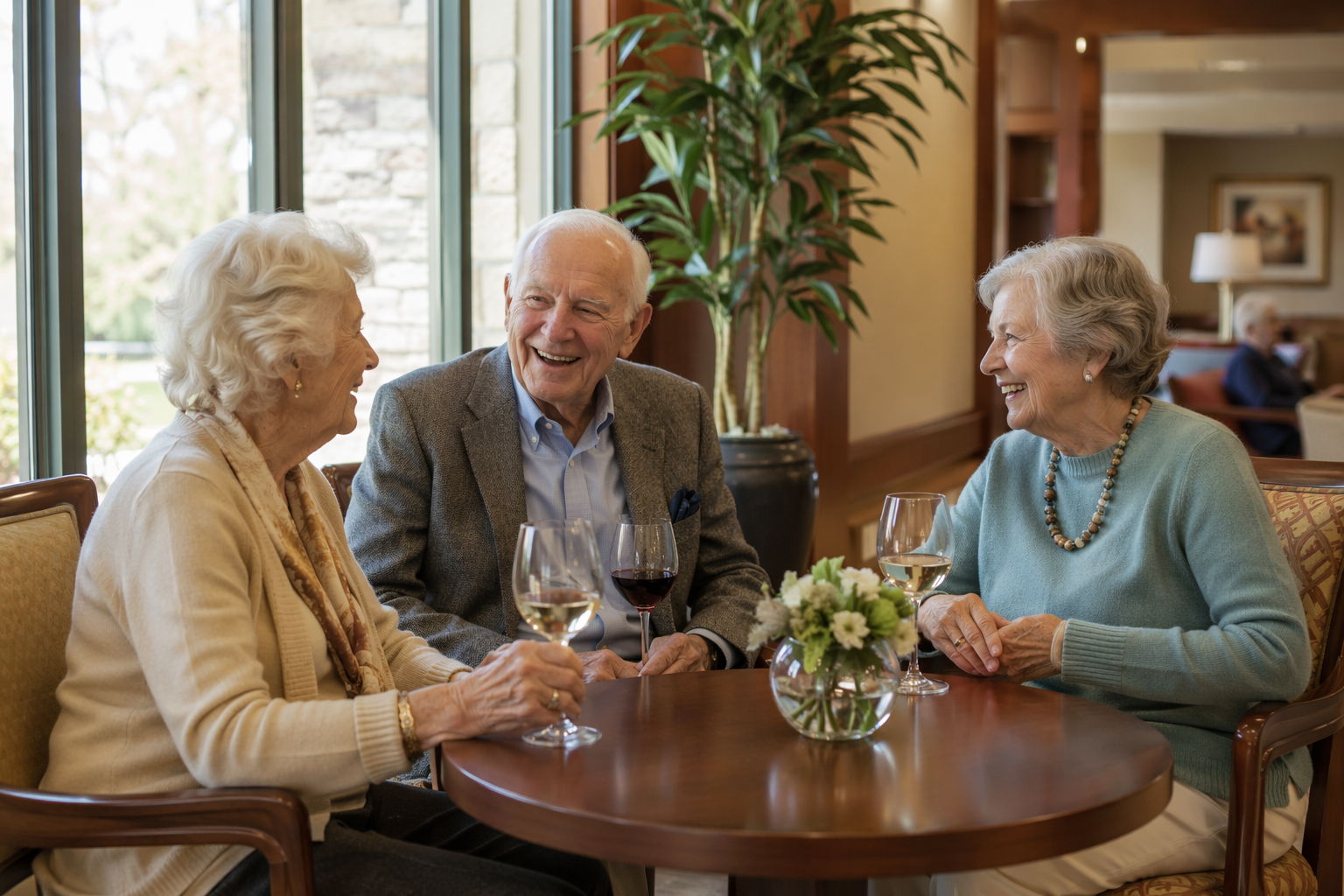
The Minnesota story did not start with a push to turn senior housing into a bar. It started at Amira Choice Champlin, where residents including Anita LeBrun wanted something ordinary: wine with dinner or a drink at a social event. The problem was not resident interest. It was that the city did not have a suitable liquor permit category for a senior living facility, which meant a modest resident gathering ran into a regulatory wall that was built for a different kind of business. [1]
That is the useful way to understand the so-called “Grandparents Happy Hour” law. It is not a mandate for alcohol in every Minnesota facility, and it is not a statewide safety protocol. It is a permission structure: beginning August 1, 2026, certain senior care settings may serve alcohol at resident events without obtaining a liquor license, as long as they follow the law’s boundaries. [2]
If you searched for “grandparents happy hour bill minnesota 2025 details,” the date can be confusing. The bill had Senate-session history in 2025, but the law itself was signed in April 2026 and takes effect August 1, 2026. [2][3] For families, that timing matters: a facility may be talking about future programming now, but the legal change is tied to the 2026 effective date.
What Minnesota Actually Changed
The law applies to nursing homes, assisted living facilities, and boarding care homes. It lets them serve alcohol at resident events without a liquor license. It does not let them sell alcohol. Staff who serve must be at least 18, and facilities must notify the state. [2]
| Question | What the law says |
|---|---|
| When does it take effect? | August 1, 2026. |
| Which settings are covered? | Nursing homes, assisted living facilities, and boarding care homes. |
| Can a facility serve alcohol at resident events? | Yes, without a liquor license, if it meets the law’s conditions. |
| Can the facility sell alcohol? | No. |
| How old must serving staff be? | At least 18. |
| Does the law set detailed medical screening rules? | No. Facilities decide their own protocols. |
The vote margins show why the measure should not be dismissed as a fringe idea. The House passed it 129-1, and the Senate passed it 53-12. [3] LeadingAge Minnesota framed the change as a matter of autonomy and “restoring a fundamental expectation” for older adults who still want normal choices in daily life. [4]
That dignity argument is persuasive. A person does not stop being an adult because she moves into assisted living. But broad legislative support does not answer the practical question a family has to ask: what happens when the resident who wants a glass of wine is also taking a sedative, managing diabetes, using a walker, or living with dementia?
The Safety Work Moves To The Facility
This is where the cheerful nickname can get in the way. The law removes a licensing obstacle. It does not create a statewide two-drink limit. It does not prescribe how a nurse should review medications before an event. It does not say how staff should monitor intake, document a refusal, or decide whether a resident’s care plan should restrict alcohol.
Nurse organizations have raised exactly those concerns: alcohol can interact with blood thinners, sedatives, antidepressants, and diabetes medications; it can increase fall risk; and someone has to be responsible for watching how much a resident actually drinks during an event. [5] Those are not abstract objections. They are the kinds of details that determine whether a pleasant happy hour stays pleasant after a resident stands up, walks back to an apartment, or takes an evening medication.
Amira Choice has been described as using a two-drink limit for its events. [6] That is important, but it should be read correctly: it is an internal facility policy, not a Minnesota legal limit. Another facility could choose a different approach, or a less developed one, unless its own policies, licensing expectations, insurers, clinical leadership, or families push for clearer rules.
What Families Should Ask Before A Parent Attends
A useful conversation with the facility should not start with “Is happy hour allowed?” After August 1, 2026, the answer may be yes. The better question is how the facility decides whether it is safe for a particular resident on a particular day.
- Ask whether alcohol participation is reviewed against the resident’s care plan, medication list, fall history, and cognitive status.
- Ask who makes that review: a nurse, a care coordinator, an administrator, or event staff.
- Ask whether the review happens once at move-in, after medication changes, before each event, or only after a concern arises.
- Ask how the facility documents consent, restrictions, refusals, and family or responsible-party involvement when needed.
- Ask whether the policy treats beer, wine, cocktails, and resident-provided alcohol differently.
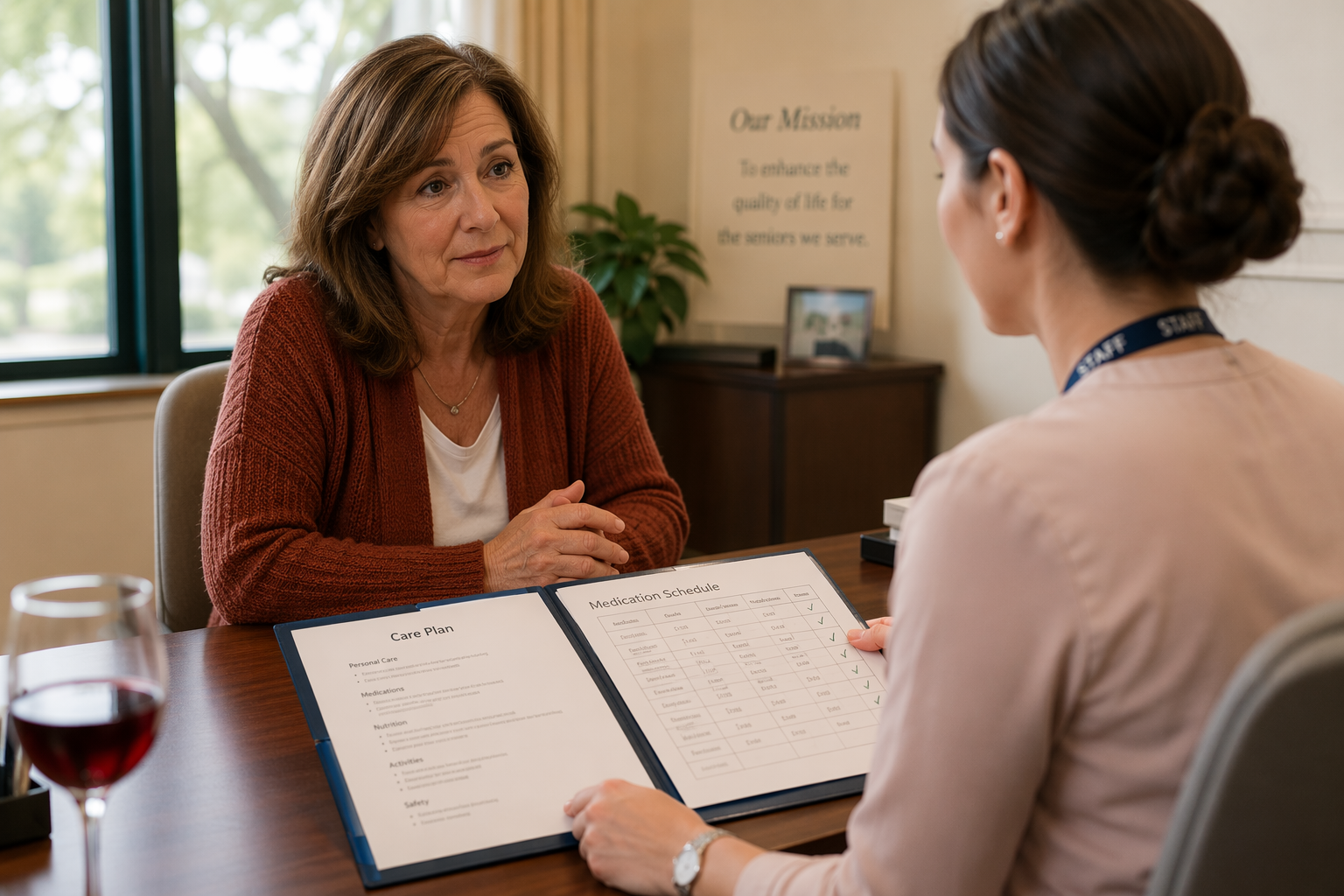
Medication review deserves its own line of questioning. A resident may be perfectly capable of choosing a glass of wine in ordinary life and still have a temporary medication change that makes alcohol a bad idea. Families should ask whether the facility has a process for catching those changes before an event, not just after an incident.
The dementia question also needs plain language. If a resident has impaired judgment, the facility should be able to explain how it determines whether the person can choose alcohol, how it handles repeated requests, and how it avoids turning a social event into a confrontation. The law’s permission to serve alcohol does not erase the facility’s duty to understand the person in front of them.
Monitoring Is More Than Checking IDs
The statute’s staff-age requirement is a floor, not a training program. A staff member who is old enough to serve still needs to know the facility’s drink limit, who is restricted from alcohol, how to respond if a resident appears impaired, and whom to notify if a resident falls or becomes confused after the event.
- Who tracks how many drinks each resident receives?
- Is tracking done verbally, on a sign-in sheet, in an electronic record, or not at all?
- What happens if a resident receives alcohol from a visitor or another resident?
- Are staff assigned to watch for balance changes, confusion, or unsafe walking after the event?
- Does the facility increase observation for residents with known fall risk?
For a parent who uses a walker, takes evening medications, or has a history of falls, the most important period may be after the glass is empty. Families can ask whether staff help residents return to rooms, whether transportation within the building is available, and whether post-event checks are part of the written plan.
A Written Policy Is The Thing To Look For
A facility that has thought this through should be able to show or describe a written alcohol policy. It does not need to be hostile to residents. In fact, the best version probably protects the social value of the event by making the safety work routine and boring: review the care plan, check medication concerns, identify residents who need limits, train staff, track drinks, and document incidents.
Families do not need to demand perfection. They do need to notice vague answers. “We’ll keep an eye on everyone” is not the same as knowing who has been cleared to drink, who is limited, who is not participating, and who is responsible if something changes during the event.
If your family is still comparing senior living options, alcohol-event policies belong in the same practical folder as staffing, fees, care levels, and contract terms. Our assisted living costs guide can help with the broader cost side while you ask Minnesota facilities how they plan to use this new flexibility.
Minnesota’s Grandparents Happy Hour law can make senior living feel more adult and less institutional. That is not a small thing. For a parent on complex medications, with dementia, or at high risk of falling, though, the meaningful safeguard is not the law’s nickname or its vote total. It is the facility’s written protocol, the staff training behind it, and the family’s willingness to ask for both before the first event appears on the activities calendar.
References
- Bill would permit assisted living facilities to serve alcohol at events, MN House Session Daily.
- Grandparents' happy hour bill, CBS Minnesota.
- Gov. Walz signs 'Grandparents' Happy Hour' law letting Minnesota senior homes serve alcohol, Fox 9 Minneapolis-St. Paul.
- Nursing home residents in Minnesota get the green light for happy hour, KSTP.com.
- Nursing Home 'Happy Hour' Bill Sparks Nurse Safety Concerns, Nurse.org.
- Minnesota care homes to serve alcohol under 'grandparents happy hour' law, BBC.
Questions to bring to a clinician or OT
This is not medical, legal, or a family's final decision — only a framework. Bring these questions to a clinician, occupational therapist, or your local Area Agency on Aging.
Find Local HelpRelated reading
Noticed something outdated or inaccurate on this page? Flag a correction. We review every report against CDC, NIA, and AARP HomeFit guidance before updating a page.