
Caregiver decision guide
What the Oldest Wimbledon Quarterfinalists Teach Caregivers About Aging
Learn what the oldest Wimbledon quarterfinalists — from Federer to Billie Jean King — reveal about staying active and healthy after 50, and how caregivers can apply these same principles to encourage safe physical activity in the older adults they care for.
The phrase “oldest tennis player grand slam quarterfinal Wimbledon” sounds as if it should have one clean answer. It does not. As of Wimbledon 2026, the men’s Wimbledon singles mark belongs to Roger Federer, who reached the 2021 quarterfinal at 39 years and 337 days after two knee surgeries.[1] In women’s singles, Billie Jean King reached the Wimbledon quarterfinal at 39 years and 224 days in 1983 and went on to the semifinals.[2] If the question widens from Wimbledon to Grand Slam singles quarterfinalists generally, Judy Dalton’s 1977 Australian Open quarterfinal at 40 years and 19 days enters the conversation.[2]
That clarification matters because records can turn slippery very quickly. Men’s singles, women’s singles, Wimbledon only, all Grand Slams, Open Era or not: each frame produces a slightly different answer. But the more useful question for caregivers is not who owns the neatest record. It is what these late-career runs show about movement, recovery, purpose, and the awkward work of staying active when the body has already made its objections known.
The record is impressive; the recovery is the part caregivers should notice
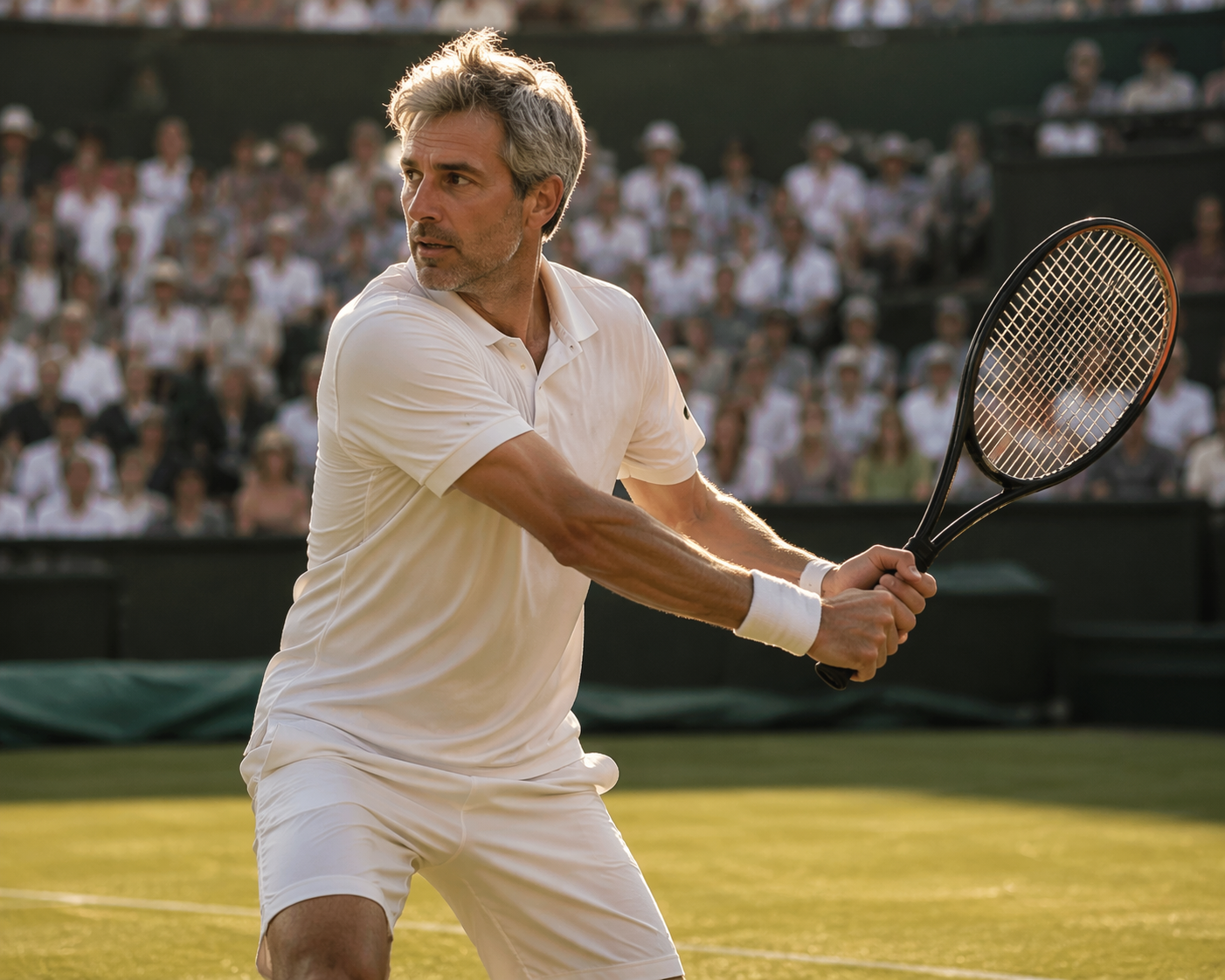
Federer’s 2021 Wimbledon quarterfinal is an easy fact to admire and a dangerous one to simplify. He was not simply “still young at heart.” He was nearly 40, had undergone two knee surgeries, and was trying to return to one of the most demanding movement sports in the world.[1] The result was remarkable, but the bridge to ordinary aging is not that older adults should push through pain or chase athletic drama. The bridge is that return to movement often has to be structured, gradual, and adjusted to the body in front of you.
For a family caregiver, that distinction is not academic. A parent who has fallen may hear “let’s go for a walk” as a test they might fail. A spouse with arthritis may hear “you need to exercise” as criticism. Federer’s case is useful only if it points away from pressure and toward progression: smaller loads, repeated safely, with attention to what happens afterward.
Novak Djokovic’s 2026 Wimbledon quarterfinal adds the timely spark. At 39, he competed in what Tennis365 described as the longest Wimbledon quarterfinal in history, lasting 5 hours and 15 minutes.[3] It is an astonishing endurance marker. It is also not a household care plan. Elite athletes have medical teams, training histories, recovery systems, and competitive incentives that most older adults do not have. The caregiver’s lesson is narrower and more humane: capacity is not fixed at 50, 65, or 80, but it is built and protected through repeated, appropriately scaled movement.
| Player | Wimbledon or Grand Slam longevity marker | What is useful for caregivers |
|---|---|---|
| Roger Federer | Reached the 2021 Wimbledon quarterfinal at 39 years, 337 days after two knee surgeries.[1] | Recovery and activity work best when they are gradual, structured, and responsive to limitation. |
| Novak Djokovic | At 39, played a 5-hour, 15-minute Wimbledon quarterfinal in 2026.[3] | Endurance later in life depends on accumulated habits, not sudden motivation. |
| Billie Jean King | Reached the 1983 Wimbledon quarterfinal at 39 years, 224 days and advanced to the semifinals.[2] | Competitive purpose can remain meaningful well past the age when people are often told to slow down. |
| Ken Rosewall | Reached the Wimbledon final at 39 years and 8 months in 1974.[4] | Smart play and long-developed skill can help compensate for what age changes. |
| Martina Navratilova | Won a Wimbledon singles match at 47, the oldest woman to win a main-draw match at SW19 in the Open Era.[2] | Identity, practice, and adaptation can keep movement part of life for decades. |
| Laura Siegemund | Reached her first Wimbledon quarterfinal at 37 years, 131 days in 2025 while ranked 104th.[2] | Late breakthroughs are not only for the famous or the already celebrated. |
Consistency is less glamorous than a comeback, which is why it matters
Caregiving often turns movement into an event: the appointment, the physical therapy session, the first walk after discharge, the big promise to “start exercising Monday.” Tennis longevity suggests a quieter truth. Federer did not arrive at 39 with a body made by one heroic month. Djokovic did not play deep into a five-hour match on borrowed willpower alone. King, Rosewall, Navratilova, and Siegemund carried years of repeated practice into the moment the record books noticed them.
At home, consistency may look almost too small to respect. A slow walk to the mailbox. Standing up from a chair a few extra times with supervision. Gentle stretching while the kettle boils. A familiar route through the garden after lunch. These are not miniature versions of Wimbledon training. They are ways to keep movement woven into the day so that activity is not always framed as correction, punishment, or proof of decline.
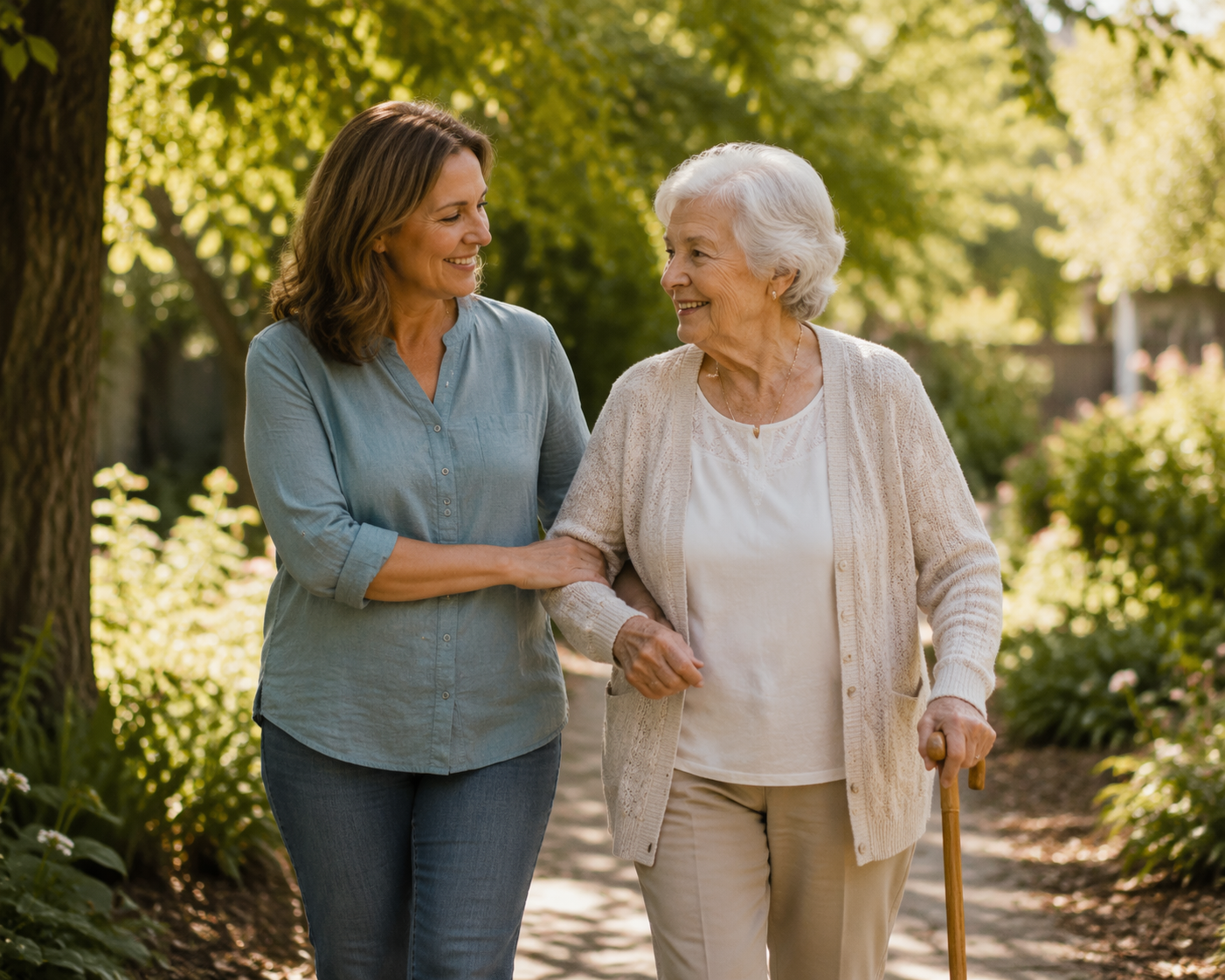
The tone matters. “You need to move more” can land as an accusation, especially after illness, grief, hospitalization, or a fall. “Walk with me to the corner and we’ll turn back if it feels wrong” gives the older adult an exit, a companion, and a defined task. The movement is still real. The dignity is preserved.
A practical caregiver approach is to make the next movement smaller than the argument around it. If a 20-minute walk creates resistance, begin with five minutes. If a formal class feels embarrassing, begin with a household routine that already has meaning. If pain or fatigue increases afterward, that information matters; the plan should be adjusted rather than defended.
Older adults do change habits, though not on command
The idea that older people cannot change is convenient, and often false. In the 2024 NORC/AARP Foresight 50+ Study, 82% of adults age 50 and older reported adopting at least one new health behavior in the past year. The same study reported that adults who exercised weekly were more likely to describe their physical health as excellent than less active adults, 59% compared with 33%. Adults 65 and older reported starting an average of 3 new health activities, compared with an average of 2 among adults ages 50 to 64.[5]
Those numbers are encouraging, not magical. The study is survey data, with a reported margin of error of plus or minus 4.2 percentage points, and it cannot promise that one caregiver’s parent will respond to a new routine in the same way.[5] It also reports associations and self-reported behavior; it does not turn weekly exercise into a guaranteed cure for frailty, pain, loneliness, or chronic disease.
Still, the finding gives caregivers something valuable: permission to stop treating change after 50 as unrealistic. Some older adults start new habits. Some start several. The first version of a habit may be modest, uneven, and dependent on reminders or company, but that does not make it meaningless.
After a setback, the goal is not bravery; it is calibration
The most tempting misuse of Federer’s post-surgery Wimbledon run is to turn it into a sermon about toughness. That is precisely the wrong lesson for caregiving. Older adults recovering from injury, surgery, hospitalization, or a frightening fall do not need to be told to ignore their bodies. They need help distinguishing ordinary effort from warning signs, and they need routines that can be scaled down without shame.
Calibration begins with the current baseline. Not the baseline from 10 years ago. Not the baseline before the fall. Not the baseline the family wishes were still there. If an older adult can walk safely for three minutes, then three minutes is real information. If balance is uncertain, seated movement or supervised standing may be the wiser starting point. If a physician or physical therapist has given restrictions, those restrictions are part of the plan, not an obstacle to motivation.
- Start from what the older adult can do safely today, even if it feels small.
- Increase only one element at a time: duration, distance, repetitions, or difficulty.
- Watch the after-effect, not only the moment itself. Pain, unusual fatigue, dizziness, or fear afterward should change the next attempt.
- Use professional guidance before beginning a new activity routine when the older adult has health conditions, recent surgery, fall risk, chest pain, unexplained shortness of breath, or significant mobility limitations.
This is where family encouragement can become either helpful or harmful. A caregiver who insists on yesterday’s goal may accidentally teach the older adult that movement is unsafe or humiliating. A caregiver who adjusts the plan while keeping the habit alive teaches something steadier: the body can be listened to without being abandoned.
Strength maintenance is not bodybuilding
Tennis makes strength visible in dramatic ways: the serve, the lunge, the recovery step, the rotation through the trunk. But for older adults at home, strength maintenance often shows up in less photogenic places. Getting out of a chair. Carrying groceries from the car. Stepping into a shower. Climbing one flight of stairs. Catching balance after a stumble.
Caregivers do not need to borrow the gym language of athletes to support this. They can notice daily tasks that are becoming harder and, with appropriate medical or therapy guidance, help preserve the movements behind those tasks. A repeated sit-to-stand may matter because the older adult wants to use the bathroom independently. A short walk may matter because it keeps the route to the dining room familiar. Gentle grip work may matter because opening a jar is tied to cooking, privacy, and self-respect.
This is also where variety helps. Tennis players survive long careers by adjusting how they move, train, recover, and compete. A caregiver can apply the same idea without turning the living room into a training center. Walking, balance practice, light household tasks, stretching, and supervised strength exercises do different jobs. The mix should reflect the person’s condition, preferences, and safety needs.
Purpose keeps movement from feeling like homework
Billie Jean King’s 1983 Wimbledon run is not interesting merely because of the age line attached to it. She reached the quarterfinal at 39 years and 224 days, then advanced to the semifinals.[2] Ken Rosewall reaching the Wimbledon final at 39 years and 8 months in 1974 carries a similar charge.[4] These were not people exercising because someone told them aging required compliance. They were still inside a world of skill, identity, rivalry, and purpose.
Martina Navratilova winning a Wimbledon singles match at 47 stretches that idea further. Laura Siegemund reaching her first Wimbledon quarterfinal at 37 years and 131 days in 2025, while ranked 104th, gives it a different texture: not just longevity, but a late-career breakthrough after years of persistence.[2] These examples are elite and unusual, but the emotional mechanism is familiar. Movement lasts longer when it is attached to something more meaningful than being told to improve.
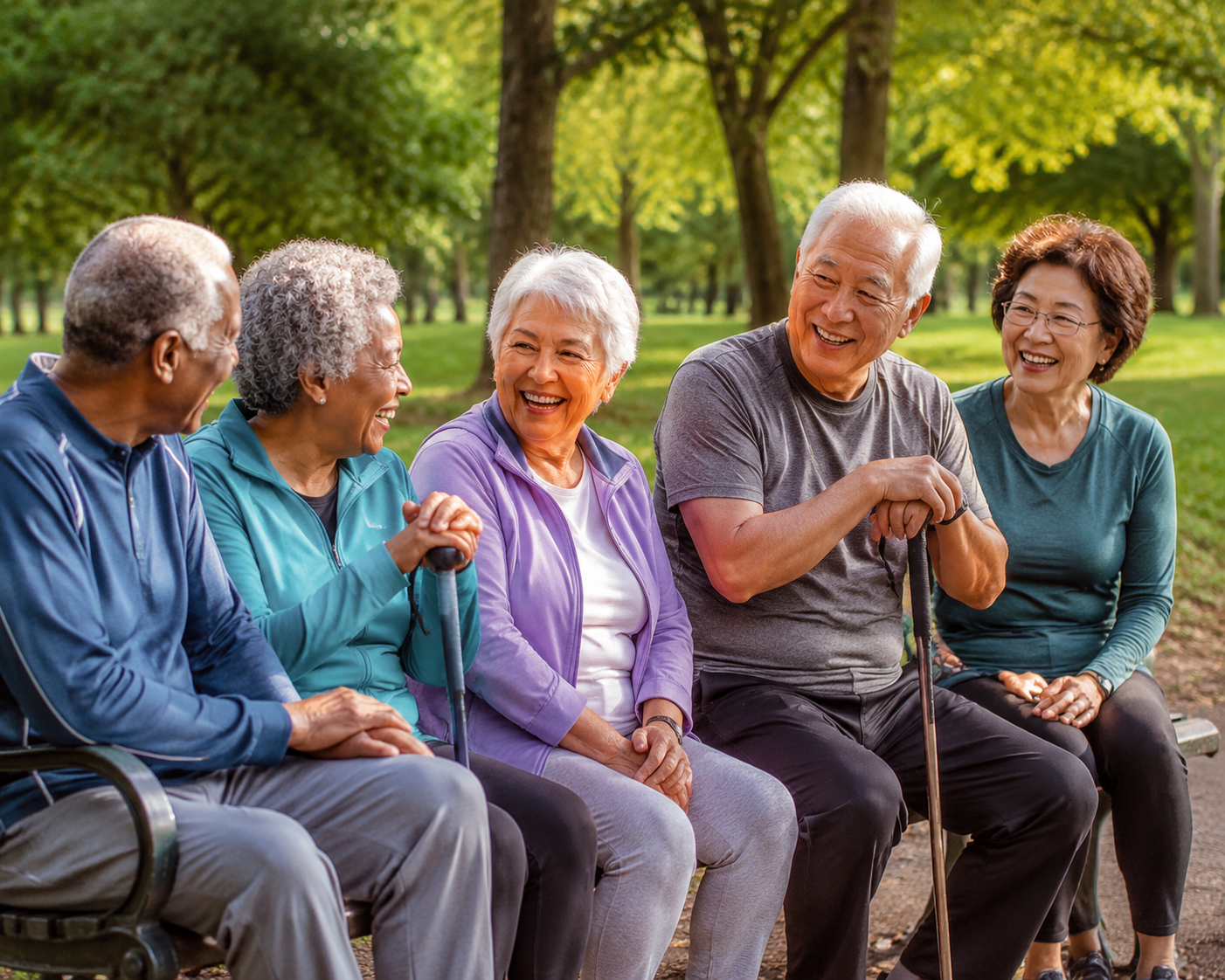
For an older adult, purpose may be social rather than competitive. Walking to see a neighbor. Attending a gentle class because a friend will be there. Practicing balance because it makes church, gardening, or a grandchild’s school event feel possible. The activity is the visible part. The reason is often what keeps it alive.
The National Senior Games Association describes more than 12,000 athletes ages 50 to over 100 competing and cites its SAFE study in discussing positive psychological benefits and lower self-reported depression among participants.[6] That material should be read carefully: it is presented by the organization itself, and the full peer-reviewed publication is not provided in the cited article. Even with that caution, the Senior Games example points to something caregivers recognize: activity is easier to sustain when it offers belonging, recognition, and a reason to show up.
How to translate Wimbledon longevity into Tuesday afternoon care
The older athletes are not templates. Federer’s knee rehabilitation, Djokovic’s endurance, King’s competitiveness, Rosewall’s craft, Navratilova’s longevity, and Siegemund’s late breakthrough all happened inside professional sport. A caregiver’s job is smaller and, in many homes, more delicate: help an older person keep enough function, confidence, and connection to live with as much independence and pleasure as possible.
That usually means choosing repeatability over drama. A short walk that happens four times a week may do more for confidence than an ambitious outing that leaves everyone exhausted and resentful. A chair exercise routine that an older adult accepts may be more useful than a perfect plan they refuse. A social walk may succeed where a lecture about health fails.
| If the caregiver sees this | Try reframing it this way |
|---|---|
| “Mom won’t exercise.” | “What movement still feels safe, familiar, or worth doing to her?” |
| “Dad used to be stronger.” | “Which daily task would he most like to keep doing independently?” |
| “They quit after one bad day.” | “Was the step too large, or did the recovery afterward tell us something?” |
| “They only go when someone joins them.” | “Companionship may be part of the activity, not a weakness in the plan.” |
| “This is too small to count.” | “Small, repeated movement is often the only kind that survives real life.” |
Caregivers also have to protect the relationship. Encouragement is more likely to work when it leaves room for refusal, fatigue, embarrassment, and negotiation. The older adult is not a project. The goal is not to produce an athlete, or even a cheerful patient. The goal is to keep movement possible enough that the person can continue participating in ordinary life.
Before starting a new routine, especially for an older adult with chronic conditions, recent medical events, balance problems, pain, or medication changes, caregivers should consult a healthcare professional. Once the safe boundaries are clear, the best plan may look almost plain: consistent movement, some attention to strength, room to adapt after setbacks, and enough social purpose that activity feels like living rather than being managed.
References
- Roger Federer sails past Lorenzo Sonego to become the oldest Wimbledon quarter-finalist in history, Tennis Majors
- Oldest Grand Slam women's singles quarter-finalists of the Open Era, Tennis365
- Oldest Wimbledon men's quarter-finalists: Roger Federer, Novak Djokovic, Tennis365
- He is the only man older than Novak Djokovic to reach the Wimbledon semi-finals, Tennishead
- Aging with Vitality: Older Adults Embracing Change for Healthier Living, NORC at the University of Chicago / AARP, 2024
- How Senior Games Athletes Show the Power of Sport, National Senior Games Association
Questions to bring to a clinician or OT
This is not medical, legal, or a family's final decision — only a framework. Bring these questions to a clinician, occupational therapist, or your local Area Agency on Aging.
Find Local HelpRelated reading
Noticed something outdated or inaccurate on this page? Flag a correction. We review every report against CDC, NIA, and AARP HomeFit guidance before updating a page.