
Caregiver decision guide
What Canadian Caregivers Can Do After the 2026 PGP Pause
The indefinite pause on Canada's Parent and Grandparent Sponsorship Program has blocked new applications, but families can take immediate action with a Super Visa while preparing for the program's return. This step-by-step guide helps adult children caregivers navigate the gap and keep their parent's immigration path alive.
Last reviewed: July 19, 2026.
If your family was preparing a parent or grandparent sponsorship file through 2025 or early 2026, the July 2026 pause changes the order of work, not the need to act. New Parent and Grandparent Sponsorship Program applications are stopped for now, but existing applications already in the system continue. CBC reported that 60,500 existing applications are still proceeding and that IRCC plans 15,000 approvals in 2026; no reopening date has been announced for new intake.[1]
For a caregiver, that distinction matters. If your parent already has a PGP application in process, your first job is to protect that file. If your parent was waiting for the next intake, your job is to run two tracks at once: see whether a Super Visa can safely bridge the gap, and keep building the PGP file so you are not starting from zero if the program reopens.

First, find out which situation your family is actually in
Before pricing insurance or calling a consultant, confirm whether anyone in the family already submitted a PGP application. This sounds obvious, but in many families one sibling completed an interest form, another gathered tax documents, and a parent remembers signing something without knowing whether a full application was ever accepted.
| Your family’s status | What the pause means | What to do now |
|---|---|---|
| A complete PGP application was already submitted and accepted into processing | The July 2026 pause does not stop existing applications from continuing.[1] | Keep contact details current, watch IRCC messages, and prepare quickly for document or medical requests. |
| You were waiting for the next PGP intake | There is no new intake and no announced reopening date.[1] | Assess the Super Visa as a bridge and build a PGP-ready folder for later. |
| You are not sure what was submitted | The family may be confusing an old interest-to-sponsor step with a current application. | Check emails, IRCC accounts, representative correspondence, payment receipts, and application numbers before assuming anything. |
Do not let the pause become a reason to stop organizing. Waiting without a file plan usually means that when the next window opens, the family is scrambling for tax notices, birth records, name-change documents, translations, and proof of who belongs in the household.
Use the Super Visa as a bridge only if it fits the parent’s real life
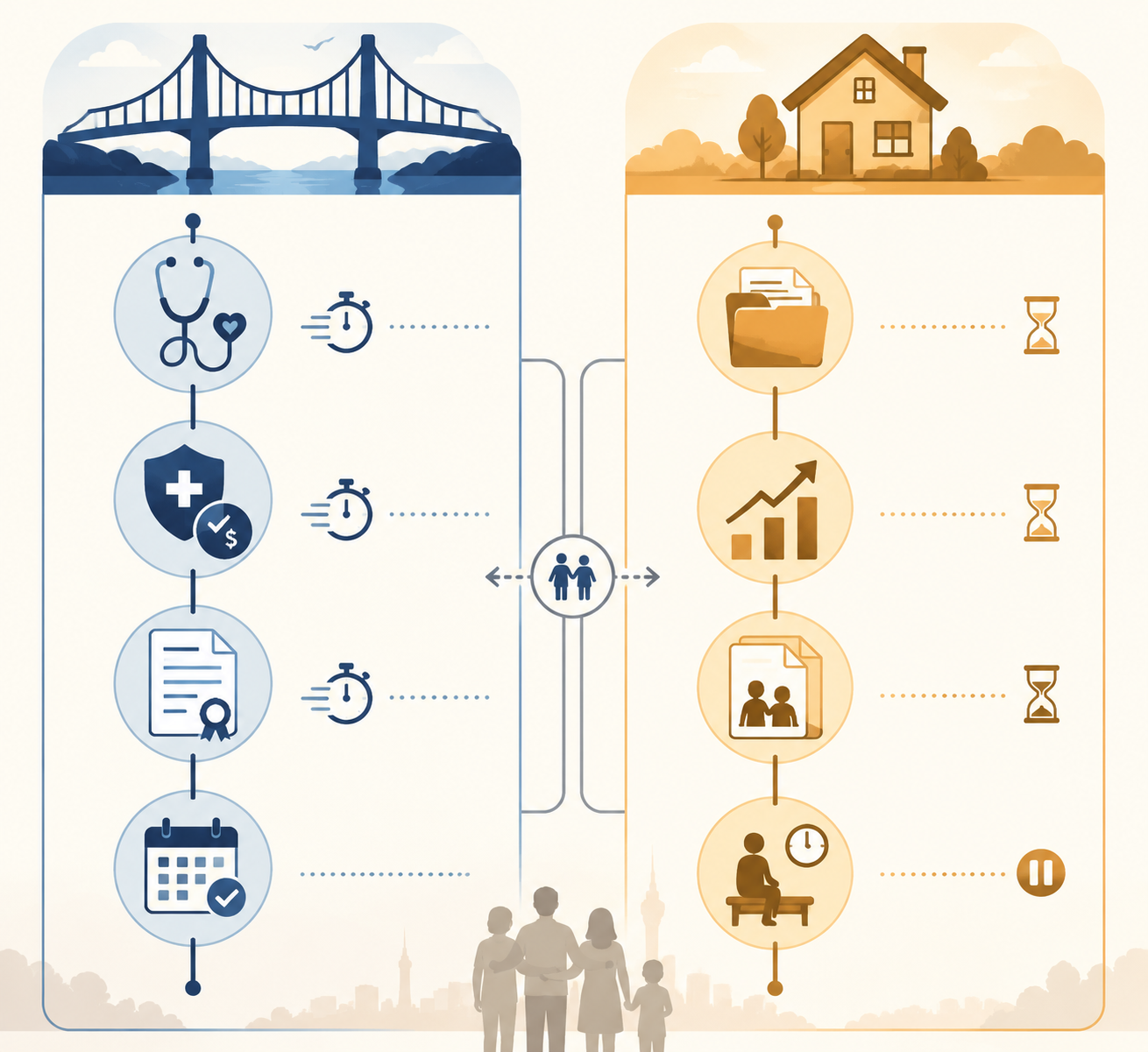
The Super Visa is the practical alternative most families should examine first because it can move much faster than PGP sponsorship. CIC News describes Super Visa processing as measured in weeks, compared with years for PGP, and notes that it can allow stays of up to five years per visit.[2] That is a meaningful bridge when a parent needs help after surgery, is struggling alone after a spouse’s death, or can no longer manage winter travel to appointments without family support.
But a bridge is not the same thing as permanent residence. A Super Visa may get your parent physically closer to you sooner; it does not settle the permanent sponsorship question, and it can fail on insurance, medical admissibility, income, or documentation. Processing also depends on the visa office and the parent’s country of residence, so “weeks” should not be treated as a promise for every family.[2]
Check the income rule under the 2026 change
The March 31, 2026 Super Visa income change is worth checking before you decide you cannot qualify. Canada.ca says hosts may use either of the two preceding tax years to meet the income requirement, and a parent or grandparent’s own income may be used to supplement the host’s income. The requirement remains tied to the low-income cut-off plus 30%.[3]
That change can help households whose income dipped in one recent year because of maternity leave, caregiving leave, job loss, business interruption, or a move between provinces. It can also help when the parent has stable pension or retirement income that can be documented. Do not use an old blog’s dollar figure for the threshold; verify the current IRCC table because the numbers are updated.
Price insurance before you promise a travel date
Insurance is often where the hopeful family plan becomes a budget problem. PolicyAdvisor’s 2026 market guidance places Super Visa insurance at roughly $1,000 to $6,000 or more per year per parent, with age, health, province, coverage choices, and underwriting affecting the final premium. Parents over 70 and parents with pre-existing conditions can face the hardest pricing and eligibility questions.[4]
Canada.ca lists Super Visa requirements that include a medical exam, proof of minimum medical insurance of $100,000, coverage for hospitalization and repatriation, and validity for at least 365 days from the date of entry.[5] That means a family should not treat insurance as a formality to buy at the end. Ask about exclusions, stability periods for pre-existing conditions, deductibles, refund rules if the visa is refused, and whether the policy dates match the planned entry.
- Collect the host’s notices of assessment for the two preceding tax years, plus current employment or business income evidence.
- Collect the parent’s pension, retirement, rental, or other income proof if you may need to supplement the host’s income.
- Request insurance quotes before booking flights, especially if the parent is older, recently hospitalized, or taking medication for a chronic condition.
- Book the required medical exam only through the process IRCC accepts; do not rely on a family doctor’s letter as a substitute.
- Check passport validity, biometrics history, travel history, and whether any past refusal or overstay needs careful explanation.
If the insurance quote is unaffordable, that is not a moral failure and it is not a reason to send a weak application. It means the family has to adjust the plan: a shorter visit if permitted by the policy, a different timing, more savings, professional advice, or a stronger care arrangement abroad while the permanent sponsorship route remains closed.
Keep the PGP file warm even though new intake is paused
The hardest part of an indefinite pause is that it gives families no finish line. Still, the documents that usually slow a sponsorship file do not become easier to find later. Birth certificates, marriage certificates, divorce records, death certificates, adoption documents, name-change papers, old passports, and translations often take weeks or months to replace, especially when the parent is abroad.
Build a shared folder now, with one person responsible for keeping it current. The folder should separate Super Visa documents from future PGP documents so nobody accidentally submits the wrong proof for the wrong program. If there are siblings, decide who owns which task rather than assuming the person in Canada will quietly do everything.
| Folder section | What to place there | Why it matters |
|---|---|---|
| Sponsor identity and status | Canadian citizenship or permanent resident proof, current address, family composition | PGP eligibility depends on the sponsor and household, not only on the parent’s need. |
| Income history | Notices of assessment, employment records, business records if applicable | Income rules can decide whether a family can sponsor; thresholds can change. |
| Relationship proof | Birth records, marriage records, name-change records, adoption or guardianship records where relevant | Different surnames and older civil records can create delays if not explained. |
| Parent identity and civil status | Passport, national ID, marriage or widowhood records, divorce records if applicable | Identity and civil status records must match the relationship story in the file. |
| Translations and certified copies | Certified translations, translator declarations, document replacement receipts | Old or informal translations can become unusable when official requirements are applied. |
Motivus Law’s practical guidance on the pause makes a useful distinction: the pause does not mean every family should sit still; it means they should understand which temporary options are available and what permanent-sponsorship preparation remains useful.[6] That advice should be applied carefully. No preparation can guarantee a future PGP spot while intake is closed.
Write the care plan for the months your parent is still abroad
Immigration delay becomes dangerous when the family treats care as something that will begin only after the parent arrives. If your mother is missing blood pressure pills now, if your father is skipping follow-up appointments now, or if a widowed parent is eating tea and toast for dinner because shopping is too much, the Super Visa timeline is not the only timeline that matters.
This is also where the cultural weight of the PGP pause shows up. The Conversation has reported on how halting new parent sponsorships can keep families apart, with particular pressure on immigrant families shaped by strong filial expectations.[7] That pressure is real, but guilt is not a care system. Someone still has to know who is checking the medication blister pack, who can take the parent to cardiology, who has a key, and who answers the phone when the parent falls.
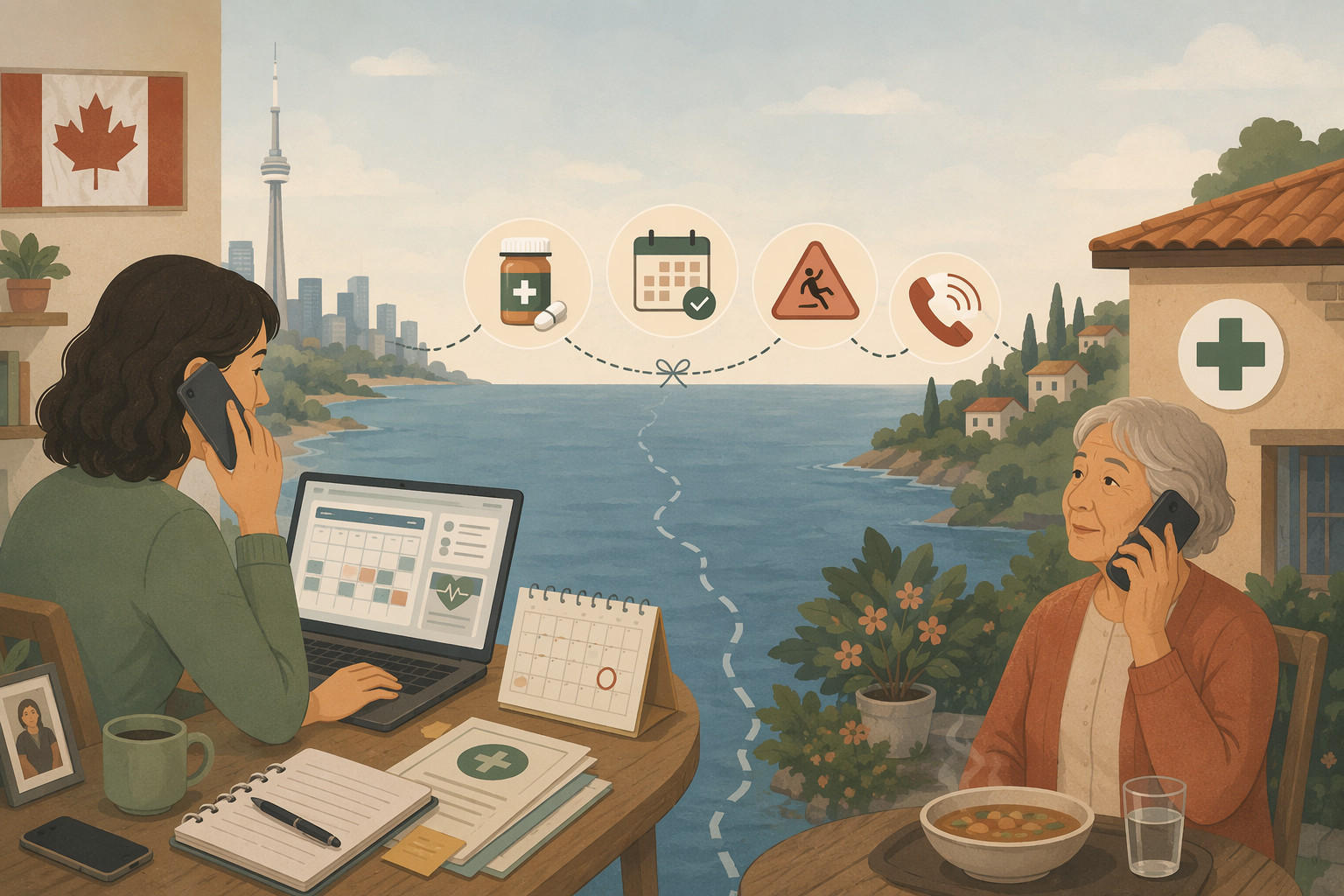
Start with a written care map, not a vague promise to “check in more.” For a broader framework, use a long-distance caregiving guide for adult children to divide work between the person in Canada, relatives near the parent, paid help, neighbors, and the parent’s own doctors.
- Medication: who fills prescriptions, checks adherence, tracks side effects, and notices when refills are not picked up.
- Appointments: who books visits, attends with the parent, translates if needed, and sends notes back to the family.
- Meals and groceries: who confirms that the parent is eating properly, not just that food is in the house.
- Falls and emergencies: who has a key, who can arrive quickly, and which hospital or clinic should be used.
- Money and scams: who watches for unpaid bills, unusual withdrawals, or pressure from strangers and relatives.
- Communication: who calls on which days, what counts as a missed-check-in alarm, and who escalates.
If you are unsure how much help your parent actually needs, organize the discussion by care need rather than by immigration status. A senior health services by care need resource can help the family separate light household support from medication management, mobility help, dementia supervision, or post-hospital care.
Technology can help, but it should be matched to the parent’s abilities and consent. A video call schedule is different from a fall alert, and a fall alert is different from someone physically checking whether the parent is eating. If remote tools are part of the bridge plan, compare them through a practical lens such as monitoring technology that can reduce in-home senior care costs, then decide who receives alerts and what they are expected to do.
When the parent can come, plan the first month before arrival
A Super Visa approval can feel like the problem is solved, but the first month in Canada can expose everything the application did not ask about: stairs in the house, medication supply, provincial health coverage limits, language, winter clothing, transportation, and whether the parent can be left alone while the adult child works.
Before booking the flight, write down where the parent will sleep, how prescriptions will be continued, which clinic or walk-in option can be used, how emergency costs will be handled under the insurance policy, and who takes time off work for the first appointments. If the arrival is likely to shift you into hands-on care, a first 30 days as a caregiver for an elderly parent plan can keep the family from improvising every decision after the suitcase is already in the hallway.
A Monday-morning action map
If the family is overwhelmed, do not start with every possible form. Start with the decisions that tell you whether the Super Visa bridge is realistic and whether the PGP file can be kept alive.
- Confirm whether a PGP application already exists: find application numbers, IRCC correspondence, fee receipts, and representative emails.
- Check Super Visa eligibility: host status, household size, income proof, parent passport, travel history, and likely medical exam issues.
- Price insurance early: request quotes using the parent’s real age, medical history, trip length, and province of stay.
- Apply the 2026 income rule carefully: compare the two preceding tax years and gather proof of any parent income that may supplement the host’s income.
- Build the PGP-ready folder: identity, civil status, relationship proof, sponsor income history, translations, and certified copies.
- Write the cross-border care plan: medication, appointments, food, falls, emergency contacts, communication schedule, and backup caregiver abroad.
- Verify current requirements directly with IRCC before filing, and get licensed immigration, legal, financial, or clinical advice where the family situation is complicated.
The PGP pause is a serious family setback. A Super Visa may bring a parent closer sooner, and PGP preparation keeps the permanent route from going cold. Neither one replaces the care plan for the months your parent is still abroad, where someone must be named for the ordinary things that become urgent when nobody is assigned to them.
References
- Canada pauses applications for parent, grandparent immigration sponsorship program, CBC News, July 15, 2026.
- PGP alternatives to bring your parents or grandparents to Canada faster and for less, CIC News, January 2026.
- Changes to how the parents and grandparents super visa income requirement is calculated, Canada.ca, March 31, 2026.
- Super Visa insurance cost in Canada (2026), PolicyAdvisor, 2026.
- Sponsor your parents and grandparents, Canada.ca.
- Canada Paused Parent & Grandparent Sponsorship: What It Actually Means for Your Family, Motivus Law.
- Canada halts new parent immigration sponsorships, keeping families apart, The Conversation.
Questions to bring to a clinician or OT
This is not medical, legal, or a family's final decision — only a framework. Bring these questions to a clinician, occupational therapist, or your local Area Agency on Aging.
Find Local HelpRelated reading
Noticed something outdated or inaccurate on this page? Flag a correction. We review every report against CDC, NIA, and AARP HomeFit guidance before updating a page.