
Caregiver decision guide
Practical Bird Flu Precautions for Older Adults
Learn evidence-based bird flu precautions specifically for older adults, including everyday actions to reduce infection risk, when to seek care, and why age matters. Based on current CDC guidance and U.S. case data.
If you are caring for an older parent or spouse and saw another bird flu headline, the useful question is not, “Should we be scared?” It is, “Do we need to change anything this week?” For most older adults living at home, the answer is modest: keep the food and animal-contact precautions tight, watch symptoms after a real exposure, and do not turn ordinary life into quarantine.
The distinction matters. The CDC’s current assessment is that the risk to the general public remains low, and the U.S. has reported 71 human A(H5) cases since February 2024 with no sustained human-to-human transmission.[1] That speaks to the chance of infection for most households. It does not erase the separate concern that older adults can do worse if they become infected. CDC says plainly that “the risk of getting very sick from bird flu increases with age, such as in older adults.”[2]
Start With Exposure, Not Headlines
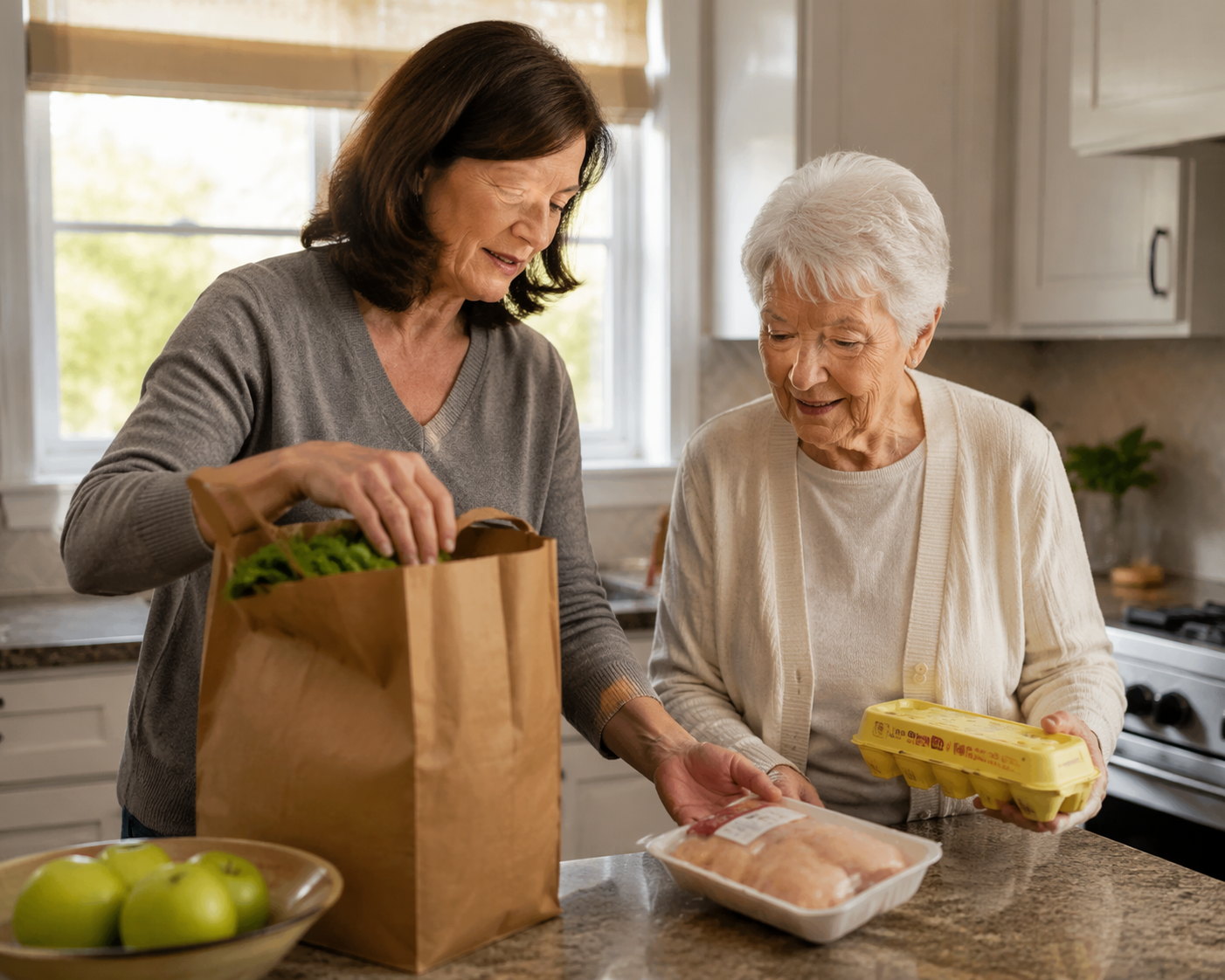
Bird flu precautions for older adults should begin with the routes that actually bring the virus close to a person: contact with infected birds or other animals, contaminated surfaces around those animals, and raw animal products. If your parent is not working on a farm, handling backyard poultry, touching sick birds, or drinking raw milk, their day-to-day chance of exposure is usually limited.
That is why “low public health risk” should not be read as “no need to think,” and age-related severity should not be read as “hide indoors.” A long-distance son does not need to tell his mother to stop every walk near a pond. He should tell her not to touch sick or dead birds, not to handle droppings, and to call him or local animal control if she sees a dead bird where people or pets may come into contact with it.
The first reported U.S. H5N1 death, announced in January 2025, was in a person older than 65 who had multiple underlying medical conditions.[3] That case deserves respect, not panic. It reminds caregivers that age and health history change the consequences of infection. It does not show that ordinary older adults are commonly catching bird flu in everyday errands.
The Household Precautions That Matter Most
A practical plan can fit into the routines caregivers already manage: groceries, cooking, handwashing, vaccines, and deciding when a symptom is worth a phone call.
- Avoid contact with sick or dead birds and other animals. Do not pick them up, move them, or let an older adult “just take a look.”
- Do not drink raw milk or eat raw milk products. Choose pasteurized milk and dairy products.
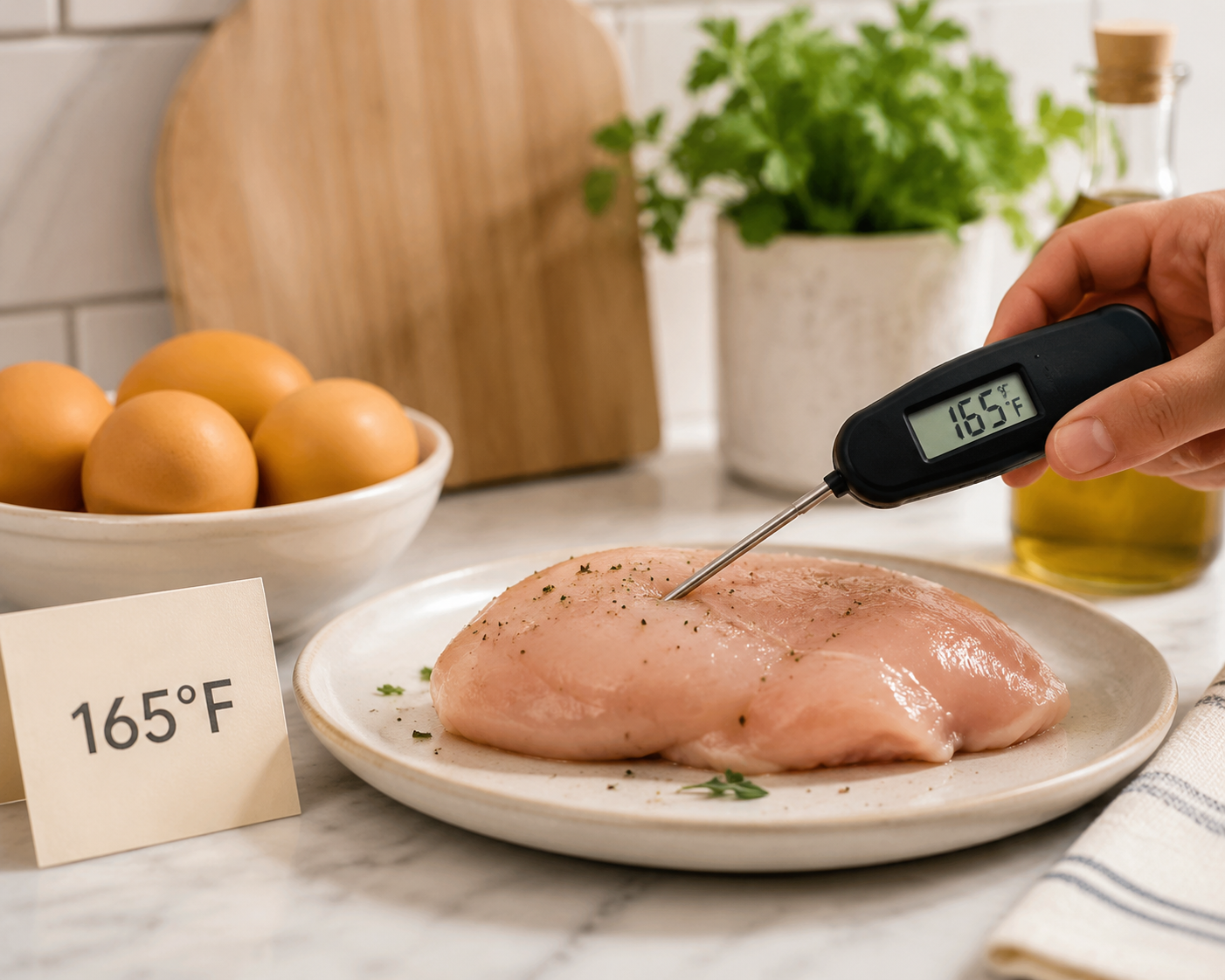
- Cook poultry, eggs, and beef properly. Use a food thermometer rather than judging by color.
- Wash hands after outdoor animal contact, handling raw animal products, or cleaning surfaces that may have been contaminated.
- Keep the seasonal flu vaccine up to date. It does not protect against H5N1, but CDC recommends it to reduce the rare risk of coinfection with seasonal flu and bird flu viruses.[4]
These are not exotic outbreak measures. They are the same kind of habits that make sense in a kitchen where an older adult may have diabetes, heart disease, lung disease, frailty, or simply less reserve after a respiratory infection.
Food: Be Firm About Raw Milk and Thermometers
Raw milk is the easiest decision in the whole plan: skip it. If an older parent buys from a farm stand, receives groceries from a neighbor, or prefers “natural” dairy, check the label. Pasteurized dairy is the safer household default.
With poultry, eggs, and beef, the point is not to stop buying familiar foods. It is to stop relying on habit. Keep raw meat separate from ready-to-eat foods, wash hands and surfaces after handling it, and use a thermometer. For a caregiver, this is less about creating a special bird flu kitchen than removing the small shortcuts that become risky when the person eating the meal has a narrower margin for illness.
Birds, Pets, and the Backyard
If there are backyard chickens, ducks, or regular contact with wild birds, the household needs more attention than a home with only grocery-store exposure. Keep older adults away from sick birds, dead birds, and areas soiled with droppings. If someone else must handle cleanup, they should use appropriate protection and wash thoroughly afterward, rather than bringing contaminated shoes, gloves, or tools back through the kitchen.
For pets, the practical rule is similar: do not let a dog or cat drag in a dead bird and then treat it as a normal mess. Keep the older adult away while it is handled safely, clean the area, and wash hands. If the animal appears sick after contact with wildlife, call a veterinarian.
Hands, Shoes, Counters, Doorknobs
Hand hygiene sounds too ordinary until you look at how care actually happens. The person who fills the bird feeder may also open the refrigerator. The spouse who cracks eggs may also set out pills. The adult child who cleans a muddy entryway may then help with a walker. Build the handwashing step into those transitions, not as a vague reminder but as a rule before food, medications, and close personal care.
If the older adult has memory problems or poor balance, do not make them responsible for a complicated sanitation routine. Put the burden where it belongs: on the person handling raw food, outdoor cleanup, animal care, and shared surfaces.
Seasonal Flu Shots Still Belong in the Plan
The seasonal flu vaccine is not an H5N1 vaccine. That is worth saying clearly, because caregivers should not leave a pharmacy thinking one shot has solved bird flu exposure. CDC’s reason for recommending seasonal flu vaccination in this context is narrower: it may reduce the rare chance that a person is infected with seasonal flu and bird flu at the same time.[4]
There is also a plain older-adult reason to keep flu vaccination current. Older adults account for about 90% of seasonal flu-related deaths, a reminder that respiratory viruses can hit this age group harder even when the virus itself is familiar.[5] That comparison should steady the plan, not inflate the bird flu threat. We already know how much routine prevention matters in older households.
When a Symptom Should Become a Call
For caregivers, the biggest change is not watching every cough with suspicion. It is taking symptoms seriously after a plausible exposure. A meaningful exposure is not reading a news story or walking past a healthy flock at a distance. It is closer contact: handling sick or dead birds, spending time around infected or potentially infected animals, cleaning contaminated areas, consuming raw milk products, or having unprotected contact in a setting where bird flu exposure is being investigated.
If an older adult develops flu-like or respiratory symptoms after that kind of exposure, call a clinician promptly and say why you are calling. Do not bury the exposure detail under a general description of “not feeling well.” The clinician needs to know what happened, when it happened, what animal or product was involved, and when symptoms started.
| What the caregiver should note | Why it helps |
|---|---|
| Date and type of possible exposure | Helps the clinician judge whether bird flu testing or public health guidance is relevant |
| Animal or product involved | Separates backyard poultry, wild birds, dairy exposure, and routine food handling |
| Whether the older adult touched the animal, droppings, raw product, or contaminated surface | Clarifies whether this was close contact or only nearby presence |
| Symptom start date | Matters because antiviral treatment works best early |
| Major health conditions and current medications | Helps the clinician judge severity risk and treatment choices |
CDC notes that oseltamivir works best when started within 2 days of symptom onset.[2] That does not mean every older adult with a cough needs bird flu treatment. It means that after a real exposure, waiting several days to “see how it goes” can close the window when treatment is most useful.
What Not to Overinterpret
Some bird flu numbers in global coverage sound terrifying because they come from confirmed cases across very different countries, health systems, and testing patterns. They should not be pasted onto a U.S. household as if they predict what will happen to an older parent who buys pasteurized milk and has no animal exposure. The U.S. case picture so far is more limited: 71 reported human A(H5) cases since February 2024 and no sustained human-to-human transmission.[1]
It is also true that there is no H5N1-specific human vaccine currently available for routine use in the United States. That may change if public health authorities decide circumstances require it, but it does not change today’s home precautions. Seasonal flu vaccination remains useful for its own reasons and for reducing coinfection concerns; it is not a substitute for avoiding exposure to infected animals or raw animal products.[4]
You may also have seen early discussion about whether people born before 1968 could have some cross-reactive immune protection against severe H5N1 disease. Treat that as emerging science, not household guidance. It is not a reason to relax food safety, handle dead birds, or delay a call after symptoms follow a real exposure.
For most older adults, the proportionate plan is careful rather than dramatic: avoid sick or dead animals, skip raw milk, cook animal products properly, wash hands at the right moments, keep seasonal flu vaccination current, and call early if symptoms follow a plausible exposure.
References
- H5 Bird Flu: Current Situation, Centers for Disease Control and Prevention, March 6, 2026
- People at Increased Risk for Bird Flu, Centers for Disease Control and Prevention, March 7, 2025
- First U.S. H5 Avian Flu Death Reported, Infectious Disease Special Edition, January 2025
- Prevention and Antiviral Treatment of Bird Flu Viruses in People, Centers for Disease Control and Prevention, April 23, 2025
- Influenza virus infection, interferon response, viral counter-response, and apoptosis, PMC
Questions to bring to a clinician or OT
This is not medical, legal, or a family's final decision — only a framework. Bring these questions to a clinician, occupational therapist, or your local Area Agency on Aging.
Find Local HelpRelated reading
Noticed something outdated or inaccurate on this page? Flag a correction. We review every report against CDC, NIA, and AARP HomeFit guidance before updating a page.