
Caregiver decision guide
Protecting Seniors from Cyclospora in Local Produce
Learn whether farmers market and locally sourced produce is safer for seniors during the 2026 Cyclospora outbreak, and discover the practical steps caregivers must take to prevent infection — from understanding irrigation risks to proper handling and cooking.
At the farm stand, the question sounds simple: if the lettuce, herbs, berries, or tomatoes were grown nearby, are they safer for an older adult during the 2026 Cyclospora outbreak? The honest answer is narrower than most shoppers want. Local produce may avoid some risks tied to long supply chains and imported produce, but “local” is not the safety test. The more useful question is where the grower’s water comes from, what happens to that water after heavy rain, and whether the food will be served raw to someone who cannot afford days of diarrhea.
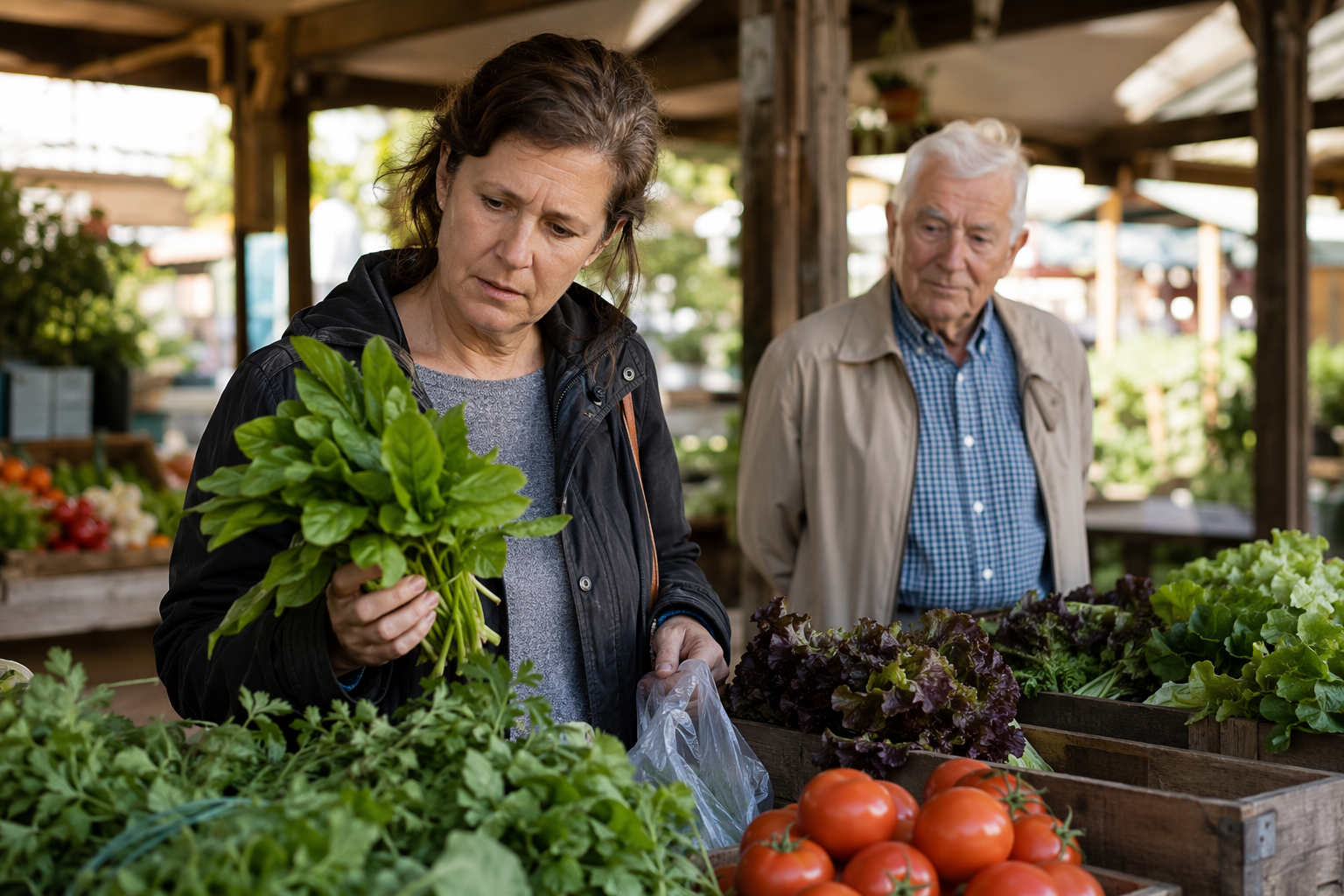
That caution is not theoretical this summer. On July 14, 2026, the CDC issued Health Alert Network advisory HAN-00531 reporting 1,645 confirmed cyclosporiasis cases in the United States since May 1. Nine percent of patients had been hospitalized, the reported age range ran from 2 to 95, and the case count was 6.6 times higher than during the same period in 2025.[1] For a healthy younger adult, a foodborne illness may mean several miserable days. For a frail parent, it can mean dehydration, confusion, medication complications, an urgent care visit, or a hospitalization that starts a longer decline.
So the goal is not to swear off farmers markets or treat supermarket produce as automatically dangerous. It is to avoid Cyclospora contamination in local produce for seniors by looking past the stall, label, or neighborhood grocery sign and asking what actually controls contamination: water, handling, whether the produce is eaten raw, and how vulnerable the person eating it is.
Why the 2026 Outbreak Changes the Shopping Decision
Cyclospora is a parasite that causes cyclosporiasis, an intestinal illness often associated with contaminated fresh produce. It is not the only food safety concern in summer produce, but it is a particularly frustrating one for caregivers because the foods involved are often the foods we are told to put on the table: herbs, berries, lettuces, and other fresh items that are commonly served uncooked.
The CDC’s July alert matters because it gives scale and timing. This is not a vague seasonal reminder; it is an active outbreak with confirmed cases, hospitalizations, and a large increase from the prior year.[1] The alert also notes a diagnostic problem that becomes important later: routine ova-and-parasite stool exams may not detect Cyclospora unless testing is specifically requested.[1]
The outbreak investigation was still ongoing as of July 19, 2026. That means any shopping advice has to stay modest. A caregiver cannot identify every contaminated batch by looking at produce. A grower cannot make a credible safety promise just by saying “picked this morning.” Freshness and safety overlap less than people like to believe.
Local Can Help, But Water Decides More Than Distance
The most useful distinction in the local-versus-imported conversation is not moral or romantic. It is operational. In a July 16, 2026 USA Today discussion, Dr. Amesh Adalja of Johns Hopkins and Dr. Dana Mordue of New York Medical College said farmers market produce may be safer in some circumstances, but it is not risk-free. The deciding factor they emphasized was the irrigation water source, not the venue where the produce is sold.[2]
That is the question worth asking at a market stand: “What water do you use for irrigation?” A grower who can explain whether they use municipal water, a well, surface water, or another source gives a caregiver more useful information than a sign that says “local.” Backyard gardens using municipal water were described as low-risk in the same expert discussion, while agricultural runoff after heavy rain was raised as a possible way domestic irrigation water can become contaminated.[2]
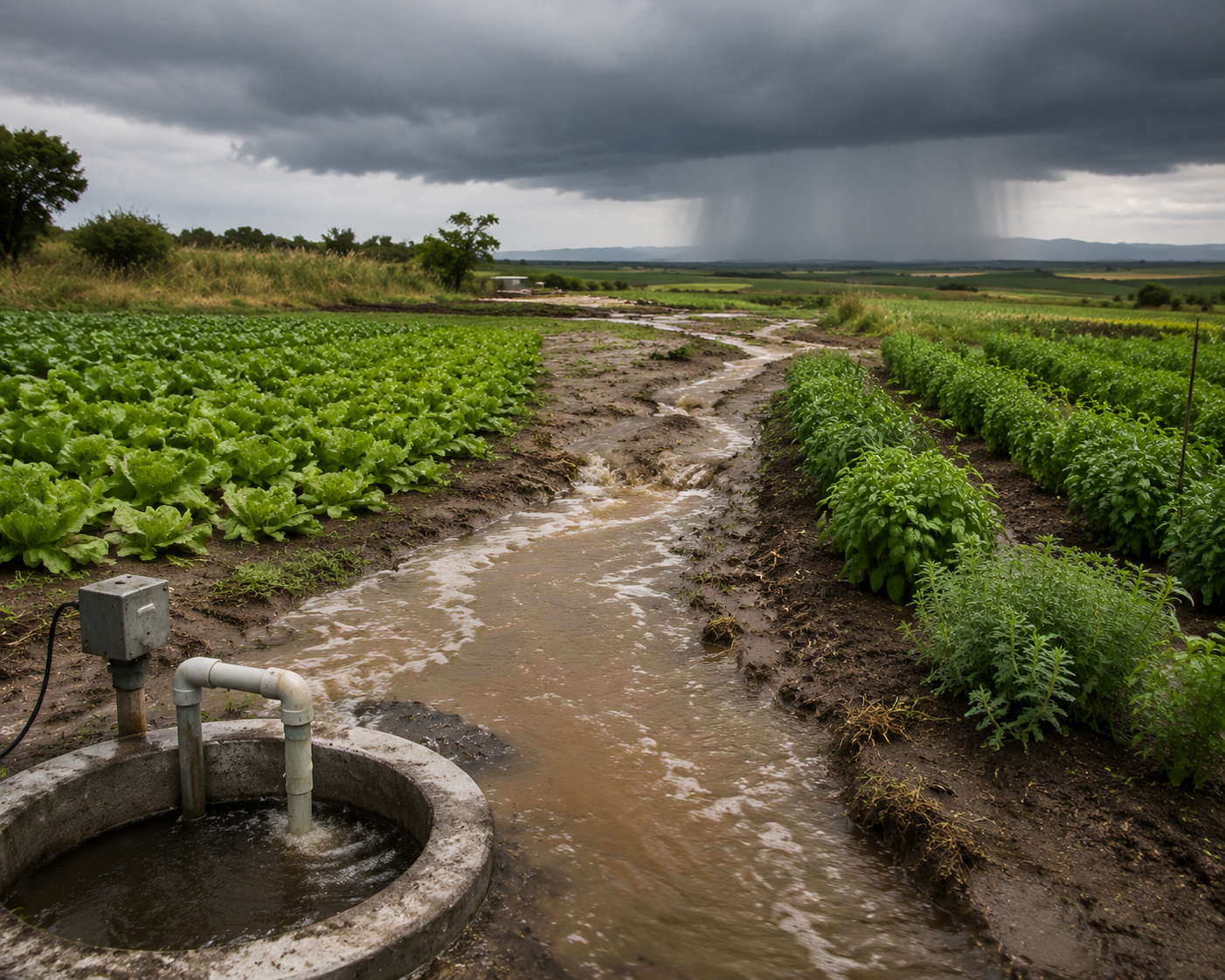
That last point is where the comforting “local is safer” shorthand starts to fall apart. A nearby field can still sit downhill from livestock, septic problems, flooded ditches, or contaminated surface water. A small farm can have excellent practices, and a small farm can also have a water vulnerability that is invisible to the person buying cilantro on Saturday morning. Distance from the shopper is not the same as distance from contamination.
The more careful conclusion is this: local produce may carry somewhat lower Cyclospora risk when it comes from a grower with a clear, protected water source and good handling practices. It should not be treated as automatically safe, especially when the produce will be eaten raw by a senior.
A Caregiver’s Point-of-Sale Framework
At a farmers market or farm stand, the best questions are plain ones. They are not meant to interrogate a grower; they are meant to decide whether this food belongs raw on an older adult’s plate during an active outbreak.
- Ask what water is used for irrigation, especially for greens, herbs, berries, and anything eaten raw.
- Ask whether recent heavy rain or flooding affected the field or water source.
- Favor growers who can describe their water source and post-harvest handling without guessing.
- Treat “local,” “organic,” and “fresh-picked” as useful food descriptions, not Cyclospora safety guarantees.
- For a frail senior, decide before buying whether the item can be cooked; if it cannot, consider skipping it during the outbreak.
Some produce deserves more caution because it has been historically linked to Cyclospora outbreaks or consumer warnings. That does not mean every bunch is dangerous. It means these are poor candidates for blind trust when they are served raw to a vulnerable person.
| Produce to Treat Carefully | Caregiver Decision |
|---|---|
| Basil and cilantro | Use cooked when possible, or buy only from a grower who can explain irrigation and handling. |
| Raspberries | Consider frozen options or skip raw berries for a high-risk senior during the outbreak. |
| Lettuce and leafy greens | Wash carefully, but do not rely on washing as a guarantee; cook when the senior’s risk is high. |
| Green onions | Cook into soups, eggs, or other hot dishes rather than serving raw as garnish. |
| Snow peas | Serve cooked if they are being prepared for a frail older adult. |
Backyard gardens are not automatically sterile either, but they are easier to understand. If the garden is watered with municipal water, kept away from runoff, and harvested with clean hands and tools, the risk is generally lower than produce grown with an unknown irrigation source.[2] If floodwater, ditch water, or runoff has touched the garden, the decision changes. For a senior, that produce should not be treated as safe just because it came from home.
What Washing Can and Cannot Do
Washing produce is still worth doing. It can remove dirt and may reduce some surface contamination. But for Cyclospora, washing is not a reliable kill step. The CDC prevention guidance and FDA Cyclospora Action Plan both state that Cyclospora oocysts resist chlorine-based sanitizers.[4][5] That matters because many kitchen routines borrow their confidence from bacteria-control habits that do not fully apply here.
The hierarchy is simple enough to tape inside a cabinet door.
| Method | What It Means During a Cyclospora Outbreak |
|---|---|
| Soap and water for hands | Use before and after handling produce; alcohol-based hand sanitizer does not kill Cyclospora. |
| Rinsing produce under running water | Useful for dirt and some surface contamination, but not a guarantee against Cyclospora. |
| Vinegar soaking | Limited evidence suggests a 3:1 water-to-vinegar soak may help for some produce, but it is not universal proof of safety. |
| Freezing | Eliminates the parasite. |
| Cooking to 158°F / 70°C | The most reliable practical kill step for high-risk produce served to vulnerable seniors. |
The hand sanitizer point is easy to miss because sanitizer is everywhere in caregiving. AP News reported that alcohol-based hand sanitizers do not kill Cyclospora; hands need soap and water.[7] That is especially relevant when someone is moving between grocery bags, pill organizers, walkers, refrigerator handles, and a parent’s water glass.
Vinegar deserves a careful, not magical, place in the routine. CBS News Texas reported on a 3:1 water-to-vinegar soak protocol from a 2021 Norwegian study that may help for some produce.[6] That is not the same as proof that vinegar makes all raw produce safe from Cyclospora, and it should not be used to justify serving raw high-risk produce to a medically fragile older adult.
Cooking is different. CDC guidance, AARP reporting, and CBS News Texas all identify cooking to 158°F, or 70°C, as an effective way to kill Cyclospora.[4][3][6] Freezing also eliminates the parasite.[4] For seniors with frailty, kidney disease, multiple prescriptions, or a history of dehydration problems, that distinction is the practical center of the decision: rinsed raw cilantro is still a bet; cooked cilantro in a hot dish is not the same bet.
Why Seniors Need a Lower-Risk Standard
AARP’s July 17, 2026 update turns the word “diarrhea” into the details caregivers actually watch for: confusion, dizziness, reduced urination, and rapid heartbeat can signal dehydration in older adults.[3] Those signs are easy to misread as a bad night, a medication side effect, or a flare of an existing condition. By the time the pattern is obvious, the caregiver may already be trying to get fluids in, call the doctor, and sort out which medications are safe to continue.
Treatment can also be more complicated for seniors. AARP notes that TMP-SMX, the treatment used for cyclosporiasis, can interact with warfarin, diabetes drugs, diuretics, ACE inhibitors, ARBs, and potassium-raising medications.[3] That is not a reason to avoid treatment. It is a reason to make sure the clinician has the medication list in front of them and understands that the patient is older, possibly dehydrated, and taking drugs that may change the risk calculation.
This is where prevention stops being a general wellness idea and becomes household logistics. If an older adult depends on someone else for meals, hydration, transportation, and medication management, a foodborne infection lands on the whole care system. The person shopping has to decide whether raw basil is worth the monitoring that may follow.
If Symptoms Appear, Ask for the Right Test
If a senior develops persistent diarrhea after eating fresh produce during the outbreak, the call to the clinician should be specific. Mention possible Cyclospora exposure and ask whether PCR-based molecular testing is needed. The CDC alert and Johns Hopkins both warn that routine ova-and-parasite stool exams may miss Cyclospora unless the test is specifically requested.[1][8]
The practical notes to have ready are not complicated: what produce was eaten raw, when symptoms started, whether there has been fever or severe abdominal pain, how much fluid the person is keeping down, whether urination has decreased, and which medications they take. For anyone on blood thinners, diabetes medicines, diuretics, ACE inhibitors, ARBs, or potassium-raising drugs, the medication list is not background information; it is part of the safety assessment.[3]
Where Home Control Ends
There is a limit to what any careful household can control. The CDC states that no one fully knows how Cyclospora gets into food and water, and prevention guidance is still shaped by incomplete knowledge.[4] That uncertainty should not paralyze shoppers, but it should keep advice honest. If contamination has already occurred before produce reaches the kitchen, a caregiver cannot inspect it away.
That is why the strongest home rule is not a more elaborate washing ritual. It is choosing carefully when buying, asking about water when there is a person to ask, separating higher-risk raw produce from lower-risk cooked meals, and using heat when the person eating is medically vulnerable.
During the 2026 outbreak, local produce can be part of a safer plan for seniors, especially when the grower can explain the water source and recent field conditions. It should not be treated as a safety label by itself. For vulnerable older adults, the sober caregiver rule is to choose the grower and water story carefully, avoid assuming farmers markets are automatically safe, and cook high-risk produce to 158°F when the consequences of infection would be hard to absorb.
References
- CDC HAN-00531: Increase in Cyclosporiasis Cases in the United States, Centers for Disease Control and Prevention, July 14, 2026.
- Vegetables, fruit from farmers markets and gardens: Cyclosporiasis risk, USA Today, July 16, 2026.
- Cyclospora Outbreak: What Older Adults Should Know, AARP, updated July 17, 2026.
- Preventing Cyclosporiasis, Centers for Disease Control and Prevention.
- Cyclospora Prevention, Response and Research Action Plan, U.S. Food and Drug Administration.
- Cyclospora: Vinegar, cooking and health food safety, CBS News Texas, July 9, 2026.
- Cyclospora produce washing tips, AP News.
- Cyclosporiasis Outbreak, Johns Hopkins Medicine.
- Cyclospora Outbreak 2026: What Consumers Need to Know, Consumer Reports.
Questions to bring to a clinician or OT
This is not medical, legal, or a family's final decision — only a framework. Bring these questions to a clinician, occupational therapist, or your local Area Agency on Aging.
Find Local HelpRelated reading
Noticed something outdated or inaccurate on this page? Flag a correction. We review every report against CDC, NIA, and AARP HomeFit guidance before updating a page.