
Caregiver decision guide
Queen Camilla's 79th Birthday Reveals a Hidden Health Crisis
Queen Camilla's 79th birthday and her powerful speech about osteoporosis provide a timely reminder for older adults and caregivers to take action on bone health. This guide covers screening, nutrition, exercise, and fall prevention to protect against fractures.
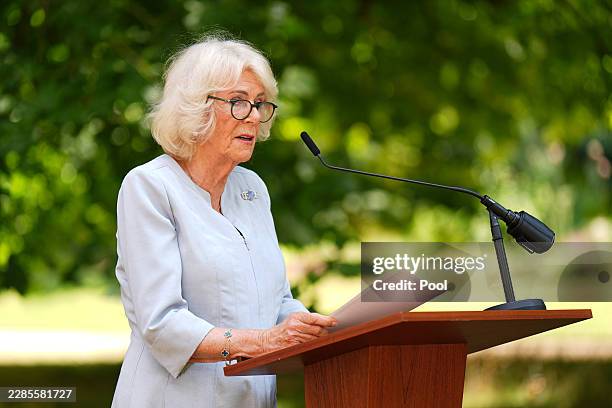
Queen Camilla's 79th birthday celebration arrived with the usual public markers: a new photograph, a public royal schedule, and the polite birthday attention that follows a senior public figure. But the more useful moment came two days earlier. On July 15, 2026, at the Royal Osteoporosis Society's 40th anniversary reception, Camilla used the week not to look backward, but to warn about a disease she called "a silent thief hiding in plain sight." She also described how bones weakened by osteoporosis can shatter during ordinary acts such as "sneezing or picking up a grandchild." [1][2]
That phrase matters because it names the part families often miss. Osteoporosis does not usually announce itself with a dramatic first symptom. Bone density can decline quietly for years, while a parent still shops, cooks, climbs stairs, and insists everything is fine. Then a fall from standing height, a twist, or even a routine movement becomes a fracture, and the conversation changes overnight to pain control, walkers, bathroom access, stairs, and whether home is still safe.
Camilla's connection to osteoporosis advocacy is not new. She joined the National Osteoporosis Society in 1994, became its patron in 1997, and became president in 2001; the July 2026 event marked 40 years of the organization now known as the Royal Osteoporosis Society. [2] The birthday timing simply made the subject harder to pass over.
The Family Story Behind the Speech
The speech carried weight because it came from a daughter who watched osteoporosis alter her mother's body and daily life. Camilla has described how her mother, Rosalind Shand, lost 8 inches in height, became so bent that she could not digest food properly, needed oxygen, and had bones fragile enough to break from hugs. The family was reportedly told, "Sorry, you're old." [3]
That sentence is more than an unpleasant memory. It captures a problem many caregivers still recognize: pain, shrinking height, stooped posture, and repeated fractures can be treated as ordinary aging instead of signs that deserve evaluation. Aging changes the body, but it should not become a blanket explanation that ends the investigation.
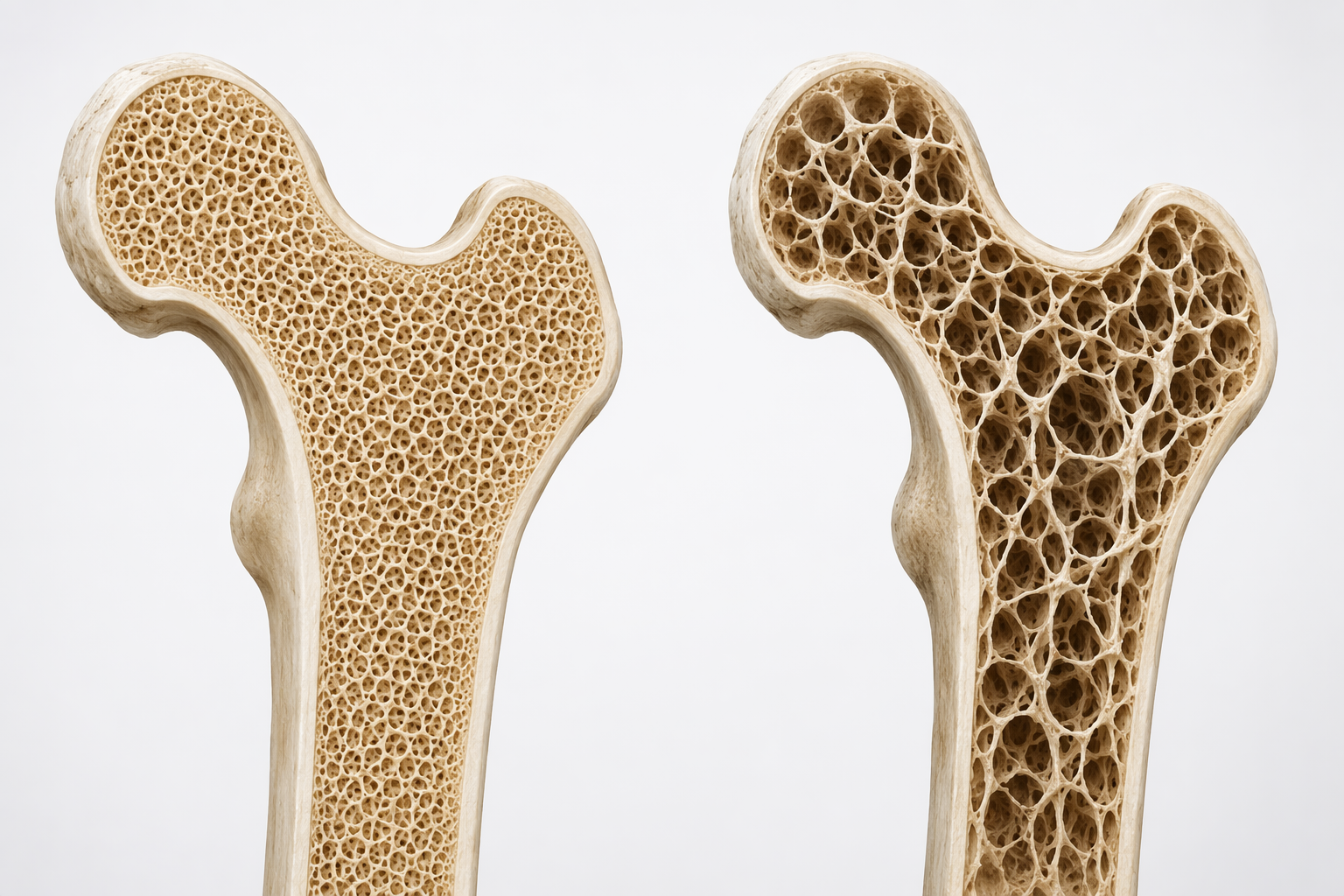
Osteoporosis means bones have become less dense and more fragile. The danger is not only the bone loss itself, but what happens when that hidden weakness meets a fall, a missed step, a poorly lit hallway, or a rushed trip to the bathroom. A younger or stronger-boned person might bruise. An older adult with untreated osteoporosis may break a hip, wrist, rib, or vertebra.
Why a Silent Disease Still Gets Missed
The scale is large enough that families should not treat osteoporosis as a rare diagnosis. Reporting from Camilla's Royal Osteoporosis Society event stated that osteoporosis affects half of women and 1 in 5 men over 50, with postmenopausal women at highest risk and family history an important predictor. [2][4]
Those numbers do not mean every older adult has osteoporosis, and they do not tell an individual person whether medication is needed. They do mean that a woman after menopause, an older man with a fracture history, or anyone with a parent who had osteoporosis deserves more than a vague instruction to be careful.
Underdiagnosis is easy to understand once you look at how families experience the condition. High blood pressure produces a number at the doctor's office. Diabetes produces blood sugar results. Osteoporosis may produce nothing obvious until the first fracture. A parent can lose height slowly enough that no one notices until old photographs or clothing fit make the change plain. Back pain may be blamed on age. A wrist fracture may be treated as one unlucky fall rather than a clue.
That is why awareness has to become a question in the exam room. Has my parent ever had a low-trauma fracture? Has height changed? Is there a family history of osteoporosis or hip fracture? Has menopause, long-term medication use, smoking, heavy alcohol use, poor nutrition, or low activity changed the risk picture? These are not questions that diagnose osteoporosis at the kitchen table. They are questions that help a clinician decide whether bone density testing or treatment discussion is overdue.
Start With Screening, Not Guesswork
The test families most often hear about is a DXA scan, a bone density scan used to help assess osteoporosis and fracture risk. Camilla's July 2026 speech also pointed to the Royal Osteoporosis Society's online risk checker, which had reached more than 500,000 people in the United Kingdom. [2] That figure is not proof that every user got better care, but it does show something practical: people are more likely to act when risk becomes concrete.
For caregivers, the most useful move is often simple and specific: ask the primary care clinician whether a DXA scan or fracture-risk assessment is appropriate. Bring the details that may not be obvious in a short appointment: prior fractures, height loss, family history, menopause history, medications, balance problems, recent falls, appetite changes, and whether the person avoids walking because of fear.
| What to bring up | Why it matters |
|---|---|
| A fracture from a minor fall or ordinary movement | It may suggest bone fragility rather than just bad luck. |
| Noticeable height loss or new stooped posture | It can point to possible vertebral compression fractures or bone loss. |
| A parent or sibling with osteoporosis or hip fracture | Family history can change the level of concern. |
| Postmenopausal status | Risk rises for many women after menopause. |
| Recent falls, dizziness, or fear of walking | Bone strength and fall risk need to be addressed together. |
A risk conversation is not the same as starting treatment. It is the step that stops families from waiting until the emergency department discovers the problem for them.
Food and Supplements Should Support the Plan, Not Replace It
Nutrition is one of the few bone-health areas where caregivers can help quickly, but it needs to be handled carefully. Calcium, vitamin D, and protein all matter for older adults, and Camilla's advocacy coverage emphasized getting enough calcium and vitamin D along with protein intake of 1.0 to 1.3 grams per kilogram of body weight per day for older adults. [2]
That does not mean a caregiver should start piling supplements into a pill organizer without review. Kidney disease, constipation, medication interactions, swallowing difficulty, appetite loss, and existing prescriptions all change the practical answer. The better first step is a medication-and-diet review: what the person actually eats, what they already take, whether vitamin D has been checked, and whether calcium should come mainly from food, supplements, or both.
Protein deserves special attention because it connects bone health to strength. An older adult who eats tea and toast, skips lunch, or avoids meat because chewing is hard may not only lose weight; they may lose muscle. Less muscle can mean weaker balance, slower recovery after a stumble, and more difficulty rising from a chair. If chewing, denture fit, grocery access, depression, or cost is limiting intake, the nutrition problem is also a fall-prevention problem.
Movement Has to Be Safe Enough to Keep Doing
Bone responds to load, and muscles respond to use. The prevention measures highlighted around Camilla's advocacy include weight-bearing and resistance exercise 3 to 4 days per week, along with smoking cessation and limiting alcohol. [2] For an older adult, that can mean walking, stair practice if safe, sit-to-stand work, light resistance bands, supervised strength training, or a physical therapy plan after a fall or fracture.
The word "exercise" can be unhelpful if it makes a frail parent picture a gym. The more useful question is: what movement can this person do safely, repeatedly, and with enough challenge to maintain strength? For one person, that may be a supervised class. For another, it may be standing from a sturdy chair five times before breakfast, walking the hallway after lunch, and practicing balance beside a counter with a caregiver nearby.
Pain, dizziness, new weakness, shortness of breath, or a recent fracture should change the plan. In those cases, ask for medical guidance before increasing activity. The point is not to push through warning signs. It is to keep fear from shrinking daily movement until the person becomes weaker and less steady.
Fall-Proofing Is Bone Protection
Once osteoporosis is part of the picture, home safety stops being a nice extra. It becomes a way to reduce the chance that fragile bone meets the floor. A throw rug, a dark hallway, a loose stair rail, or a bathroom without a grab bar may look ordinary until a fracture turns it into the detail everyone wishes they had fixed.
Start where falls are most likely to happen during rushed or tired moments: the path from bed to bathroom, the shower, stairs, entryways, and the kitchen. The site's CDC STEADI room-by-room fall prevention checklist is a practical place to work through lighting, clutter, flooring, footwear, bathroom supports, and stair safety without trying to redesign the entire house in one afternoon.
- Remove or secure loose rugs and cords on walking paths.
- Add night lights between the bed, bathroom, and kitchen.
- Check that stair rails are sturdy and easy to grip.
- Use non-slip surfaces and properly placed grab bars in the bathroom.
- Keep frequently used items at waist-to-shoulder height to avoid climbing and deep bending.
Some changes are behavioral rather than structural. An older adult who gets up at night should have glasses, a phone, and a light within reach. Someone who rushes to answer the door may need a chair near the entry or a reminder that no visitor is worth a hip fracture. If walking has become unsteady, the site's guide to maintaining mobility at home can help connect layout changes with independence rather than making the home feel like a sickroom.
Products can help, but they should solve a real problem. A grab bar that is installed in the wrong place, a walker that is the wrong height, or a bath mat that curls at the edge can add risk instead of reducing it. Before buying, use a structured approach to evaluate home safety products for seniors, especially when a parent already has osteoporosis, poor balance, vision changes, or a recent fracture.
What Families Can Do This Week
The useful response to Camilla's speech is not worry in the abstract. It is a short list of actions that moves osteoporosis from a hidden possibility to a managed risk.
- Ask whether a DXA scan or fracture-risk assessment is appropriate, especially after menopause, height loss, family history, or any low-trauma fracture.
- Bring a written history of falls, fractures, height changes, medications, appetite changes, smoking, alcohol use, and activity level to the appointment.
- Review calcium, vitamin D, and protein intake with a clinician or dietitian before adding supplements.
- Build safe weight-bearing and resistance movement into the week, with medical or physical therapy guidance when balance, pain, or recent fracture is an issue.
- Walk through the home with fall prevention in mind, starting with the bedroom-to-bathroom route, stairs, shower, and entryway.
There is no need to turn every conversation with an older parent into a lecture about bones. A better approach is often practical and calm: "You mentioned losing height. Let's ask whether that changes your fracture risk." Or, "Since you fell last month, let's check both your balance and your bone health." That framing respects the person while still taking the risk seriously.
Camilla closed her July 2026 remarks on a hopeful note: "We are not quite there yet, but we are well on the way." [2] For families, being on the way means making the next appointment, asking the bone-density question, and fixing the part of the house most likely to turn a silent disease into a life-changing fracture.
References
- New photograph marks Queen's 79th birthday, BBC News, link
- Camilla calls osteoporosis a silent thief in powerful speech about deadly disease, The Independent, link
- Queen Camilla opens up about her mother's death from devastating osteoporosis in powerful speech, Hello! Magazine, link
- Queen Camilla Painful Family Health History With Osteoporosis, TODAY, link
Questions to bring to a clinician or OT
This is not medical, legal, or a family's final decision — only a framework. Bring these questions to a clinician, occupational therapist, or your local Area Agency on Aging.
Find Local HelpRelated reading
Noticed something outdated or inaccurate on this page? Flag a correction. We review every report against CDC, NIA, and AARP HomeFit guidance before updating a page.