
Caregiver decision guide
What Queen Elizabeth II's Senior Lifestyle Reveals About Aging Well
Queen Elizabeth II's final years offer a narrative blueprint for helping aging loved ones live with dignity. This article uses four pillars—purpose, routine, movement, and social connection—to show what research validates and families can apply, without palaces or staff.
Two days before she died, Queen Elizabeth II was still standing for duty. On September 6, 2022, at Balmoral Castle, she received Liz Truss and formally asked her to become prime minister. The photograph from that meeting is quiet rather than grand: a small older woman in a gray cardigan and tartan skirt, leaning on a cane, smiling in a drawing room. Forty-eight hours later, she was gone at 96. Her private secretary later described the death as “very peaceful,” saying she had “slipped away,” with “old age” and “no pain.”[1]
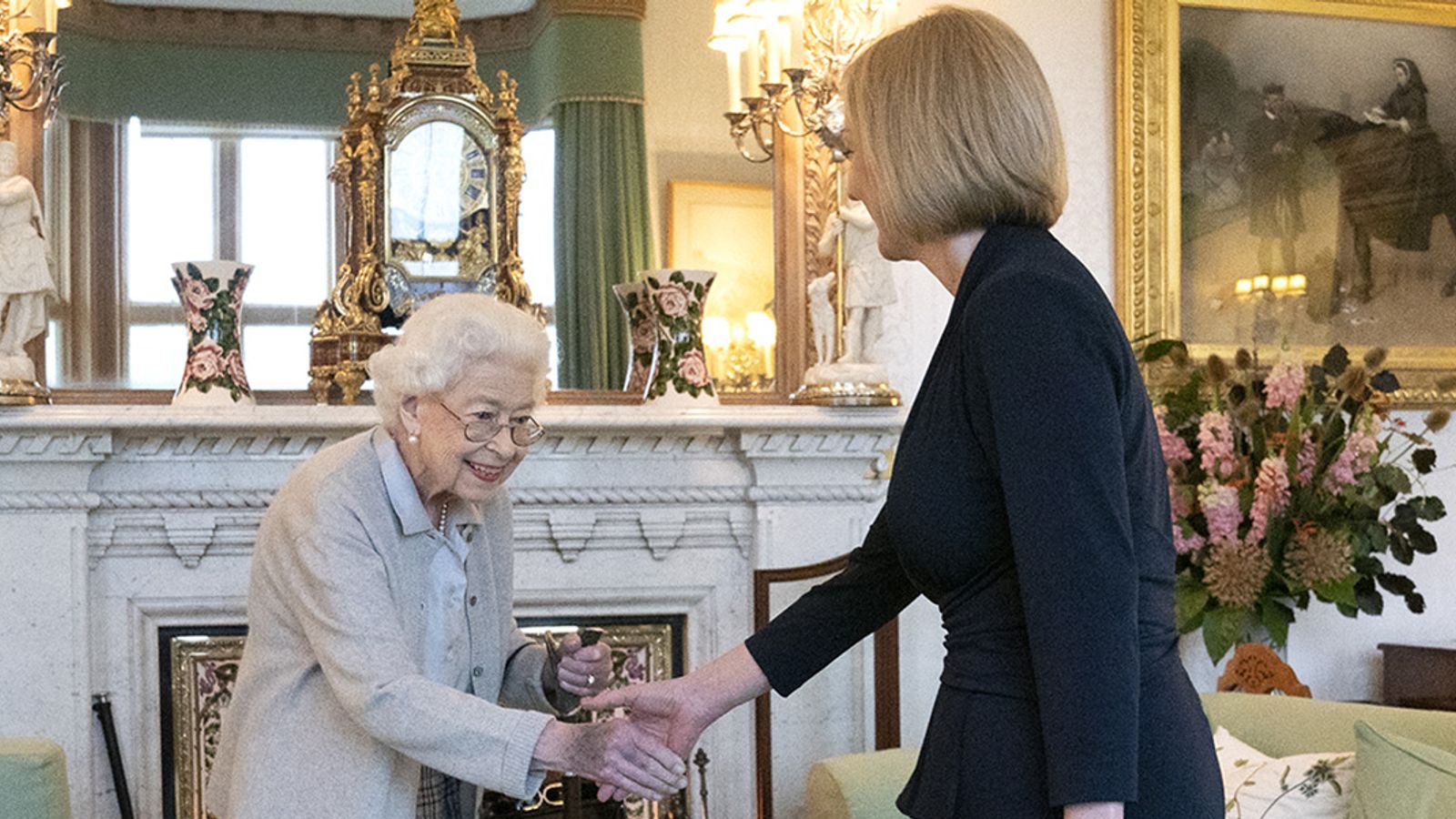
That scene is easy to romanticize, and it should not be. Queen Elizabeth had advantages most families cannot begin to reproduce: staff, medical access, protected grounds, private secretaries, cooks, drivers, and a lifetime of institutional support. An adult daughter coordinating a parent’s prescriptions before work is not living a royal version of the same problem.
Still, the final Balmoral scene matters because it points to a better caregiving question. Not “How do we stretch life at any cost?” and not “Which habits made someone live to 96?” The more useful question is: what helped an aging person remain recognizable to herself — purposeful, steady, physically engaged, and socially connected — until very late in life?
The answer is not a palace. It is a pattern.
Purpose Was Not Retired Out From Under Her
In October 2022, The Lancet Healthy Longevity called Queen Elizabeth II “an exemplar of healthy longevity.” The journal’s PubMed abstract framed her long life not simply as survival, but as a public example of remaining active and engaged across old age.[2] That distinction matters for families. Many older adults do not fear help itself as much as they fear becoming only the object of help.
By her 90s, the Queen had outlived many of the people who had defined her earlier life. She had also lost Prince Philip, her husband of 73 years, in 2021. Yet the office of monarch still gave her a daily reason to dress, read, decide, receive, sign, and be expected. Reports on her longevity often note that she worked more than 40 hours a week into her 90s, but the number is less important than the structure beneath it: people were still waiting for her judgment.
That is not a small thing. Andrew Steele, author of Ageless, told TODAY.com that genetics accounts for less than 20% of human lifespan, leaving lifestyle and luck to explain much of the rest.[3] The figure should not be treated as a neat formula; no family can calculate a parent’s future from it. But it pushes back against the comforting fatalism that says aging is only genes playing out.
Purpose also has research weight beyond royal biography. Harvard Health, discussing a 2016 study on working past traditional retirement age, reported that healthy adults who worked one year longer had an 11% lower risk of dying during the study period, while even unhealthy adults had a 9% lower risk.[4] Those figures are directional, not a prescription for every older person to keep a job. Some work is exploitative. Some bodies are exhausted. Some caregiving situations require letting go of former roles. But the finding supports something many families observe at the kitchen table: being needed can steady a person.
The household translation is not to invent busywork. Older adults can usually tell when a task is fake. The better question is, “What can this person still own?” It may be choosing Sunday dinner, folding towels, watering plants, reviewing the grocery list, calling a grandchild before an exam, managing the birthday calendar, or deciding which photographs go into an album. The task does not have to be physically large. It has to be real enough that someone else would notice if it were not done.
This is where caregiving can accidentally become too efficient. In trying to protect a parent, adult children often remove every obligation: no cooking, no errands, no decisions, no risk, no inconvenience. Safety improves in one column while identity quietly drains out of another. A better plan leaves room for contribution, with the hard parts trimmed away. A father who can no longer drive to the hardware store may still choose the repair supplies. A mother who cannot host Thanksgiving may still decide the menu and assign the serving dishes. Purpose often survives when the role is edited rather than erased.
Routine Gave the Day Edges
The Queen’s daily life is often described through charming details: the 7:30 a.m. wake-up, breakfast around 8:30, afternoon tea, evening journaling, the red boxes of government papers. AARP’s Bryan Kozlowski used these routines to explain how consistent daily patterns can act as cognitive scaffolding for older adults, reducing the burden of repeated decision-making and helping the brain move through familiar sequences.[5]
That phrase, cognitive scaffolding, is useful because it makes routine sound less like rigidity and more like support. In later life, especially when memory, energy, sleep, or mood begin to shift, the day can become surprisingly demanding. Every “What now?” asks the brain to orient itself again. A familiar morning order — bathroom, clothes, breakfast, pills, newspaper, walk — lowers the number of times an older person has to rebuild the day from scratch.
A royal schedule had servants to protect it. Ordinary homes have interruptions: clinic calls, insurance forms, grandchildren, work shifts, broken appliances, and the unpredictable weather inside an aging body. That does not make routine impossible. It means the routine must be smaller and more humane.
| Instead of managing every hour | Preserve a few dependable anchors |
|---|---|
| A full printed schedule | A consistent wake-up window |
| A rigid meal plan | Breakfast and medications in the same order |
| Constant reminders | Visual cues placed where the action happens |
| Removing all choices | Limited choices at predictable times |
| Correcting every deviation | Protecting the routines that affect safety, sleep, food, and dignity |
The practical value is often in the mechanics. Put the pill organizer near the breakfast plate if medication follows food. Keep the walking shoes by the door actually used, not the door that looks tidier. Serve tea, coffee, or a favorite snack at a familiar time if that pause helps the afternoon settle. If journaling is too much, a one-line notebook — “Who visited today?” or “What mattered today?” — can preserve continuity without turning memory into a test.
Routine also helps family relationships. When every need is handled as an emergency, the older person begins to feel watched and the adult child begins to feel on call. Predictable check-ins can be kinder than constant checking. “I’ll call after breakfast” lands differently from five anxious calls scattered through the morning. The first creates a rail; the second can feel like surveillance.
None of this means forcing an aging parent into a childish timetable. The Queen’s routine worked partly because it was hers: built around duties, tastes, habits, and symbols that had accumulated over a lifetime. A useful caregiving routine should feel the same way. It should borrow from the person’s old life whenever possible, because familiarity carries emotional information. The blue mug, the local news, the cardigan by the chair, the call after church — these are not decorative details. They tell the person, “You are still in your own life.”
Movement Stayed Woven Into Ordinary Pleasures
Queen Elizabeth’s movement was not framed as exercise culture. It was built into pleasures and obligations: walking corgis, riding horses for much of her life, spending time outdoors at Balmoral, and continuing to move through public duties as her body allowed. TODAY.com reported that she walked her corgis daily and hiked at Balmoral into her 90s.[3]
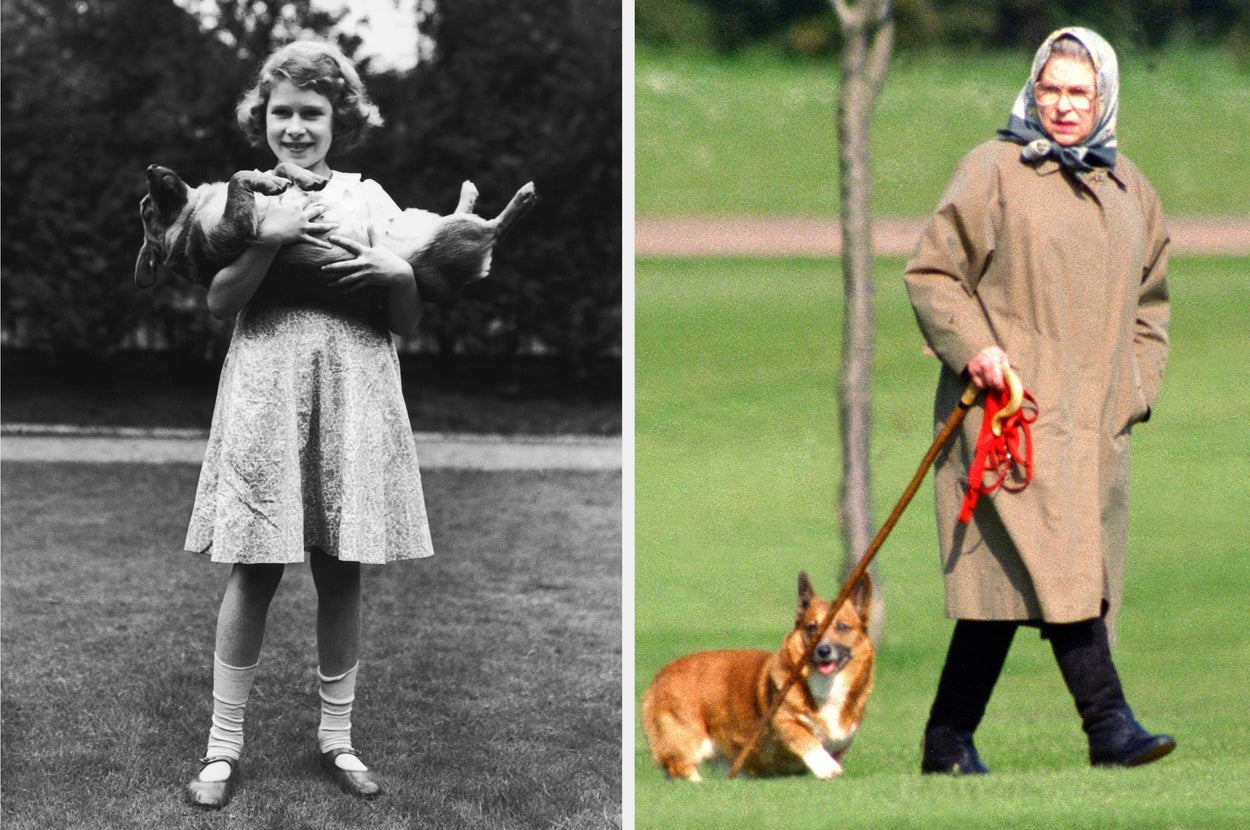
There is a lesson in the ordinariness of that movement. Many families hear “exercise” and picture a program their parent will reject: new shoes, new rules, a chart on the refrigerator, maybe a physical therapist’s handout that disappears under the mail. But movement that attaches to affection or routine has a better chance of surviving. A dog needs to go out. The garden needs a look. The mailbox is at the curb. The neighbor expects a wave.
The research should be used carefully here. TODAY.com cited research linking 10,000 steps a day with about a 50% lower risk of dementia, but that does not mean 10,000 steps prevents dementia or that a frail parent should be pushed toward a number that no longer fits their body.[3] The more portable message is that regular walking and less sitting are worth protecting, even when the dose changes.
Nature adds another layer. A 2019 Scientific Reports study cited in the same TODAY.com coverage linked spending at least two hours a week in nature with better self-reported health and well-being.[3] Balmoral gave the Queen an unusually beautiful version of that exposure. Most families are working with a porch, a sidewalk, a courtyard, a senior center garden, or a bench near a parking lot. The scale is different. The human need is not.
Pets belong in this same conversation, not because corgis are a longevity secret, but because animals can create movement, touch, schedule, and companionship at once. The National Institutes of Health reported in 2018 that interacting with animals can decrease cortisol, lower blood pressure, and reduce loneliness.[6] For some older adults, a pet is too much responsibility; for others, visits from a family dog, feeding a cat with help, or watching birds at a feeder can supply a gentler version of the same connection.
Connection Was Built Into the Job, the Marriage, and the House
Queen Elizabeth’s social world was unusually dense. She had a 73-year marriage to Prince Philip after marrying him in 1947, daily contact with staff, regular audiences with prime ministers, ceremonial duties, family relationships, and a public role that required her presence.[3] Not all of those relationships were intimate, and royal family life was hardly free of strain. But isolation was not the default shape of her day.
For aging parents, this may be the hardest pillar to preserve because losses accumulate. Friends die. Driving stops. Hearing loss makes restaurants exhausting. Stairs make visits complicated. Pride makes someone say “I’m fine” until the week has narrowed to television, meals, and medical appointments.
The health stakes are not sentimental. A JAMA Network Open meta-analysis found that social isolation was associated with a 32% higher risk of all-cause mortality.[7] Association is not the same as proof that loneliness directly causes death in every case; poor health can also make people more isolated. But the relationship is strong enough that families should treat connection as part of care, not as a nice extra once the “real” tasks are done.
The useful move is to separate company from performance. An older parent does not always need a big outing. Sometimes connection is a chair in the kitchen while someone cooks, a standing phone call with a sibling, a neighbor who brings in the mail and stays three minutes, a grandchild doing homework at the table, a faith service watched at the same time as a friend, or a care aide who has been given enough time to speak like a person rather than complete a route.
Caregivers can also protect connection by reducing friction. Hearing aids charged before a visit, glasses cleaned, the walker already near the door, a quiet corner chosen at a family gathering — these small preparations decide whether social life remains possible. Dignity is often won or lost before the visitor arrives.
Food Was Part of Rhythm, Not a Magic Formula
The Queen’s eating habits attract predictable attention: grilled fish, vegetables, limited starches when dining alone, and a fondness for dark chocolate. Former royal chef Darren McGrady has described this pattern as simple and moderate.[8] It is worth mentioning, but not stretching. McGrady left royal service in 1993, so his memories may say more about earlier decades than the Queen’s final years.[8]
For families, the better lesson is not a royal menu. It is the role meals play in steadiness. Food anchors medication timing, hydration, social contact, blood sugar, pleasure, and memory. A parent who eats more reliably when soup is served in the familiar bowl has not become difficult; the bowl is doing work. A square of chocolate with tea may matter less for nutrition than for continuity. In late life, eating well is often less about perfect rules and more about making nourishment recognizable enough to be accepted.
What Families Can Actually Borrow
No ordinary household can reproduce Queen Elizabeth’s senior lifestyle, and pretending otherwise insults the daily labor of caregiving. Most families do not have a private secretary organizing the calendar or a chef adjusting meals. They have siblings with different opinions, a parent who may resist help, paid caregivers who may change, and a health system that often expects families to fill every gap.
But the underlying needs are ordinary. A person needs something meaningful to do. The day needs a few dependable rails. The body needs chances to move within its limits. The mind and heart need other people. These are not glamorous interventions, which is why they are easy to undervalue. They also shape the difference between a life that is merely managed and a life that still feels inhabited.
- Preserve one real responsibility before adding another service.
- Protect the routines tied to waking, meals, medication, sleep, and emotional calm.
- Attach movement to something the person already values: a pet, a plant, a mailbox, a porch, a familiar route.
- Treat social contact as care infrastructure, not entertainment.
- Keep pleasure in the plan, especially when the plan is medically complicated.
The Balmoral photograph stays with people because it does not show youth disguised as age. It shows age, visibly. The cane is there. The frailty is there. So is the duty. The Queen’s life cannot be turned into a universal recipe, and her 96 years cannot be promised to anyone else. What can be borrowed is more modest and more useful: arrange the day so an older person can still contribute, recognize the rhythm, move through the world, and be met by other human beings as someone who is still here.
References
- Queen Elizabeth II: Monarch slipped away peacefully, private secretary says, BBC, January 13, 2024.
- Queen Elizabeth II: an exemplar of healthy longevity, The Lancet Healthy Longevity, October 2022.
- Queen Elizabeth II’s longevity habits: What helped her live to 96?, TODAY.com, September 2022.
- Working later in life can pay off in more than just income, Harvard Health Publishing.
- Queen Elizabeth II’s 10 Best Life Lessons, AARP.
- The Power of Pets, NIH News in Health, February 2018.
- Association of Social Isolation and Loneliness With All-Cause and Cause-Specific Mortality, JAMA Network Open.
- Queen Elizabeth II's diet and exercise habits likely helped her live a long, healthy life, Business Insider, September 2022.
Questions to bring to a clinician or OT
This is not medical, legal, or a family's final decision — only a framework. Bring these questions to a clinician, occupational therapist, or your local Area Agency on Aging.
Find Local HelpRelated reading
Noticed something outdated or inaccurate on this page? Flag a correction. We review every report against CDC, NIA, and AARP HomeFit guidance before updating a page.