
Caregiver decision guide
Will Your Senior's SSI Drop If They Live With You in 2026?
Learn how SSI in-kind support rules can reduce your senior parent's benefit by hundreds of dollars per month if they live with you rent-free—and discover the steps you can take to prevent those reductions in 2026.
If your parent moved in with you rent-free, SSI can drop even when the family is simply trying to help. In 2026, the federal maximum SSI is $994 a month for one person and $1,491 for a couple, so a shelter-based reduction can take a noticeable bite out of a small check.[2]
The two main reductions are the value of the one-third reduction, or VTR, which is about $331 a month, and the presumed maximum value, or PMV, which can cut benefits by up to $351 a month when the senior pays less than fair-share shelter costs.[1][2]

Why Free Housing Still Matters
The part that surprises families is that food stopped being part of the problem in 2024. As of September 30, 2024, food provided by relatives no longer counts as in-kind support for SSI, which removed a common trap for multigenerational households.[1][3]
Shelter is still the issue. If your parent lives in your home and does not pay enough toward the housing costs SSA counts, the agency can treat that support as in-kind support and reduce the check unless an exemption applies.[1]
What SSA Counts As Shelter
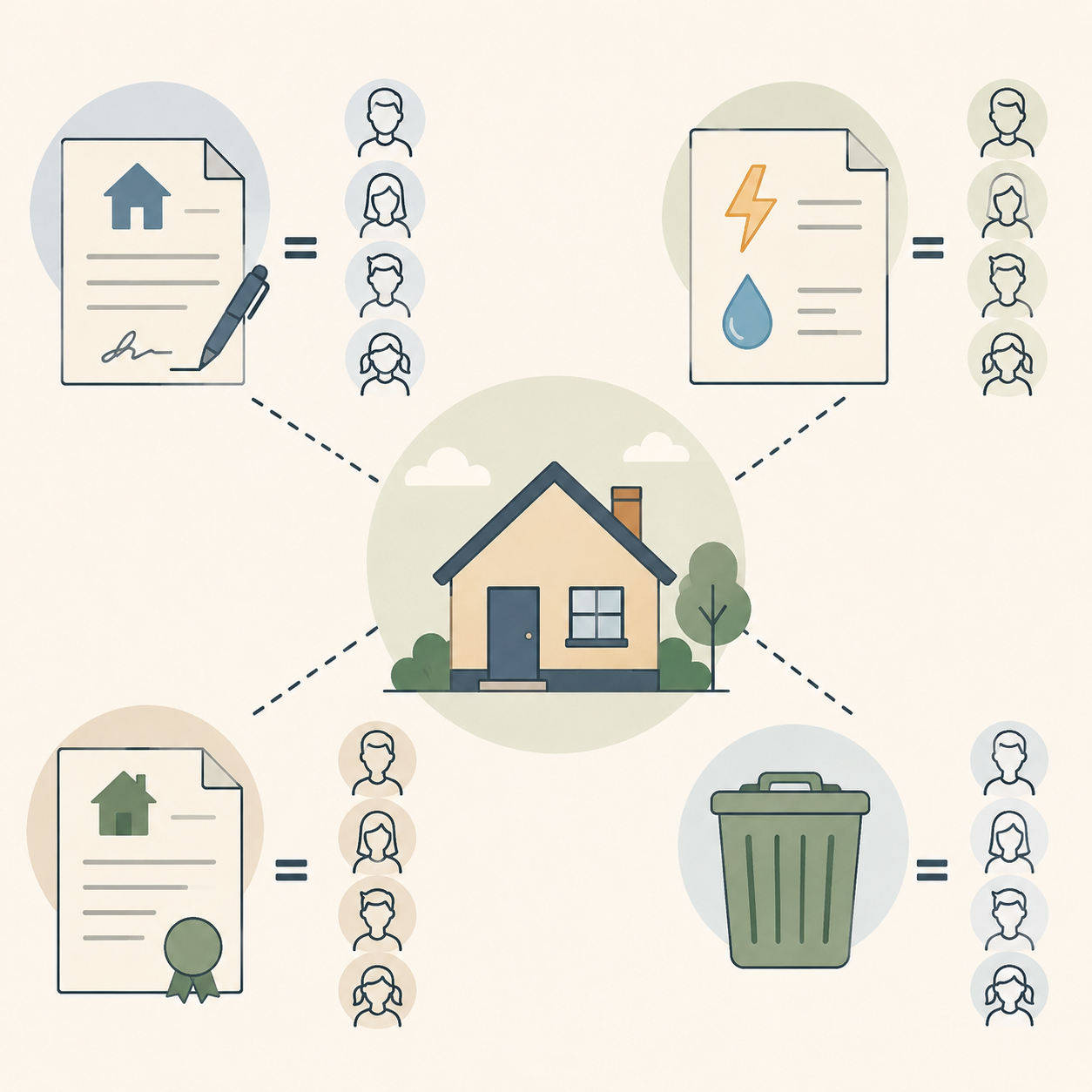
SSA counts a narrow set of shelter expenses when it decides whether a senior is paying a fair share. The practical test is to total the household's counted shelter costs, divide by the number of people in the home, and compare that amount with what the senior actually pays.[1]
| Counts as shelter cost | Does not count |
|---|---|
| Rent or mortgage | Phone |
| Property taxes | Cable TV |
| Gas, oil, or electricity | Internet |
| Water or sewer | Auto insurance |
| Garbage removal | Veterinary bills |
| Home or renter's insurance | Other non-shelter household bills |
If the senior's payments cover the senior's share of the counted shelter costs and you can show the payments, the reduction generally should not apply. If the household is just absorbing the cost informally, SSA can treat that difference as support and lower the benefit.[1]
Ways Families Avoid The Reduction
A written rent or contribution arrangement works best when it tracks the real numbers. Some families charge a fixed monthly amount equal to the senior's share of the counted shelter costs; others keep a simple ledger and use bank transfers so the paper trail matches the household math. The point is to document that the senior paid a fair share.[1]
If the caregiver's household receives SNAP, the public-assistance household exemption can protect the senior from an ISM reduction under current rules.[5] That protection is not something to assume will stay untouched: a proposed rule would remove SNAP from the public-assistance household definition, and as of July 2026 its final status is still unconfirmed.[5]
The Kitchen-Table Move
For families, the cleanest next step is to calculate the senior's fair share before or as soon as the move happens, then put the arrangement in writing and keep receipts, bank records, or other proof of payment. That makes it easier to correct the record if SSA asks later and lowers the chance that a fixable misunderstanding turns into an overpayment problem.[1]
If the move is still ahead, the pre-move conversation guide can help you set expectations first. If the budget gap is already real, the guide to the 2026 maximum SSI benefit shows how far a reduced check can fall, and the paying-for-home-help guide can help you think through the next dollar after housing.
References
- Living Arrangements — Supplemental Security Income (SSI) — Social Security Administration
- SSI Federal Payment Amounts for 2026 — Social Security Administration
- How In-Kind Support Affects SSI Benefits: Rules, Limits, and Examples — National Council on Aging
- Trump Administration Poised to Cut SSI Benefits for Nearly 400,000 Low-Income Disabled and Older People — Center on Budget and Policy Priorities
Questions to bring to a clinician or OT
This is not medical, legal, or a family's final decision — only a framework. Bring these questions to a clinician, occupational therapist, or your local Area Agency on Aging.
Find Local HelpRelated reading
Noticed something outdated or inaccurate on this page? Flag a correction. We review every report against CDC, NIA, and AARP HomeFit guidance before updating a page.