Family Caregiver Leave Options: Understanding FMLA, State Paid Leave, and Employer Policies
For: working caregiver12 minutesReviewed: 2026-07-05
Family Caregiver Leave Options: Understanding FMLA, State Paid Leave, and Employer Policies
This guide explains the three overlapping layers of family caregiver leave in the U.S. — federal FMLA, state paid leave programs, and employer-provided policies — helping employed caregivers determine which options they qualify for and how to access them.
By Editorial Team
new caregiver
experienced caregiver
long-distance caregiving
spousal caregiver
working caregiver
daily routines
medication management
personal hygiene
care coordination
first steps
ADLs
IADLs
If you need time away from work to care for a parent, spouse, or another aging family member, the useful question is not “Can I take caregiver leave?” It is “Which layer of leave actually applies to me?” In the U.S., family caregiver leave options usually come from three places: federal FMLA, your state’s paid leave program, and your employer’s own policy. They do not cover the same people, they do not pay the same way, and they do not always protect your job.
That distinction matters before you tell a hospital discharge planner you can be available next week, before you promise your parent you will handle every appointment, and before you assume HR will have one neat form waiting for you. Federal FMLA can protect a job for up to 12 weeks when an eligible worker cares for a spouse, parent, or child with a serious health condition, but it is unpaid and does not cover every worker or every family relationship; the most recent authoritative estimate cited by the U.S. Department of Labor puts FMLA eligibility at about 56% of workers.[1]
State paid family leave may replace wages and may cover more family relationships, but it depends entirely on where you work and whether your state has a mandatory program. As of mid-2026, 14 states and Washington, D.C. have mandatory paid family leave programs, with Delaware, Minnesota, and Maine launching benefits in 2026.[2] Employer-paid family leave can fill gaps, but it is far from guaranteed: only 27% of private-sector workers have access to paid family leave through employers, according to BLS 2023 data cited by New America.[3]
Start With the Three Layers, Not the Leave Form
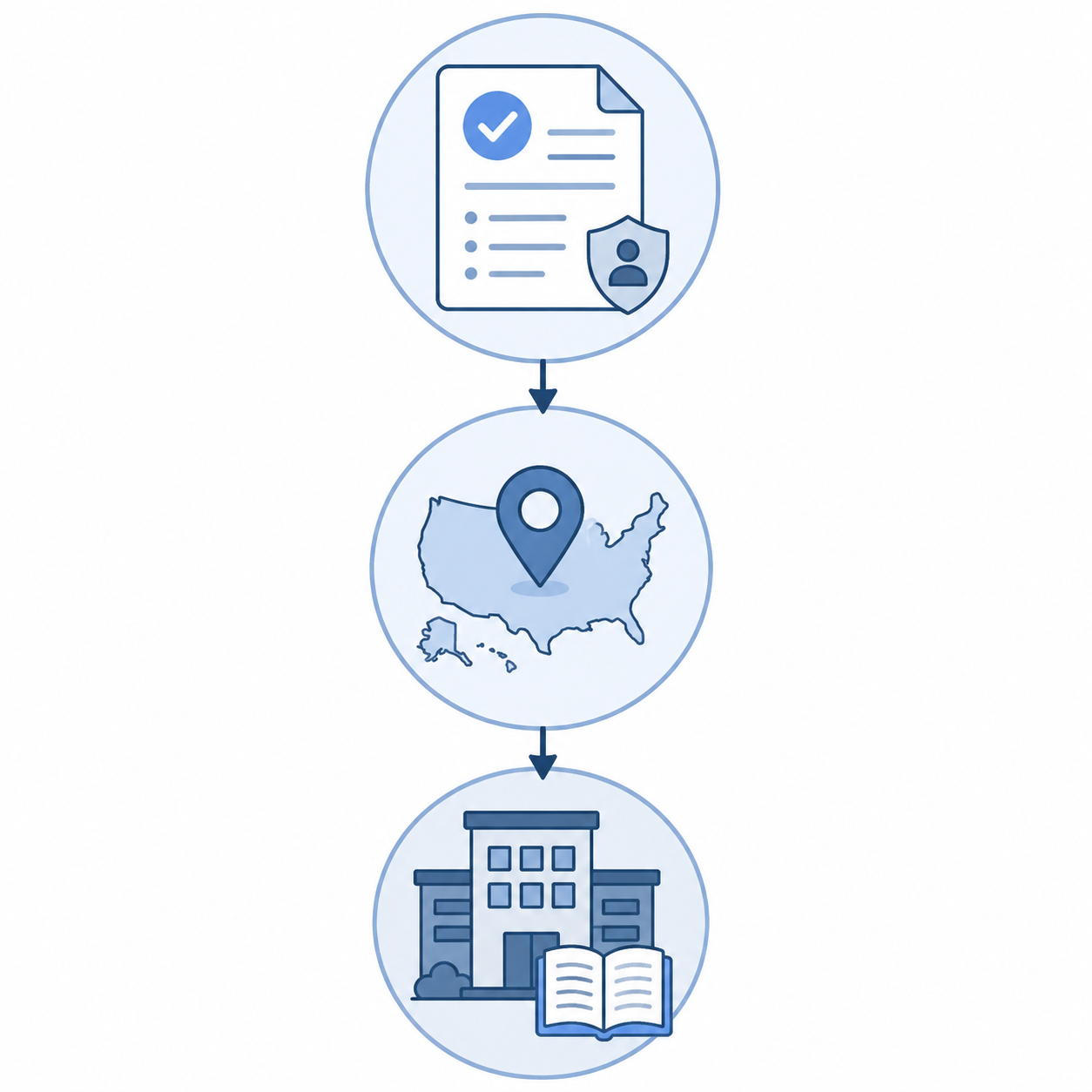
A caregiver leave decision works best when you check the layers in order. Federal FMLA answers whether your job may be protected. State paid leave answers whether part of your paycheck may continue. Employer policy answers whether your company offers additional paid time, flexibility, or coordination rules that sit on top of the law.
Layer
Main question it answers
What to verify first
Federal FMLA
Can I take job-protected unpaid leave?
Employer size, your tenure and hours worked, and whether the person you care for is covered
State paid family leave
Can I receive wage replacement while caregiving?
Whether your state has a mandatory program, whether your relationship qualifies, and how benefits are calculated
Employer policy
Does my company add paid caregiver leave, PTO, flexibility, or a private plan?
The handbook, HR portal, union contract, or benefits administrator rules
The order is important because a policy name can create false confidence. “Family leave” may mean unpaid protected time under federal law, partial wage replacement under a state program, a company-paid benefit, or a combination. It may also mean none of those if you are too new in the job, work for a small employer, live in a state without paid leave, or care for someone outside the program’s family definition.
For a broader work-and-care planning framework beyond leave, see The Working Caregiver's Survival System. But when the immediate problem is time away from work, begin with the eligibility map.
Layer 1: Federal FMLA Protects Some Jobs, But It Does Not Replace Wages
The Family and Medical Leave Act is often the first benefit people hear about, and it is worth checking first because job protection is the foundation. If you qualify, FMLA can allow up to 12 workweeks of unpaid, job-protected leave in a 12-month period to care for a spouse, parent, or child with a serious health condition. It also provides up to 26 workweeks in a single 12-month period for covered military caregiver leave.[1]
The word “unpaid” is not a footnote. FMLA may keep your job and health benefits protected while you are out, but it does not send you a paycheck. Some workers use PTO, sick time, vacation, short-term disability for their own health condition, state paid leave, or employer-paid family leave during the same absence. Whether those can run at the same time depends on the program and employer rules.
The FMLA family definition is narrower than many caregiving families expect
For elder care, the relationship rule can be the painful surprise. Federal FMLA generally covers care for a spouse, parent, or child with a serious health condition. The Department of Labor’s caregiver guidance states that FMLA does not cover care for parents-in-law, grandparents, siblings, or chosen family members under the family-care provisions.[1]
That does not mean the care is less real. It means federal job protection may not follow the relationship. If you are the only local adult child caring for your mother-in-law, or the sibling who manages every oncology appointment, federal FMLA may not be the layer that helps. That is exactly when the state and employer layers deserve a careful look.
What to check before you assume FMLA applies
Employer coverage: FMLA generally applies only if your employer is covered by the law.
Your work history: eligibility depends on tenure and hours worked, not just being a full-time employee.
Worksite rules: some employees at smaller or remote worksites may not qualify even if the company is large elsewhere.
Family relationship: spouse, parent, and child are not the same as in-law, sibling, grandparent, or close friend under federal FMLA.
Medical certification: your employer may require documentation showing the serious health condition and your need for leave.
Ask HR for the FMLA notice and certification process before you disclose more personal detail than necessary to a supervisor. The practical wording can be simple: “I may need leave to care for a parent with a serious health condition. Please send me the FMLA eligibility notice and any required certification forms.”
Layer 2: State Paid Family Leave May Pay You, But Only If Your State and Relationship Qualify
State paid family leave is the layer many caregivers miss because they stop after hearing “FMLA is unpaid.” In states with mandatory paid family leave, a worker may receive partial wage replacement while taking time to care for a seriously ill family member. These programs are state-run or state-regulated, and they are not available nationwide.
As of the Bipartisan Policy Center’s April 2026 update, mandatory paid family leave exists in 14 states and Washington, D.C., with Delaware, Minnesota, and Maine launching benefits in 2026.[2] Benefit amounts change, often tied to state wage formulas. Across state programs, wage replacement ranges from 60% to 100% of wages, with maximum weekly benefits ranging from $900 in Delaware to $1,765 in California, according to BPC and New America summaries of state paid leave programs.[2][3]
Those numbers are useful for scale, not for budgeting down to the dollar. If you are planning a specific leave in Q3 2026, use your state’s paid leave calculator or benefits page, because maximums and formulas can change annually.
State programs may cover relatives FMLA excludes
For adult children and extended-family caregivers, the family definition may be the most important difference between FMLA and state paid leave. Many state programs cover a wider range of relationships than federal FMLA, including grandparents, siblings, parents-in-law, and, in some states, people with a close association equivalent to family.[2]
This is where the map can change. A worker caring for a father may qualify for both FMLA and state paid leave. A worker caring for a parent-in-law may be outside federal FMLA but inside a state paid leave program. A worker caring for a close family friend may have no federal protection but may have a state option if the state recognizes chosen family. The answer is state-specific.
Paid leave and job protection are related, but not identical
Do not assume a wage-replacement program automatically protects your job in every situation. Some state paid leave programs include job-protection rules, some interact with FMLA, and some workers receive pay under one law while job protection comes from another. If both FMLA and state paid leave apply, they may run at the same time rather than stacking into two separate leave periods.
That is not a reason to avoid applying. It is a reason to ask the question precisely: “Will my state paid family leave run concurrently with FMLA, and what protects my job during the leave?” HR may answer part of that. The state paid leave agency or insurer may answer the benefit-payment part. You may need both answers before choosing dates.
Be cautious with voluntary state programs
Some states have voluntary paid family leave models rather than mandatory statewide coverage. They should not be treated as if they are broadly available to most workers. BPC identifies nine states with voluntary programs and notes very low enrollment in at least some of them; New Hampshire’s voluntary program covers about 2.5% of the workforce.[2]
So if an article or benefits slide says your state “has paid family leave,” check whether it means a mandatory program you can actually use, an optional insurance product your employer may or may not have purchased, or a narrow public-employee benefit. The difference is not academic when rent is due.
Layer 3: Employer Policies Can Help, But They Are the Least Predictable Layer
Employer policies matter because they may provide paid caregiver leave, expanded family definitions, remote-work flexibility, donated leave banks, PTO coordination, or private-plan administration of a state benefit. They also vary wildly. A large employer may have a generous paid caregiver policy. Another may offer nothing beyond legally required leave. A smaller employer may not be covered by FMLA at all.
The access numbers are modest. AbsenceSoft’s 2026 report says 29% of employers currently offer paid caregiver leave, while 30% plan to offer it in the next year.[4] That is employer adoption, not proof that every employee at those companies qualifies or that the leave is long enough for an extended care crisis.
Look in the handbook or HR portal for terms such as “paid family leave,” “caregiver leave,” “family care leave,” “elder care benefits,” “leave of absence,” “PTO,” “sick and safe leave,” “bereavement,” “personal leave,” and “flexible work.” The labels are inconsistent, and some of the most useful help may sit outside the formal leave section.
Questions to ask HR or benefits
Do I qualify for FMLA, and will you send the eligibility notice in writing?
Does the company offer paid caregiver leave separate from PTO, sick time, or vacation?
If my state has paid family leave, does the employer use the state program or a private plan?
Will paid leave, PTO, sick time, state benefits, and FMLA run at the same time?
Which family relationships are covered under the company policy?
What documentation is required, who receives it, and how much notice is expected?
If you are nervous about asking, you do not have to lead with every family detail. Start with the benefit category and the relationship: “I need to understand my leave options to care for my mother after a serious medical event.” If the person is outside FMLA’s narrow family definition, name that early enough for HR to check state and company rules instead of assuming federal FMLA is the answer.
How the Layers Work Together in Real Planning
The hard part is not memorizing three programs. It is understanding how they overlap in your specific week. A caregiver may have job protection from FMLA, wage replacement from a state paid leave program, and an employer requirement to use accrued PTO during part of the same absence. Another caregiver may have state wage replacement but no federal FMLA protection because of employer size or work history. A third may have only PTO and an unpaid personal leave request.
This is why the application path can split. FMLA is usually handled through the employer. State paid family leave is usually handled through a state agency, state portal, insurer, or employer-approved private plan. Employer-paid caregiver leave is handled through HR, benefits, a third-party administrator, or a leave-management system. The same medical certification may not satisfy every layer.
If this is your situation
Check first
Then check
You care for a parent and work for a covered employer long enough to qualify
FMLA job protection
State paid leave and employer pay options
You care for a parent-in-law, sibling, grandparent, or chosen family member
State paid leave family definition
Employer caregiver leave or personal leave policy
You need income replacement more than time protection
State paid leave benefit rules
Employer-paid caregiver leave, PTO, and other financial help
You recently started a job or work for a small employer
State paid leave eligibility
Employer policy, PTO, and unpaid personal leave
You need intermittent time for appointments
FMLA intermittent leave rules if eligible
State and employer rules for partial-day or intermittent claims
Intermittent leave deserves special attention for elder care. Many working caregivers do not need one uninterrupted block of leave at first. They need Tuesday mornings for chemotherapy transportation, a week for a rehab discharge, half-days for neurology appointments, or sudden time when home care falls through. FMLA can sometimes be used intermittently when medically necessary, but you still need eligibility, certification, and employer tracking. State and employer paid-leave programs may have their own rules for intermittent claims.
The Scale Is Large, But Your Eligibility Is Personal
The national caregiving picture is big: AARP and the National Alliance for Caregiving estimate that there are 63 million family caregivers in the United States.[5] That scale helps explain why more workers are asking about caregiver leave. It does not tell you whether your job is protected next Thursday.
Eligibility lives in details that feel unfairly small when a family is in crisis: the number of employees near your worksite, the month you started the job, the state where you work, whether your parent is legally your parent or your spouse’s parent, whether the care recipient’s condition meets the program definition, and whether the leave request is continuous or intermittent.
Those details are also what keep you from making a plan around a benefit that is not actually available. If your parent is being discharged in three days, you need to know whether you can step away for the first week, whether any pay will continue, who must approve the leave, and what documentation has to be submitted before or after the absence.
If Leave Does Not Solve the Income Problem
Caregiver leave is not the same as long-term caregiver income. FMLA is unpaid. State paid leave is temporary and capped. Employer-paid caregiver leave, where it exists, may be brief. If the care need is ongoing, leave can buy time to arrange care, attend training, stabilize a discharge, or get through a treatment window, but it may not replace a long-term funding plan.
If income is the main pressure, look beyond workplace leave into Medicaid self-directed care programs, VA caregiver support, local aging services, home-care funding options, and tax or benefits planning. Those programs vary by state and by the care recipient’s eligibility. For a deeper starting point, see Financial Help for Family Caregivers and How to Pay for Elderly Home Care.
Your Pre-Call Checklist
Before you call HR, your state paid leave office, or a supervisor, write down the facts that determine the map. You do not need perfect language. You need the details that let the right person check the right rule.
State: the state where you work, not only where your parent or spouse lives.
Employer: approximate employer size, your worksite or remote-work arrangement, and whether there is a union contract.
Tenure and hours: your start date and whether you meet the employer’s or law’s service requirements.
Relationship: whether the person is your spouse, parent, child, parent-in-law, sibling, grandparent, domestic partner, or chosen family.
Type of leave: continuous leave, intermittent appointments, reduced schedule, emergency absence, or planned discharge support.
Pay need: whether you can manage unpaid job-protected leave, need wage replacement, or need to combine several paid sources.
Application path: who handles each layer — HR, a third-party leave administrator, the state paid leave agency, or an employer private plan.
The safest sequence is to check FMLA for job protection, state paid leave for wage replacement and broader family coverage, and employer policy for anything your workplace adds. Caregiver leave is not one benefit to apply for. It is a layered eligibility map, and the map has to be checked before your family builds a work, income, and care plan around it.


Comments
Join the discussion with an anonymous comment.