
Caregiver decision guide
How to Keep Your Aging Parent Safe From Food Recalls
Learn how to stay informed about food recalls, audit your parent's kitchen, and build a system that prevents a recall from turning into a hospitalization. This guide covers alert setups, safe disposal, and symptom recognition for older adults.
When a food recall headline mentions something your parent might buy, the first job is not to understand the whole recall system. It is to answer four plain questions: Is the food in the kitchen? Has anyone eaten it? Can it be removed without spreading contamination? Does your parent need symptom watch or medical care?
For older adults, that urgency is not overreaction. CDC guidance says nearly half of adults 65 and older with lab-confirmed Salmonella, Campylobacter, Listeria, or E. coli infections are hospitalized, and adults 65 and older are four times more likely than the general population to get Listeria infection; more than half of all Listeria cases occur in this age group.[1]
| If you just saw a recall notice | What to do first |
|---|---|
| You are not sure whether the product is in the house | Check the refrigerator, freezer, pantry, grocery bags, and any second fridge before assuming it is gone. |
| The product is found | Do not taste it. Put it in a bag or sealed container, keep it away from other food, and follow the recall instructions for disposal or return. |
| The package is open or partly eaten | Save the recall details, note when it may have been eaten, and watch for symptoms. |
| The food touched shelves, drawers, counters, or utensils | Clean and sanitize those areas after the food is removed. |
| Your parent has symptoms after possible exposure | Call a clinician promptly, especially for severe symptoms, dehydration, fever, blood in stool, or neurologic symptoms. |
Why Recalls Hit Seniors Differently
A recall is public information. That does not mean it has reached the person who bought the food, the spouse who unpacked it, or the adult child who only visits on Saturdays. The FDA tells consumers not to eat recalled food and to check recall notices for product names, package sizes, lot numbers, dates, and other identifiers.[2] That is sound advice, but it assumes someone has seen the notice, has the package, can read the code, and knows whether an unlabeled leftover came from the same product.
The consequences are also different. USDA FSIS describes older adults as an at-risk population because immune function changes with age, digestion can slow, and reduced stomach acid can weaken one of the body’s defenses against foodborne bacteria.[3] CDC also identifies people on dialysis as especially vulnerable to Listeria, with a 50-times higher risk of infection than people not on dialysis.[1]
That is why recall advice for seniors needs to be more concrete than “stay informed.” A caregiver needs a way to catch the alert, match it to a real package, remove the food safely, and decide what symptoms require action. The family member who handles this may live in the same house, or may be calling from another state while a parent reads a label over the phone.
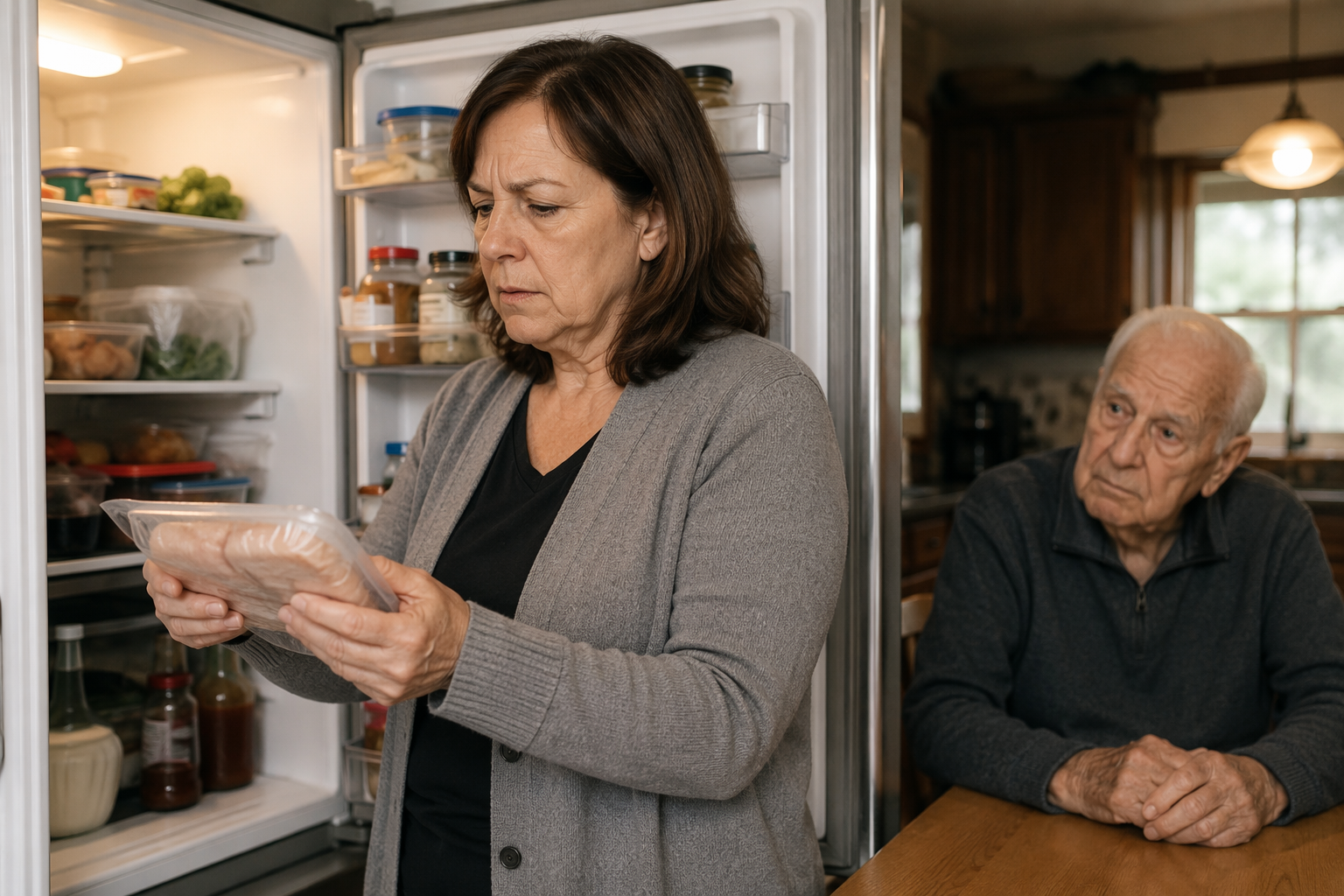
The Recall System Is Public, But It Is Not One Door
One reason families miss recalls is that the U.S. system is split. FDA-regulated foods include many packaged foods, produce, seafood, dairy, and eggs in shell; USDA FSIS regulates meat, poultry, and processed egg products. FoodSafety.gov pulls recall and outbreak information into a consumer-facing site, but it is still wise to know where the original notices live.[4]
There is another wrinkle: not every problem that sickens people produces a household-level recall notice in time for a refrigerator check. U.S. PIRG Education Fund reported that, among 28 identified outbreaks in 2025, no recall was announced for 17 of them.[5] PIRG has also warned that some FDA Class I recall information may appear in the agency’s Enforcement Report database rather than as a more visible public announcement.[6]
Commercial and advocacy sources have reported sharp recent increases in recall-related harms. FSNS, a commercial food testing company, reported that hospitalizations from recalled food rose from 230 in 2023 to 487 in 2024 and deaths rose from 8 to 19, citing PIRG and CDC data.[7] Those figures are useful as a warning sign, not as the only reason to act. The stronger everyday case is simpler: older adults are more likely to be hospitalized when serious foodborne infections occur, and families are still expected to assemble the warning system themselves.
Build a Recall Alert Setup That Does Not Depend on One Headline
A workable alert system has redundancy. It should not rely on your parent watching the evening news, a store receipt app, or one agency email. Use at least two official sources and one practical backup tied to how your parent actually shops.
- Bookmark FoodSafety.gov’s recalls and outbreaks page for a broad consumer view across agencies.[4]
- Check FDA food recalls for foods under FDA authority, especially packaged foods, produce, seafood, dairy, and shell eggs.[2]
- Check USDA FSIS recall notices for meat, poultry, and processed egg products.
- Sign up for store loyalty or pharmacy-grocery app notifications when available, but treat them as a backup rather than the main system.
- If you live far away, create a shared note or photo album where your parent or a nearby helper can upload pictures of questionable labels.
For an adult child, the best schedule is usually boring: a quick recall scan twice a week, plus an immediate check when a high-risk food appears in the news. High-risk for this purpose means foods your parent actually keeps and foods that are especially concerning for older adults: deli meats, ready-to-eat refrigerated foods, soft cheeses, bagged salads, cut fruit, sprouts, smoked seafood, and leftovers of uncertain origin.
For a spouse or live-in caregiver, the alert setup should sit next to the shopping routine. If one person buys groceries and another cleans the refrigerator, both need the same recall information. “I threw it out” should mean all packages were removed, including unopened extras in the freezer or garage refrigerator.
For long-distance caregivers, the weak point is usually identification. Ask for photos of the front label, the back label, the lot code, the use-by date, and the store receipt if it exists. A brand name that almost matches is not enough. Recalls often apply to specific package sizes, plants, dates, or lot codes, and FDA consumer guidance tells people to compare those details before deciding whether a food is affected.[2]
Use Search Terms That Match a Real Kitchen
Agency recall pages are useful, but they do not know what is in your parent’s refrigerator. Keep a short list of foods and brands your parent buys every month. Include the grocery store, meal delivery service, butcher counter, pharmacy food aisle, warehouse club, and any friend or church group that drops off prepared food. This list turns recall checking from a vague chore into a five-minute comparison.
- Favorite deli meats and cheeses
- Bagged salad brands and salad kits
- Frozen meals, prepared soups, and refrigerated entrees
- Nut butters, snacks, and shelf-stable foods eaten regularly
- Foods bought in bulk and stored outside the main kitchen
If your parent is new to accepting help, do not start by taking over every purchase. Start with a shared list. Independence is easier to protect when the safety system is built around what someone already eats, not around an ideal grocery cart they will never use.
Do a Kitchen Audit That Finds the Food People Forget
A kitchen audit is not a performance of cleanliness. It is a search pattern. Recalled food hides where ordinary food hides: behind condiments, in freezer doors, in vegetable drawers, in the garage refrigerator, in a lunch bag, or repacked into a container with no label.
Once a month, or more often if your parent has frequent prepared foods, check these areas in the same order: refrigerator shelves, deli drawer, produce drawers, freezer, pantry, countertop fruit bowl, medication-area snacks, emergency food shelf, second refrigerator, and any cooler or insulated bag used for grocery pickup. The order matters less than repeating it. A repeatable path prevents the “I thought I checked” problem.
| Kitchen area | What to look for |
|---|---|
| Deli drawer | Sliced meats, cheeses, opened tubs of prepared salads, unlabeled wrapped items |
| Produce drawer | Bagged salads, cut fruit, sprouts, herbs, produce still in store bags |
| Freezer | Bulk packages, frozen entrees, meat or poultry moved from original packaging |
| Pantry | Nut butters, canned goods, snacks, baking mixes, protein drinks |
| Second fridge or garage freezer | Warehouse-club extras, holiday leftovers, unopened duplicates |
| Leftover containers | Foods without a date, foods transferred from recalled packaging, takeout kept too long |
When comparing a recall notice to a package, read slowly. Check the exact brand, product name, package size, lot code, best-by or use-by date, establishment number if listed, and photos in the notice. If the recall says a specific variety of a salad kit is affected, a similar-looking bag from the same brand may not be included. If the notice lists multiple dates or lot ranges, take a photo and compare it enlarged rather than squinting at the package.
Unlabeled leftovers need a stricter rule. If a recalled food may have been transferred into a container and no one can prove which package it came from, discard it. That can feel wasteful, especially to someone who has spent a lifetime saving food, but the cost of guessing is not evenly distributed when the person eating it is 78, on dialysis, immunocompromised, or recovering from an illness.
For broader prevention habits such as clean, separate, cook, and chill, use a general foodborne illness routine alongside this recall system. A recall protocol is the part you use after a specific food has been flagged; everyday prevention is a separate baseline. See Your Guide to Preventing Foodborne Illness in Seniors for that foundation.
When a Recalled Food Is Found, Remove It Without Spreading the Problem
Do not taste recalled food to see whether it seems fine. The FDA tells consumers not to eat recalled products, and many dangerous bacteria do not change taste, smell, or appearance.[2] If your parent says, “It smelled normal,” treat that as information about the smell, not about safety.
- Take a photo of the package, including lot codes and dates, before discarding it.
- Put the food in a sealed bag or container so juices, crumbs, or loose produce do not touch other foods.
- Follow the recall notice for disposal, refund, or return instructions.
- Wash hands after handling the product.
- Clean and sanitize refrigerator shelves, drawers, counters, cutting boards, utensils, and any surfaces the food touched.
- Write down whether anyone ate it, the approximate date, and any symptoms that appear.
The Academy of Nutrition and Dietetics gives similar recall response guidance: identify whether the product matches the recall, avoid eating it, follow instructions for returning or disposing of it, and clean areas that may have contacted the food.[8] That cleaning step is easy to skip when everyone is focused on the package itself, but it matters for foods that leak, shed, or sit directly on refrigerator surfaces.
Do not ask an older parent to fish a questionable item out of the trash later for a better look. If documentation may matter, photograph first. If symptoms develop, those photos and notes can help a clinician or public health investigator understand the exposure without anyone handling the food again.
Deli Meat Needs Its Own Habit
Deli meat is not a rare food in many older adults’ homes. It is lunch, habit, convenience, and sometimes the one protein that still sounds good. It is also a food category where Listeria deserves special attention because the bacteria can survive in refrigerated ready-to-eat foods.
CDC advises adults 65 and older to avoid eating deli meats unless they are reheated to an internal temperature of 165°F or until steaming hot just before serving.[1]
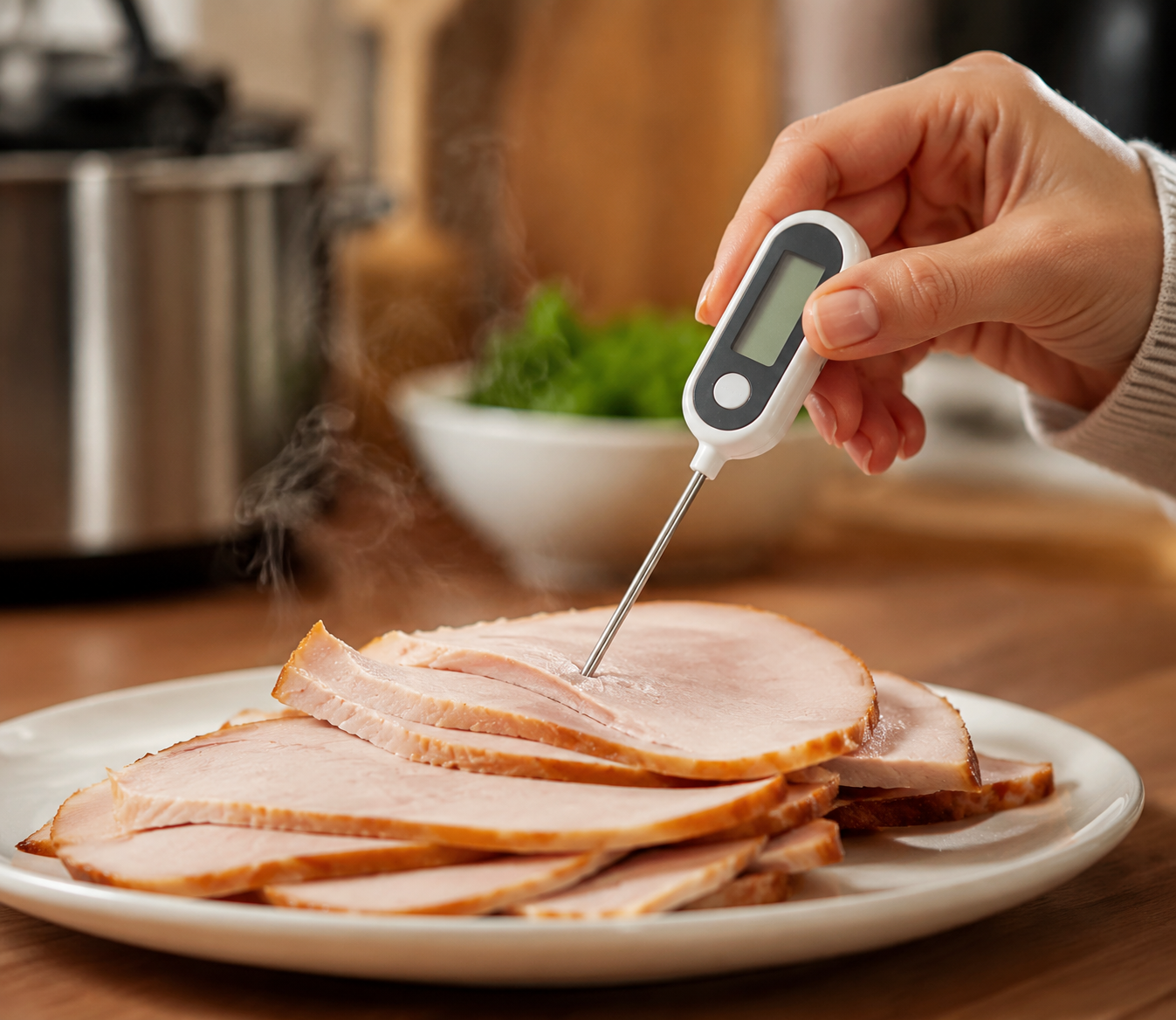
That does not mean every sandwich has to become a negotiation. Make the safer version easy: heat the meat on a plate, use a thermometer when possible, serve it hot, and do not return warmed leftovers to the deli container. If your parent will not heat deli meat, buy smaller amounts more often, keep the original label, and treat recall alerts for deli products as same-day kitchen checks.
The 2024 Boar’s Head outbreak showed why this category gets attention in senior households. U.S. PIRG Education Fund reported that the median age of affected people was 78 and that 10 of 61 people died.[5] That single outbreak should not be treated as proof that every deli purchase is dangerous, but it is a clear example of how a familiar refrigerator staple can become a high-consequence exposure for older adults.
After Possible Exposure, Watch the Person, Not Just the Product
Once you know a recalled food may have been eaten, the job shifts. You are no longer only managing the kitchen; you are watching for illness. CDC lists common food poisoning symptoms including diarrhea, stomach pain or cramps, nausea, vomiting, and fever, and advises medical care for severe symptoms such as bloody diarrhea, diarrhea lasting more than three days, high fever, frequent vomiting that prevents keeping liquids down, dehydration signs, or neurologic symptoms such as blurred vision, muscle weakness, or tingling.[9]
With an older adult, do not wait for a dramatic scene. Confusion, unusual weakness, dizziness, reduced urination, or “not acting like themselves” can be the practical reason to call, especially if there has been vomiting or diarrhea. A parent who already has kidney disease, diabetes, cancer treatment, immune suppression, or dialysis has less room for dehydration or invasive infection.
Keep a short exposure note:
- Product name, brand, package size, lot code, and date
- Where and when it was bought, if known
- Whether it was eaten, and approximately when
- Who else may have eaten it
- Symptoms, temperature readings, and times they began
- Photos of the package and recall notice
This note is not bureaucracy for its own sake. It keeps a tired caregiver from reconstructing dates at midnight and gives a clinician better information if the illness worsens.
Make the Monthly Check Realistic
A monthly audit fails when it depends on guilt or perfect memory. Attach it to something already on the calendar: medication refill day, bill-paying day, a regular Sunday call, a grocery delivery, or a home visit. If you are also checking lighting, rugs, and kitchen hazards for aging in place, combine the refrigerator check with that routine rather than inventing another one. The kitchen portion of a home safety review can sit naturally beside a broader checklist such as the CDC STEADI Fall Prevention Checklist for Home.
For a parent who dislikes waste, label the audit as a freshness and recall check, not a purge. Keep painter’s tape and a marker near the refrigerator. Date leftovers when they go in. Keep original packaging for higher-risk foods until the food is gone. If food is divided into smaller containers, cut out or photograph the label first.
For a parent with memory changes, vision problems, or a packed freezer, simplify the environment. Use one shelf for ready-to-eat refrigerated foods. Use a clear bin for deli items. Keep unopened backup packages in one place. The point is not to make the refrigerator look staged; it is to make a recall search possible when the phone rings.
If meal delivery or prepared foods are part of the household routine, keep the provider name, delivery dates, and menus in the same folder or shared note. For families comparing food sourcing options as part of broader support, Aging in Place Services: The Complete Guide can help frame meal services alongside other home supports.
A Caregiver Protocol for the Next Recall
Keep this protocol somewhere boring and visible: taped inside a pantry door, saved in a shared family note, or printed with the medication list. The best recall plan is the one someone can follow while making dinner, answering a work email, or trying to talk a parent through a label over speakerphone.
- Check alerts from FoodSafety.gov plus the relevant FDA or USDA source.
- Search the kitchen in a fixed order: refrigerator, deli drawer, produce drawer, freezer, pantry, second fridge, and leftovers.
- Compare exact identifiers: brand, product name, size, date, lot code, and establishment number when listed.
- Do not taste the food. Photograph it, contain it, and discard or return it according to the recall notice.
- Clean and sanitize any surfaces, drawers, utensils, or containers that may have touched it.
- Ask whether it was eaten, document the timing, and watch for symptoms that require medical care.
No household can prevent every contaminated food from crossing the door. The practical goal is narrower and more useful: make the next recall less dependent on luck, memory, or your parent happening to see the right warning before lunch.
References
- Safer Food Choices for Adults 65 and Older, CDC, https://www.cdc.gov/food-safety/foods/adults-65-older.html
- Food Recalls: What You Need to Know, FDA, https://www.fda.gov/food/buy-store-serve-safe-food/food-recalls-what-you-need-know
- Adults 65 and Older: An At-Risk Population, but Why?, USDA FSIS, https://www.fsis.usda.gov/news-events/news-press-releases/adults-65-and-older-risk-population-why
- Recalls and Outbreaks, FoodSafety.gov, https://www.foodsafety.gov/recalls-and-outbreaks
- Food for Thought 2026, U.S. PIRG Education Fund, https://pirg.org/edfund/resources/food-for-thought-2026/
- How to Find Out About Food Recalls, PIRG, https://pirg.org/edfund/resources/finding-food-recalls/
- Food Recalls in 2024: Revealing the Statistics, FSNS, https://fsns.com/food-recalls-in-2024-revealing-the-statistics/
- What to Do During a Food Recall, Academy of Nutrition and Dietetics, https://www.eatright.org/food/home-food-safety/safe-food-storage/what-to-do-during-a-food-recall
- Food Poisoning Symptoms, CDC, https://www.cdc.gov/food-safety/signs-symptoms/index.html
Questions to bring to a clinician or OT
This is not medical, legal, or a family's final decision — only a framework. Bring these questions to a clinician, occupational therapist, or your local Area Agency on Aging.
Find Local HelpRelated reading
Noticed something outdated or inaccurate on this page? Flag a correction. We review every report against CDC, NIA, and AARP HomeFit guidance before updating a page.