What Senior Care Options Exist Instead of Home Care
This guide compares seven senior care alternatives to traditional in-home home care — including adult day care, assisted living, PACE, and nursing homes — with national cost data and a simple decision rule to help families choose the right option based on hours of help needed, budget, and location.
By Editorial Team
new caregiver
experienced caregiver
long-distance caregiving
spousal caregiver
working caregiver
daily routines
medication management
personal hygiene
care coordination
first steps
ADLs
IADLs
Home care can be the right answer for a long time. A few morning visits, help with bathing, medication reminders, a ride to appointments, meal prep after a hospital stay — those services can keep a parent steady without turning the whole family’s life upside down. The hard part is noticing when home care has stopped being a simple add-on and has become the thing everyone is trying to stretch past its limits.
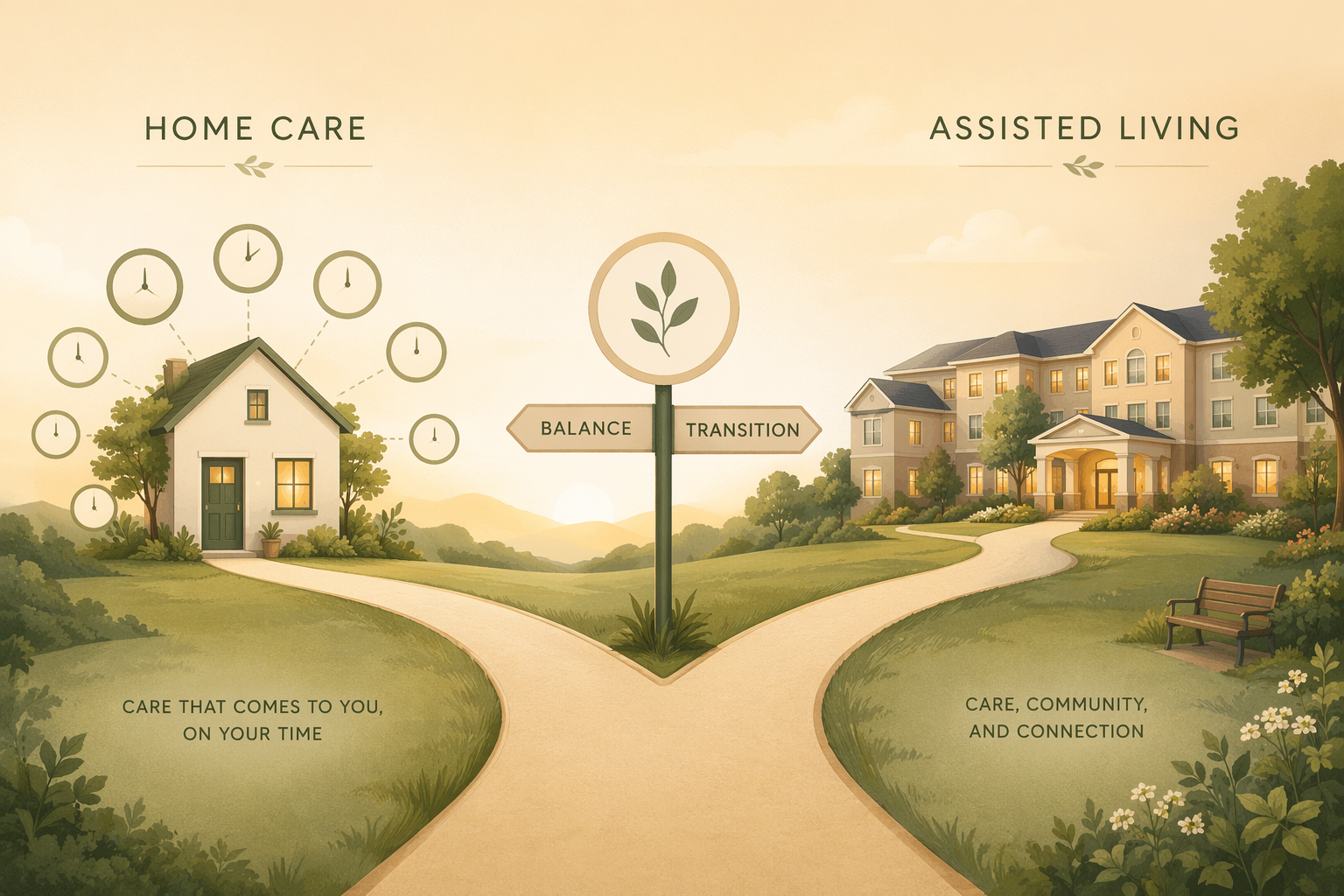
If you are searching for options instead of home care, start with the hours. When help is occasional or mostly daytime, look first at adult day care, family support, respite care, or targeted home services. When paid help starts approaching full-time levels, compare assisted living and live-in care before automatically adding more shifts. When medical needs are driving the problem — wounds, complex medications, serious mobility decline, dementia-related safety risks — check whether PACE, skilled nursing, memory care, or nursing home care fits the situation better.
The useful tipping point is roughly 44 hours a week. At that level, national 2026 median home care costs are about $6,292 per month, while assisted living is about $5,190 per month.[1] That does not mean assisted living is automatically better, and it certainly does not mean local quotes will match the national median. It does mean the family should stop assuming that “more home care” is the financially obvious next step.
This is where the kitchen-table math gets uncomfortable. A parent may want to stay home, and that wish deserves respect. More than 90% of older adults say they want to age in place, but only about 10% of U.S. homes are physically ready to support aging-accessibility needs.[2] A house can be full of history and still have a bathroom doorway too narrow for a walker, a bedroom upstairs, no safe shower setup, and no one there at 2 a.m. when the transfer from bed to bathroom goes badly.
National figures are orientation points, not quotes. Local rates, care levels, move-in fees, Medicaid rules, and staffing needs can change the answer.
Usually does not cover evenings, overnights, or transportation gaps
Assisted living
Daily help, meals, social structure, safer environment
About $5,190 per month
Costs and care levels vary widely by location and needs
PACE
Integrated medical and social care for eligible older adults who can live in the community
Varies by eligibility and payer situation
Available only in certain service areas
Live-in care
Continuity at home with overnight presence
Roughly $8,000–$12,000 per month
Still depends on home safety, staffing rules, and coverage model
Memory care
Dementia-related supervision and structured support
Varies by market and care needs
Not every assisted living community provides appropriate dementia care
Residential care home
Small-group residential support in a home-like setting
Varies widely
Medical capacity and oversight differ by state and provider
Nursing home
High medical and personal-care needs
About $9,581 semi-private or $11,294 private per month
Usually the most intensive and expensive option
The 44-Hour Question Comes Before the Facility Tour
Families often compare care options too late in the process. They add two mornings, then three afternoons, then weekend help, then a private-pay evening shift after a fall. By the time anyone totals the hours, the monthly bill may already be higher than assisted living, and the older adult may still be alone for the riskiest parts of the day.
The 44-hour mark is not a medical rule. It is a budgeting and planning signal. If a parent needs six or seven hours of paid help most days, the question changes from “Can we add another caregiver?” to “Is home still the safest and most honest care setting?” Nationally, 44 hours a week of home care is estimated at about $6,292 per month in 2026, compared with about $5,190 for assisted living.[1]
The local number matters more than the national number. Home care hourly rates can be much lower in some rural markets and much higher in high-cost metro areas. Assisted living can also change quickly once a community adds care-level fees, medication management, incontinence support, escort help, or memory care. Still, the crossover point gives families permission to compare instead of just feeling guilty.
Medicare also needs a reality check here. It may cover limited skilled home health services when eligibility rules are met, but it generally does not pay for ongoing 24/7 personal care or custodial help at home.[3] That is why a plan that looks reasonable on a discharge sheet can fall apart when the unpaid night shift lands on a spouse, daughter, son, or neighbor.
Adult Day Care Is Often the First Real Alternative
Adult day care is easy to overlook because it does not sound as comprehensive as home care. In practice, it can solve the exact problem some families have: a parent who is not safe or well at home alone all day, but who does not need overnight residential care.
A good adult day program can provide supervision, meals, activities, routine, and a reason to leave the house. For a working caregiver, it can turn a day of constant phone-checking into a day where someone else is watching for missed meals, wandering, toileting needs, or exhaustion. The 2026 national median is about $95 per day, or about $2,058 per month, far below the monthly median for 44 hours of home care or assisted living.[1]
The limits are just as important. Adult day care usually covers set daytime hours. Someone has to handle mornings, evenings, nights, weekends, sick days, and transportation. If the parent refuses to attend, cannot tolerate the group setting, needs one-on-one behavioral support, or requires a level of medical care the program cannot provide, the lower price does not make it workable.
It is strongest when isolation and daytime supervision are the main problems. It is weaker when the danger lives in the overnight hours: repeated falls on the way to the bathroom, stove use after dinner, sundowning, or a spouse caregiver who is no longer sleeping.
Assisted Living Is Not Just “Leaving Home”
Assisted living often enters the conversation wrapped in dread. Families picture a parent losing independence, privacy, or identity. Sometimes that fear is well founded; a rushed move into the wrong community can be deeply upsetting. But assisted living should be compared against the parent’s real current day, not against the best memory of home.
If home now means a recliner, a microwave meal, one hurried aide visit, no shower unless a daughter comes over, and long stretches of silence, then assisted living is not competing with an ideal version of home. It is competing with the arrangement actually happening.
The cost surprise is real. Assisted living’s 2026 national median is about $5,190 per month, while 44 hours a week of home care is about $6,292.[1] Assisted living usually includes housing, meals, housekeeping, activities, and scheduled help with daily activities, though the exact package varies. Home care preserves the current residence, but the family still carries rent or mortgage, utilities, groceries, maintenance, home modifications, and the unpaid coordination work.
That does not make assisted living cheap. Many communities charge more as care needs rise. Medication management, transfer help, incontinence care, escorts to meals, and dementia-related support can change the monthly bill. Families should ask for the base rate, care-level pricing, one-time community fees, medication fees, rate-increase history, and what happens after a hospitalization.
The right comparison is not “home care versus assisted living” in the abstract. It is this parent, in this home, with these stairs, this medication list, this caregiver network, this budget, and these local prices.
PACE Can Be Excellent, If It Exists Where Your Parent Lives
PACE — the Program of All-Inclusive Care for the Elderly — deserves attention because it is built around a problem families know well: the older adult does not just need one service. They may need primary care, therapy, transportation, medications, social support, help at home, and someone looking across the whole picture.
As of a February 2026 National PACE Association milestone announcement, PACE served more than 91,000 participants through more than 200 programs in 33 states and the District of Columbia. The association reported that 97% of participants live in the community and that 95% of family caregivers would recommend PACE to someone in a similar situation.[4]
Those numbers explain why PACE is worth checking early. It can be a strong fit for someone who meets eligibility requirements, needs a nursing-home level of care, and can still live safely in the community with coordinated support. It may also relieve caregivers who are exhausted from being the scheduler, driver, medication tracker, insurance translator, and backup plan.
The caution is availability. PACE is not everywhere, and programs serve defined geographic areas. It is not enough to like the model; the parent has to live in a service area, meet eligibility rules, and accept the program’s care structure. Before a family reorganizes expectations around PACE, someone should check the local program map and call the program directly.
Live-In Care Can Bridge the Gap, but It Is Not Cheap
Live-in care appeals to families who are not ready for residential care but know that short visits are no longer enough. It can offer continuity, a familiar face, help with routines, and overnight presence. For some older adults, especially those anxious with rotating caregivers, that consistency matters.
The usual cost range is roughly $8,000 to $12,000 per month, placing it above the national median for assisted living and often below or near the cost of round-the-clock shift care.[1] The details matter: “live-in” does not always mean awake and working 24 hours. Families need to ask about sleep time, backup coverage, labor rules, private sleeping space, meal arrangements, days off, and what happens when the caregiver is sick.
This option works best when the home itself is reasonably safe and the parent’s needs are steady enough for a live-in model. It works less well when the parent requires frequent overnight hands-on help, two-person transfers, complex medical care, or dementia supervision that one caregiver cannot safely sustain.
Memory Care, Residential Care Homes, and Nursing Homes Are Different Answers
Once memory loss or medical complexity becomes the main issue, the word “care” starts hiding too many differences. A parent who forgets appointments needs a different plan from a parent who leaves the house at night, resists bathing, cannot manage medications, or becomes frightened and agitated in the late afternoon.
Memory care is usually for dementia-related safety, structure, and supervision. It may be part of an assisted living community or a separate setting. Families should ask about staffing patterns, secured areas, behavior support, activities, bathing assistance, medication management, and discharge rules. A pleasant-looking community is not enough if it cannot handle the parent’s actual dementia symptoms.
Residential care homes, sometimes called board-and-care homes or adult family homes depending on the state, offer a smaller residential setting. They can be a good fit for someone who would be overwhelmed by a large community or who benefits from a quieter household rhythm. The tradeoff is variation: licensing, staffing, medical capacity, and oversight differ by location, so local checking matters more than any national description.
Nursing homes are the most medically intensive option in this group and should not be treated as the automatic next stop after home care. They are expensive: 2026 national medians are about $9,581 per month for a semi-private room and $11,294 for a private room.[1] They also serve a relatively small share of older Americans; only about 5% live in nursing homes, while most older adults live at home or in other community settings.[5]
A nursing home may be appropriate when the parent needs skilled nursing, substantial hands-on care, rehabilitation after a hospitalization, complex medical monitoring, or a level of supervision that other settings cannot safely provide. It is not a failure. It is also not the only alternative to home care.
Use the Problem You Actually Have
A family can waste weeks comparing beautiful brochures if no one names the real problem. The better starting point is plain:
If the parent is lonely, inactive, and unsafe during work hours, compare adult day care, transportation, and a limited home care schedule.
If the parent needs help most days with meals, bathing, dressing, medications, and housekeeping, compare assisted living with the true cost of enough home care.
If the parent needs coordinated medical and social support but can still live in the community, check PACE availability before assuming residential care is the only path.
If the parent needs overnight presence and wants to remain home, price live-in care honestly and confirm what coverage actually includes.
If dementia symptoms are driving safety risks, compare memory care and dementia-capable home support rather than general assisted living alone.
If skilled medical needs dominate, evaluate nursing home care or skilled nursing options without treating them as a personal defeat.
The same parent may move through more than one of these answers over time. A discharge plan might start with home health and family help, then adult day care, then assisted living, then memory care. Another family may use PACE for years and avoid a move. Another may choose live-in care because the house is safe, the budget allows it, and a move would cause more harm than help. The sequence is less important than whether the current arrangement is still telling the truth.
A Practical Order for Making the Choice
Before touring communities or signing a home care contract, estimate the weekly help that is actually needed. Count bathing, dressing, toileting, transfers, meals, medication reminders, transportation, laundry, housekeeping, supervision, and overnight risk. Do not count only the hours someone is currently paying for; count the hours someone is covering, worrying about, or hoping nothing happens.
Then separate personal care from medical complexity. A parent who needs help showering and getting to meals may do well in assisted living. A parent with unstable health, wound care, frequent hospitalizations, complex medication changes, or a need for skilled monitoring may need a more clinical setting or a coordinated model such as PACE where available.
Next, decide whether isolation or safety is the bigger immediate problem. Isolation points toward adult day care, assisted living, senior centers, transportation, or structured community programs. Safety points toward supervision, home modifications, transfer support, medication management, memory care, or a higher-care residential setting.
After that, check geography. The best theoretical answer may not exist in the parent’s county. PACE may not serve the address. Adult day care may close before the caregiver’s shift ends. Assisted living may have a waitlist or a care cap. A residential care home may be excellent in one state and loosely regulated in another. Local availability is not a footnote; it is often the deciding fact.
Finally, compare real prices. Ask home care agencies for hourly rates, minimum shifts, weekend rates, overtime policies, and what happens if the regular aide calls out. Ask assisted living communities for the full monthly estimate after care fees. Ask adult day programs about transportation, attendance minimums, and whether Medicaid or local programs help. Ask every provider what would make them say, “We can no longer safely serve your parent.”
Choosing something instead of home care is not giving up on home. It is matching support to the life your parent is actually living now: the meals being missed, the stairs being avoided, the medications being guessed at, the caregiver who is no longer sleeping, and the quiet hours when everyone is hoping the phone does not ring.



Comments
Join the discussion with an anonymous comment.