
Caregiver decision guide
Medication Errors at Home: A Caregiver's Guide to the Six Most Common Mistakes and How to Prevent Each One
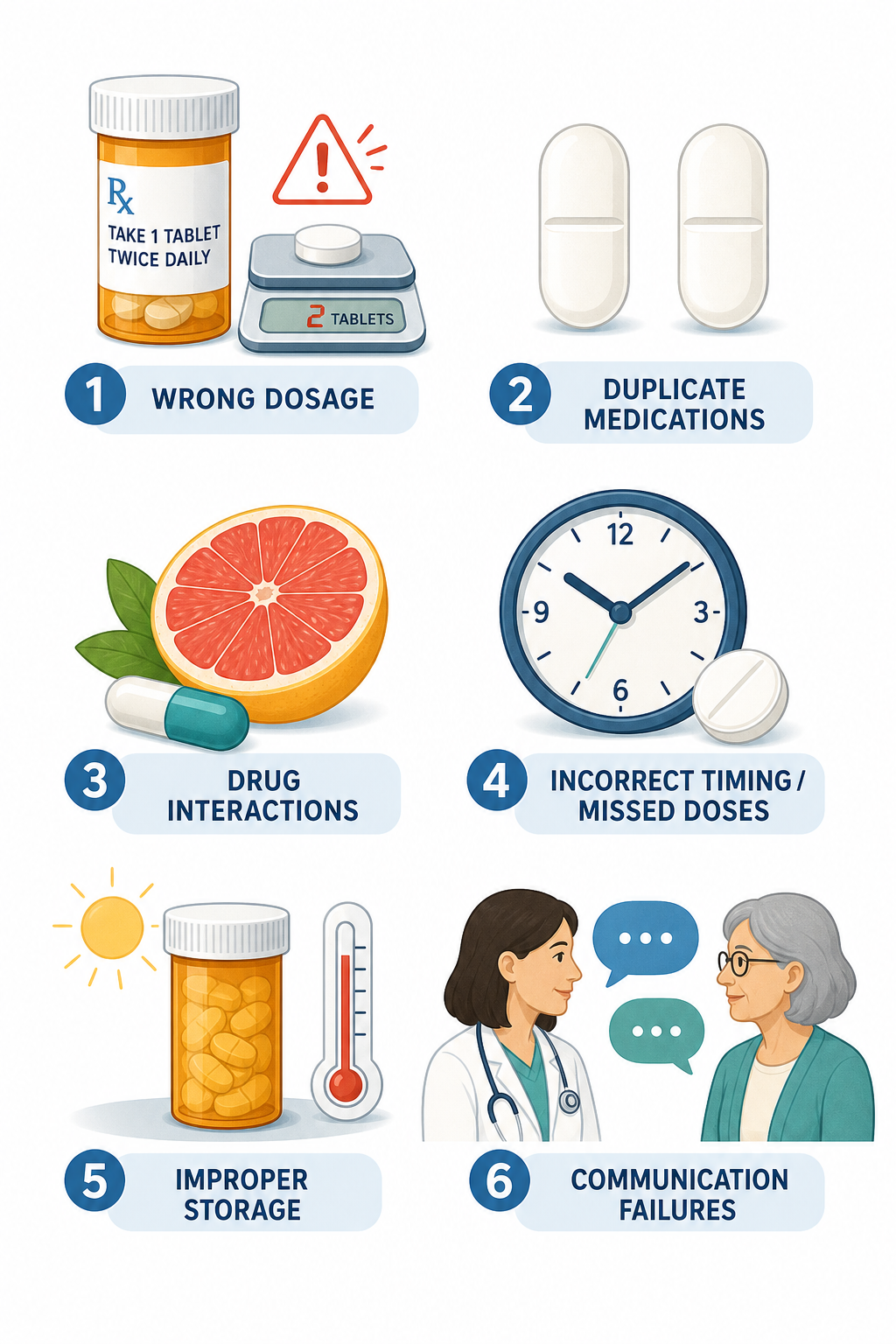
This guide helps family caregivers identify and prevent the six most common medication errors at home — from wrong dosages and duplicate medications to drug interactions and communication failures — with specific, evidence-backed strategies for each type.

The Scope of the Problem: Why Medication Errors Happen at Home
If you are reading this, you have likely already felt the knot of uncertainty that comes with managing a loved one's medications. You are not alone, and the stakes are higher than most people realize. Adverse drug events send more than 18 million people to emergency rooms each year in the United States, and older adults are twice as likely to visit the ER for these events compared to younger patients. Research shows that 78% of family caregivers are responsible for managing medications, and over half of those caregivers handle five or more different prescriptions daily. Nearly 20% manage ten or more.
The problem is not a lack of effort. It is that medication management at home is complex, and mistakes tend to fall into predictable patterns. By understanding these six common error types, you can move from worry to a concrete prevention plan.
Why Older Adults Are at Higher Risk for Medication Mistakes
Aging changes how the body processes medications. The liver and kidneys, which are responsible for breaking down and eliminating drugs, do not work as efficiently as they once did. This means a standard adult dose can build up to dangerous levels in an older person's system. At the same time, the presence of multiple chronic conditions often leads to polypharmacy — the use of several medications simultaneously — which multiplies the chances of an error or interaction.
These age-related factors directly contribute to the six error types covered in this guide:
- Slower metabolism means a small dosing mistake can have a larger effect.
- Multiple prescribers increase the risk of duplicate medications and interactions.
- Memory changes and vision problems make label-reading and timing more difficult.
- The use of over-the-counter drugs and supplements adds hidden variables.
Two-thirds of caregivers report problems with at least one medication management activity, according to a study published in the Journal of the American Geriatrics Society. Understanding the specific error types is the first step to preventing them.
Error Type 1: Wrong Dosage — Too Much or Too Little
Dosing errors are the most common medication mistake. They happen when a caregiver or senior misreads a label, confuses tablet strengths (e.g., 25 mg vs. 50 mg), splits pills incorrectly, or guesses at a dose because the instructions are unclear. The consequences can be serious: too little medication may mean a condition goes untreated, while too much can lead to toxicity.
Prevention Strategies
- Always start with the lowest effective dose when a new medication is prescribed, especially for older adults.
- Use clear, written instructions — not just verbal ones — for every dose change. Ask the doctor or pharmacist to write down the exact amount and timing.
- Practice the teach-back method: ask your loved one to repeat the dosing instructions back to you in their own words to confirm understanding.
- Use a pill organizer with pre-sorted doses for each day and time. This eliminates the need to read labels multiple times per day.
Error Type 2: Duplicate Medications — Same Drug, Different Names
Duplicate medications occur when the same active ingredient is prescribed under different names — for example, a brand name and its generic equivalent — or when two different doctors prescribe similar drugs without knowing about the other. This is especially common when a senior sees multiple specialists.
The most effective prevention is a single, comprehensive medication list that includes both the generic and brand names for every drug. The list should also note the prescribing doctor, the start date, the dosage, and the purpose of each medication.
What to Include on a Master Medication List
| Category | Details to Record |
|---|---|
| Medication Name | Generic name and brand name (e.g., metformin / Glucophage) |
| Strength & Dosage | Exact mg or mL, and how many times per day |
| Prescribing Doctor | Name and specialty |
| Start Date | When the medication was first prescribed |
| Purpose | What condition it treats |
| Notes | Special instructions (take with food, avoid grapefruit, etc.) |
Using a single pharmacy for all prescriptions is another powerful safeguard. A good pharmacy's system can flag potential duplicates before they reach your loved one's hands.
Error Type 3: Drug Interactions — When Medications Clash
Drug interactions happen when one medication changes the way another works, or when a medication interacts with food, supplements, or over-the-counter drugs. These interactions can reduce effectiveness or cause dangerous side effects.
Some of the most common and dangerous interactions involve blood thinners. For example, combining a blood-thinning medication with aspirin or certain pain relievers can dangerously amplify bleeding risk. Herbal supplements also pose risks: ginkgo biloba can interact with blood thinners, blood pressure medications, and NSAIDs like ibuprofen.
Common Interactions to Watch For
| Interaction Type | Example | Risk |
|---|---|---|
| Prescription + OTC | Blood thinner + aspirin | Increased bleeding risk |
| Prescription + Food | Certain statins + grapefruit juice | Dangerous increase in drug levels in the blood |
| Prescription + Supplement | Blood thinner + ginkgo biloba | Increased bleeding risk |
| Prescription + Alcohol | Sedatives + alcohol | Excessive drowsiness, fall risk |
The best prevention is a complete review of all medications — including OTC drugs, vitamins, and herbal supplements — with a pharmacist at least once a year, or whenever a new drug is added. Falls are a common sign of a medication-related problem; for more detail, see our FAQ on medications that increase fall risk.
Error Type 4: Incorrect Timing and Missed Doses
Missed doses and timing errors are among the most frustrating problems for caregivers. They often stem from simple forgetfulness, confusion about a complex schedule, or the classic "did I take that?" moment. Some medications must be taken at precise intervals to maintain a steady level in the bloodstream, so a missed or late dose can reduce effectiveness.
Prevention Strategies
- Link medication times to existing daily routines — for example, take morning pills right after breakfast and evening pills right after brushing teeth.
- Use a simple alarm or timer. A basic pill organizer with an alarm can cost as little as $15.
- Fill a multi-week pill organizer all at once. This lets you see at a glance whether a dose has been taken.
- For more complex needs, consider a smart dispenser that locks until the correct time and can alert a caregiver if a dose is missed. These range from $80 to $300, often with a monthly service fee of $30 to $45.
Error Type 5: Improper Storage — Heat, Moisture, and Expired Medications
Many people store medications in the bathroom cabinet or the kitchen, but these are actually the worst places. Heat and humidity from showers and cooking can degrade medications, making them less effective or even harmful. The same is true for storing medications in a car, where temperatures can swing dramatically.
Storage Best Practices
- Store all medications in a cool, dry place away from direct sunlight. A bedroom closet or a dedicated drawer in a climate-controlled room is ideal.
- Check expiration dates regularly — at least every three months. Expired medications may not work as well or may cause harm.
- Dispose of expired or unused medications properly. Many pharmacies and local police departments offer take-back programs.
- Never store medications in a car, even for short trips.
If a medication looks discolored, has an unusual smell, or has changed texture, do not use it — even if it is not yet expired. When in doubt, ask your pharmacist.
Error Type 6: Communication Failures — After Hospital Discharge and Between Doctors
Communication breakdowns are the most systemic of the six error types. They happen when a senior is discharged from the hospital with a changed medication list that does not get communicated to their primary care doctor, or when a specialist prescribes a new drug without the others knowing. These gaps are dangerous.
The teach-back method is a powerful tool here. After any medication change — whether in a hospital, a clinic, or a pharmacy — ask the provider to explain the change and then have your loved one repeat it back. This confirms understanding and catches errors before they reach home.
Key Communication Safeguards
- Reconcile medications after every hospital visit. Compare the discharge list against the pre-admission list and resolve any discrepancies with the discharging doctor or a pharmacist.
- Share the master medication list with every provider at every visit. Bring a printed copy.
- Designate one pharmacist as the point of contact for all prescriptions. They can spot conflicts that individual doctors might miss.
- Use a single pharmacy for all prescriptions to enable automated interaction checks.
Red-Flag Symptoms: When to Suspect a Medication Problem Right Now
Medication side effects can mimic the signs of aging, which makes them easy to overlook. The rule of thumb is simple: any new symptom could be medication-related. Do not assume it is just "getting older."
Watch for these red-flag symptoms:
- Sudden confusion or memory changes
- Excessive drowsiness or lethargy
- Falls or dizziness
- New or worsening incontinence
- Loss of appetite or unexplained weight loss
- Depression or mood changes
- Parkinson's-like symptoms (tremors, stiffness, shuffling gait)
- Insomnia or changes in sleep patterns
If you notice any of these, especially after a recent medication change or hospital discharge, contact the prescribing doctor or a pharmacist immediately.
The Caregiver's Emergency Checklist: What to Do If You Suspect an Adverse Reaction
If you believe your loved one is having an adverse drug reaction, act quickly but calmly. Follow these steps:
- Stop the medication if it is safe to do so. For some medications (like blood thinners or heart drugs), stopping abruptly can be dangerous. If you are unsure, call the pharmacist or doctor first.
- Call the pharmacist or the prescribing doctor immediately. Describe the symptoms and when they started.
- Go to the emergency room for severe symptoms: difficulty breathing, swelling of the face or throat, loss of consciousness, chest pain, or seizures.
- Bring all medications — including OTC drugs and supplements — to the appointment or ER. Put them in a bag and take them with you.
- Write down the symptoms and their timing. Note when the last dose was taken and when symptoms began. This information is critical for the medical team.
Questions to bring to a clinician or OT
This is not medical, legal, or a family's final decision — only a framework. Bring these questions to a clinician, occupational therapist, or your local Area Agency on Aging.
Find Local HelpRelated reading
Noticed something outdated or inaccurate on this page? Flag a correction. We review every report against CDC, NIA, and AARP HomeFit guidance before updating a page.