
Glossary entry
What Medications Increase Fall Risk in Older Adults? A Caregiver FAQ
Quick Reference: Medication Classes That Increase Fall Risk
| Drug Class | Common Examples | Primary Fall‑Risk Mechanism |
|---|---|---|
| Antidepressants | Sertraline, citalopram, amitriptyline | Sedation, orthostatic hypotension, reduced bone density (SSRIs) |
| Benzodiazepines | Diazepam, lorazepam, alprazolam | Sedation, dizziness, impaired balance |
| Z‑drugs (sleep aids) | Zolpidem, eszopiclone, zaleplon | Sedation, next‑day drowsiness, poor coordination |
| Antipsychotics | Quetiapine, risperidone | Orthostatic hypotension, sedation, extrapyramidal effects |
| Opioids | Morphine, oxycodone, hydrocodone | Sedation, dizziness, confusion |
| Antihypertensives / Diuretics | Furosemide, lisinopril, tamsulosin | Orthostatic hypotension, electrolyte imbalance, dehydration |
| Muscle Relaxants | Baclofen, cyclobenzaprine | Sedation, muscle weakness, dizziness |
| Anticholinergics | Diphenhydramine (Benadryl), oxybutynin | Drowsiness, confusion, blurred vision |
| NSAIDs | Ibuprofen, naproxen, aspirin >325 mg/day | Blood pressure elevation, GI bleeding risk (worsened by falls) |
| Anticonvulsants | Gabapentin, pregabalin | Sedation, dizziness, impaired gait |
Which drug classes have the strongest link to falls?
The most comprehensive analysis available—a 2009 meta-analysis by Woolcott and colleagues—found that antidepressants carry the highest statistical odds of a fall among older adults, with an odds ratio of 1.68 (95% CI 1.47–1.91). Neuroleptics/antipsychotics (OR 1.59) and benzodiazepines (OR 1.57) are close behind, followed by sedatives/hypnotics (OR 1.47), antihypertensives (OR 1.24), and NSAIDs (OR 1.21).
Both selective serotonin reuptake inhibitors (SSRIs) and tricyclic antidepressants increase risk—not just the older, sedating ones. SSRIs may also reduce bone mineral density (about 3.9% at the hip and 5.9% at the lumbar spine), making fall-related fractures more likely. For antipsychotics, the risk is dose-dependent; one study by Sterke and colleagues (2012) reported a hazard ratio of 2.78 at higher doses.
How do these medications cause falls?
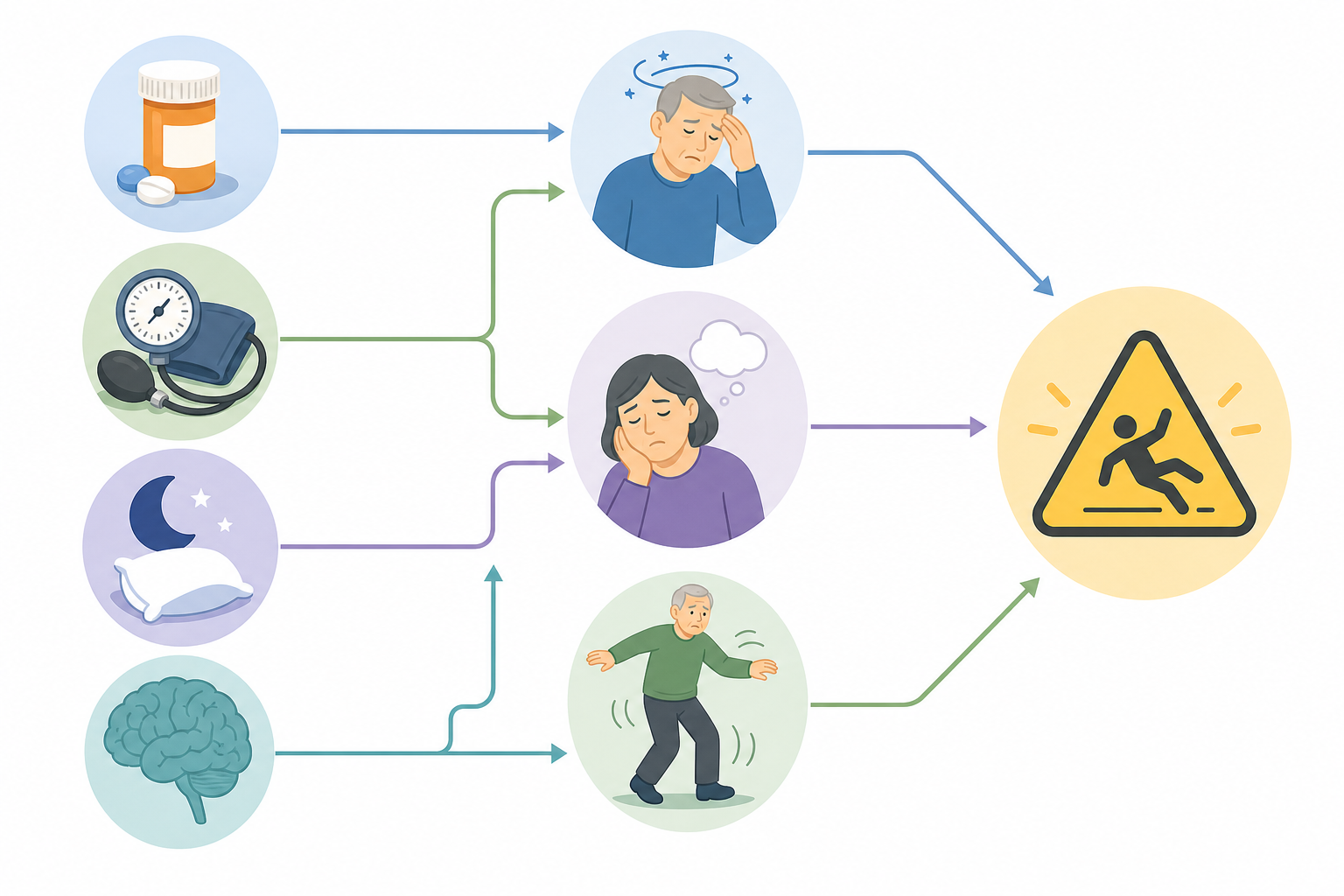
- Sedation and drowsiness: Drugs like benzodiazepines, Z‑drugs (zolpidem, eszopiclone), opioids, and muscle relaxants depress the central nervous system. They slow reaction time, dull awareness of hazards, and can cause excessive daytime sleepiness—especially when taken at night and their effects linger into the next day.
- Orthostatic hypotension: Antihypertensives, diuretics, alpha‑blockers (e.g., tamsulosin for prostate symptoms), and some antidepressants can cause a sudden drop in blood pressure when standing up. This dizziness or lightheadedness is a common fall trigger, especially after sitting or lying down for a while.
- Dizziness, impaired balance, and coordination problems: Anticonvulsants (gabapentin, pregabalin), muscle relaxants, and anticholinergic drugs can directly affect the inner ear, cerebellar function, or proprioception. The result is unsteady gait, blurred vision, or confusion about where the body is in space.
Many older adults take several drugs from different categories, which means these mechanisms can also combine and compound each other—a phenomenon known as cumulative side‑effect burden.
Do over-the-counter medications increase fall risk?
Yes—and they are often overlooked because caregivers assume “over‑the‑counter” means “safer.” Several OTC drugs carry significant fall risk, especially for older adults who are also taking prescription medications.
- Antihistamines such as diphenhydramine (Benadryl) and first‑generation allergy drugs are strongly anticholinergic. They cause drowsiness, confusion, and blurred vision. Despite being available without a prescription, they are listed on the AGS Beers Criteria as potentially inappropriate for older adults.
- NSAIDs (ibuprofen, naproxen, aspirin above 325 mg/day) can raise blood pressure and interfere with blood pressure medications. They also increase the risk of gastrointestinal bleeding, which can be worsened if a fall occurs while on anticoagulants—a common combination.
- Anticholinergic sleep aids like doxylamine (Unisom) are also diphenhydramine‑like. They impair cognition and coordination, especially in people with already slower clearance of these drugs.
What is the role of polypharmacy in fall risk?
Polypharmacy—taking multiple medications—dramatically raises fall risk independently of the specific drugs involved. According to the Deprescribing Network Canada, the risk of falling increases by approximately 75% when a person takes just four or more medications daily. In the U.S., more than two‑thirds of adults over 65 take at least three prescriptions each month (Cleveland Clinic/Beers Criteria), and the median number has doubled over the past few decades.
The more drugs on the list, the greater the chance of drug‑drug interactions and additive side effects (e.g., two sedating drugs causing dangerous drowsiness). This is why medication reviews are so important—especially when a senior is seeing multiple specialists who may not be aware of each other’s prescriptions.
For a deeper look at how to identify medication overload and talk to a prescriber about deprescribing, read our full guide: When More Medications Means More Risk: A Caregiver's Guide to Polypharmacy in Older Adults.
How does the Beers Criteria relate to fall risk?
The American Geriatrics Society (AGS) Beers Criteria is a regularly updated list of potentially inappropriate medications for older adults. Many of the fall‑risk drug classes—benzodiazepines, muscle relaxants, anticholinergics, certain antihypertensives, and NSAIDs (at high doses)—appear on this list because the harms generally outweigh the benefits for people 65 and older.
The Beers Criteria is updated every three years (latest: 2023; next expected 2026). If your parent is taking any drug that appears on the list, it does not automatically mean they should stop—but it does mean their doctor should have a clear, documented reason for prescribing it and should monitor for side effects. As a caregiver, you can ask: “Is this medication on the Beers list? Are the risks worth it for my parent’s situation?”
What should I do if my parent falls while on these medications?
- Assess for injury: Check for head trauma, bleeding, or inability to move an arm or leg. If there is any sign of serious injury, call 911 immediately.
- Help them get up safely if possible: If no injury and they can move, guide them to roll onto their side, push up with their arms, and slowly stand. If they cannot get up or feel dizzy, keep them comfortable and call for help.
- Note the circumstances: Write down the time of day, what they were doing (e.g., getting up from the toilet, walking to the kitchen), and any symptoms they experienced just before the fall (dizziness, sudden weakness, confusion). This information is crucial for the doctor.
- Schedule a medication review: Bring the fall details and a complete medication list (including OTC and supplements) to the primary care provider or pharmacist. Ask specifically: “Could any of these medications have contributed to the fall?”
While you address the medication side, do not overlook the environment. A fall can also be caused by home hazards. Use our Bathroom Safety Checklist and Bedroom Safety Checklist to reduce trip and slip hazards.
When should I talk to the doctor or pharmacist about fall‑risk medications?
Ideally, before a fall happens. Bring a complete, up‑to‑date medication list to every appointment—including all prescriptions, OTC products, vitamins, and herbal supplements. Ask questions like:
The CDC’s STEADI‑Rx initiative is designed specifically for pharmacists to screen for fall‑risk medications and recommend adjustments. Many pharmacists can perform this review without a separate doctor’s visit.
Is it safe to stop or change these medications on our own?
The safe approach is deprescribing—a medically supervised, gradual tapering process where the dose is lowered slowly over weeks or months while monitoring for side effects. If you suspect a medication is doing more harm than good, talk to the prescribing doctor about starting a deprescribing conversation. Our Polypharmacy guide includes practical tips for having that conversation without alienating the prescriber.
How does alcohol interact with fall‑risk medications?
Alcohol is a central nervous system depressant. When combined with other CNS depressants—benzodiazepines, opioids, antidepressants, sleep aids, muscle relaxants—it amplifies sedation, dizziness, and orthostatic hypotension. Even a single glass of wine can turn a normally tolerable side effect into a fall‑inducing event.
Alcohol also affects blood pressure regulation and can interfere with how the body processes many medications, especially in older adults whose liver function may already be reduced. The safest approach is to avoid alcohol entirely when taking any fall‑risk medication, or at least to discuss it with the doctor—especially when a new drug is started.
Browse more in the Glossary.