
Glossary entry
The Hidden Costs of Senior Health Services: A Complete Financial Roadmap for Family Caregivers
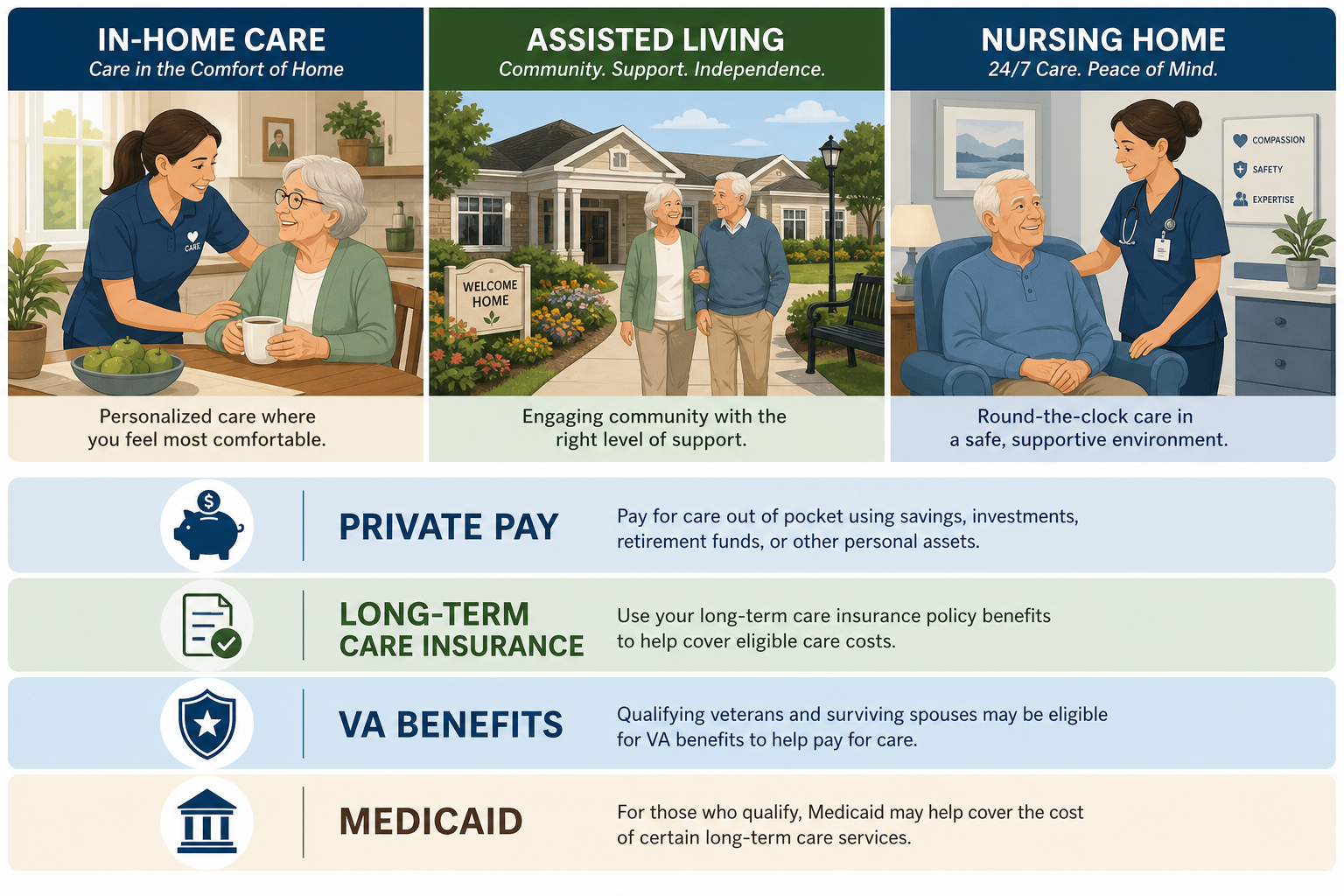
The Three Care Scenarios and Their True Annual Costs (2026)
Before you can build a payment plan, you need a realistic estimate of what each care path actually costs. The national median figures for 2026 reveal a wide range, and your family's actual costs will depend on your location, the level of care needed, and the specific facility or agency you choose.
| Care Scenario | National Median Monthly Cost | National Median Annual Cost | Key Details |
|---|---|---|---|
| Nursing home (private room) | $11,294 | $135,528 | Includes room, board, 24/7 skilled nursing, meals, and supervision. |
| Nursing home (semiprivate room) | $9,842 | $118,104 | Shared room; same level of care as private. |
| Assisted living | $5,419 | $65,028 | Includes housing, meals, personal care assistance, and some activities. Median community fee: $3,000. |
| In-home care (20 hours/week) | ~$2,947 | ~$35,360 | Based on a national median hourly rate of ~$34–$35. Actual hours vary widely. |
These figures are national medians. State-level variation is dramatic. For example, a semiprivate nursing home room in Texas runs about $5,808 per month, while in Alaska the same level of care costs approximately $32,220 per month. Assisted living costs follow a similar pattern, ranging from a median of $3,983 per month in Louisiana to $8,960 per month in the District of Columbia.
Costs also rise predictably over time. Industry data indicates that assisted living costs increase by roughly 5% per year. Projections from SeniorLiving.org suggest that by 2030, the national median for a semiprivate nursing home room could reach $11,077 per month. This compounding effect means that a five-year care journey can cost significantly more than a simple multiplication of today's rates.
For a deeper look at how these care options compare and what they include, see our guide on Senior Care Options in 2026: A Cost Reality Check for Families.
What Medicare Actually Covers — and the Massive Gap Families Discover Too Late
This is the single most common source of financial shock for new caregivers. Medicare is not long-term care insurance. It was designed to cover acute medical episodes, not the months or years of daily assistance that most seniors need.
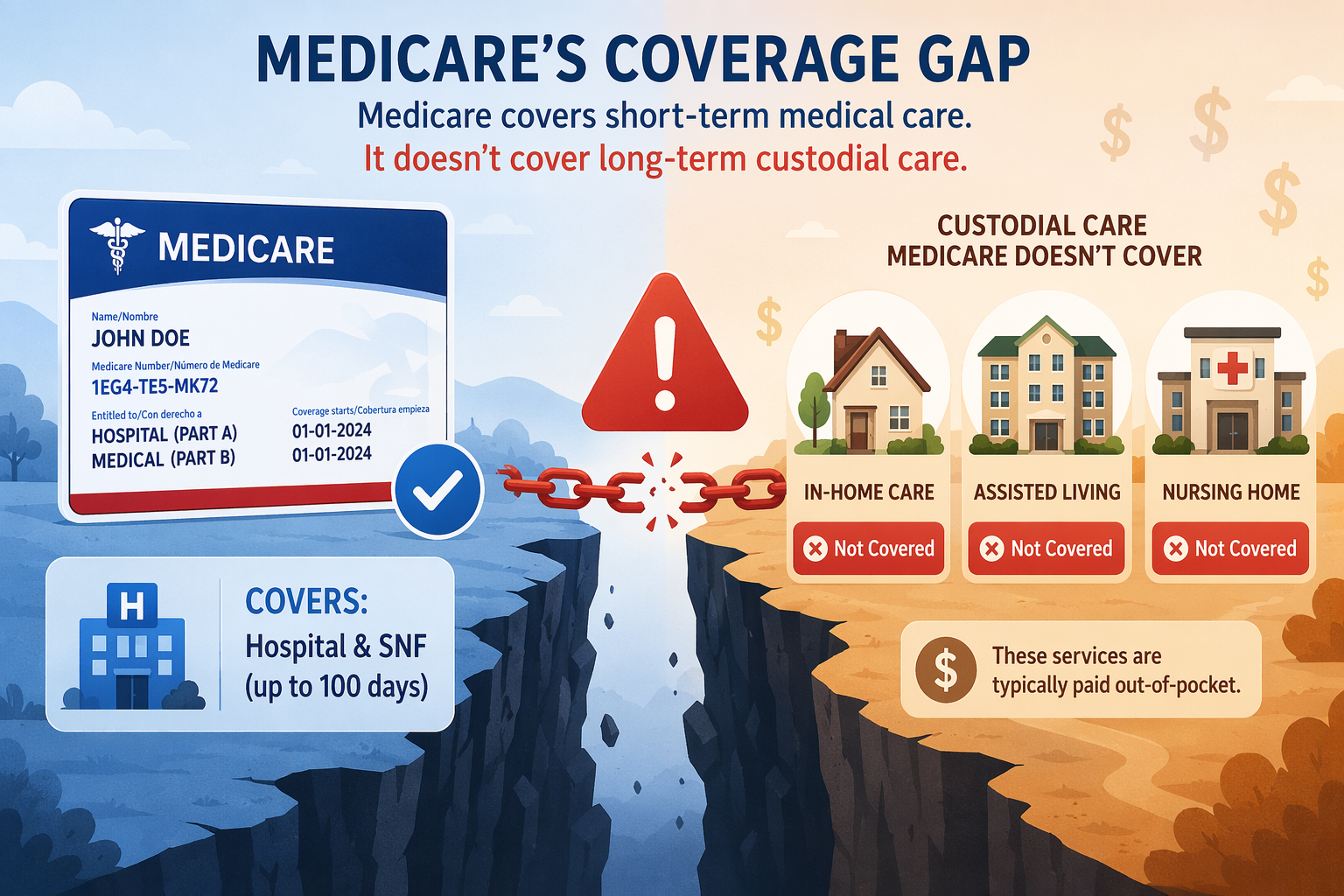
The Custodial Care Gap
Medicare covers zero days of custodial care — the type of help with activities of daily living (bathing, dressing, eating, toileting, transferring) that most seniors in assisted living or nursing homes require. This is true whether care is delivered at home, in an assisted living facility, or in a nursing home. If your parent needs help with daily tasks but does not require skilled nursing or therapy, Medicare will not pay for it.
The Skilled Nursing Facility (SNF) Benefit: Limited and Conditional
Medicare does cover up to 100 days of skilled nursing facility care per benefit period, but only under strict conditions: the patient must have a qualifying hospital stay of at least three days, must need skilled nursing or therapy services on a daily basis, and must enter the SNF within 30 days of discharge. Even then, the coverage is not free.
| Days in SNF | Medicare Coverage | Patient Responsibility |
|---|---|---|
| Days 1–20 | Full coverage (after $1,676 Part A deductible in 2026) | $0 copay |
| Days 21–100 | Partial coverage | $217 per day copay |
| Day 101 and beyond | No coverage | Full cost |
Browse more in the Glossary.