
Home Instead vs. Visiting Angels vs. BrightStar Care: How Franchise In-Home Care Pricing Actually Compares
legal-financialA side-by-side comparison of Home Instead, Visiting Angels, and BrightStar Care for adult children evaluating in-home care. This guide breaks down hourly rates, service scope, franchise variability, and the key questions to ask any local franchise.
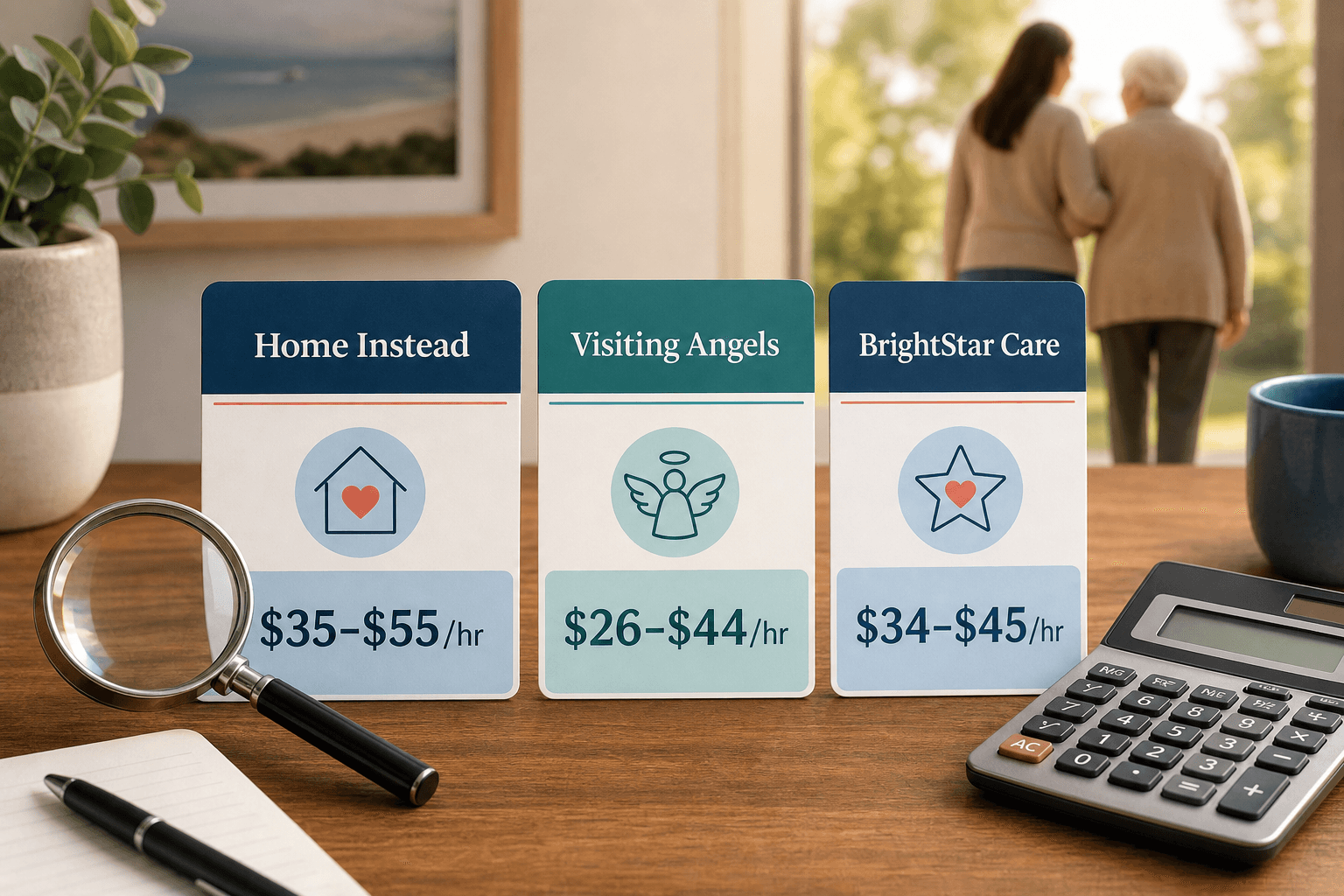
Why the Franchise Brand Matters Less Than the Local Office
When you call Home Instead, Visiting Angels, or BrightStar Care, you are not calling a national headquarters that sets uniform prices and sends standardized caregivers to every home. You are calling a locally owned and operated franchise office. That distinction is the single most important thing to understand about how in-home care pricing actually works.
Each franchise owner sets their own hourly rates, minimum-hour requirements, caregiver wages, and service policies within the brand's general guidelines. The same national brand can charge $28 an hour in one city and $44 an hour in another — not because the care is different, but because the local cost of living, state regulations, and the franchise owner's business model vary. The national brand name on the van and the website is a marketing umbrella, not a guarantee of pricing or quality.
This means that choosing between these three brands is not like choosing between an iPhone and a Samsung. You cannot simply look up the national price list and make a decision. You must evaluate the specific local franchise office that would serve your parent's home. The brand gives you a starting point — a general sense of service scope and rate range — but the local office determines everything that matters.
Three National Franchises at a Glance
Before comparing rates, it helps to understand the basic footprint and history of each brand. All three are franchise models, but they differ in national coverage, founding year, and — most importantly — the types of care they are licensed to provide.
| Brand | Founded | U.S. Locations | Care Type | Key Differentiator |
|---|---|---|---|---|
| Home Instead | 1994 | ~1,200 | Non-medical (companion + personal care) | Largest U.S. footprint; acquired by Honor Technology in 2021 |
| Visiting Angels | 1998 | 600+ | Non-medical (companion + personal care) | Widest geographic rate spread; some locations offer Select Your Caregiver program |
| BrightStar Care | 2002 | 400+ across 41 states | Non-medical + skilled nursing (RNs and LPNs) | Only brand of the three that provides medical care at home |
See This Term in Context
- Elderly Care Cost Per Hour in 2026: A State-by-State Guide for Family Caregivers
Home care costs vary dramatically by state, from $23 to $44 per hour. This guide provides the 2026 national median, a full state-by-state rate table, monthly cost estimates by care schedule, and a breakdown of what drives pricing — so you can build a realistic budget for your family.
- DME (Durable Medical Equipment): What It Means, What Medicare Covers, and What Surprises Families
DME — Durable Medical Equipment — is the Medicare regulatory term for home-use medical equipment like walkers, wheelchairs, and oxygen devices, but its eligibility rules, cost structure, and surprising exclusions routinely catch families off guard at hospital discharge. This plain-language glossary entry explains what qualifies, how Medicare Part B pays in 2026, what is commonly assumed covered but is not, and what steps caregivers need to take before equipment arrives home.
- Agency vs. Independent Caregiver: Cost Comparison and Decision Guide for Families
Compare the true costs and trade-offs of hiring a home care agency versus an independent caregiver. Learn what the agency markup covers, the hidden employer costs of hiring privately, and a decision framework to choose the right option for your family.
Also related: Home Instead Senior Care Cost: Hourly Rates, Minimums, and What Families Actually Pay in 2026, Home Health vs. Home Care vs. Hospice vs. Respite: A Side-by-Side Comparison for Families After Hospital Discharge, Senior Care Options in 2026: A Cost Reality Check for Families, When Home Care Costs More Than Assisted Living: The Break-Even Point Families Need to Know, Home Care vs. Assisted Living vs. Nursing Home: Which Is Actually Cheaper in 2026?
Comments
Join the discussion with an anonymous comment.