
STEADI: assess
Is It Time to Step In? 5 Signals of Declining Capacity
This 5-signal framework helps adult children objectively assess when concern about a parent's declining capacity must turn into action. Track falls, medication errors, home safety, finances, and driving with a green-to-red progression to know when to intervene and when to wait.
The hardest moment is often not after the emergency. It is the stretch before it, when your parent has had a fall, then a missed medication, then a strange bill problem, and every event can still be explained away if someone wants to explain hard enough.
That is usually when families start asking whether it is time to step in for an aging parent's declining capacity. The useful question is not whether one incident proves anything. Most single incidents do not. The better question is whether the same kind of risk is repeating, or whether different kinds of risk are starting to gather around the same person.

Use a simple threshold: one red signal or three yellow signals across domains means concern has crossed into action. Action does not mean taking over permanently. It means reducing immediate risk, documenting what happened, and arranging the right evaluation before the family spends another month arguing over whether the latest incident “counts.”
The Green-to-Red Threshold
The five signal areas are falls and injuries, medication errors, home safety breakdown, financial confusion, and driving incidents. Each can be green, yellow, orange, or red. The color is not a diagnosis. It is a way to decide whether you are watching, scheduling help, or intervening now.
| Level | What it means | Family action |
|---|---|---|
| Green | No current pattern of concern in this area. | Keep ordinary communication open. |
| Yellow | A concerning incident happened, but it is isolated or explainable. | Track for 30 days and write down dates, details, and consequences. |
| Orange | The problem repeats, worsens, or begins affecting health, money, safety, or daily function. | Schedule a medical, pharmacy, home safety, financial, or driving-related evaluation. |
| Red | There is immediate danger, major harm, exploitation risk, or refusal of clearly needed help. | Step in now to reduce risk and involve the appropriate professional or emergency support. |
Accumulation matters because capacity is rarely all-or-nothing. Dr. Leslie Kernisan distinguishes legal competence from decision-making capacity and describes capacity as decision-specific: a person may handle some choices well while struggling with others. She highlights four abilities clinicians look for: understanding information, expressing a choice, appreciating how the information applies to one’s own situation, and reasoning through options and consequences.[1]
Families cannot diagnose incapacity from a kitchen table. They can, however, notice that a parent understands a medication instruction in the doctor’s office but does not appreciate that skipping it repeatedly could lead to harm, or can express a wish to keep driving but cannot reason through recent close calls. Those observations are useful precisely because they are concrete.
Signal 1: Falls and Injuries
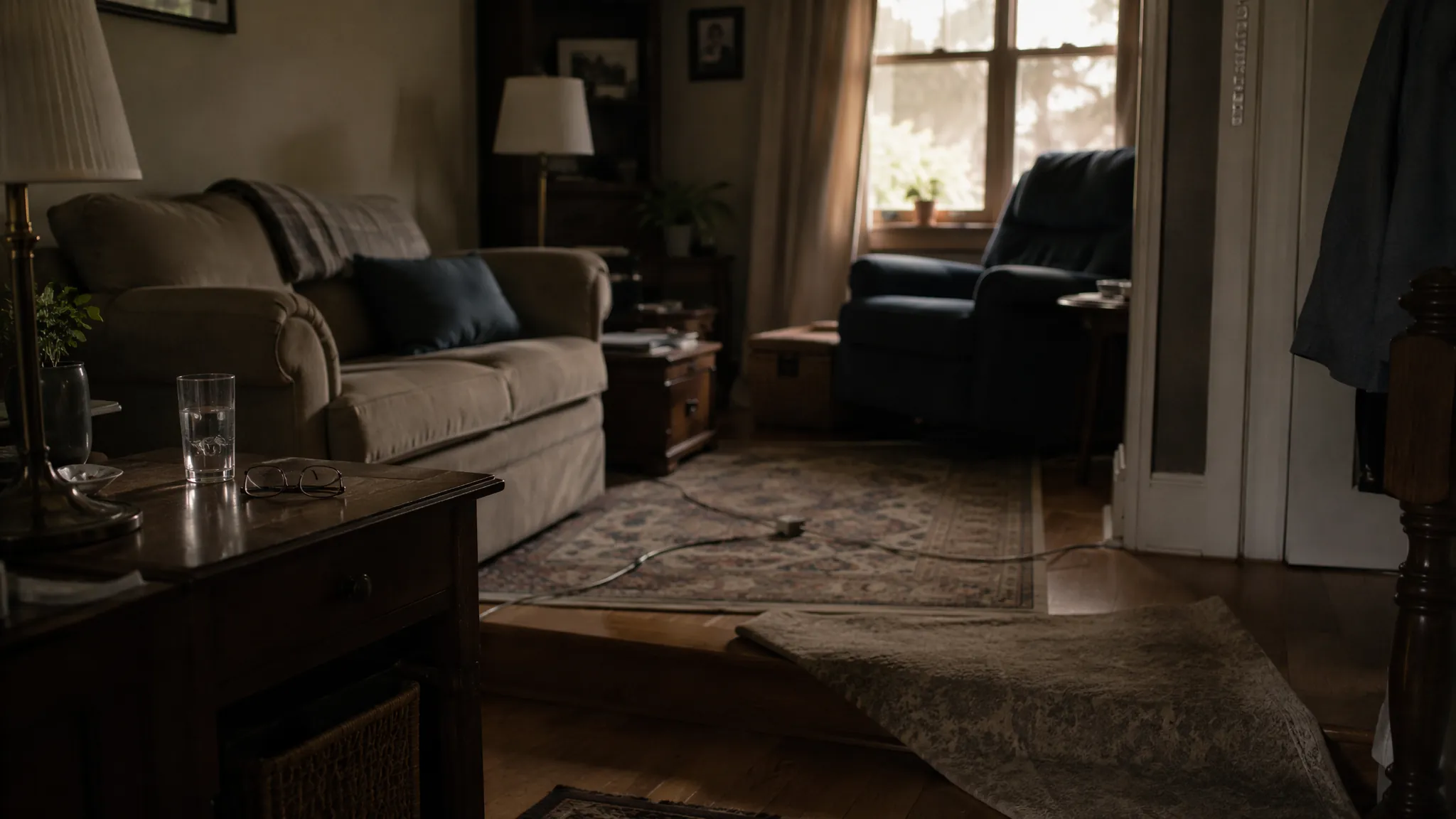
Falls deserve more weight than families sometimes give them. CDC STEADI materials state that one in four older adults falls each year, falls cause 95% of hip fractures, and falls are associated with 41,000 deaths per year.[2] A fall is not just “Mom is getting older.” It is a safety event that can quickly change housing, mobility, medication, and caregiving decisions.
| Level | What you might see | What to do |
|---|---|---|
| Green | No falls, no new fear of walking, no unexplained bruises. | Keep normal activity and watch for changes after illness, medication changes, or hospitalization. |
| Yellow | One stumble, one minor fall without injury, or a new comment about feeling unsteady. | Write down the date, location, footwear, lighting, surface, and whether alcohol, dizziness, or a new medication may have played a role. |
| Orange | Two falls, repeated near-falls, new use of furniture for balance, or avoiding stairs, showers, or errands because walking feels unsafe. | Schedule a medical visit and ask about physical therapy, occupational therapy, vision, blood pressure, medication side effects, and home hazards. |
| Red | A fall with head injury, fracture, loss of consciousness, inability to get up, or refusal to seek care after a serious fall. | Intervene immediately. Call emergency services when medically appropriate and do not wait for a sibling vote. |
The fall itself is only part of the record. The more telling detail is what happened afterward. Did your parent tell someone promptly? Could they explain how it happened? Did they accept reasonable prevention steps? Did they stop bathing or going outside because they were afraid of falling again? A fall can reveal physical risk, but the response can also reveal whether the person appreciates the risk and can reason through safer alternatives.
For deeper fall-specific planning, families can use fall prevention resources and home modification guidance, but the threshold here is simple: repeated falls, injury, concealment, or refusal of clearly needed care moves the issue out of casual monitoring.
Signal 2: Medication Errors
A half-full pill organizer on the wrong day is easy to minimize once. It gets harder to minimize when it appears beside dizziness, confusion, emergency visits, or contradictory explanations. Medication mistakes are one of the clearest places to separate preference from capacity: a parent may dislike a medication, but the capacity concern is whether they understand the regimen, appreciate the consequence of missed or doubled doses, and can carry out the plan reliably.
| Level | What you might see | What to do |
|---|---|---|
| Green | Medications are taken as prescribed, refills are current, and your parent can explain the basic purpose of each important medication. | No new action beyond ordinary check-ins. |
| Yellow | One missed refill, one forgotten dose, or confusion after a recent prescription change. | Track for 30 days. Ask permission to review the medication list and compare bottles, pill organizers, and refill dates. |
| Orange | Repeated missed doses, duplicate bottles, expired medications in use, or uncertainty about which doctor prescribed what. | Ask for a pharmacist medication review and notify the primary care clinician. |
| Red | Dangerous overuse, suspected double dosing of high-risk medication, mixing medications in unsafe ways, or refusing urgent help after a medication-related episode. | Seek immediate clinical guidance, poison control, urgent care, or emergency care depending on the situation. |
The first fix is usually not a lecture. It is simplification and review. Bring the actual bottles, supplements, and over-the-counter products to the pharmacist or clinician if your parent agrees. If they do not agree and the pattern is orange or red, document the pattern anyway and ask the clinician’s office how to share safety concerns.
Signal 3: Home Safety Breakdown
Home safety problems are often treated as housekeeping complaints, which is why they can sit unresolved for too long. Warning-sign guides for families commonly point to changes such as spoiled food, poor hygiene, cluttered pathways, unsafe appliances, and difficulty maintaining the home as reasons to look more closely at whether an older adult needs help.[3][4][5]
| Level | What you might see | What to do |
|---|---|---|
| Green | The home is reasonably safe for your parent’s current mobility and cognition. | Keep ordinary maintenance going. |
| Yellow | New clutter in walkways, one burned pan, spoiled food, a loose rug, or a missed repair that creates mild risk. | Track dates and take photos if your parent permits. Offer a specific fix rather than a broad criticism. |
| Orange | Repeated stove problems, blocked exits, worsening sanitation, unsafe stairs, missed essential repairs, or difficulty using the bathroom safely. | Request an occupational therapy or home safety assessment and prioritize hazards that could cause falls, fire, infection, or inability to bathe or toilet safely. |
| Red | Fire, gas leak, wandering, no heat in dangerous weather, inability to access food or water, or refusal to leave a clearly unsafe environment. | Intervene immediately. Involve emergency services, adult protective services, the utility company, or urgent family support as the situation requires. |
This is where families can waste time arguing over tone. One sibling sees a messy kitchen. Another sees a fire risk. Write down the functional problem instead: the stove was left on, the smoke alarm had no working battery, the hallway was blocked, the shower could not be used safely. Functional facts travel better than accusations.
Home modifications may eventually be part of the answer, but do not start with a full renovation wish list. Start with the hazards connected to the signal: lighting, rugs, stairs, bathroom access, stove safety, door locks, emergency contacts, and whether your parent can summon help.
Signal 4: Financial Confusion
Financial confusion is one of the most uncomfortable signals because it touches pride, privacy, and power. It is also one of the areas where delay can cause consequences that are hard to unwind. The issue is not whether a parent makes every financial choice the way an adult child would. The issue is whether bills, benefits, taxes, scams, and legal documents are being understood and handled well enough to avoid harm.
| Level | What you might see | What to do |
|---|---|---|
| Green | Bills are paid, accounts are not overdrawn, and your parent can explain ordinary financial decisions. | Respect privacy and keep emergency contact information current if your parent is willing. |
| Yellow | One missed bill, one confusing letter, a duplicate payment, or a new difficulty using online banking. | Track the issue and ask whether your parent wants help setting reminders or organizing mail. |
| Orange | Repeated late notices, shutoff warnings, unusual withdrawals, unpaid insurance premiums, tax problems, or increasing confusion about basic accounts. | Encourage a meeting with a trusted financial professional, benefits counselor, or elder law attorney, depending on the problem. |
| Red | Suspected exploitation, large unexplained transfers, foreclosure or eviction risk, utilities at risk of disconnection, or refusal to address urgent financial harm. | Seek immediate professional advice. If exploitation is suspected, contact the appropriate financial institution, adult protective services, or legal counsel. |
Legal authority matters here. Paying a bill for a parent is different from changing account access, using a power of attorney, challenging a transaction, or pursuing guardianship. Legal discussions of stepping in for an aging parent commonly stress that guardianship and forced decision-making are serious legal measures, not ordinary family management tools.[6] State law varies, so this article is educational, not legal advice. When money, legal authority, housing, or forced decisions are involved, consult an elder law attorney in your state.
Signal 5: Driving Incidents
Driving is often the argument families dread most because it represents freedom, identity, and routine. It is also a public safety issue. The threshold should focus on incidents and function, not age.
| Level | What you might see | What to do |
|---|---|---|
| Green | No accidents, no new navigation problems, and driving remains appropriate to vision, reaction time, cognition, and local conditions. | Keep the conversation ordinary and practical. |
| Yellow | One new dent, one wrong turn in a familiar area, discomfort driving at night, or a passenger noticing slower reactions. | Track the event and ask about limiting higher-risk conditions such as night driving, highways, bad weather, or unfamiliar routes. |
| Orange | Repeated dents, getting lost, traffic tickets, near-misses, honking from other drivers, or family members refusing to ride along. | Ask the primary care clinician about cognition, vision, medications, and referral to a driving rehabilitation specialist if available. |
| Red | Crash with injury, driving despite a clinician’s warning not to, getting lost for an extended period, or continuing to drive with severe confusion or impaired awareness. | Intervene immediately. Remove access only when legally and practically appropriate, and involve clinicians, licensing authorities, or legal counsel when needed. |
A useful driving record is specific: date, route, weather, what happened, who observed it, and what consequence followed. “Dad is unsafe” may start a fight. “Dad turned left against traffic twice on the same familiar route this month, and one passenger will no longer ride with him” gives a clinician something to evaluate.
Why Three Yellows Can Matter More Than One Loud Incident
Families often wait for a single decisive event because it feels fairer. A serious fall, a car crash, or a bank disaster leaves less room for debate. The problem is that waiting for an undeniable event can mean waiting until harm has already happened.
Three yellow signals across domains are different from three annoyances. A missed medication, a loose rug, and one confusing bank letter may each be explainable. Together, they suggest that the parent’s daily systems are becoming fragile. That is the point where the family should stop debating personality and start evaluating function.
The capacity question is not “Can she still make decisions?” It is more precise: Can she understand this decision, express a stable choice, appreciate how the risk applies to her, and reason through realistic options? Dr. Kernisan’s framework is useful because it keeps families from treating capacity as a light switch.[1]
That nuance protects the parent as much as the adult child. A parent may still choose what to eat, whom to see, and how to spend ordinary leisure time while needing help with medication setup or bill management. Stepping in should match the domain of risk. Broad control is rarely the right first move when a narrower safety plan would work.
What to Do Once the Threshold Is Met
If there is one red signal or three yellow signals, do four things before the family meeting turns into another referendum on who is overreacting.
- Write a dated record. Include what happened, who saw it, what changed afterward, and whether the same kind of problem happened before.
- Match the signal to the right professional. Falls may call for a medical visit, PT, OT, vision review, medication review, or home safety assessment. Medication errors may call for a pharmacist. Financial confusion may require an elder law attorney or trusted financial professional. Driving concerns may call for a clinician and, when available, a driving rehabilitation specialist.
- Start with the least restrictive safety step that addresses the actual risk. A pill dispenser, grab bar, bill reminder, ride plan, or temporary driving limit may solve the immediate problem without erasing independence.
- Ask for evaluation during a stable period whenever possible. Avoid making permanent decisions based only on behavior during delirium, infection, medication side effects, post-surgical recovery, severe pain, dehydration, or another acute episode.
Dr. Kernisan’s practical guidance on helping aging parents emphasizes understanding the older adult’s situation, identifying safety issues, and working through health, functional, and family factors rather than jumping straight to control.[7] That approach is slower than panic, but it produces a record that a clinician, attorney, or reluctant sibling can actually use.
A Short Script for the Sibling Meeting
Keep the meeting about thresholds, not motives. A workable opening is: “I am not saying we take over. I am saying we have one red signal, or we have three yellow signals across different areas. I want us to agree on the next evaluation and the immediate safety step.”
Then name the evidence. “There was a fall on May 4, a missed blood pressure refill on May 18, and a shutoff notice on June 2.” Dates change the conversation. They do not remove emotion, but they make it harder for everyone to argue only from mood.
What Not to Decide Too Early
Do not treat every threshold crossing as proof that your parent can no longer live at home, manage money, drive, or make medical decisions. The threshold means the family needs action. It does not decide the final outcome.
Temporary impairment is a real complication. An infection, medication change, hospitalization, delirium, dehydration, or severe sleep disruption can make a capable person look suddenly incapable. When immediate danger is present, protect safety first. When the decision is permanent or legally serious, wait for clinical assessment during a more stable period whenever that is possible.
Guardianship, forced moves, major financial control, and removal of driving access can carry legal and emotional consequences. Sometimes they are necessary. They should not be the family’s first vocabulary for every decline.
The Practical Line
If everything is green, stay connected. If one area is yellow, track it for 30 days. If a pattern turns orange, schedule the right evaluation. If one signal is red, intervene now. If three yellow signals appear across different domains, stop waiting for the incident that finally convinces everyone.
That is the disciplined position: not taking over, not looking away, and not making permanent decisions from panic. Step in enough to reduce immediate risk, request evaluation, and make the next decision from documented evidence.
References
- Mental Incompetence & Losing Decision Capacity in Aging, Better Health While Aging
- Older Adult Fall Prevention Patient & Caregiver Resources, CDC STEADI
- 10 Signs Your Elderly Parent Needs Help, A Place for Mom
- Warning Signs Your Aging Parent Needs Home Care: A Family's Checklist, TheKey
- 10 Warning Signs Your Aging Parent May No Longer Be Safe Living Alone, Age Safe America
- Is It Time To Step In And Take Over For Your Aging Parent?, Colgan Law Firm
- 6 Steps to Take When Aging Parents Need Help, Better Health While Aging
Related reading
Noticed something outdated or inaccurate on this page? Flag a correction. We review every report against CDC, NIA, and AARP HomeFit guidance before updating a page.
Part of the Fall Prevention section.