
STEADI: Intervene
After-Storm Home Safety Checklist for Seniors
This room-by-room checklist helps family caregivers and older adults identify three new categories of fall hazards — wet surfaces, lost lighting, and displaced objects — after a storm passes, before re-entering or starting cleanup. It fills the gap between standard disaster re-entry guidance and everyday fall prevention checklists.
An after-storm home safety checklist for seniors should start at the front door, before anyone steps inside with wet shoes, a flashlight, and a bag of cleanup supplies. The house may look familiar from the porch, but after heavy rain, wind, flooding, or a long power outage, it can behave like a different space. A hallway that was safe yesterday may now have a curled rug edge. A kitchen path someone has walked for 30 years may be crossed by a mop bucket, a chair, or a dark patch of water.
For an older adult, the safest re-entry is not “go slowly.” It is this: one capable person checks the home first, room by room, before the older adult resumes normal walking routes or starts cleanup. That walkthrough does not replace disaster re-entry guidance. It sits on top of it.
Before the fall checklist: do not enter yet if...
Before looking for rugs, rails, or wet flooring, use the safety gate that CDC and FEMA emphasize for returning home after a disaster: if the building may be unsafe, no fall-prevention checklist makes it safe enough to enter. [1][2]
- Do not enter if you smell gas, hear a hissing sound, or suspect a gas leak. Leave the area and contact the appropriate utility or emergency service.
- Do not enter or walk through standing water if electrical hazards may be present, including downed lines, submerged outlets, or damaged electrical equipment.
- Do not enter if the structure looks shifted, cracked, sagging, or otherwise unstable. FEMA specifically warns returning residents to check for structural damage and to be cautious around damaged buildings.
- Do not use a generator, grill, camp stove, or similar fuel-burning device inside the home, garage, basement, or near open windows. Carbon monoxide danger comes before convenience.
- Do not let an older adult walk in first “just to see.” The first person inside may need to stop suddenly, back up, or step over unexpected damage.
If you helped your parent prepare before the storm, re-entry is the next separate task. A pre-storm plan, such as severe thunderstorm safety for seniors, does not tell you whether the bathroom floor is now slick or the hallway lamp is out.
The three post-storm fall hazards to look for in every room
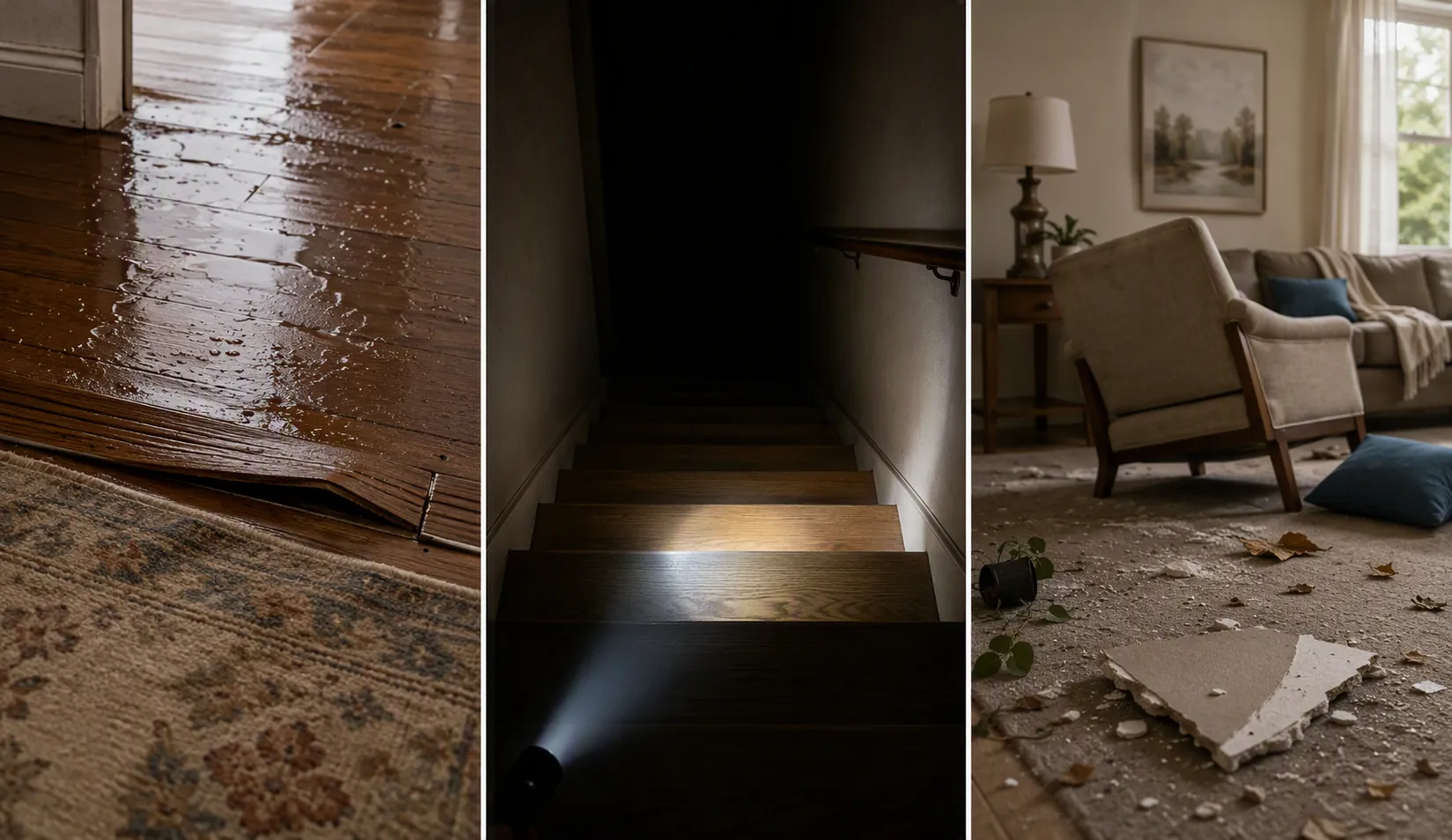
Once the home passes the basic re-entry screen, the fall walkthrough should look for three changes: surfaces, lighting, and displacement. These are ordinary-sounding words, but after a storm they change the way a person moves through a familiar home.
| Hazard type | What changed after the storm | What to check before an older adult walks there |
|---|---|---|
| Surface changes | Rainwater, flood residue, mud, wet carpet, warped wood, curled rugs, buckled thresholds | Is the walking path dry, flat, firm, and free of loose fabric or raised edges? |
| Lighting loss | Power outage, burned-out bulbs after surges, blocked windows, dark stairs, no night-lights | Can the older adult see the next step, floor edge, handrail, toilet, sink, and bed path without carrying too much? |
| Displaced objects or damage | Furniture shifted, cleanup supplies in walkways, debris, loose rails, cracked steps, sagging floors | Is the normal walking line clear, and are the objects an older adult reaches for still where habit expects them? |
The reason to take this seriously is not that every older adult will fall after a storm. The narrower, better-supported point is that falls are already common, and the home environment is one of the risk areas that can be changed. CDC reports that about 1 in 4 older adults falls each year, and identifies environmental factors as an important modifiable fall-risk area. [3]
Research published through PubMed Central has also reported that environmental hazards contribute to an estimated 30% to 50% of falls among older adults globally. That figure is not a U.S. post-storm fall rate, and it should not be treated as one. It does, however, support a practical conclusion: when a storm changes floors, lighting, and furniture placement, the fall environment deserves a fresh inspection. [4]
Industry fall-prevention guidance makes the same connection in plainer terms: Brookdale Senior Living specifically names downed power lines, debris, and wet surfaces as storm-related fall risks for older adults. [5]
How to do the walkthrough without creating a new hazard
The first walkthrough should be boring on purpose. Wear sturdy shoes. Keep one hand free. Use a bright flashlight, headlamp, or battery lantern rather than carrying a phone in one hand and bags in the other. If you set up a stationary monitoring station during the storm, use the same seated, low-rush approach when checking conditions before re-entry; the goal is not to prove the house is fine quickly, but to find the places where it is not fine yet.
If the older adult lives alone and must inspect without help, the same rule applies in smaller pieces: open the door, stop, light the path, and check only the next safe walking zone. Do not carry laundry, trash bags, wet towels, or a bucket while testing floors. A hand that is full cannot catch a rail.
- Mark unsafe rooms by closing the door, placing a visible note at eye level, or blocking entry from outside the walking path.
- Move cleanup tools to one staging area, not along the hallway or beside the bed.
- Dry walking paths first, before sorting belongings.
- Put chairs, walkers, canes, and frequently used side tables back where the older adult expects them, unless that spot is unsafe.
Entryway, porch, and threshold
This is where re-entry often turns into a fall risk before anyone has “started cleanup.” People step in while looking at ceiling damage, carrying mail, holding a flashlight, or trying not to track water inside. For an older adult, the entry zone needs to be made usable before the rest of the house is even discussed.
Surface checks
- Check porch boards, concrete, steps, and ramps for mud, leaves, water, ice, loose gravel, or slick storm residue.
- Look at the doormat. If it is soaked, curled, bunched, or sliding, remove it from the walking path. A wet mat is not a safety feature.
- Inspect the threshold. Stormwater, swelling wood, or shifted flooring can create a small lip that catches a toe or walker wheel.
- If the entry floor is wet, dry a narrow, direct path first. Do not scatter towels loosely across the floor; they can become the next trip hazard.
Lighting checks
- Turn on the porch light and entry light if power is available. If not, place a battery lantern so it lights the threshold and the first few steps inside.
- Do not ask the older adult to cross the threshold while holding the only light source. The light should illuminate the path without occupying both attention and a hand.
- Check for glare from wet flooring. A shiny patch may hide a puddle or make a raised edge harder to see.
Displacement and damage checks
- Move packages, branches, sandbags, trash cans, boots, and cleanup supplies away from the doorway before the older adult enters.
- Check whether the usual grab points are still reliable: porch rail, door frame, side table, walker storage spot, umbrella stand, or chair.
- If a chair was moved during storm preparation or cleanup, return it to its safe usual place or remove it fully. Half-moved furniture is worse than no furniture because habit reaches for it.
- If the door sticks or scrapes the floor, do not let the older adult wrestle it open while balancing at the threshold.
Stairs and hallways
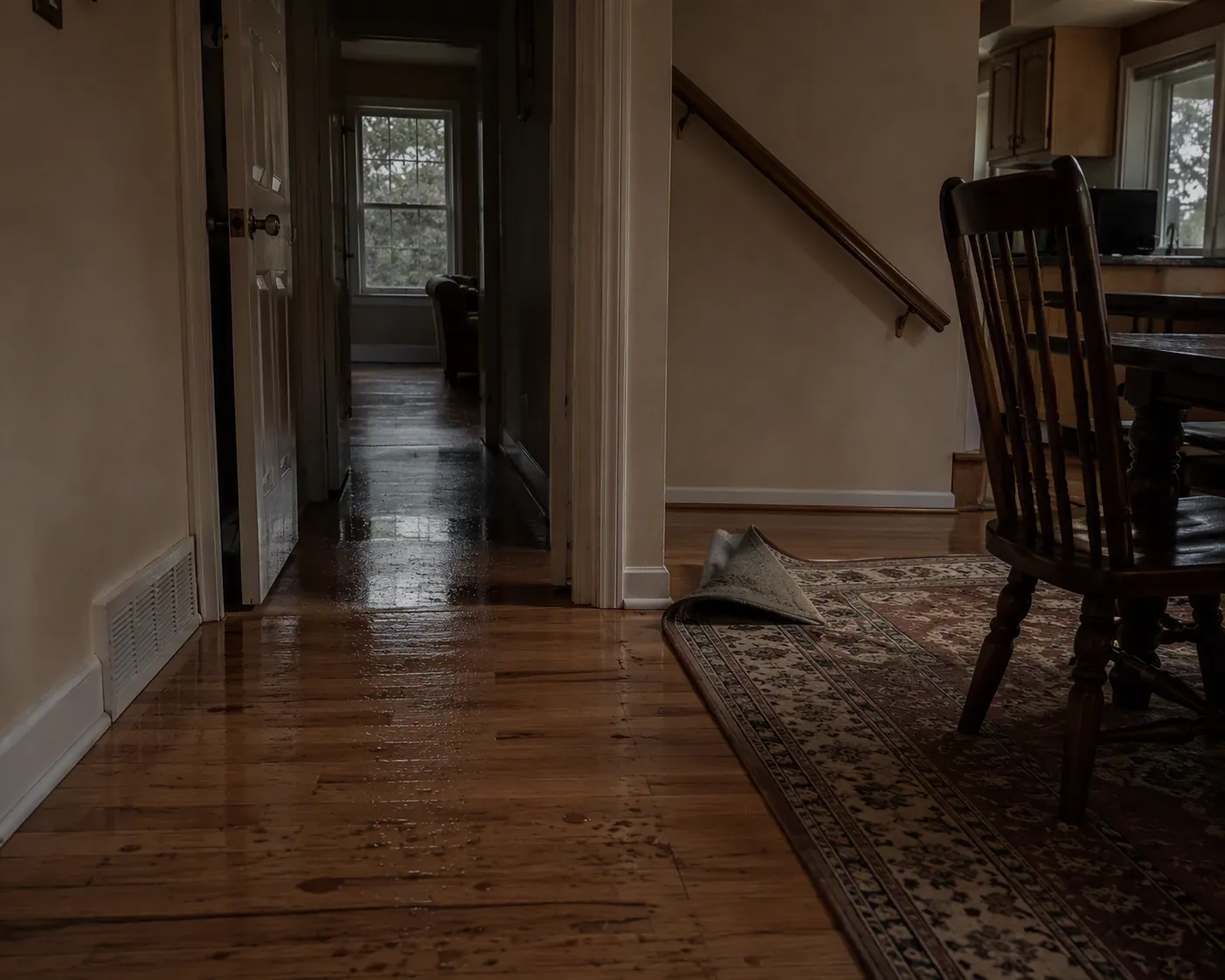
Stairs and hallways are where a familiar home becomes most deceptive. People move through these areas on memory. After a storm, memory may be wrong: the light is out, the runner has shifted, the handrail is damp, or a bin of towels is sitting exactly where a foot usually lands.
Surface checks
- Walk the full hallway before the older adult does. Look down, not just ahead.
- Remove or flatten hallway runners if edges are curled, damp, or rippled.
- Check each stair tread for water, grit, mud, leaves, or debris tracked in from outside.
- Feel for soft carpet, lifted flooring, or sagging spots. FEMA’s re-entry guidance warns residents to watch for structural damage; a soft or shifting stair is not a cleanup nuisance. [2]
Lighting checks
- Light both the top and bottom of the stairs. A single flashlight beam from behind can throw shadows over the next step.
- Replace or reset battery night-lights if power has been out long enough to drain them.
- If there is no reliable stair lighting, postpone nonessential stair use. Bring needed items downstairs or upstairs instead of asking the older adult to make repeated trips.
- Keep one hand available for the rail. Do not combine stair use with carrying wet towels, food, flashlights, medications, or trash.
Displacement and damage checks
- Test handrails gently before weight is placed on them. If a rail is loose, wet, splintered, or pulled from the wall, treat the stairs as unsafe for the older adult.
- Remove boxes, fans, extension cords, buckets, and laundry from hallways. These items tend to collect during cleanup because hallways feel like temporary storage; for fall prevention, they are not storage.
- Check that walkers, canes, and rollators are not parked sideways in the hall. After a storm, mobility aids are often moved to make room for cleanup and then forgotten.
- If a hallway table was shifted, either return it fully or remove it fully. Do not leave it six inches out from the wall where an older adult’s hip, walker, or hand may meet it unexpectedly.
The AARP Disaster Resilience Tool Kit gives a hard example of why darkness and cleanup deserve attention: in the February 2021 Texas winter storm, 60% of the 246 deaths were people age 60 and older, with many deaths related to falls in the dark and during cleanup. [6] That is one storm, not a national benchmark. It is still enough to make a dark hallway with a mop bucket in it feel less like a small inconvenience and more like a preventable hazard.
Bathroom
The bathroom deserves an early check because it combines water, hard surfaces, small spaces, and urgency. After a storm, an older adult may head there before anyone has inspected the floor, especially after a long drive back home or hours without normal routines.
Surface checks
- Check the path from the bathroom door to the toilet, sink, and shower before the older adult uses the room.
- Dry tile, vinyl, and bath-area flooring completely. A floor that looks only slightly damp can still change how a foot, cane tip, or walker glide moves.
- Remove wet bathmats unless they have a secure backing and lie flat. A damp, bunched bathmat is a trip hazard in the exact place someone expects support.
- Check for toilet overflow, roof leaks, window leaks, or water blown under the door. Do not assume bathroom water came from normal use.
- If the shower or tub area is wet and lighting is poor, postpone bathing until the room is lit, dry, and the person is not exhausted.
Lighting checks
- Make sure the toilet path is visible at night, not just during the first daytime walkthrough.
- Place a battery light so it does not sit on the floor where it can be kicked or tripped over.
- If the mirror creates glare from a flashlight or lantern, angle the light toward the floor and fixtures, not toward the older adult’s eyes.
Displacement and damage checks
- Check grab bars and towel bars separately. A towel bar may look like a handhold but may not be installed to support body weight.
- Move cleaning bottles, plungers, buckets, and wet towels out of the turning space around the toilet and sink.
- Put toilet paper, wipes, medications, glasses, and hearing aids within normal reach so the older adult does not stretch, twist, or step onto a wet area.
- If the bathroom door no longer opens fully because flooring swelled or an object shifted behind it, fix that before the room is used. A partial opening narrows the safest path.
Kitchen
Kitchens collect post-storm hazards quickly: spoiled food, leaking appliances, scattered towels, extension cords, coolers, bottled water, pet bowls, and people trying to do too much at once. It is also where an older adult may go immediately for medication, water, coffee, or a phone charger.
Surface checks
- Check the route from the kitchen entrance to the sink, refrigerator, stove, table, medication spot, and trash area.
- Look under and around the refrigerator, dishwasher, sink cabinet, and exterior-facing doors for water.
- Remove throw rugs and mats if they are damp, curled, or sliding. Kitchen mats are often left because they are familiar; after a storm, familiar is not the same as safe.
- Clean up broken glass, spilled food, and grit before anyone walks through in slippers or socks.
- Do not let an older adult climb, kneel, or use a step stool to reach storm supplies, high cabinets, or freezer items during the first cleanup period.
Lighting checks
- Light the floor, not only the countertop. A kitchen can feel usable because a lantern is on the table while the floor remains shadowed.
- Check whether under-cabinet lights, appliance lights, and night-lights still work after the outage.
- If the older adult needs medication or water overnight, set up a safer route before bedtime rather than assuming they will remember the new hazards.
Displacement and damage checks
- Move coolers, bottled water cases, trash bags, fans, and food-sorting piles out of the normal walking line.
- Push chairs fully under the table or place one stable chair where the older adult normally sits. Do not leave chairs angled into the walking path.
- Route extension cords along walls only after electrical safety is confirmed. Never stretch cords across the path to the refrigerator, sink, or table.
- If cabinet doors, drawers, or appliance doors are swollen or jammed, do not let the older adult pull hard while standing on a questionable floor.
Bedroom and the route to the bathroom
The bedroom may look less damaged than the entry or kitchen, but the overnight route is where small hazards matter. Tired people do not inspect the floor at 2 a.m. They follow habit.
- Clear a direct path from the bed to the bathroom, bedroom door, phone, and main light switch.
- Check whether carpet is damp near windows, exterior walls, or ceiling leaks.
- Remove storm bags, laundry baskets, extension cords, oxygen tubing loops, and stacked supplies from the bedside path.
- Place a flashlight, glasses, hearing aids, phone, and water where the older adult can reach them without standing first.
- Put slippers or shoes in the usual place, but only if they are dry, supportive, and easy to put on without bending into an unstable position.
- If power is out, use a battery light that stays on or turns on easily. A phone flashlight buried under blankets is not a night safety plan.
Living room and main sitting areas
Living rooms often become command centers after a storm. That can be useful, but the command center should not spill into the older adult’s walking and transfer space.
- Check the path from the main chair or sofa to the bathroom, kitchen, bedroom, front door, and phone.
- Remove loose rugs or rug edges that have curled from humidity, water, or furniture being dragged across them.
- Return the older adult’s usual chair, side table, walker, cane, remote, and phone to predictable positions, unless those positions are wet or damaged.
- Do not place lanterns, power banks, radios, fans, or charging cords on the floor beside the chair.
- If furniture was moved away from windows or leaks, create one clear, wide route rather than several narrow routes around displaced pieces.
- Check pet bowls, toys, newspapers, blankets, and dropped towels. These are small enough to be overlooked and large enough to change a step.
Basement, garage, laundry, and utility areas
These spaces are not first-priority walking areas for most older adults after a storm. If there is standing water, electrical uncertainty, gas smell, structural damage, or poor ventilation, keep the older adult out and follow disaster safety guidance instead of treating the area as a normal household room. [1][2]
- Do not ask an older adult to check a breaker, pilot light, sump pump, wet appliance, or storage area.
- Check stairs into the basement or garage for wet treads, loose rails, mud, and poor lighting before anyone uses them.
- Move hoses, tools, extension cords, laundry baskets, and cleanup equipment away from the doorway and stair landing.
- If laundry must be done, carry small loads only and avoid asking the older adult to carry baskets on stairs or across wet flooring.
Before cleanup continues
Cleanup changes the house again. Even if the first walkthrough made the home passable, the next hour can add cords, fans, towels, bags, boxes, and wet shoes. Treat fall prevention as part of the cleanup sequence, not something to do after the “real work” is done.
- Assign one dry walking route through the home and protect it from storage, tools, and trash.
- Give cleanup supplies a staging zone that is not the hallway, bathroom doorway, kitchen route, or bedside path.
- Stop before fatigue changes movement. A tired caregiver may leave a towel on the floor; a tired older adult may step around it instead of asking for help.
- If the power is out during hot weather, watch for dehydration, dizziness, and heat strain while moving through the home. Post-storm heat can add fall risk during cleanup; see this guide on how to cool seniors without AC and prevent falls during heat waves.
- If an area cannot be made dry, lit, and clear, close it off for now.
For the first 72 hours after re-entry, use a stricter standard than you would on a normal week. This is a practical caution window, not a published post-storm fall-rate statistic. It is the period when fatigue, power loss, wet materials, unfamiliar room layouts, and cleanup clutter are most likely to overlap.
If a fall happens during re-entry or cleanup
Do not rush the person up. Check for pain, head impact, dizziness, confusion, bleeding, new weakness, or inability to bear weight. If there is any concern, call for medical help. A post-storm fall can be treated as “just a slip” too easily because everyone is focused on the house.
The larger fall picture is serious even outside disasters: the National Safety Council reports 3.85 million emergency department visits for older-adult fall injuries in 2023 and 43,020 fall deaths among adults 65 and older in 2024, a 51% increase over 10 years. [7] Those are general fall figures, not storm-specific counts, but they are enough reason not to minimize a fall after cleanup begins.
If a fall leads to medical evaluation, physical therapy, or a formal fall-risk assessment, it may also be worth reviewing what Medicare covers for fall prevention services. After the immediate recovery phase, a professional home assessment can also fit into a broader aging-in-place fall-prevention plan.
The final pass before normal routines resume
Before the older adult moves through the home as usual, walk the daily route one more time: entry to chair, chair to bathroom, bathroom to bedroom, bedroom to kitchen, kitchen to phone or exit. Look for the towel dropped in the hallway, the chair left at an angle, the rug edge that curled after drying, the flashlight sitting on the floor, and the bucket someone meant to move later.
After-storm fall prevention is not a request to be extra careful. It is a separate walkthrough because water, darkness, and displacement create hazards that ordinary home checklists and disaster re-entry protocols do not fully cover together.
References
- Returning Home After a Natural Disaster, Centers for Disease Control and Prevention
- Tips for Returning Home Safely After a Disaster, FEMA
- Facts About Falls, Centers for Disease Control and Prevention
- The Role of Environmental Hazards in Falls among Older People: A Systematic Review, PubMed Central
- Helping to Prevent Falls in Older Adults, Brookdale Senior Living, June 2025
- Disaster Risks to Older Adults, AARP
- Older Adult Falls, National Safety Council
Related reading
Noticed something outdated or inaccurate on this page? Flag a correction. We review every report against CDC, NIA, and AARP HomeFit guidance before updating a page.
Part of the Fall Prevention section.